We nod, smile and pretend to understand but don’t actually have a clue what is going on at all! The guide is talking away in Spanish; the 20 or so Chileans on the trip are agreeing to what he is saying and laughing at what must be some very funny jokes. We are on a tour to see the ghost towns of Humberstone and Santa Laura. When we booked it, the man said the tour was in Spanish but with some English. Mmm! We soon find out that that means just enough to tell us the time to be back to the bus and to learn that leaving in ten minutes means at least 30.
Santa Laura was a potasium nitrate industry making gunpowder and fertilizers. The buildings were abandoned in the 1960s when it became possible to manufacture fertilizer by using man made methods.
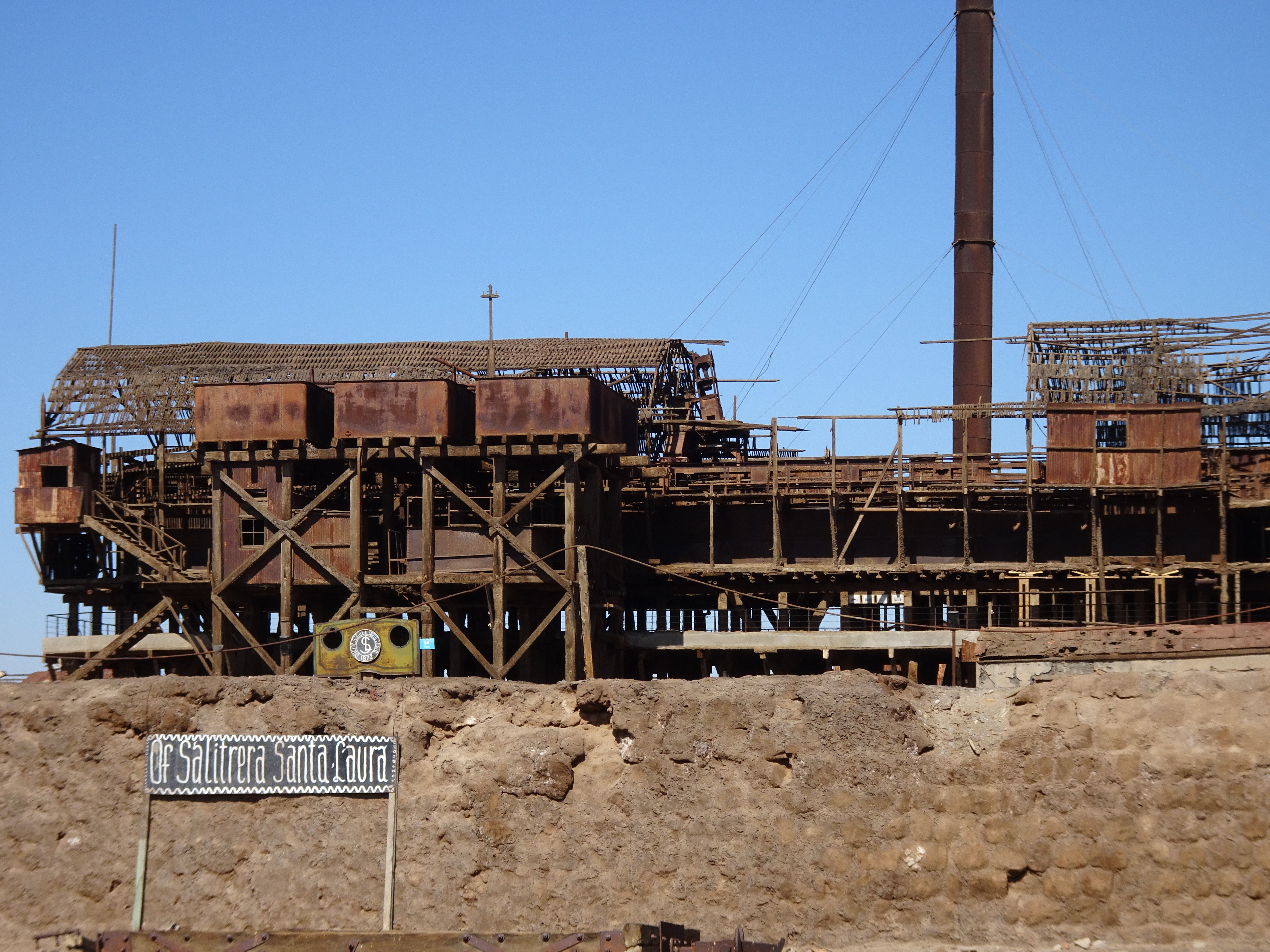
The first sight of the buildings standing alone surrounded by desert, reminds me of the rusty hulks of the boats left by the retreating Aral Sea.
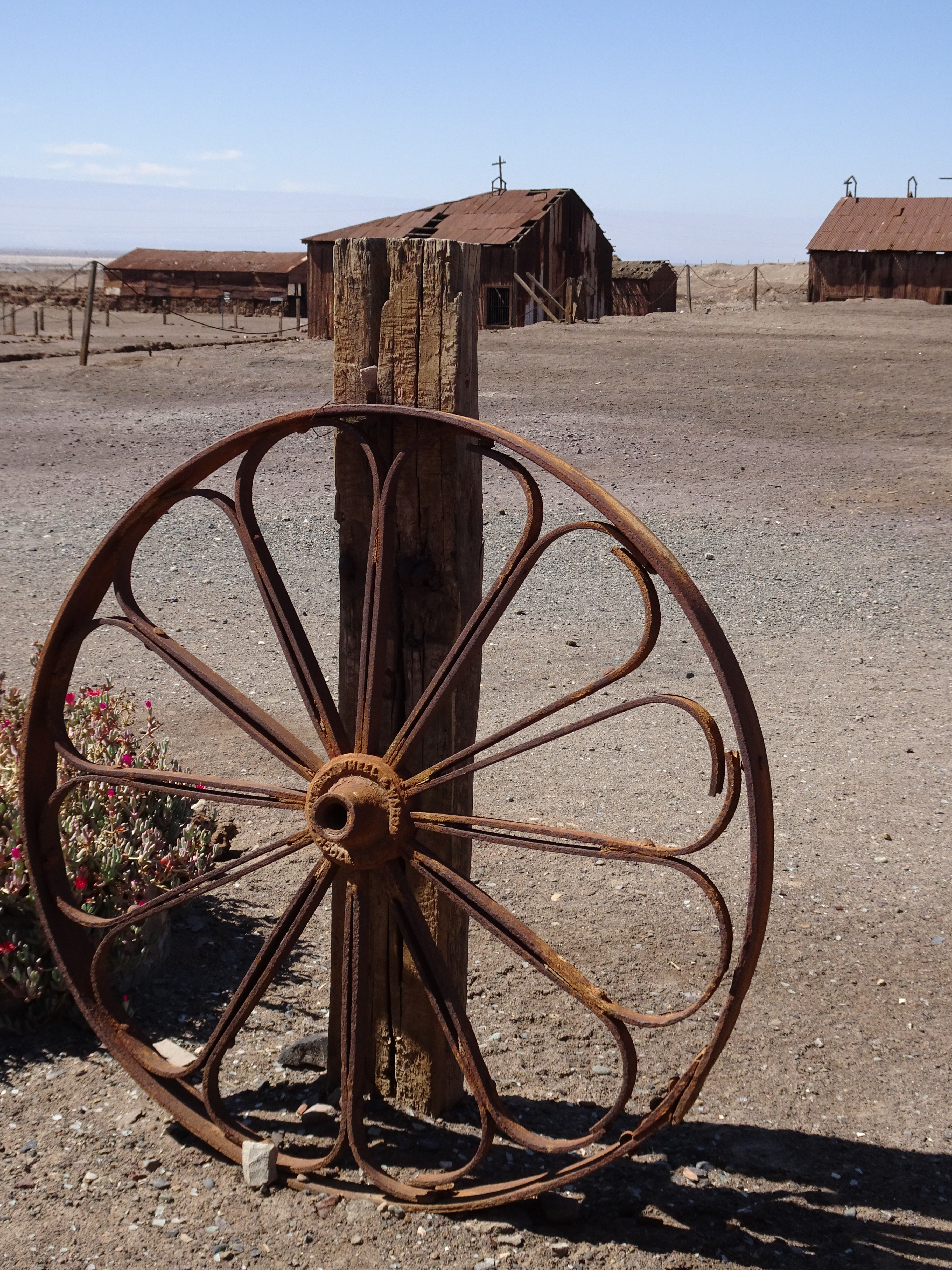
Getting closer, it feels like we are in the American West, tumble weeds included.
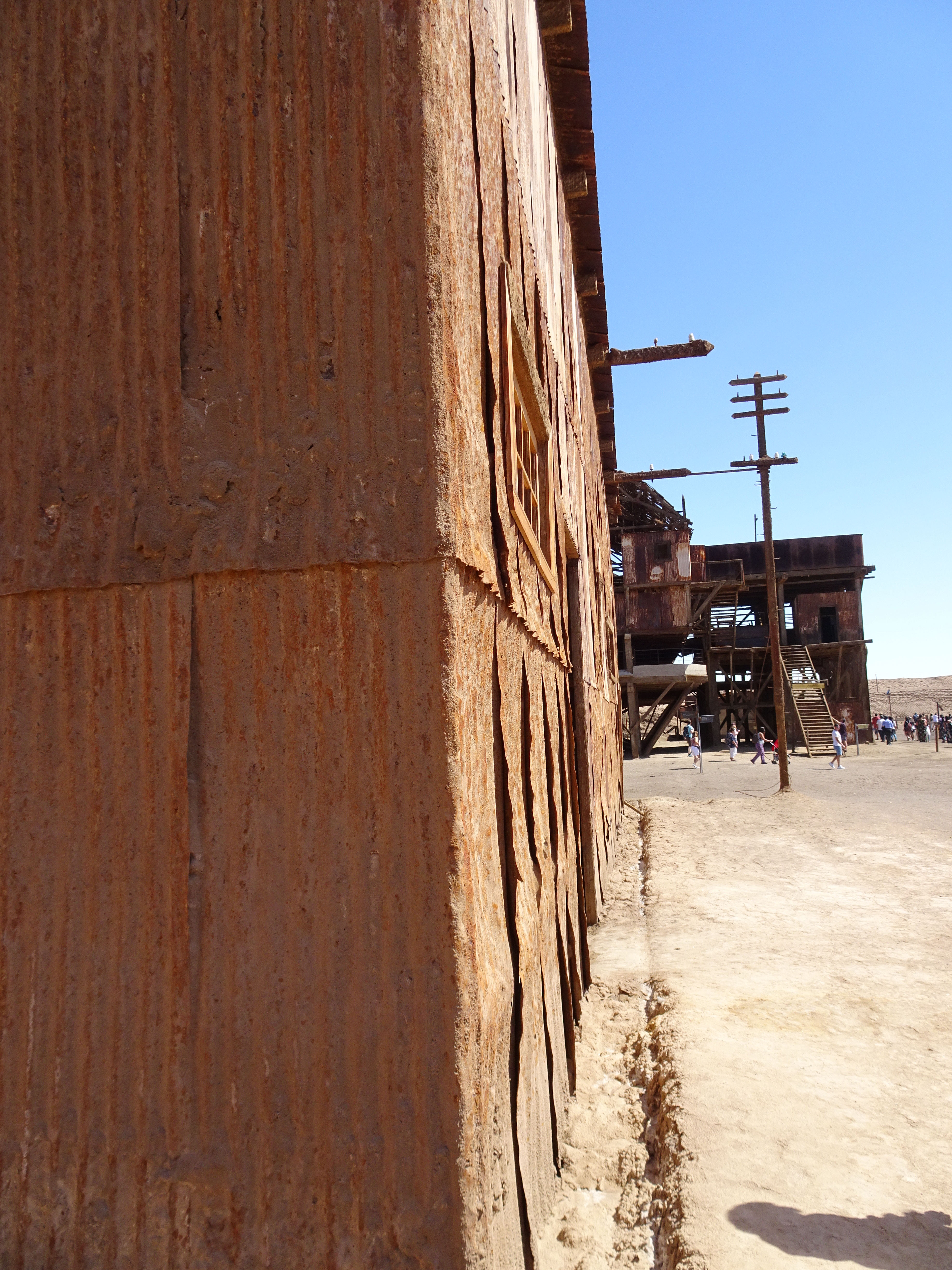
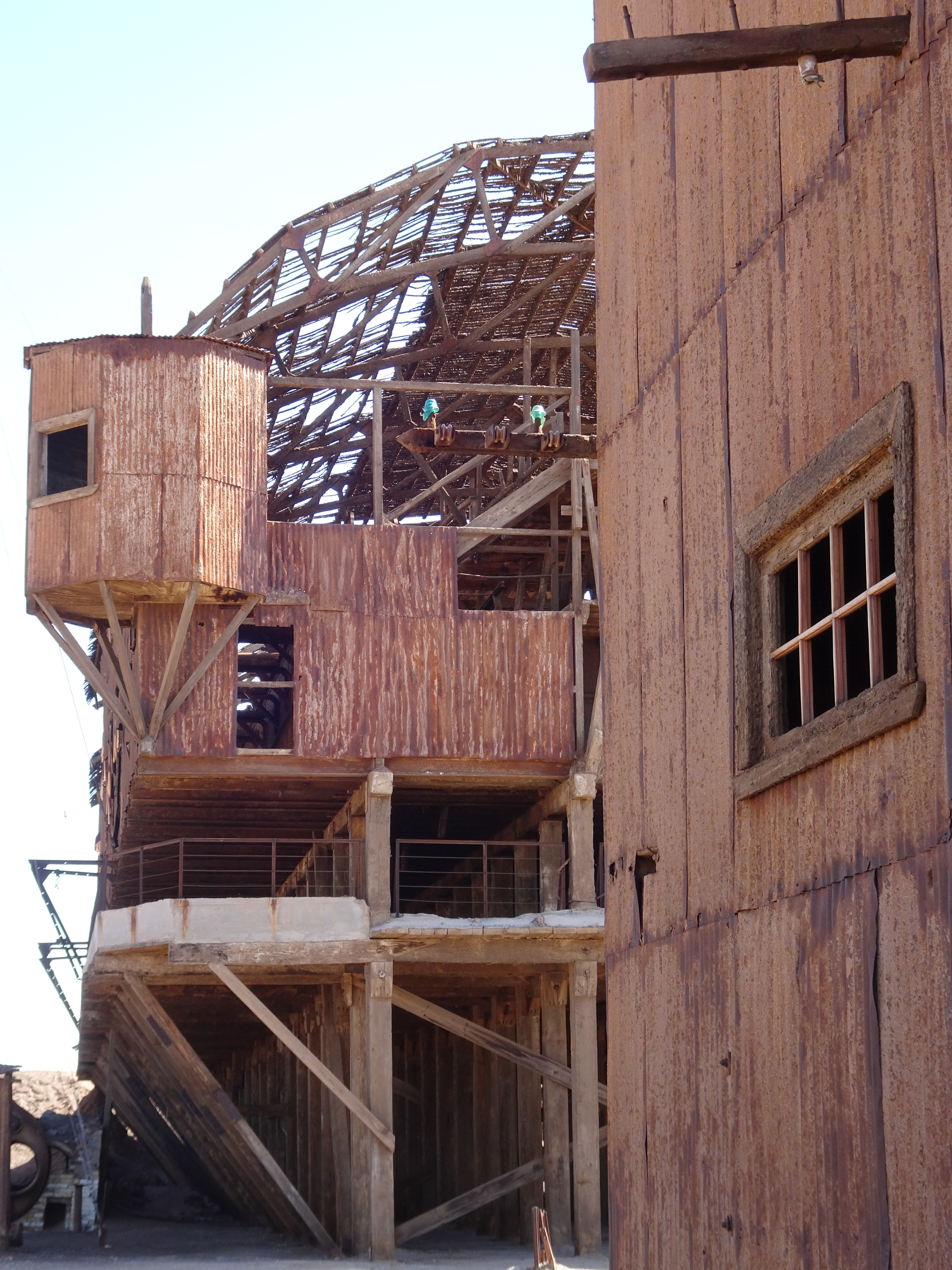
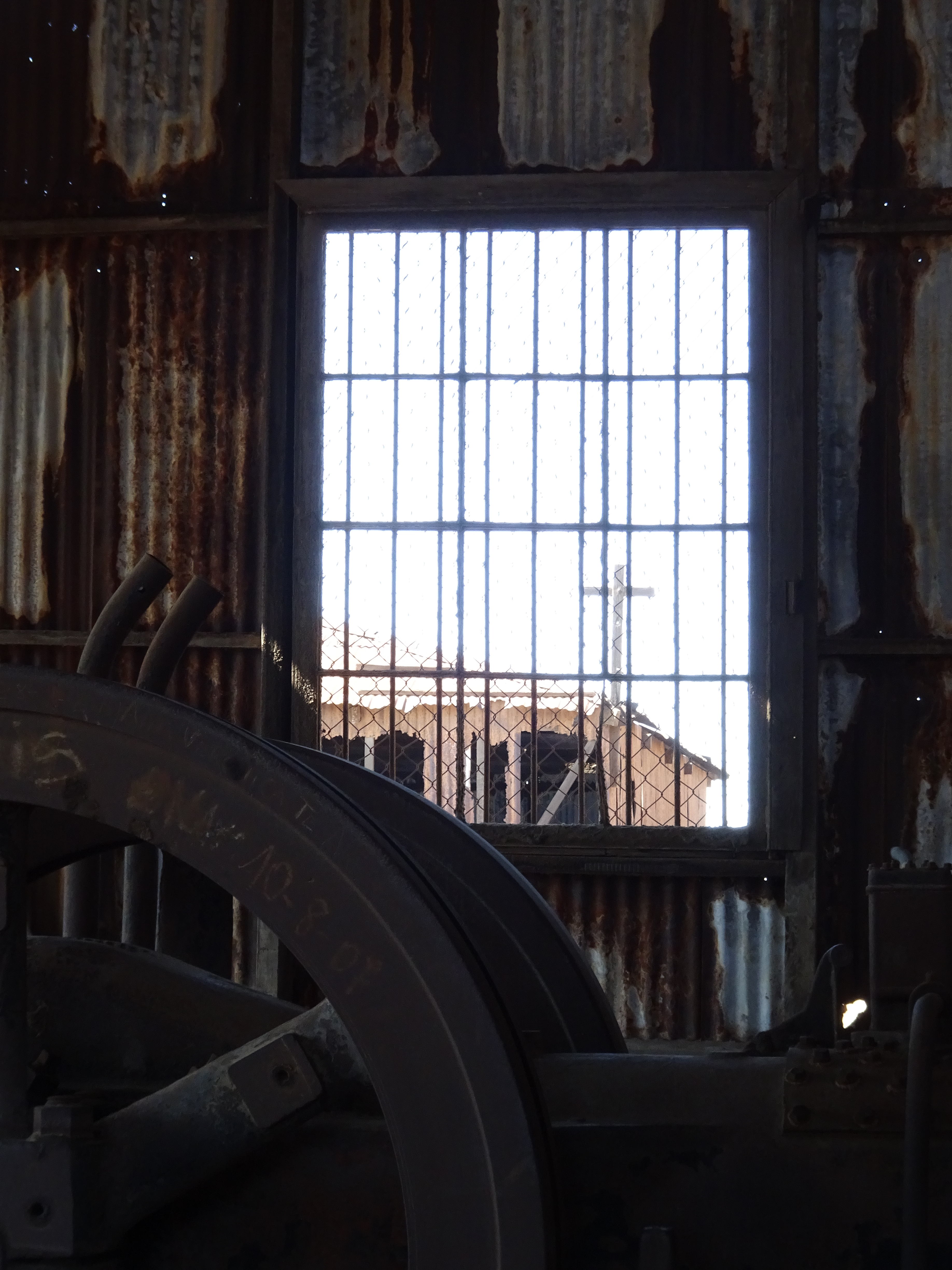
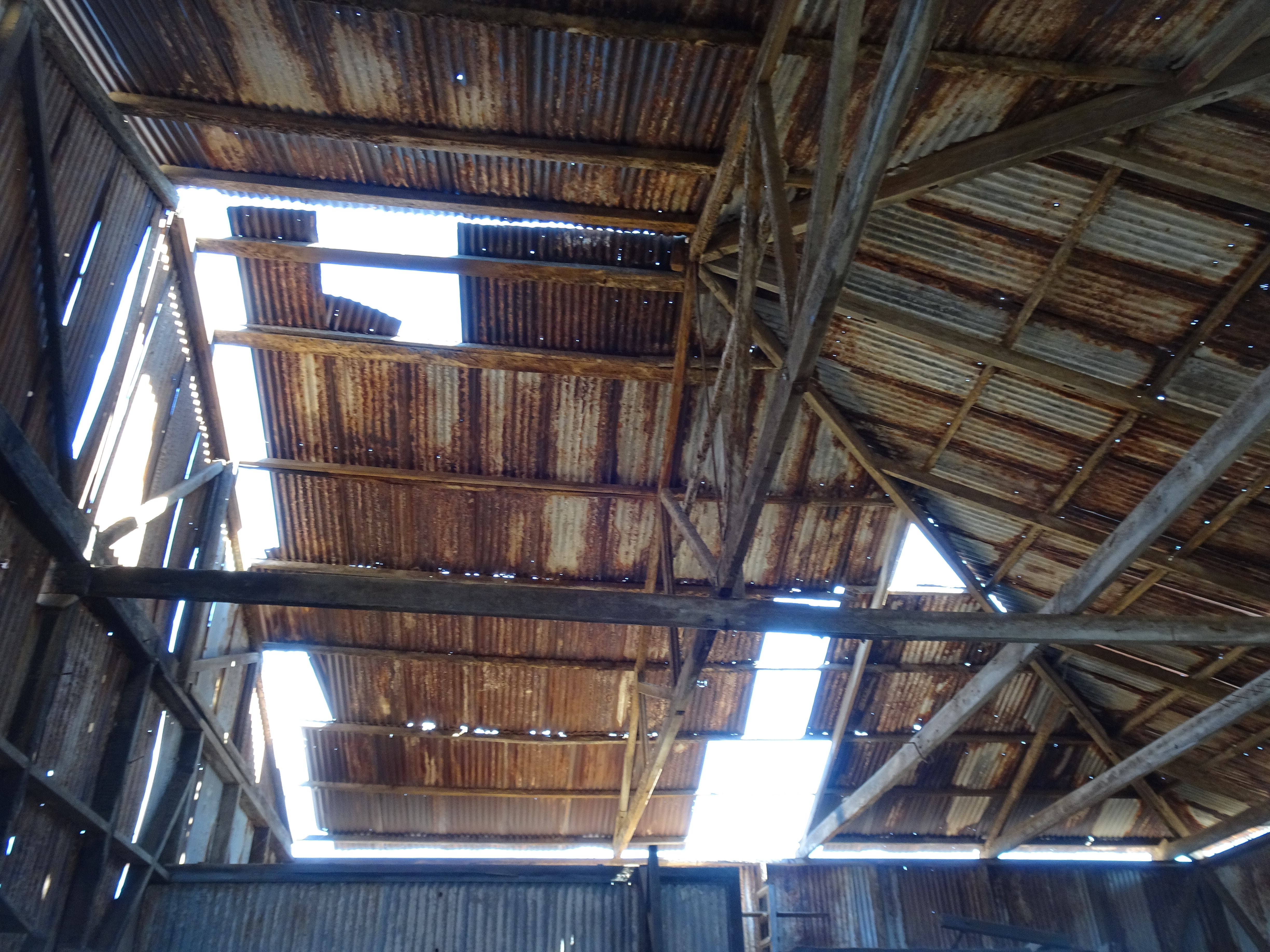
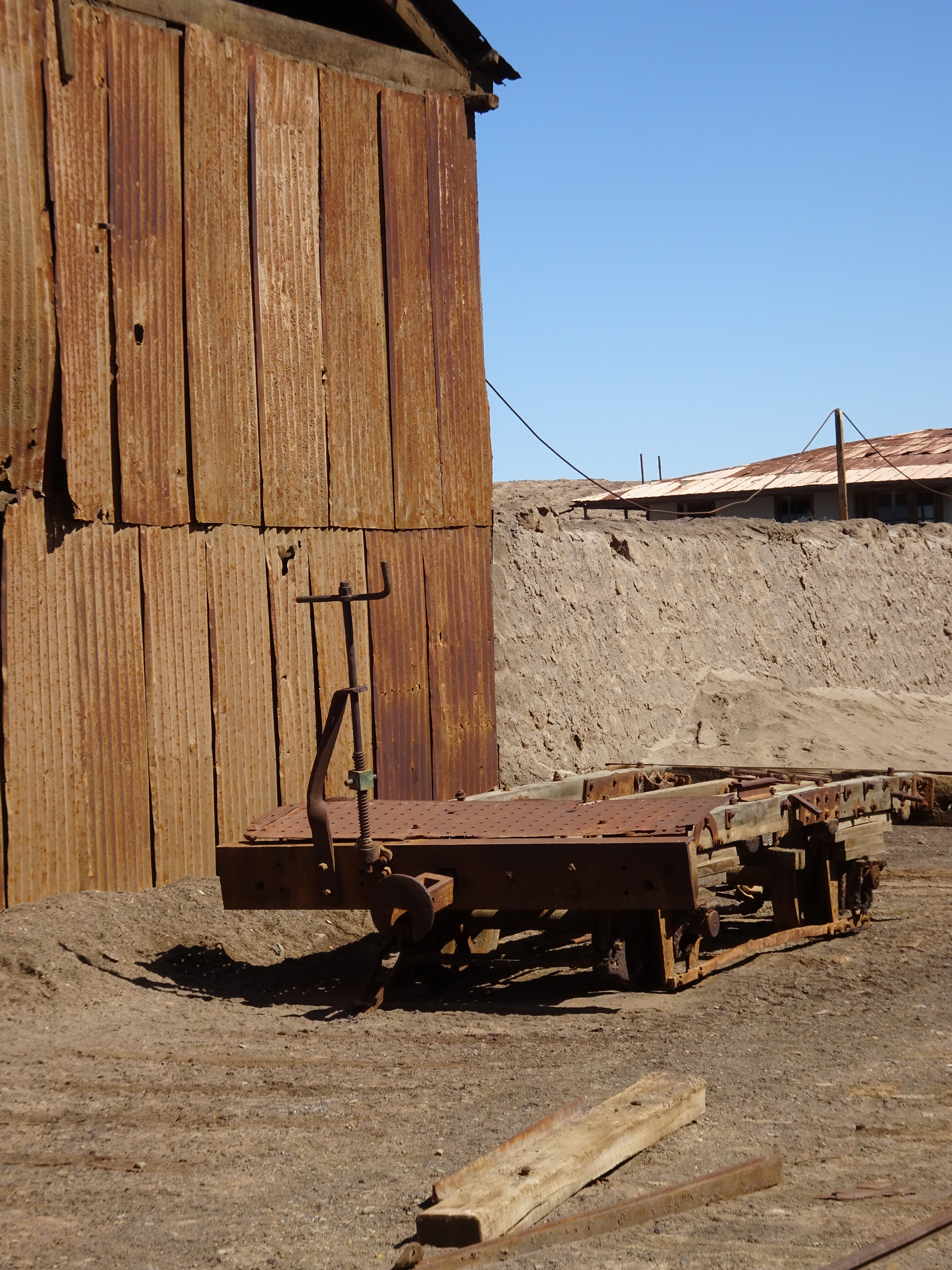
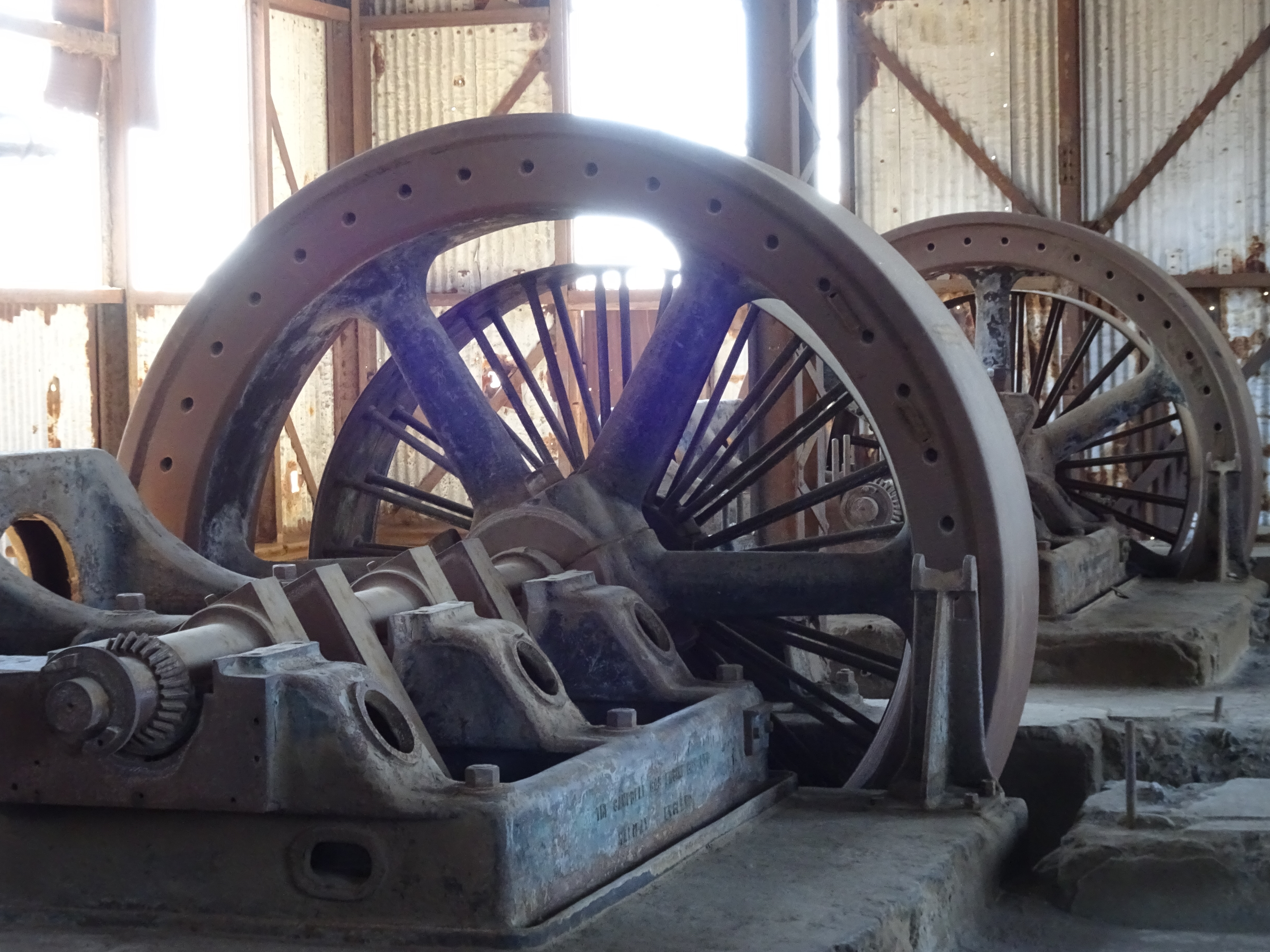
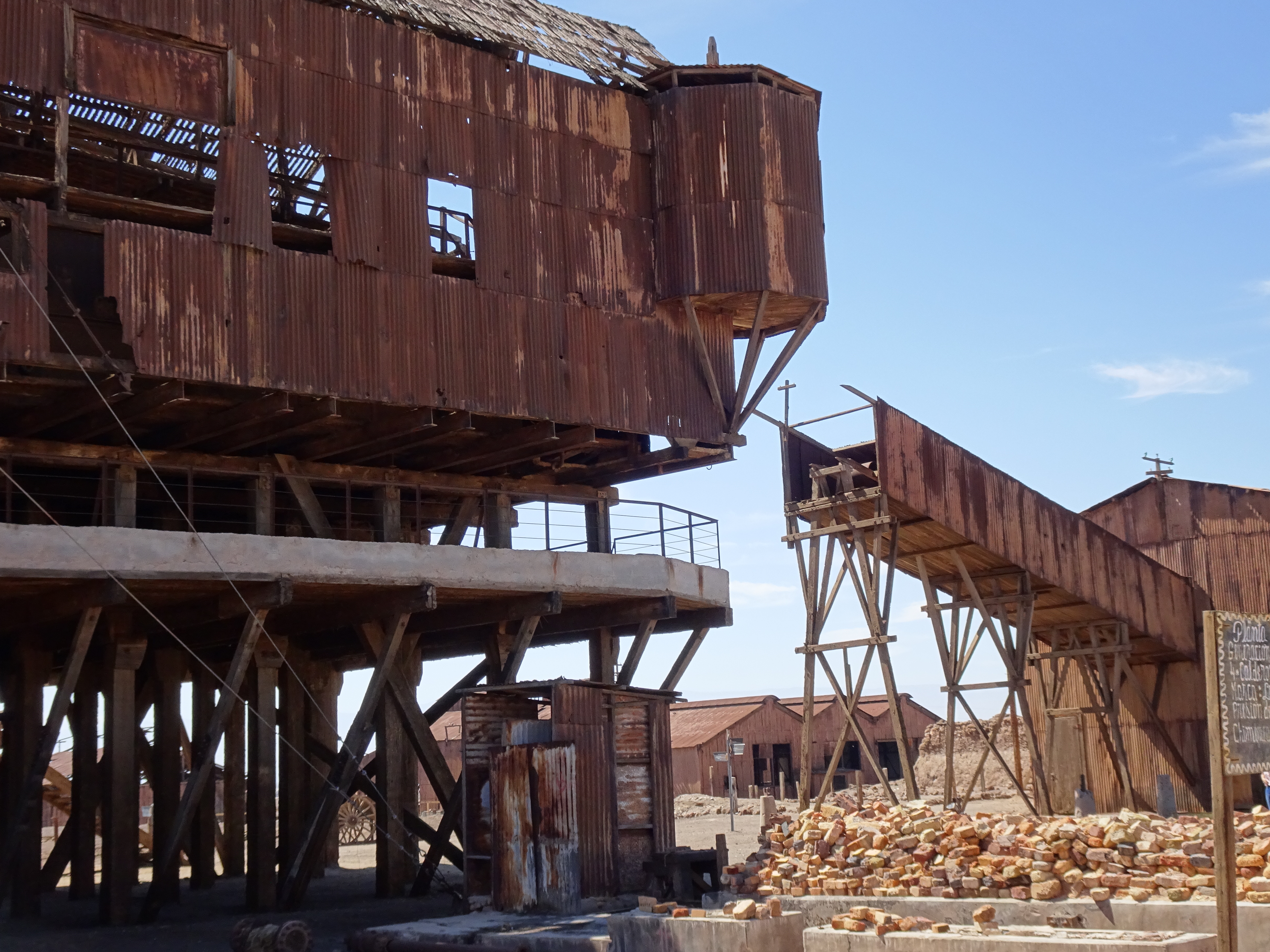
We walk in and out of various workshops and factory buildings, roofs decaying, iron rafters exposed. Minute holes pepper the corrugated iron. Glass hangs shattered in window frames; we try to take arty photos through them. A conveyor belt is left hanging in mid air. Large wheels and machinery are frozen: work suspended.
A quick drive down the road, takes us to Humberstone- the town set up to house the workers from Santa Laura.
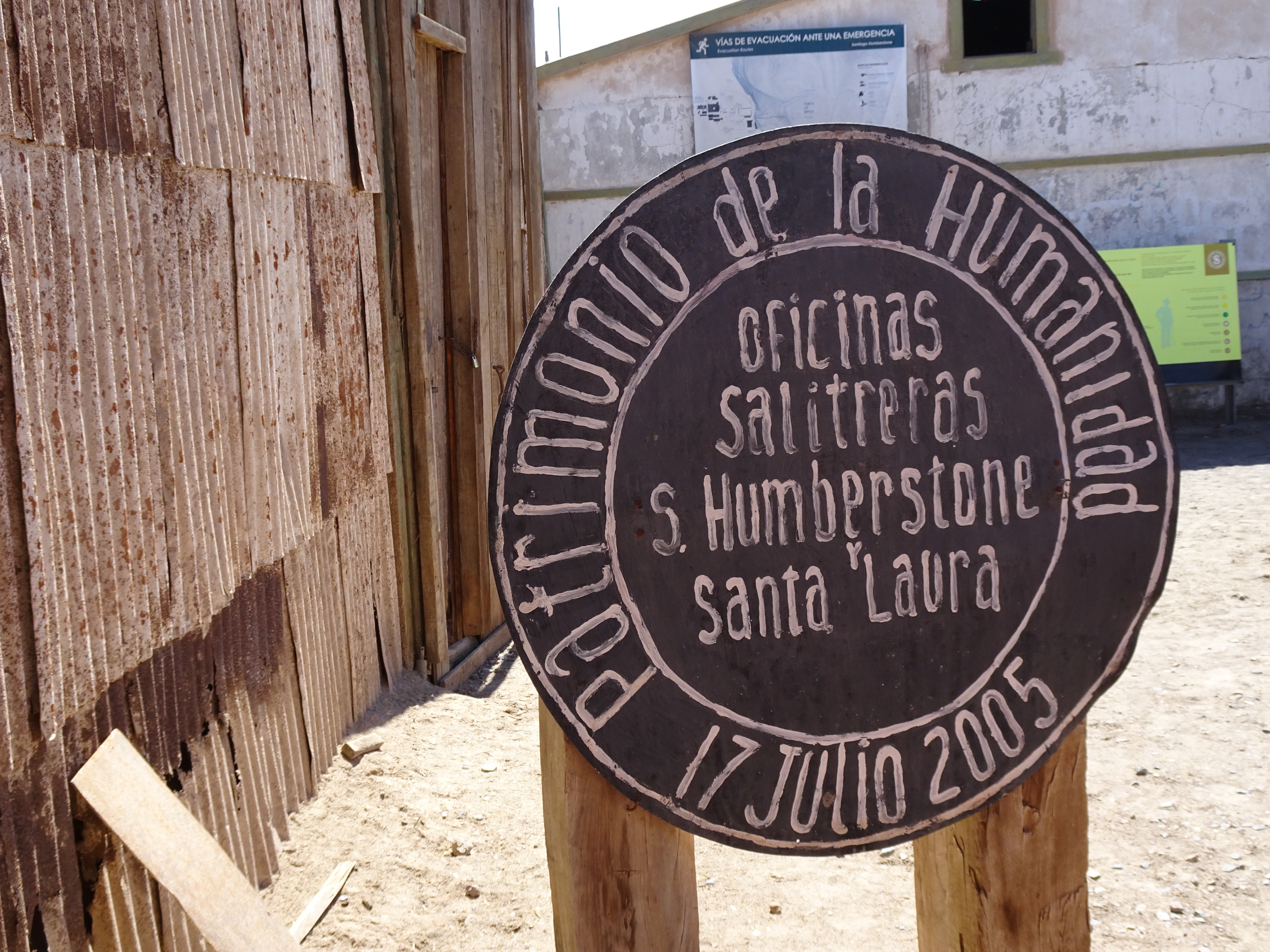
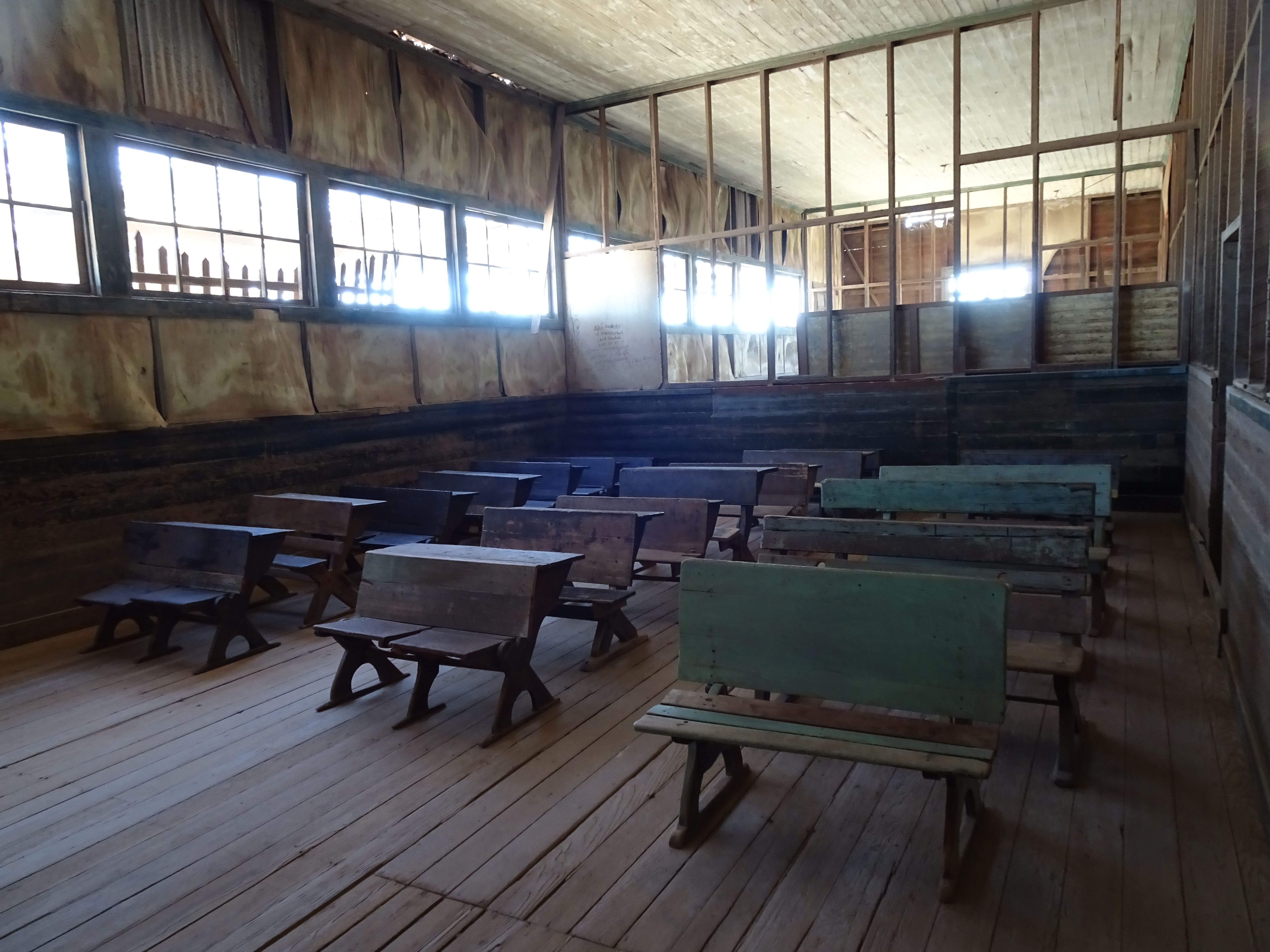
We are walked by the guide to the school, where as we sit at wooden graffitted desks. Appropriately our attention drifts from the classroom as he talks with animation in Spanish about what we presume is the history of the town.
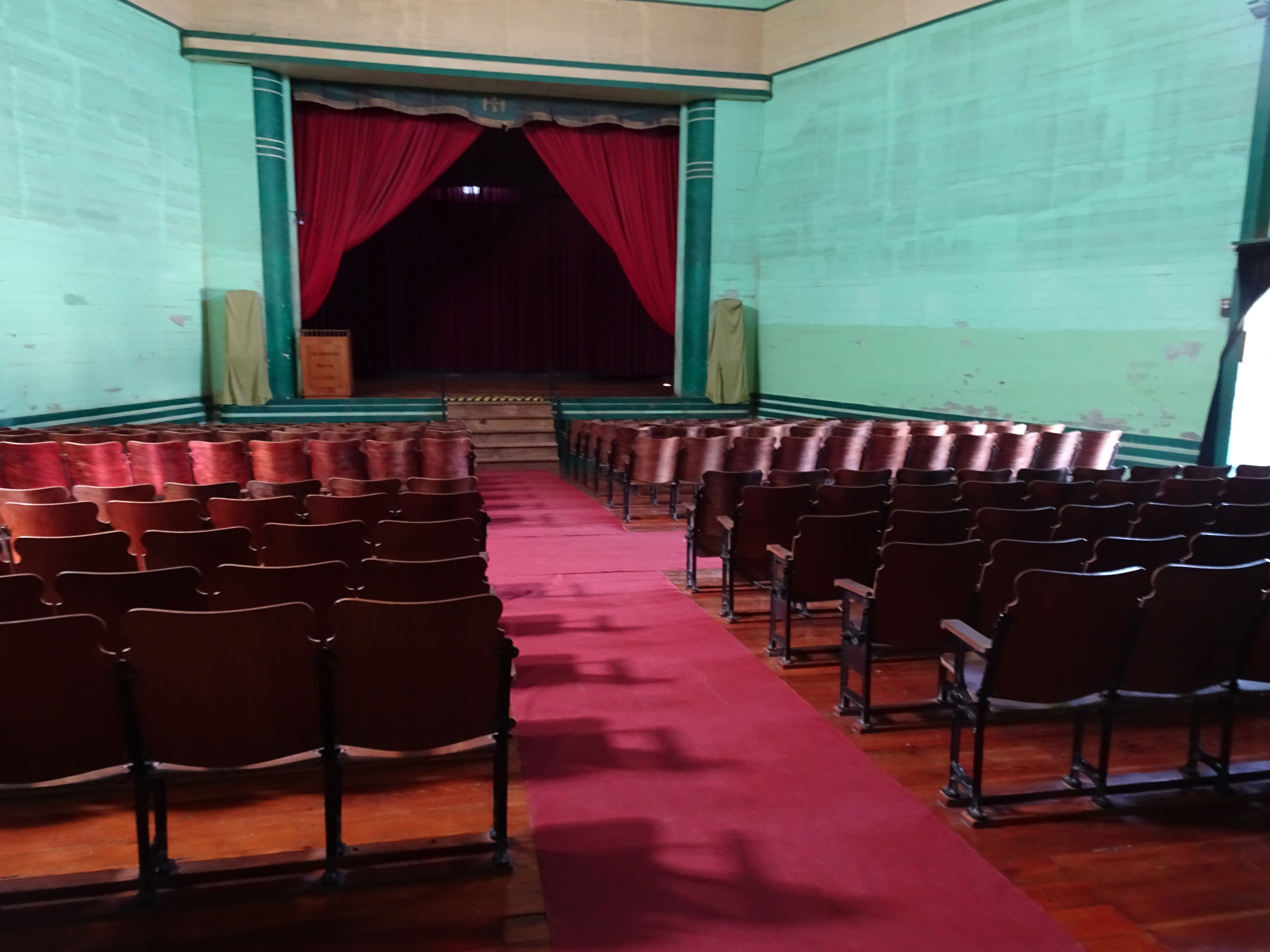
Exploring on our own, we enter the theatre.
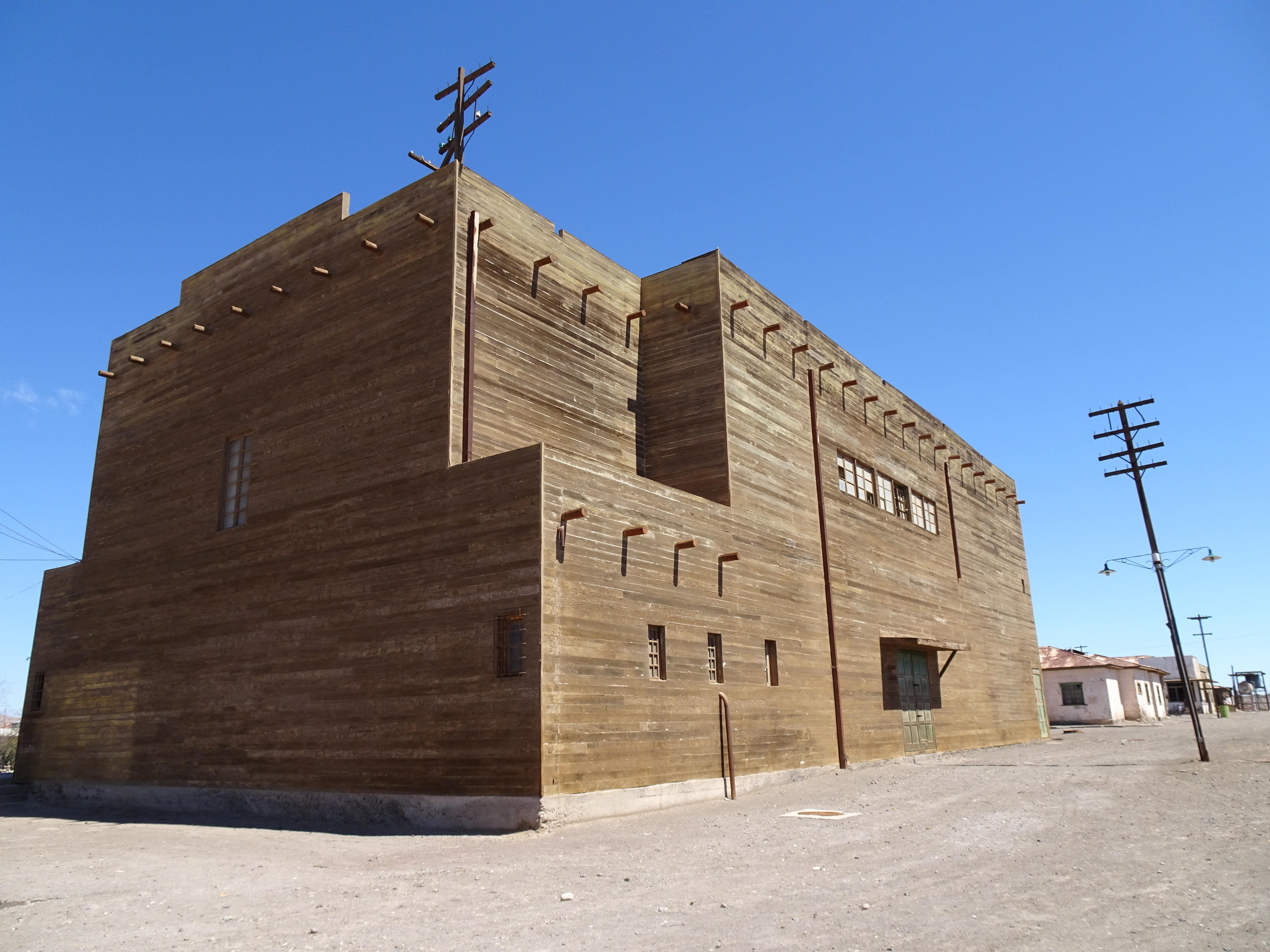
There is a slightly distasteful whiff of decay, that flashes me back to the deserted Russian Mining town on Svalbard. The damp and cold invade everything there, the smell staying in your nostrils for long afterwards. The dry of the desert is doing a better job of preserving the buildings.
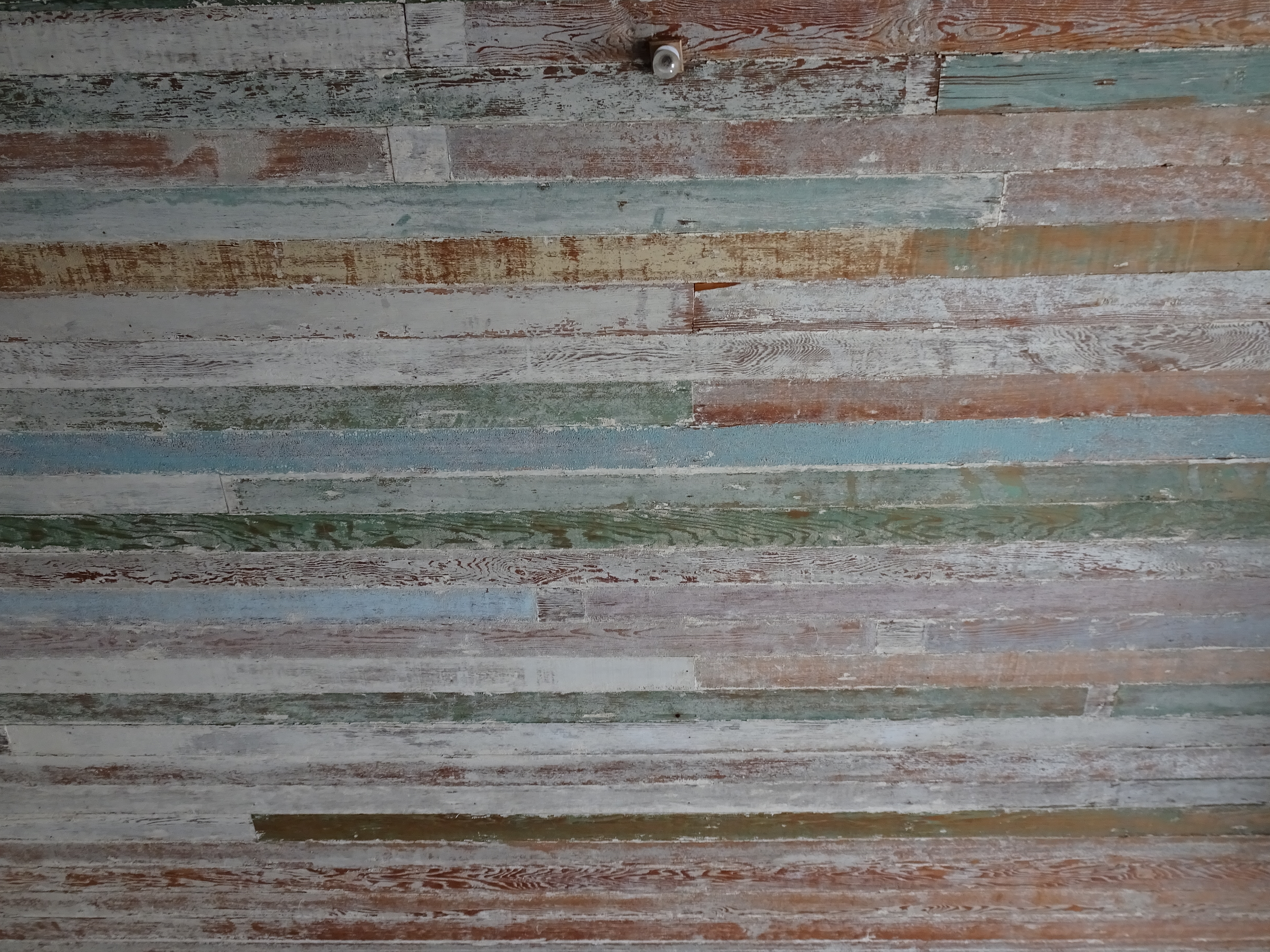
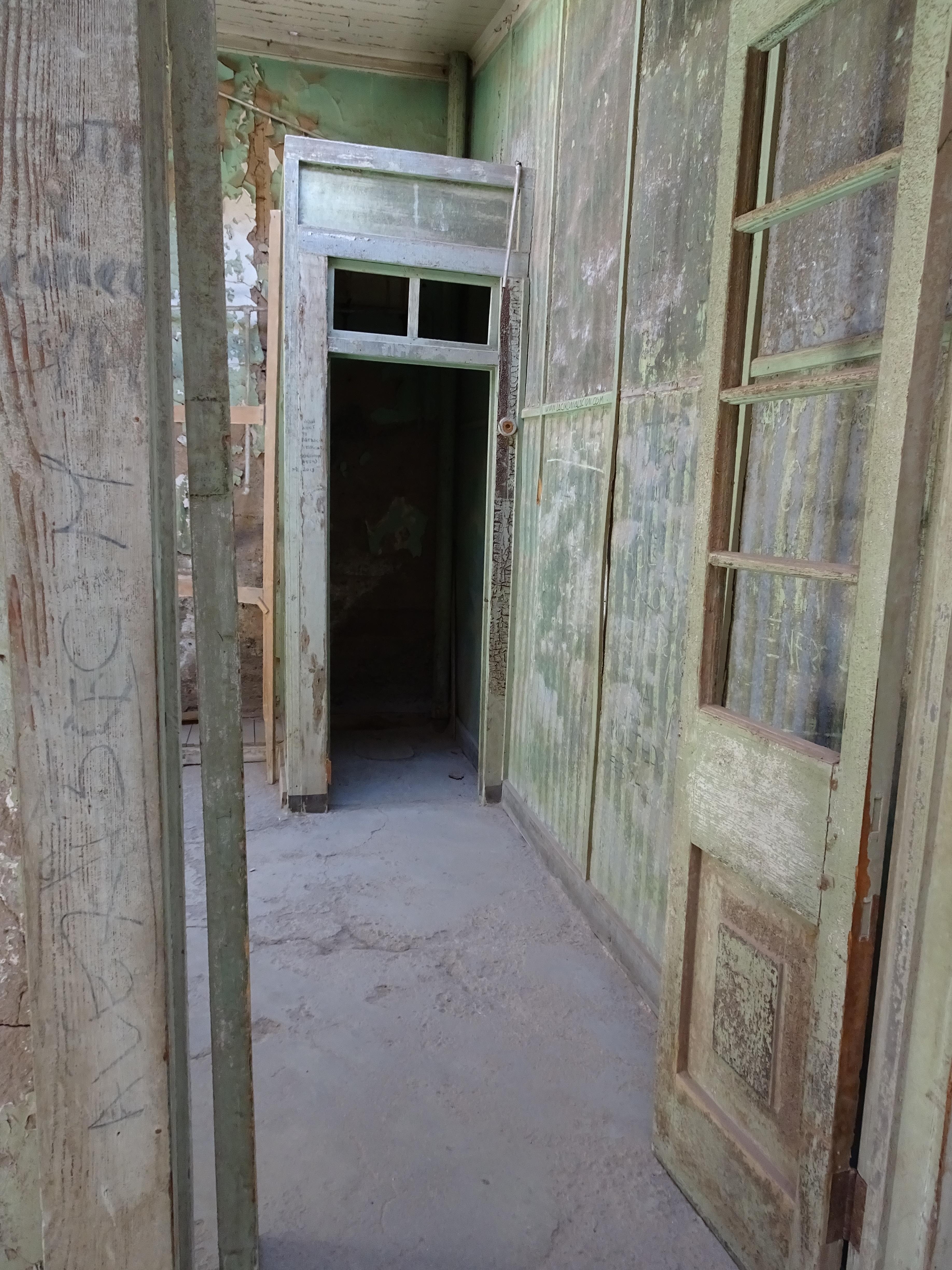
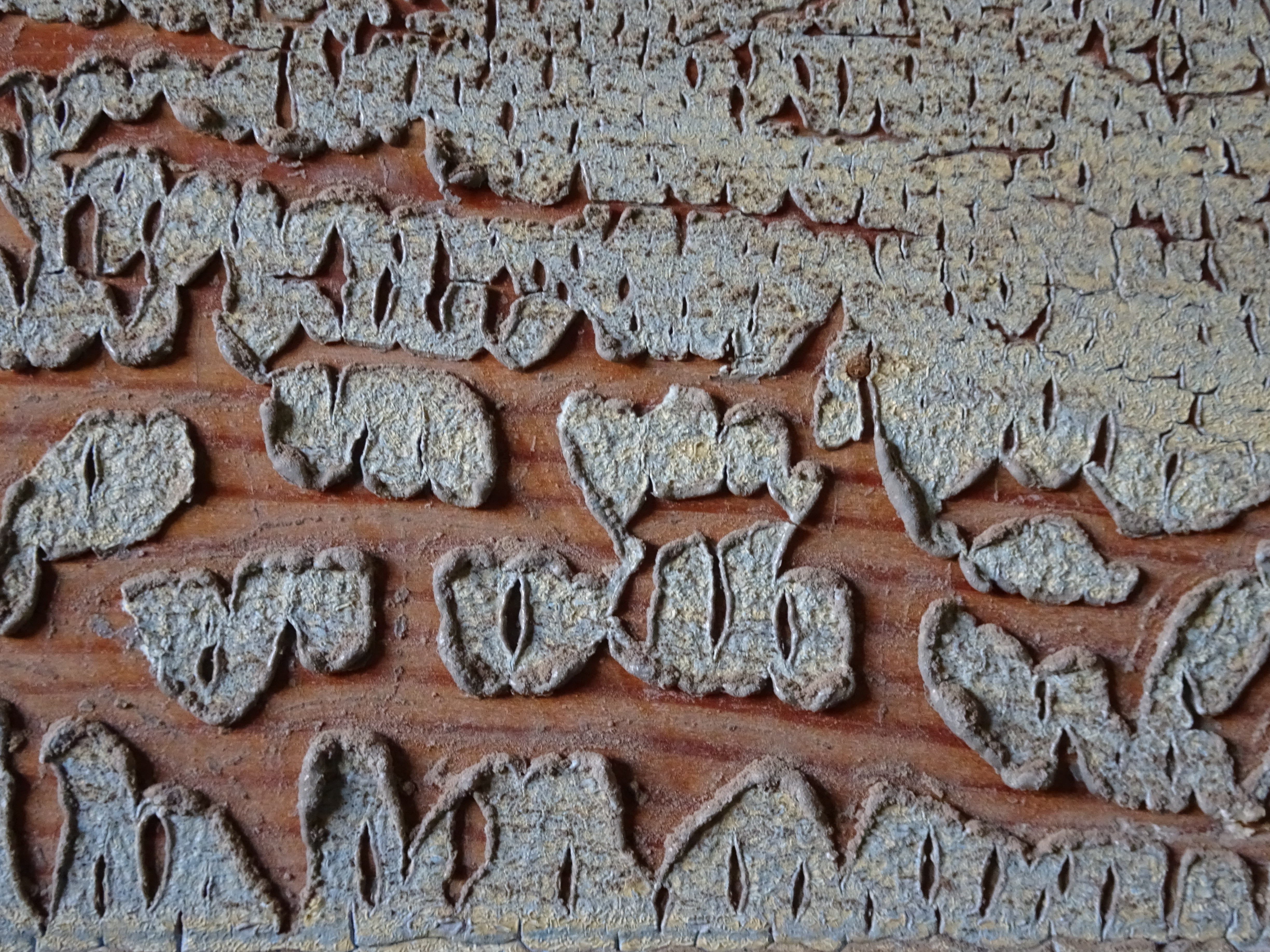
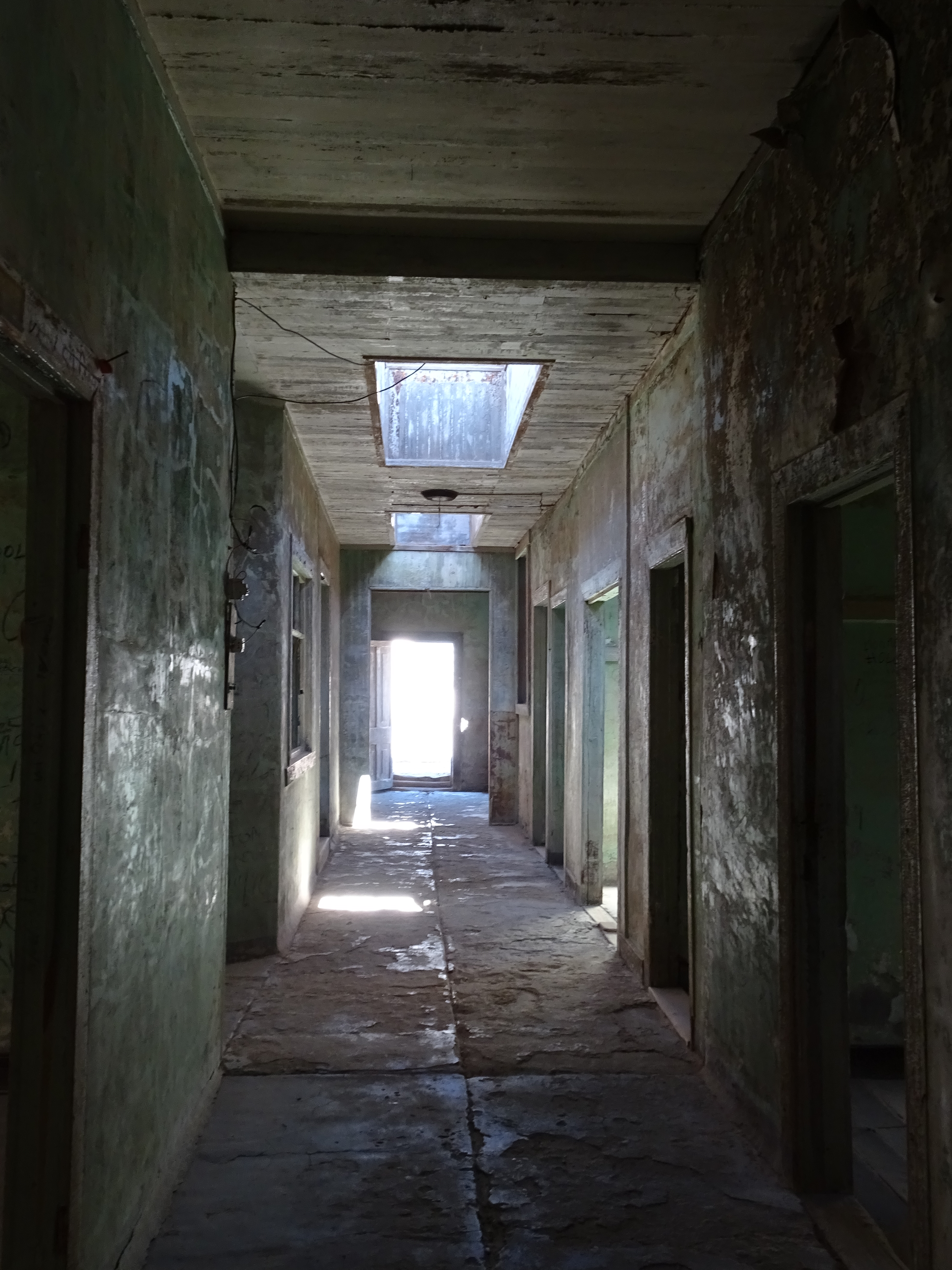
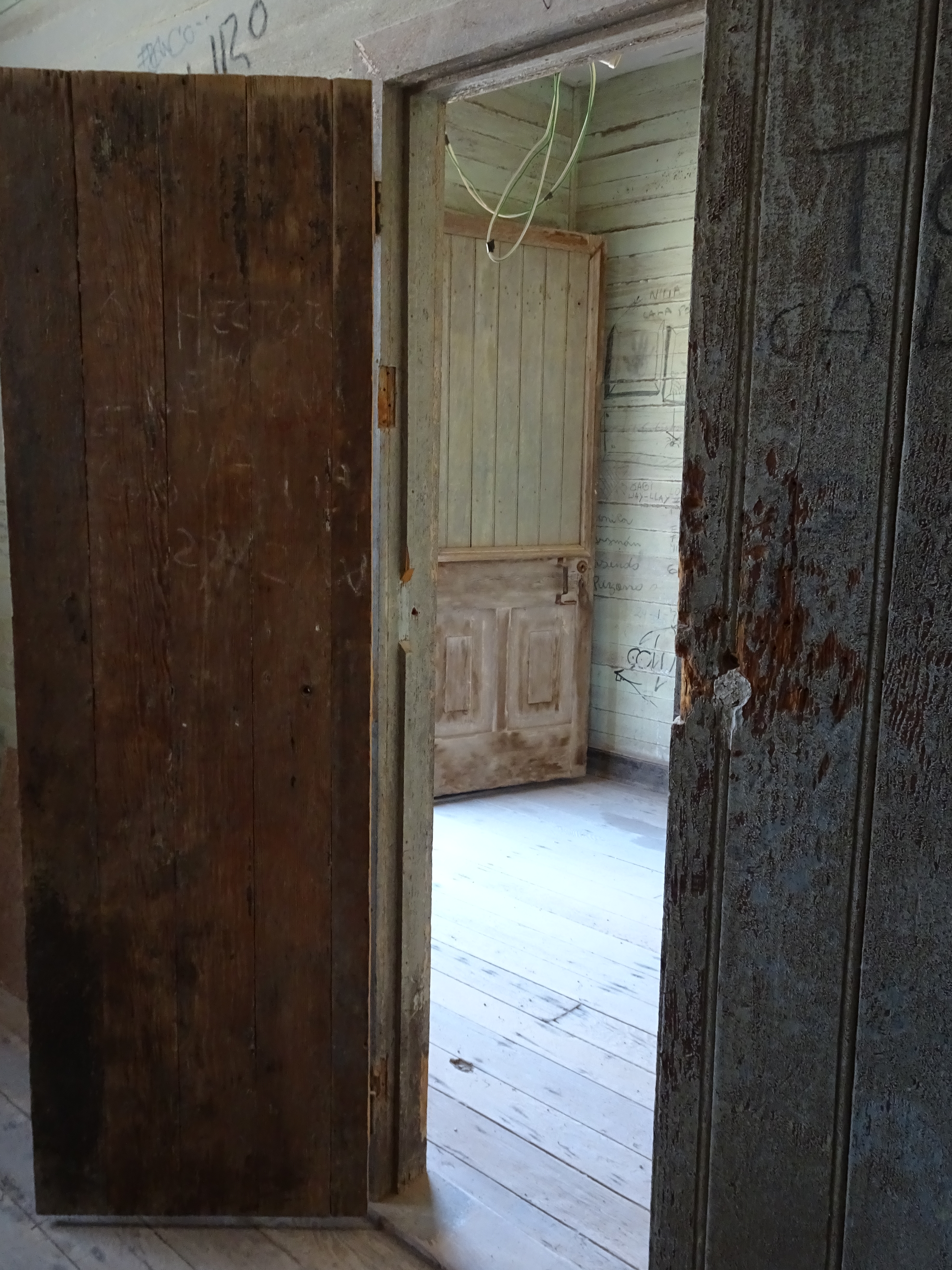
The empty hospital has an eerie feel to it; particularly the one chair left in the middle of a room. Corridors and doorways lead onto others. The paint in some places is peeling off the woodwork, in others the striped planks remain. No equipment is left so it makes it quite hard to imagine what it would have been like.
We explore the rest of the buildings. All are empty. There is the sadness of time passing.

 Journeys with my pencil