I have so enjoyed exploring Athens. I will be back!
Acropolis
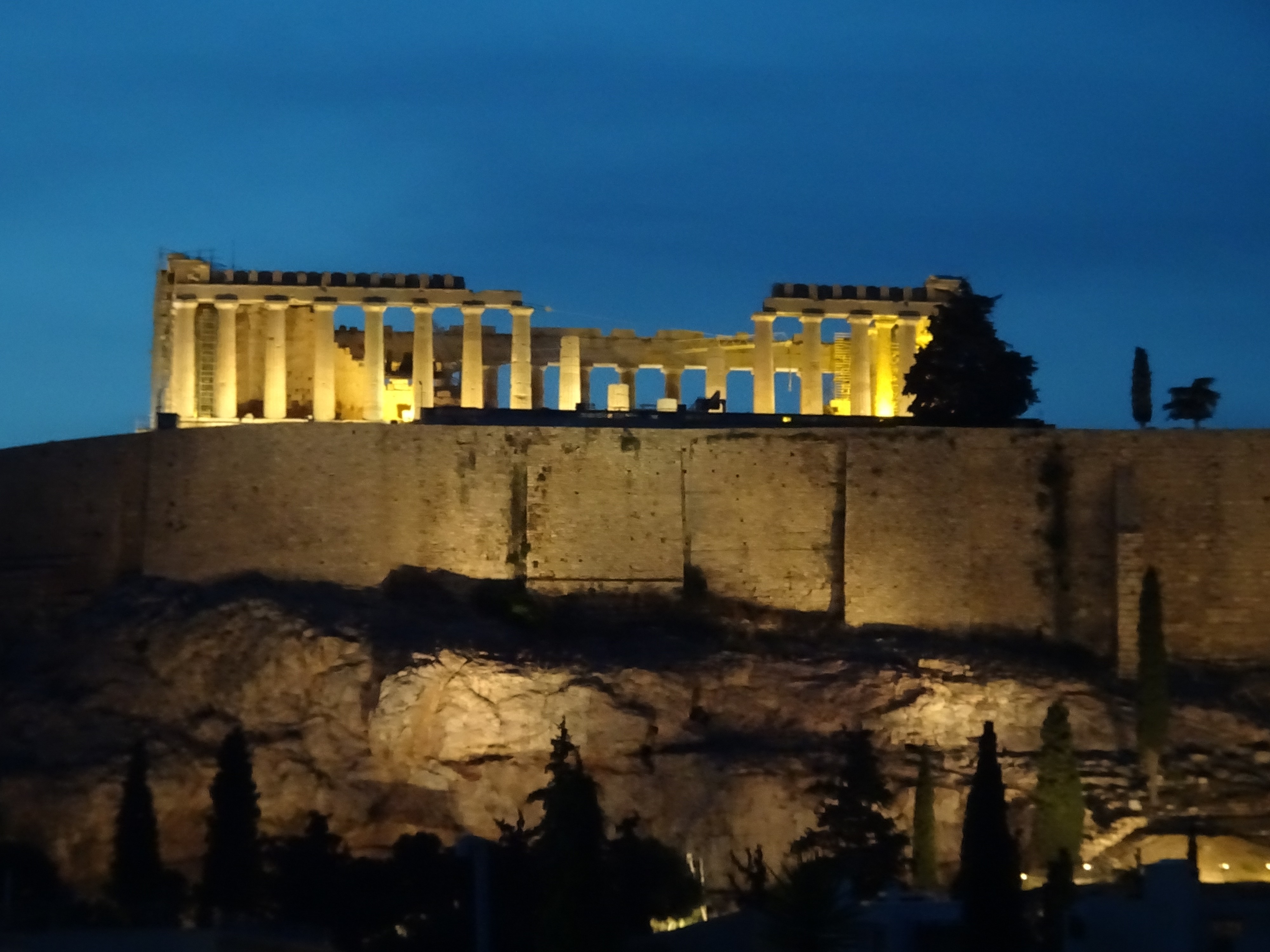
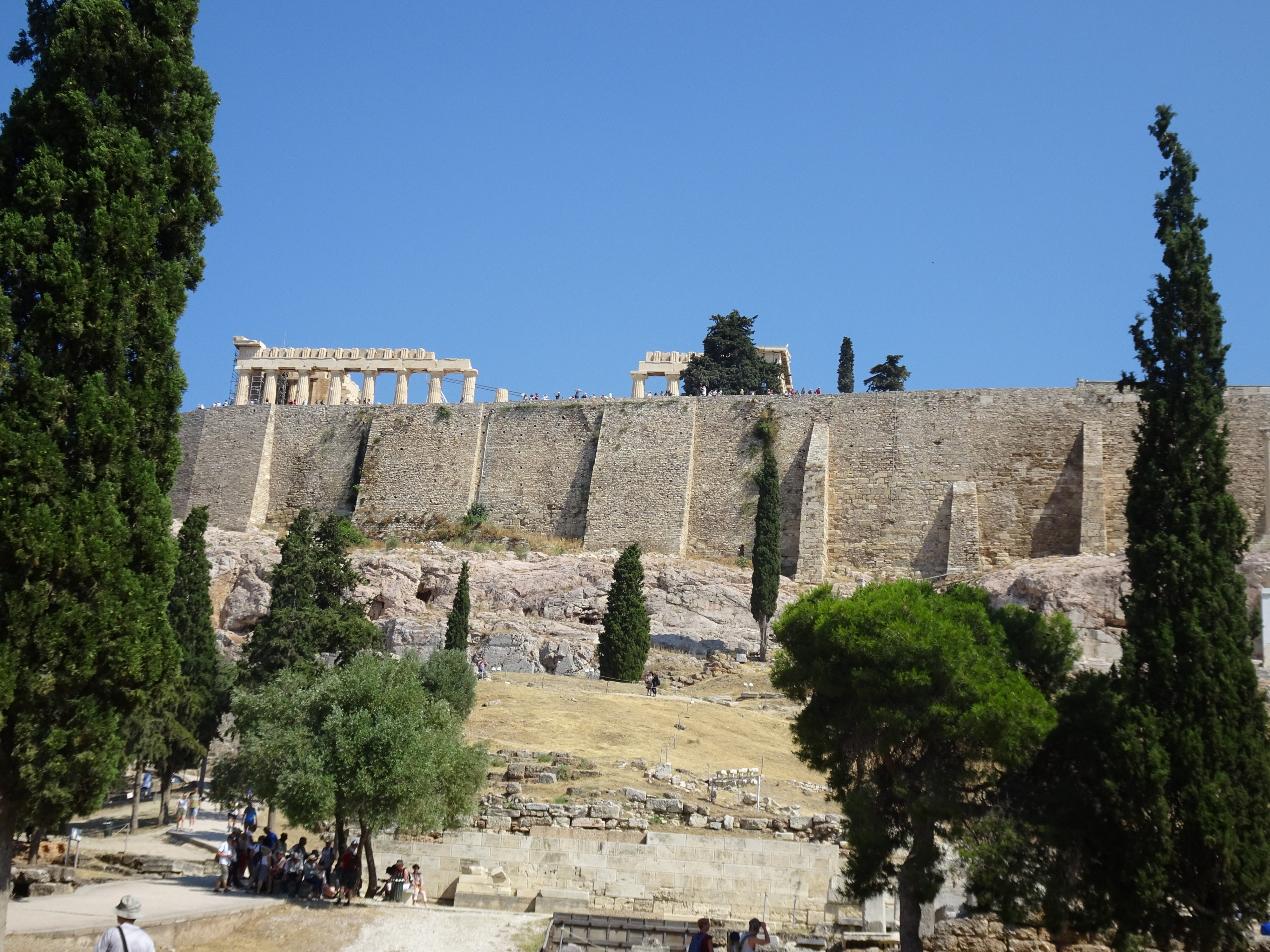
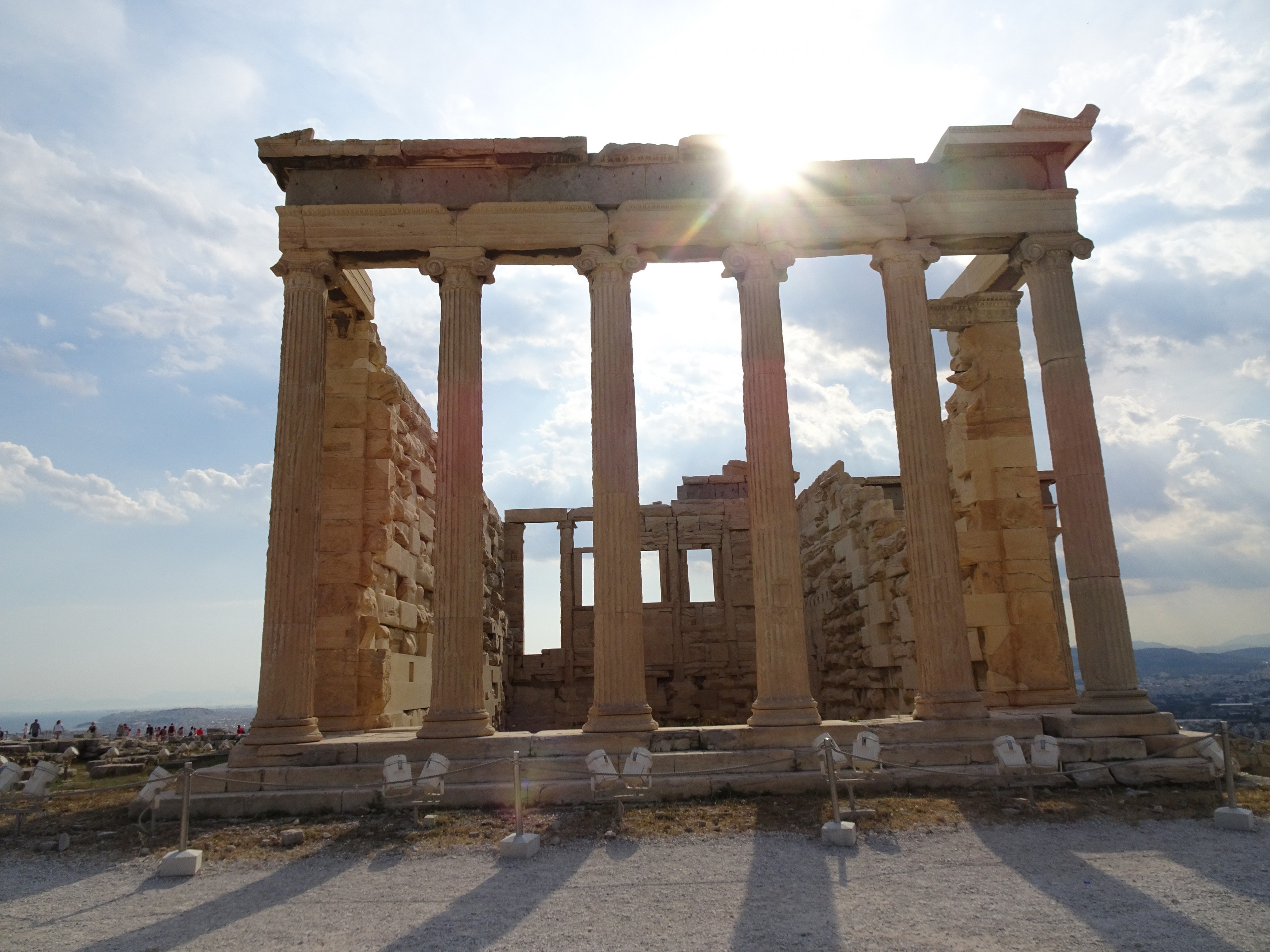
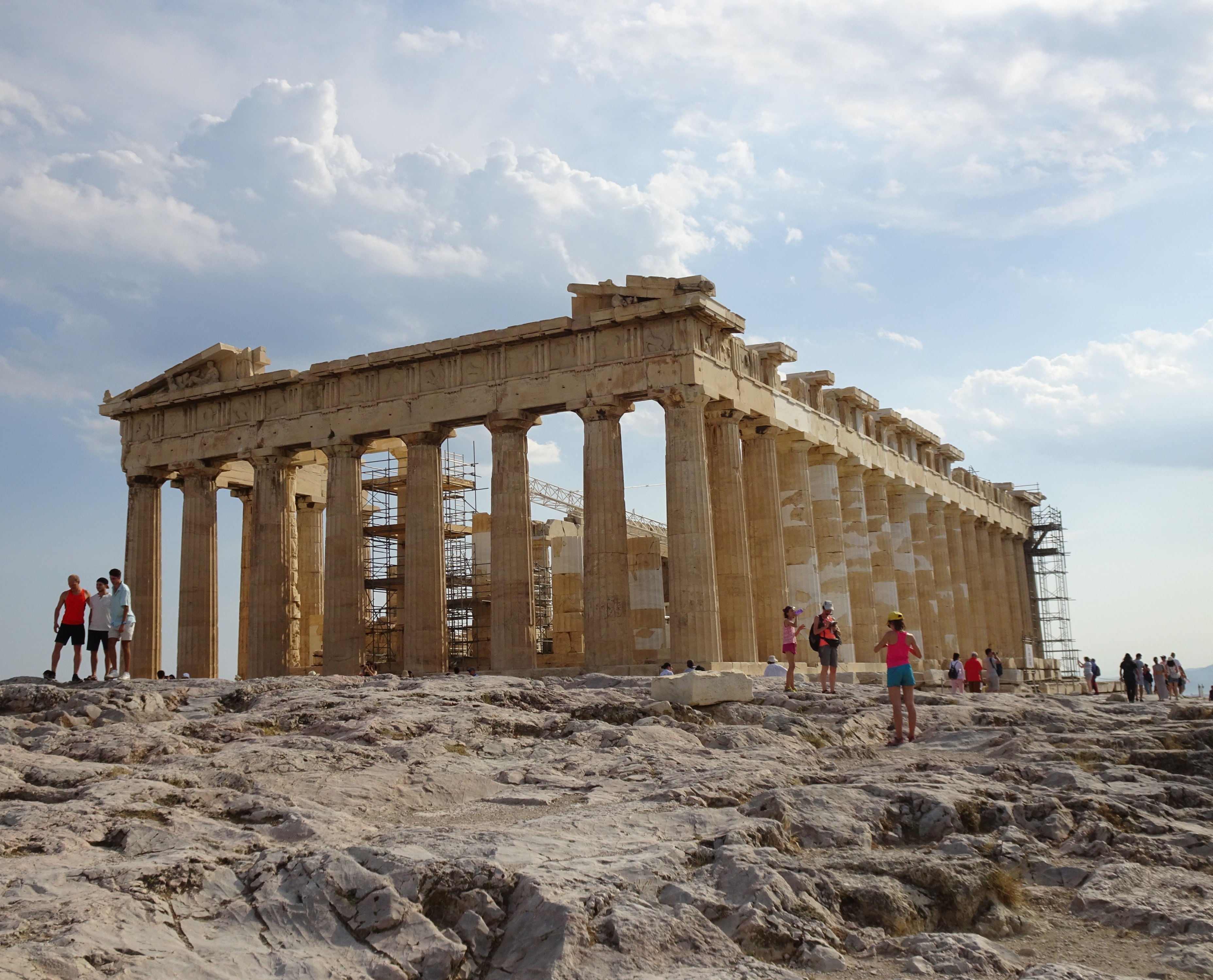
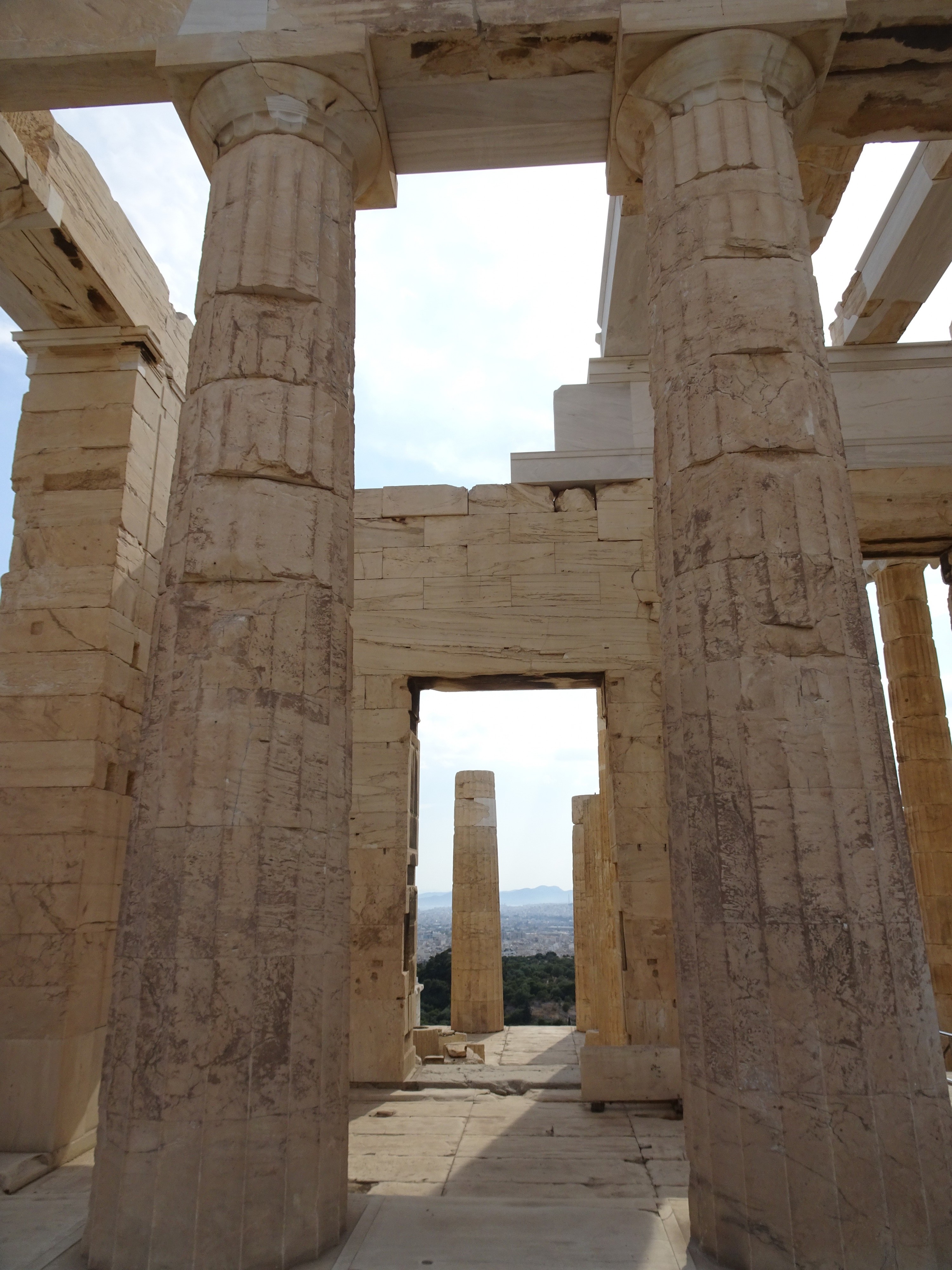
Exploring the old town
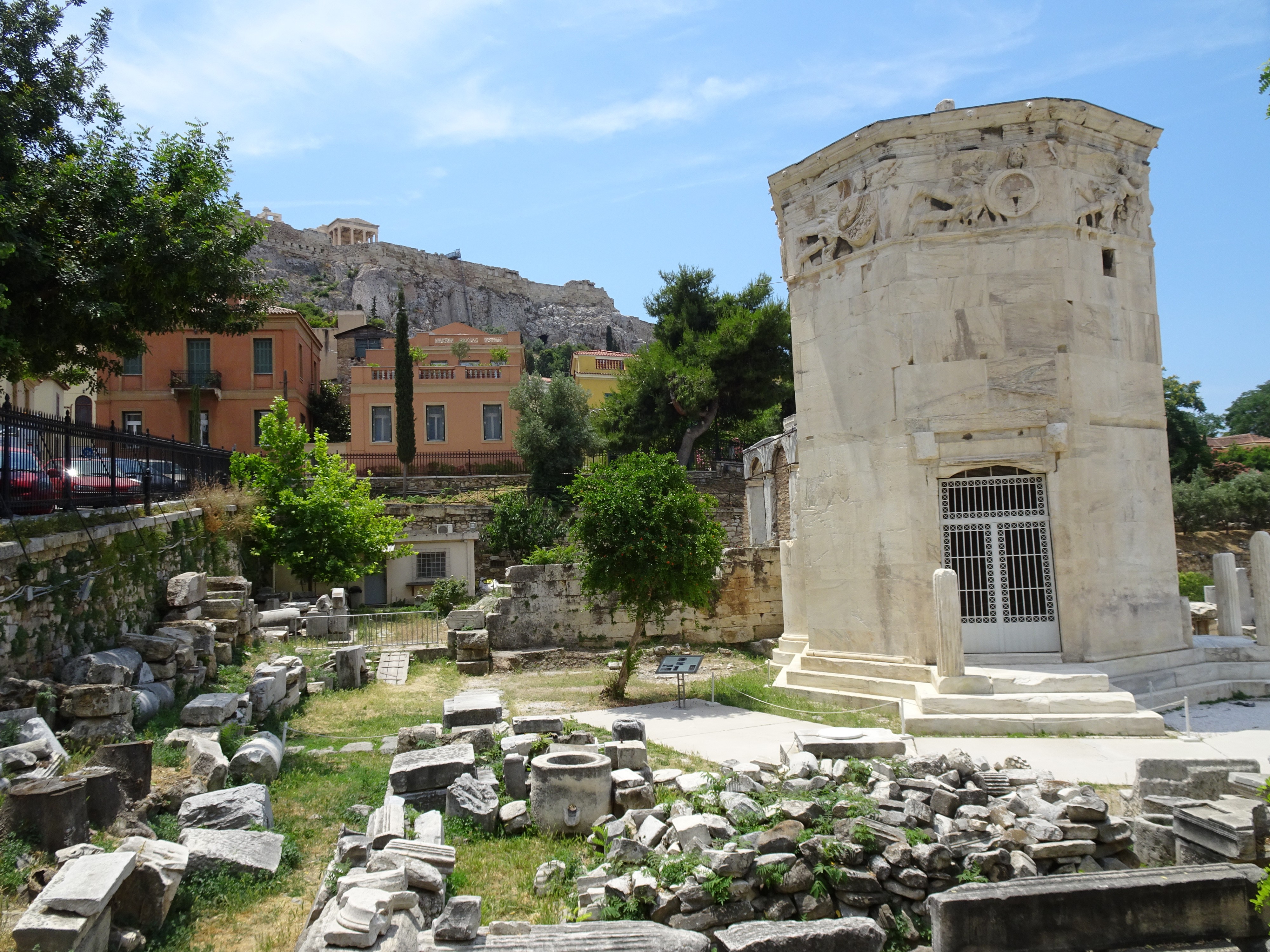
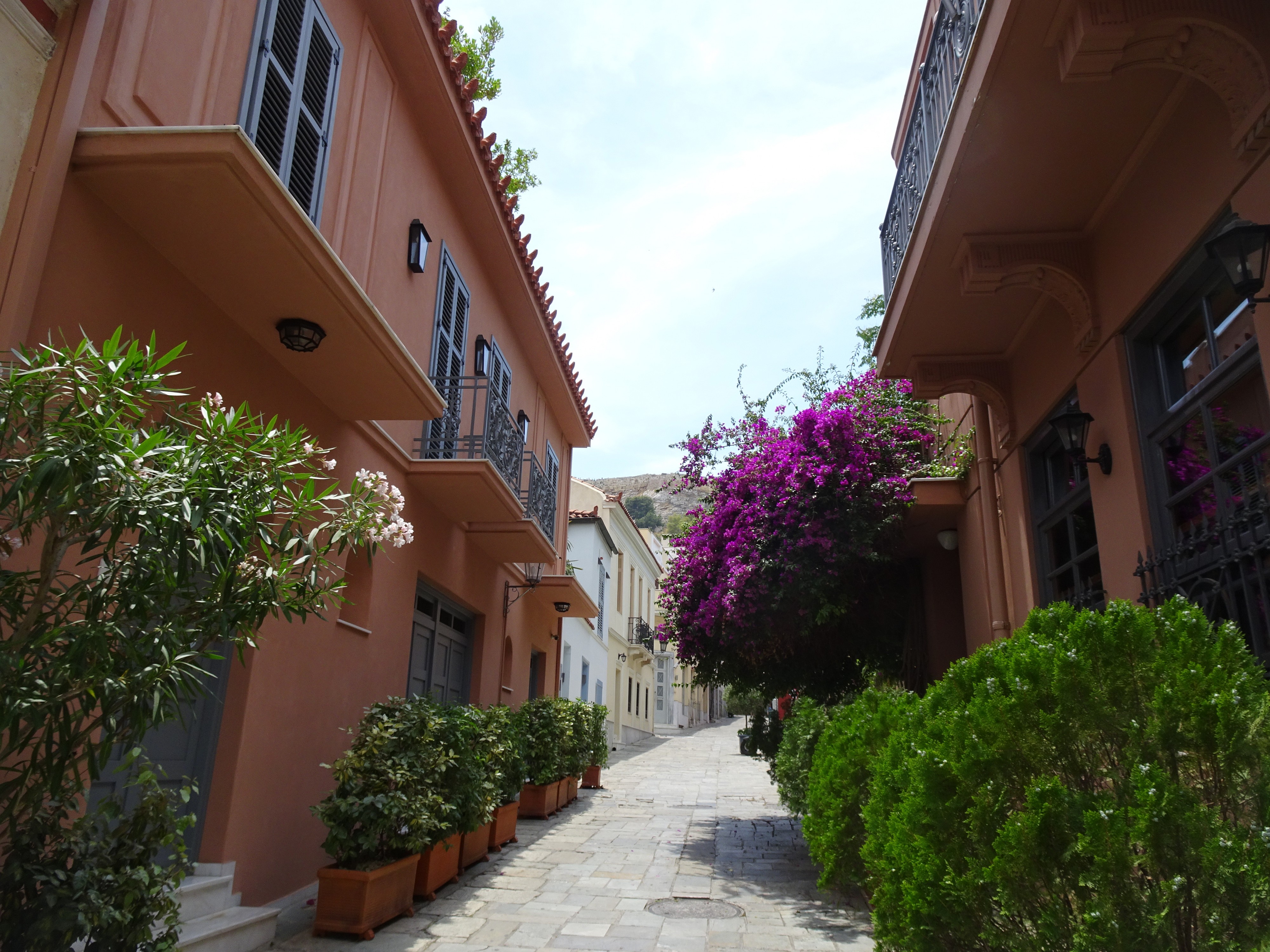
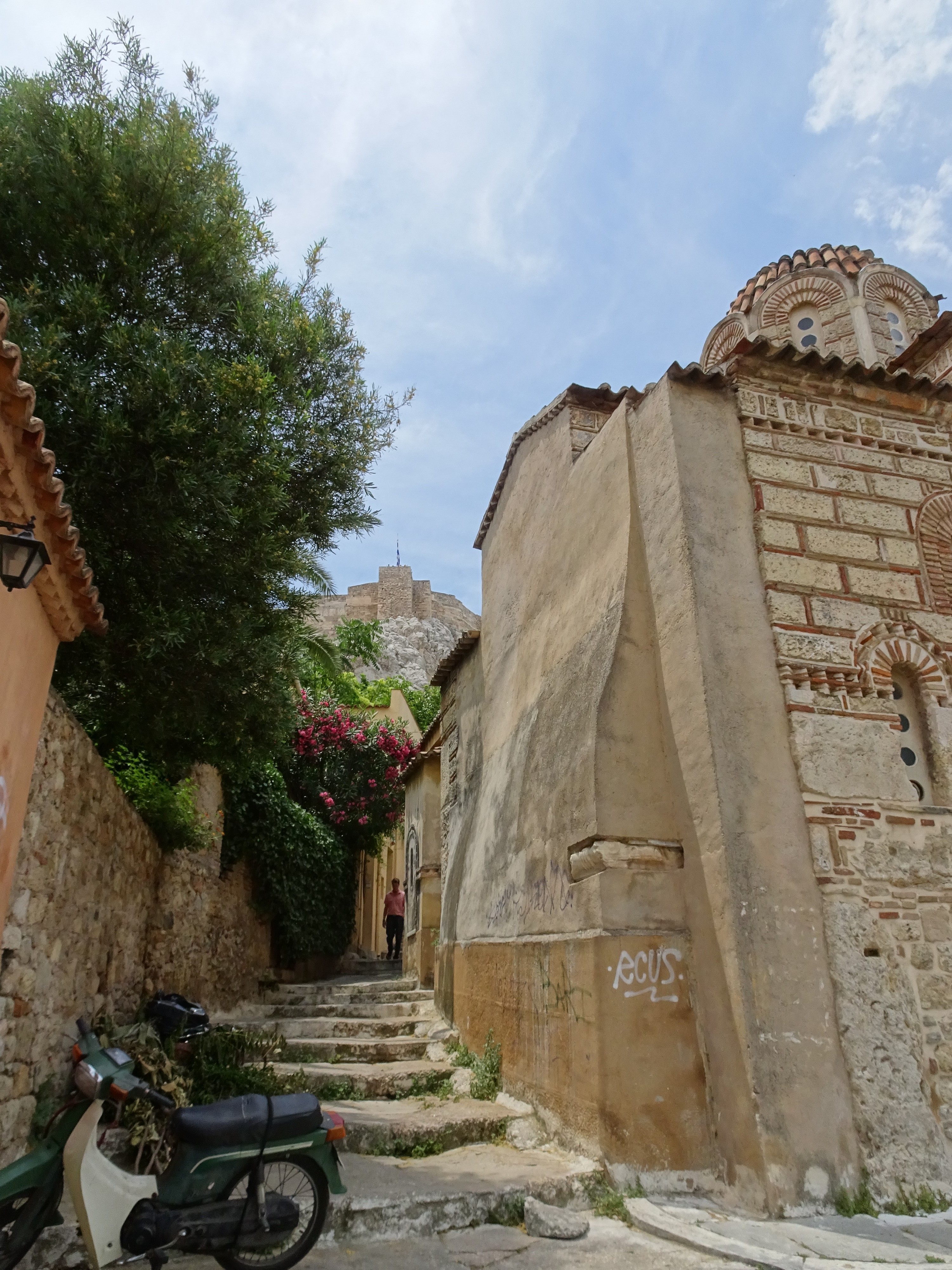
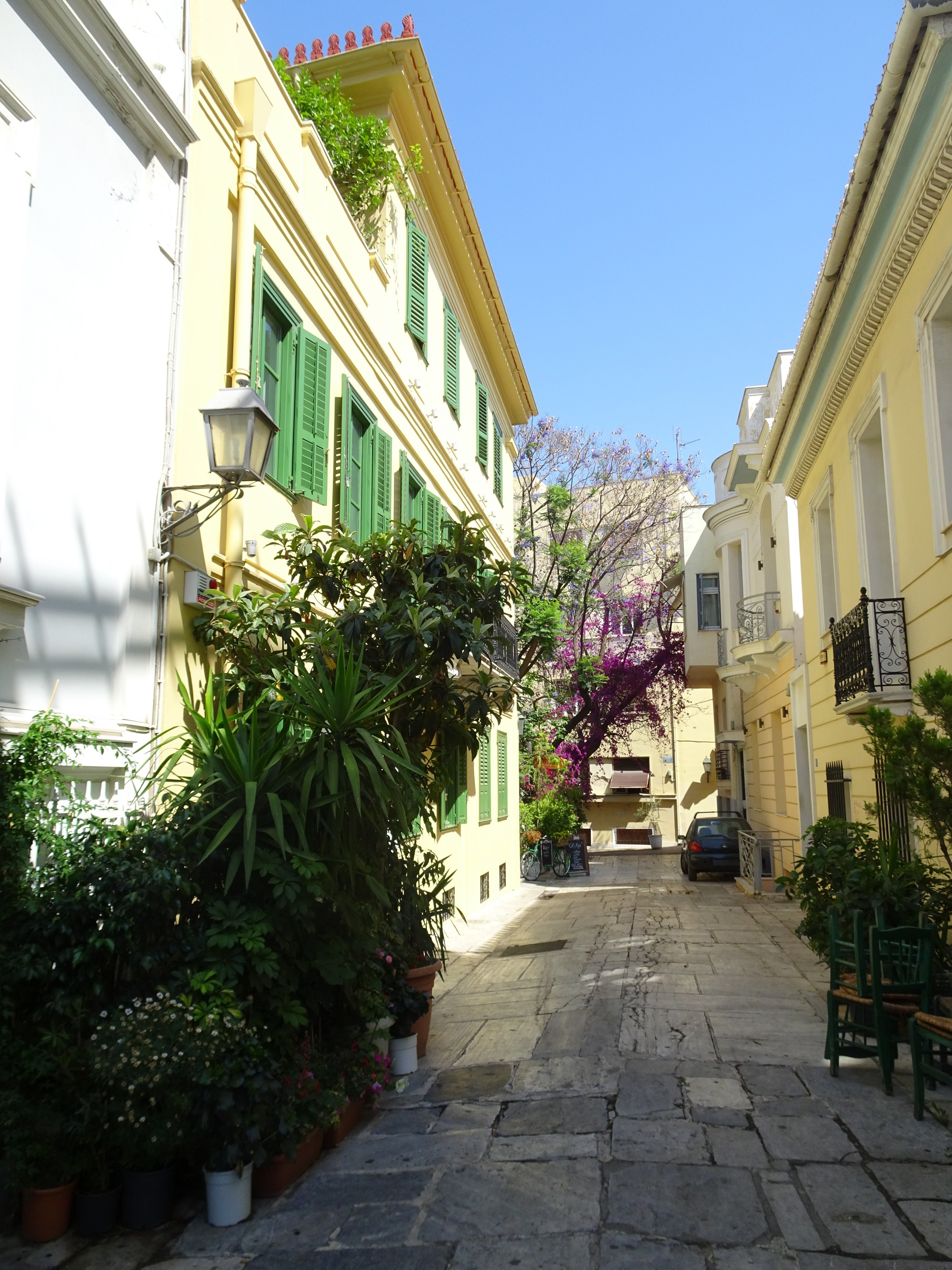
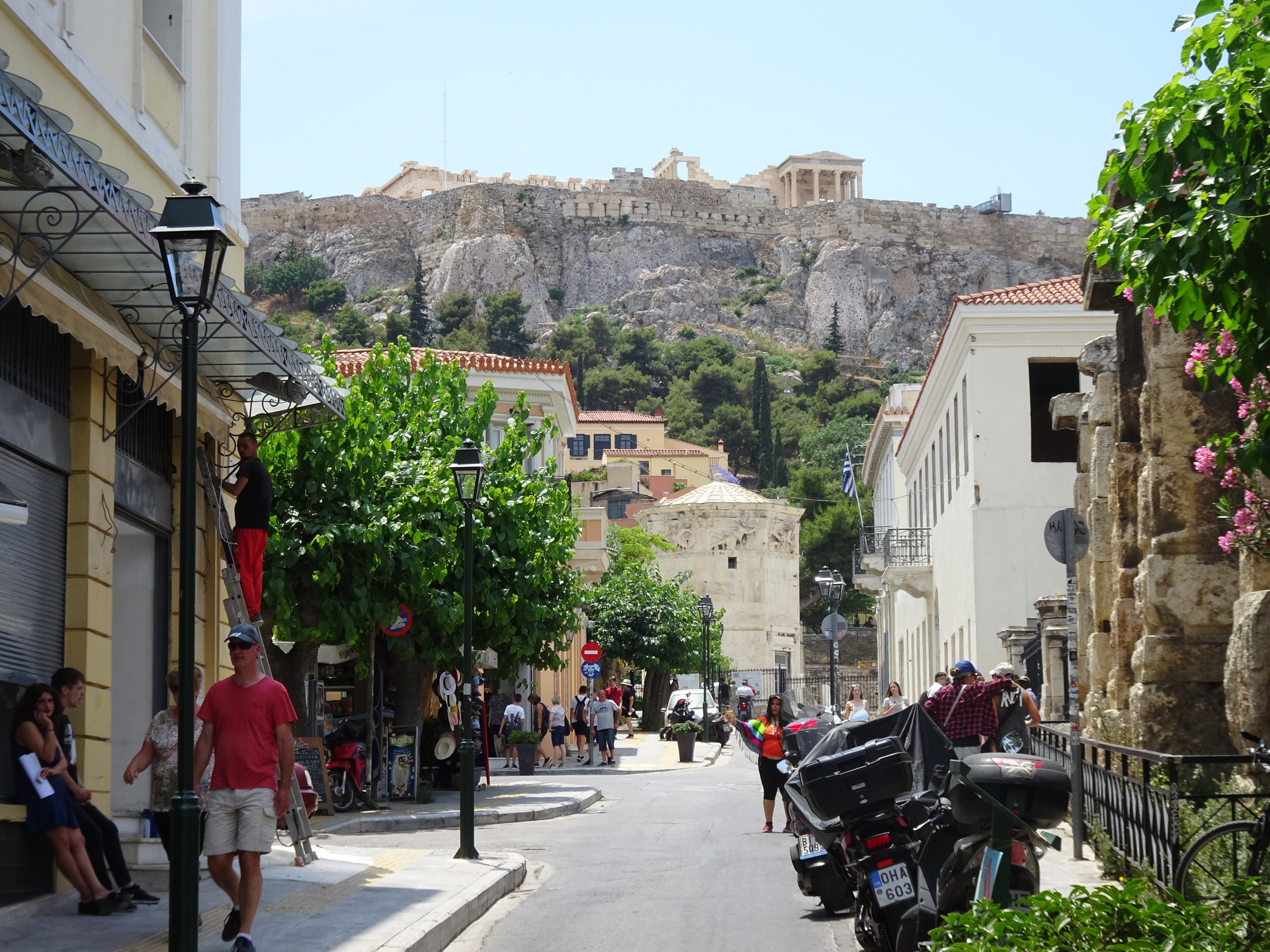
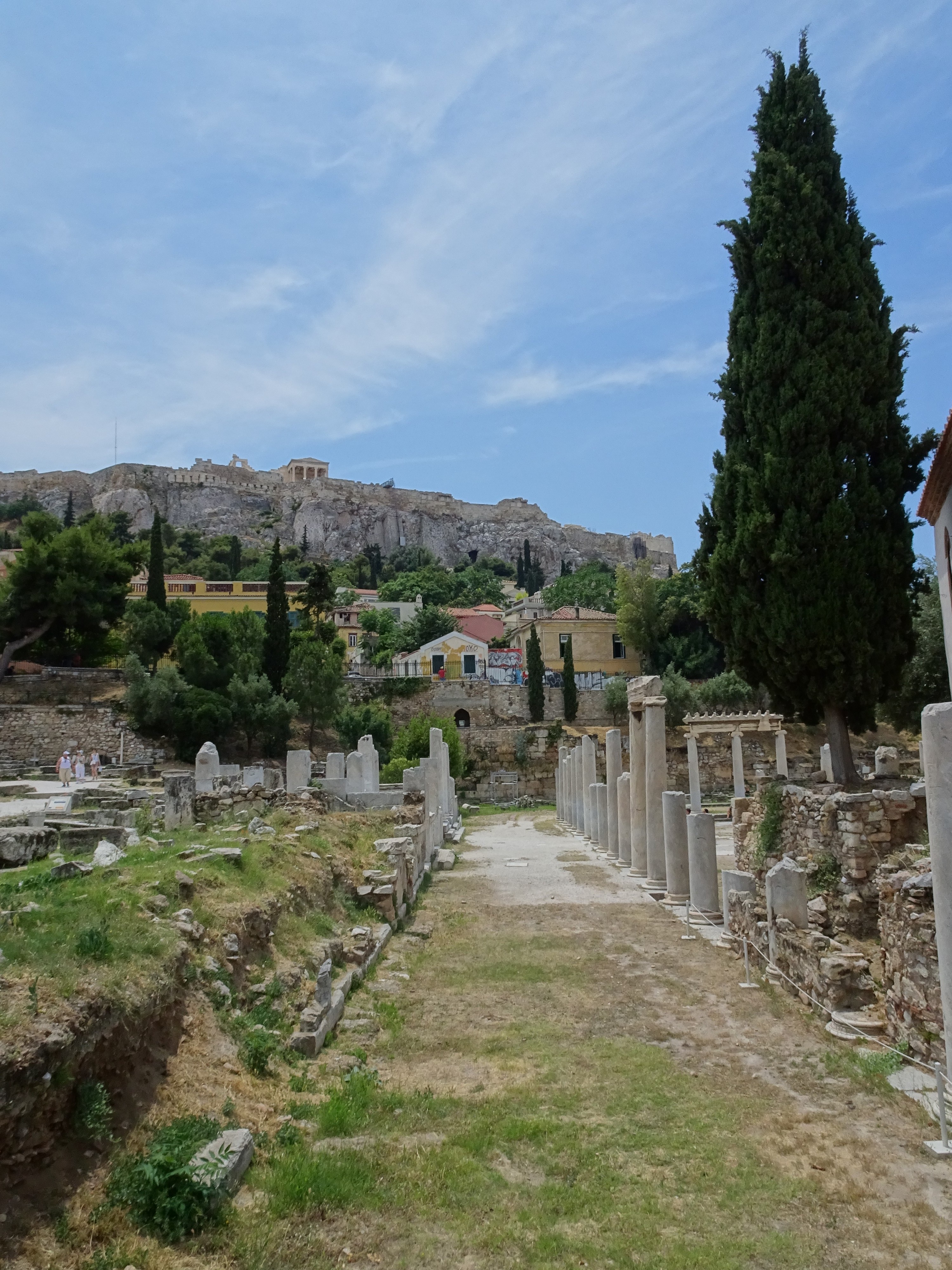
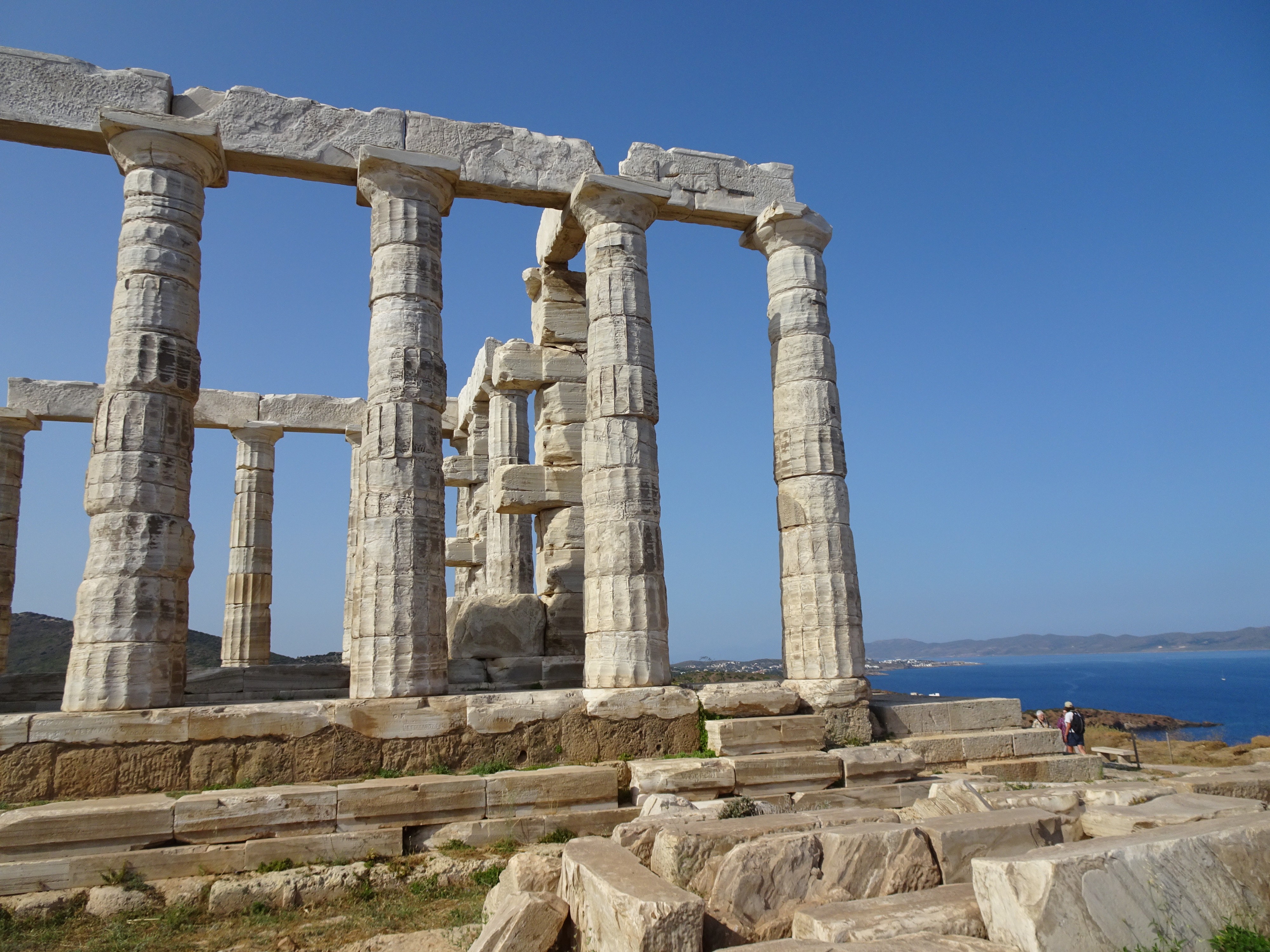
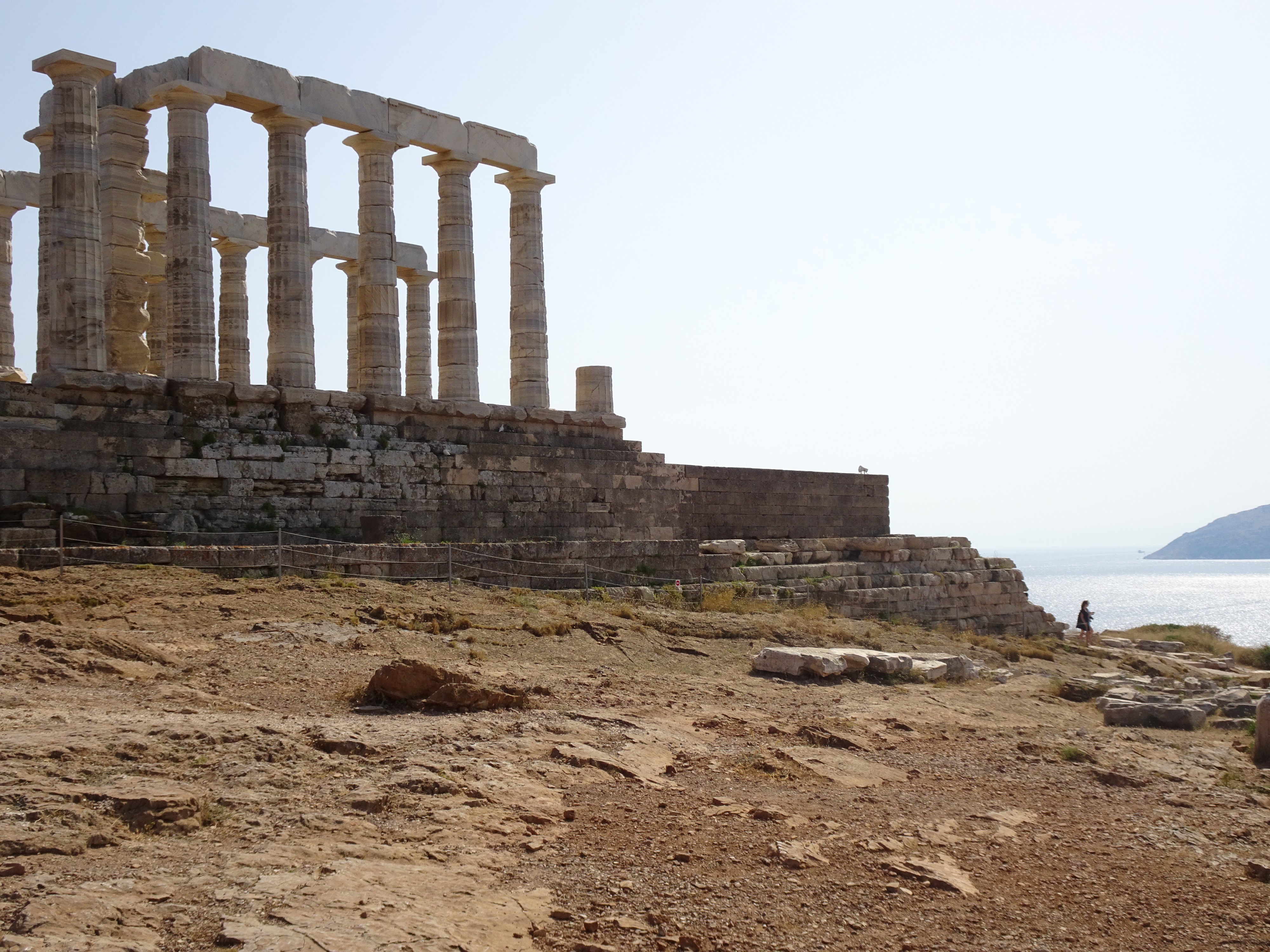
Temple of Poseiden
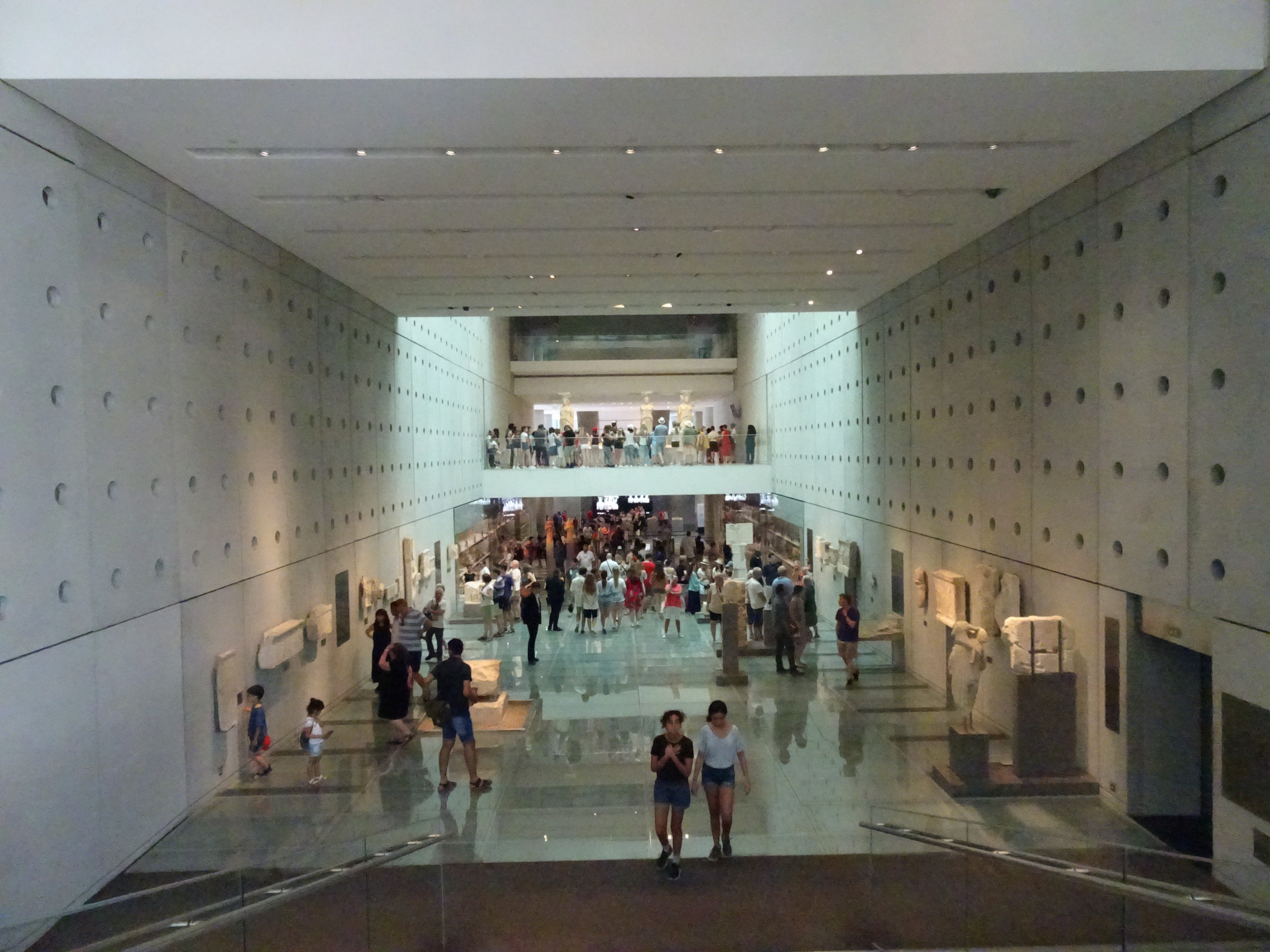
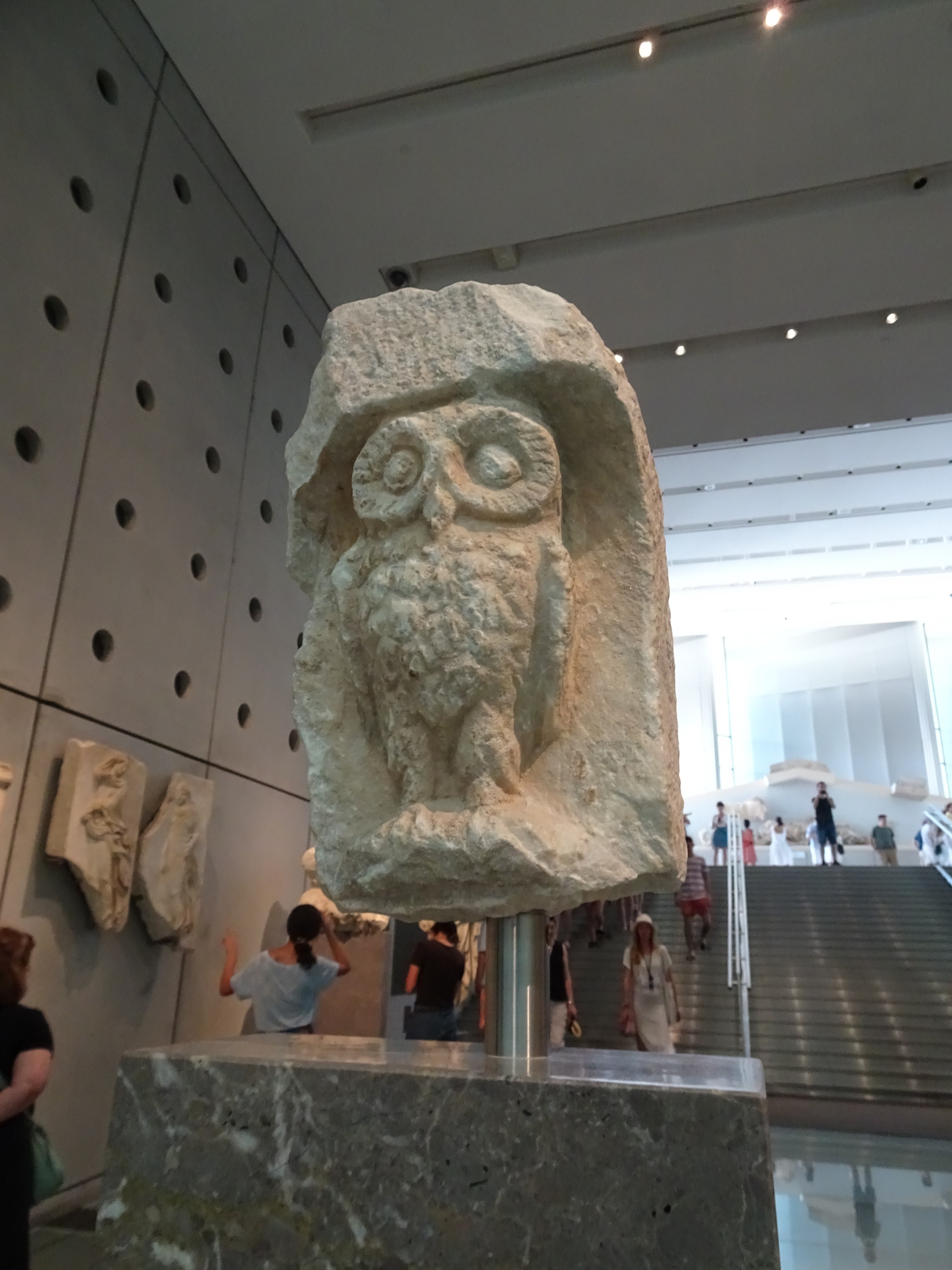
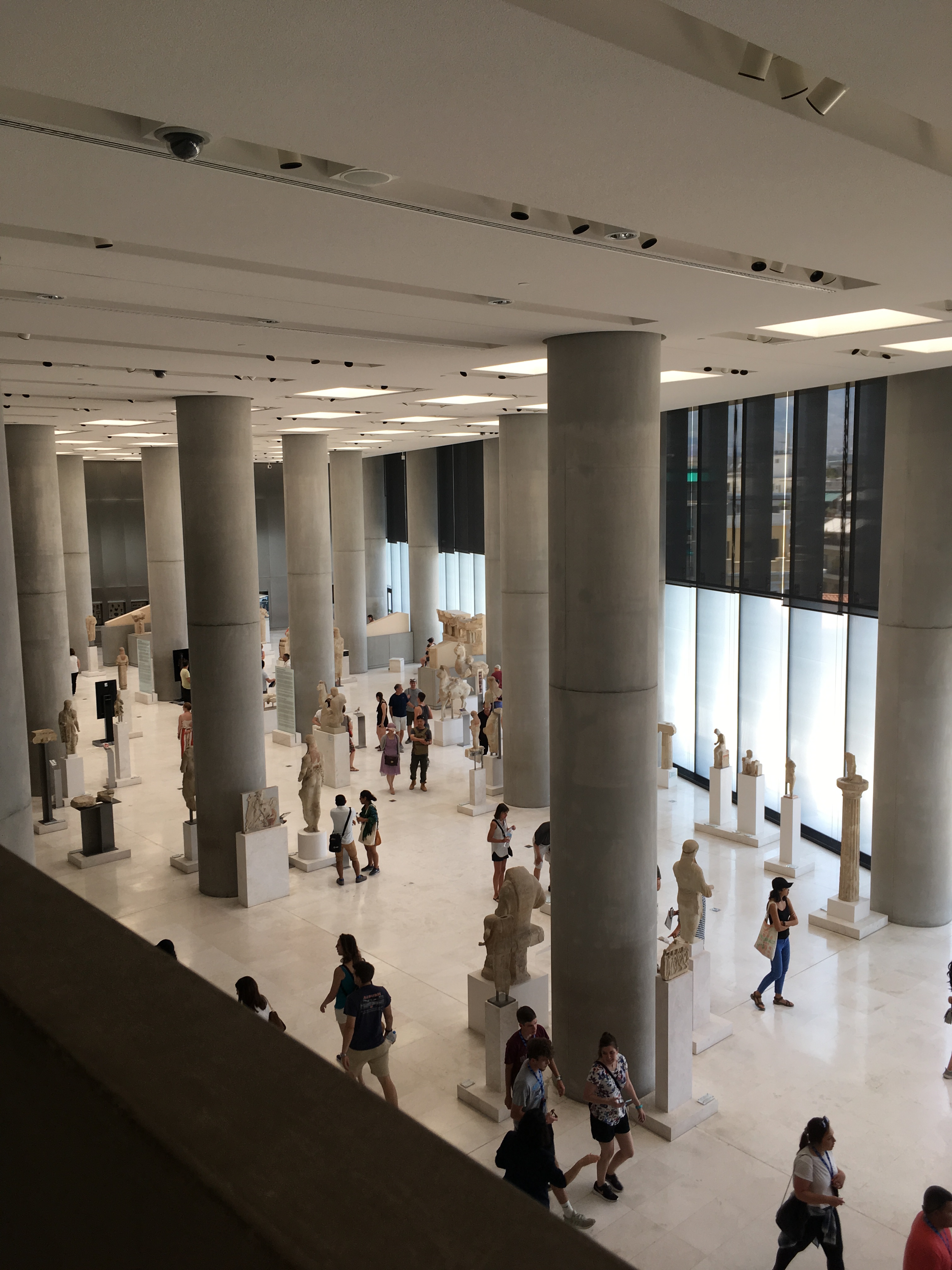
New Acropolis Museum
A descriptive account of my travels
I have so enjoyed exploring Athens. I will be back!
So I’m balancing with one leg on the barrier and trying to hold my phone in the other hand, filming. I did have the best view, although now not so good as they’ve let a lot of other people into the space that was in front of me.
I wasn’t sure this morning whether I would come down here today. The thought of standing out in the open in 33 degrees heat wasn’t very attractive. I took my time over breakfast, faffed around in my room, dawdled down to the square. All to ‘waste’ time.
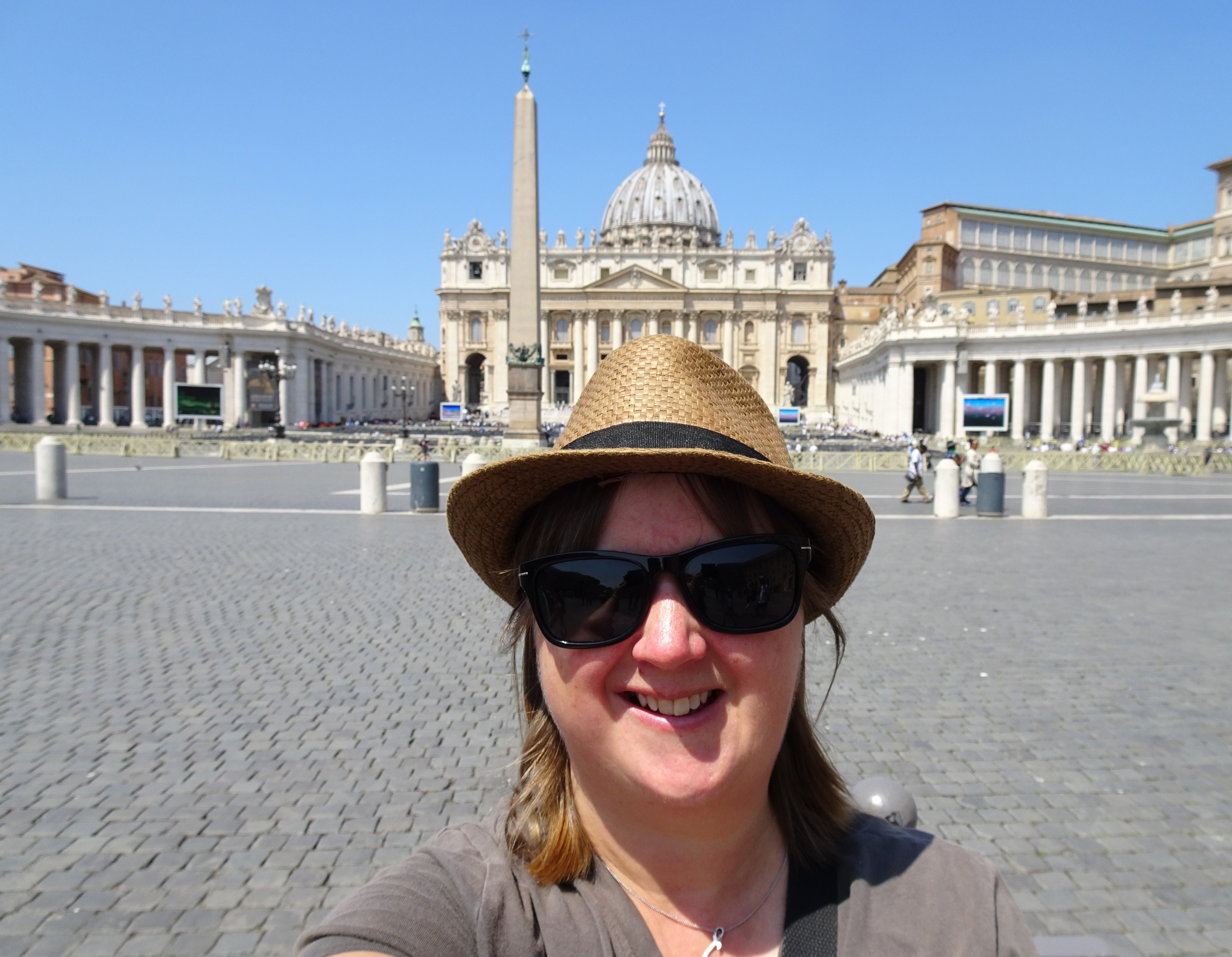
I decide now that I might as well go in. I pass through security and out in the vast area. I then get caught up with it all. I see him on the big screens. I hear the service; the singing. So I wait. In the sun. We are all waiting for 12 0’clock. For him to appear at the window, to make a speech.
But as it is Pentecost, he decides not to appear at the window but to greet the crowds in his popemobile. So here I am, balancing on the railing, a sea of mobile phones, joining in with everybody else. Trying to see the Pope come past; trying to get the perfect photo.
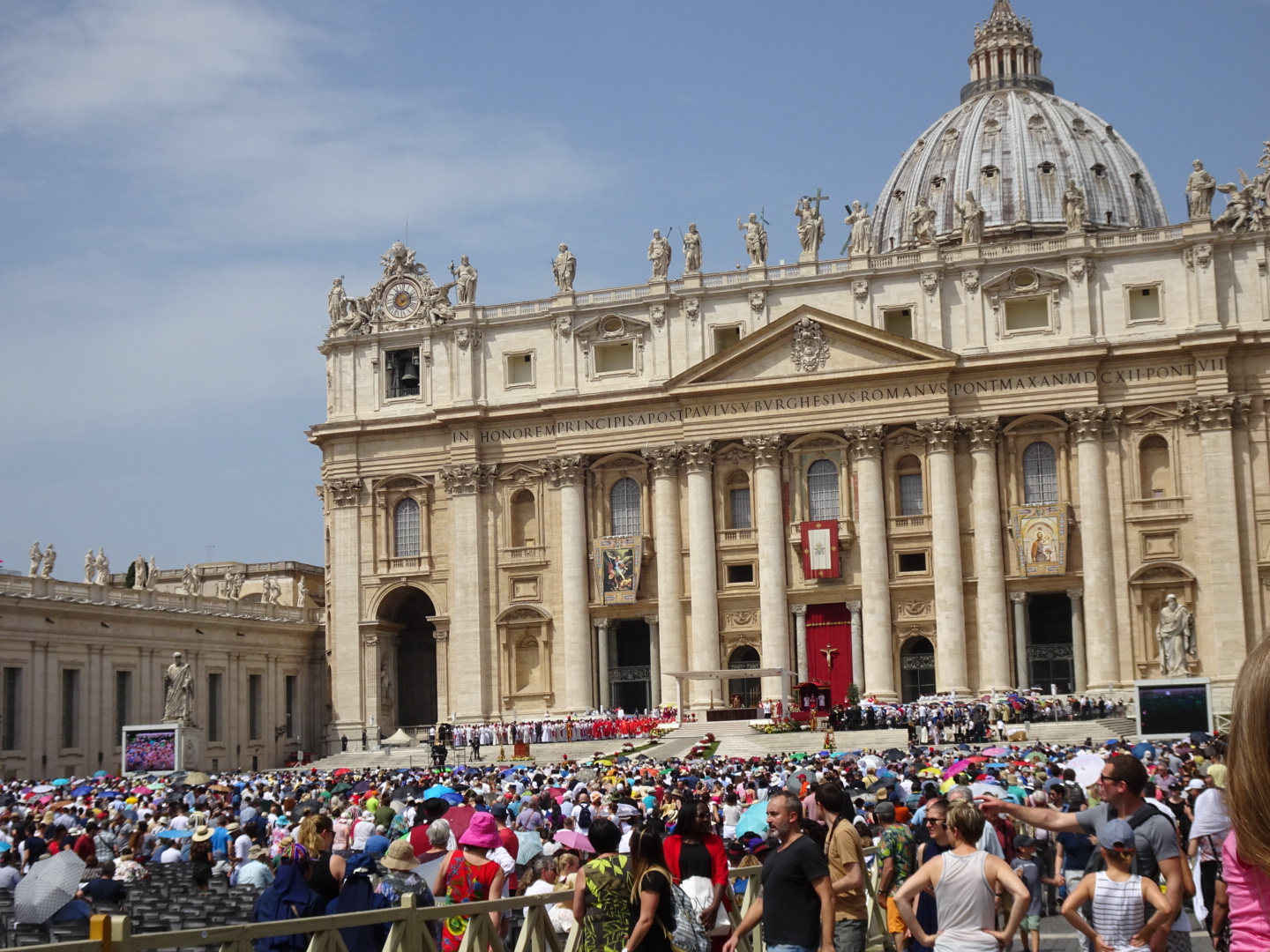
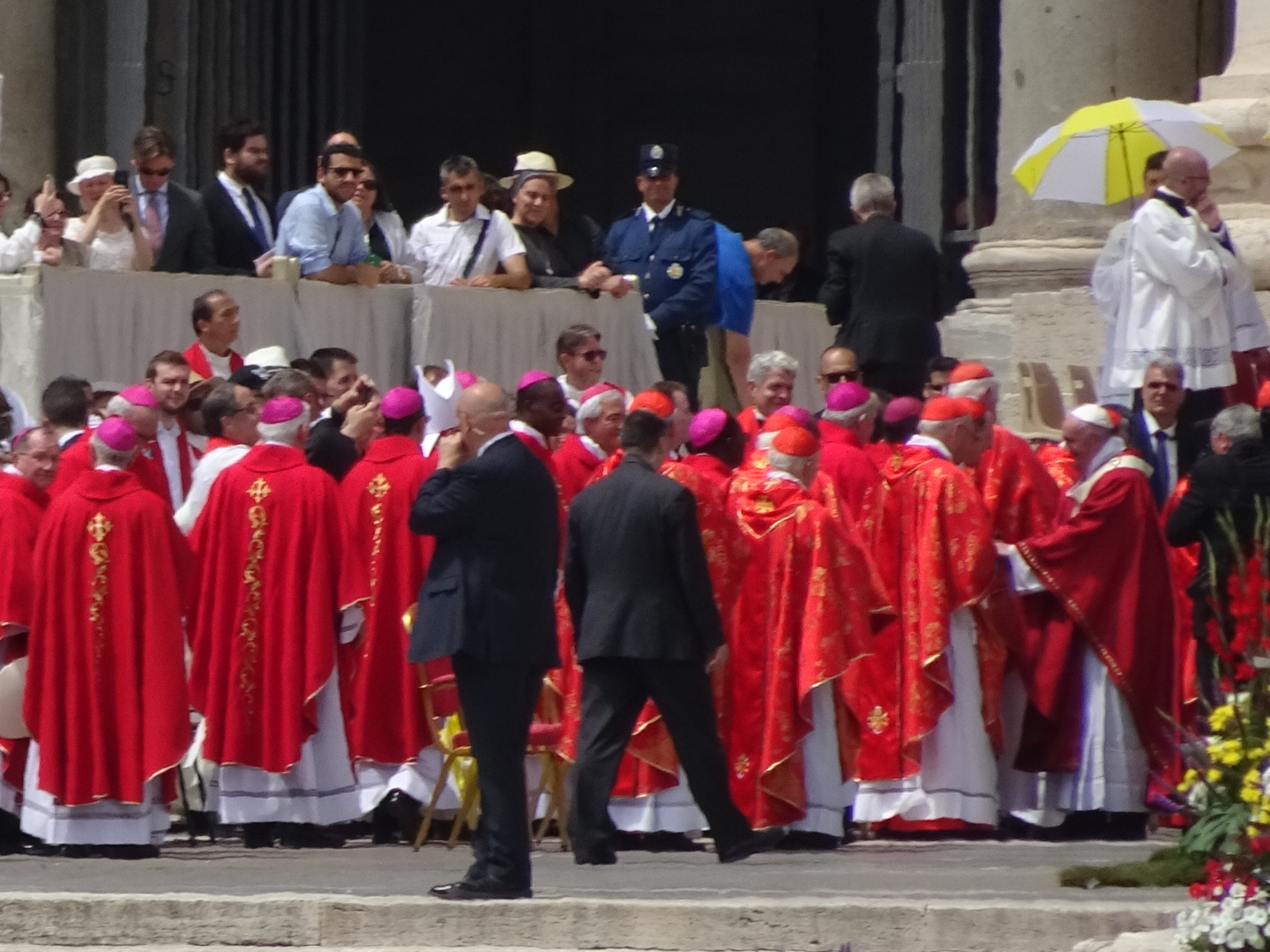
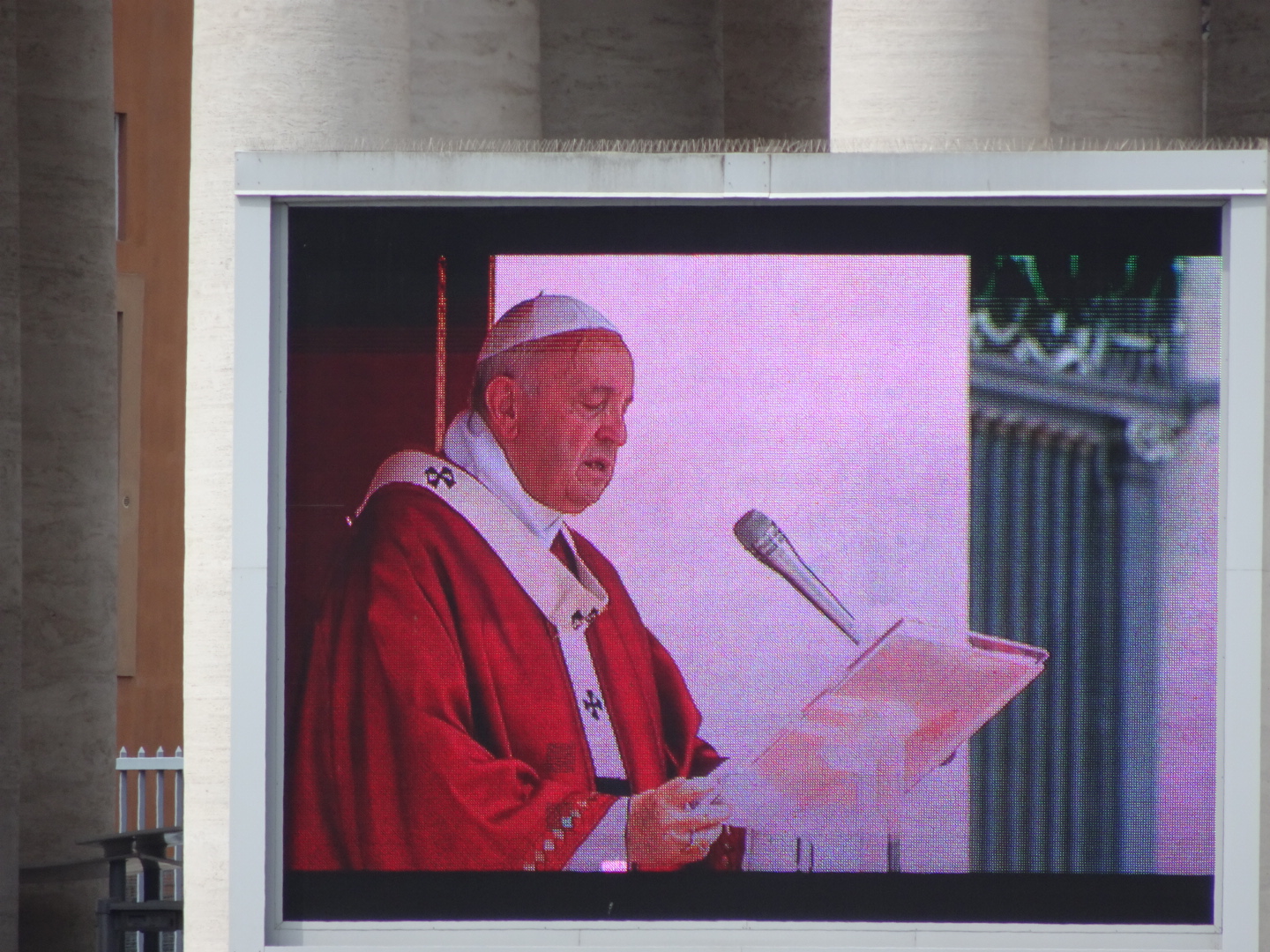
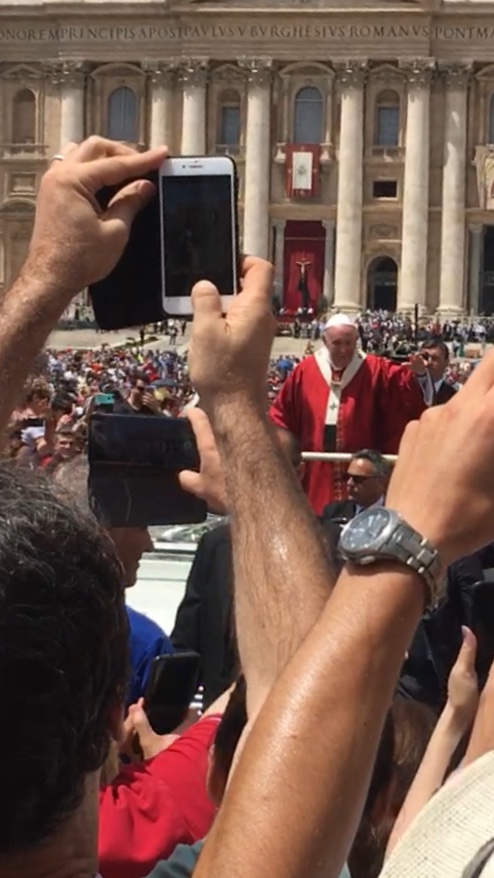
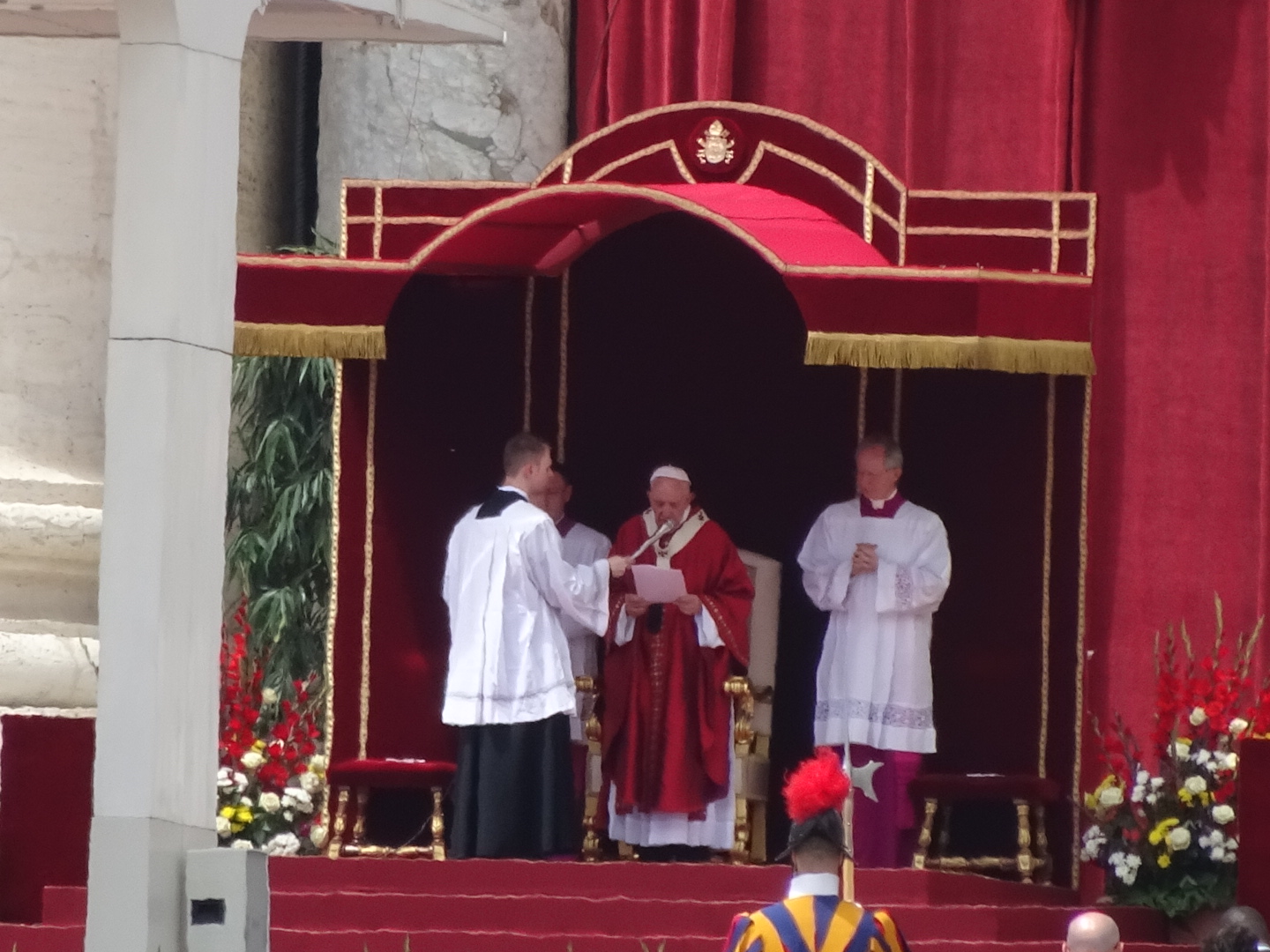
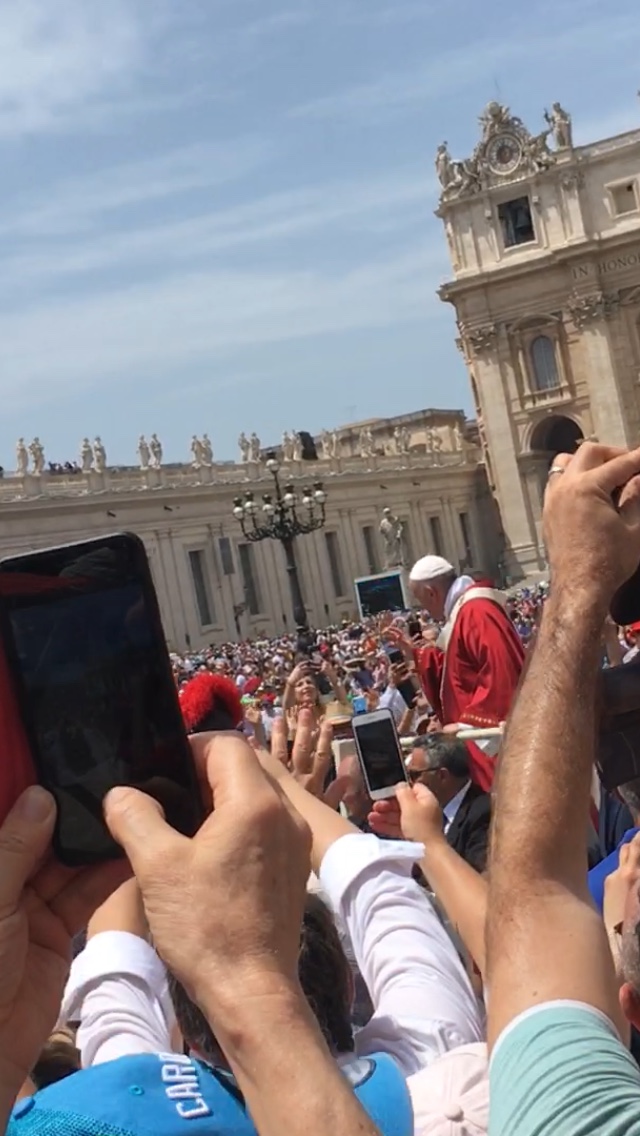
And was it worth it? Was it worth the heat headache that I then have all afternoon! Yes it probably was.
He’s the Pope!
I have so enjoyed exploring Rome. I will be back!
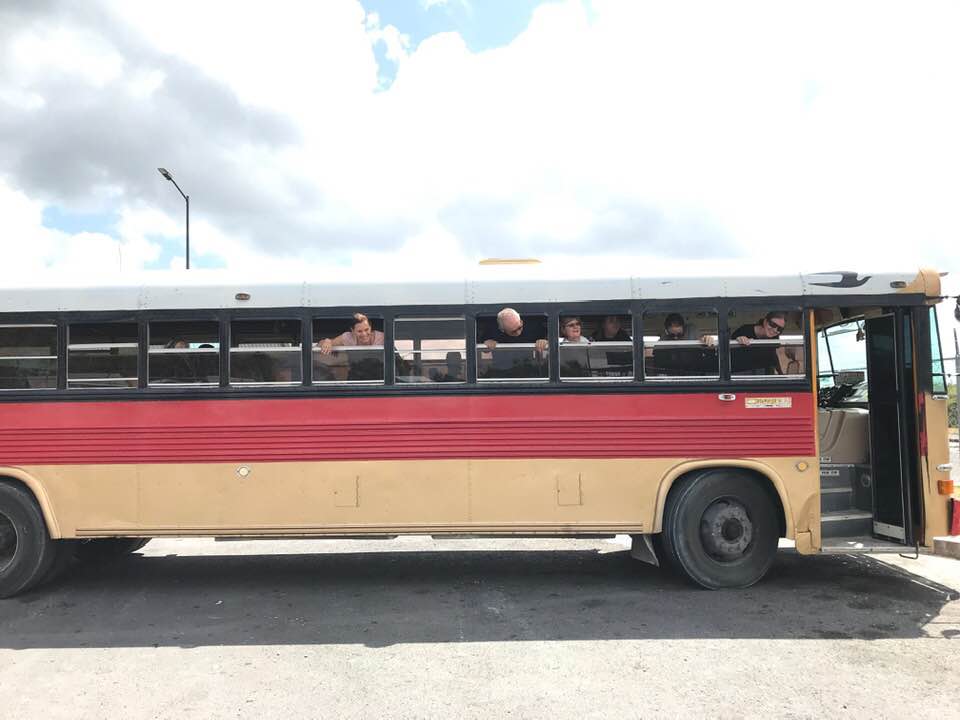
The chicken bus. An old American school bus. No chickens today though. Instead hard seats with a little bit of upholstery – just enough to stop you going completely numb. I seem to spend a lot of the journey trying to avoid the stomach and crotch area of the quite large bus ‘official’ who is collecting the fares and organising the luggage. The only thing making it bearable is the breeze coming through the open windows; and that becomes stifling when the bus stops to pick up the numerous locals along the way. (The return journey is not much better either! But definitely an experience)
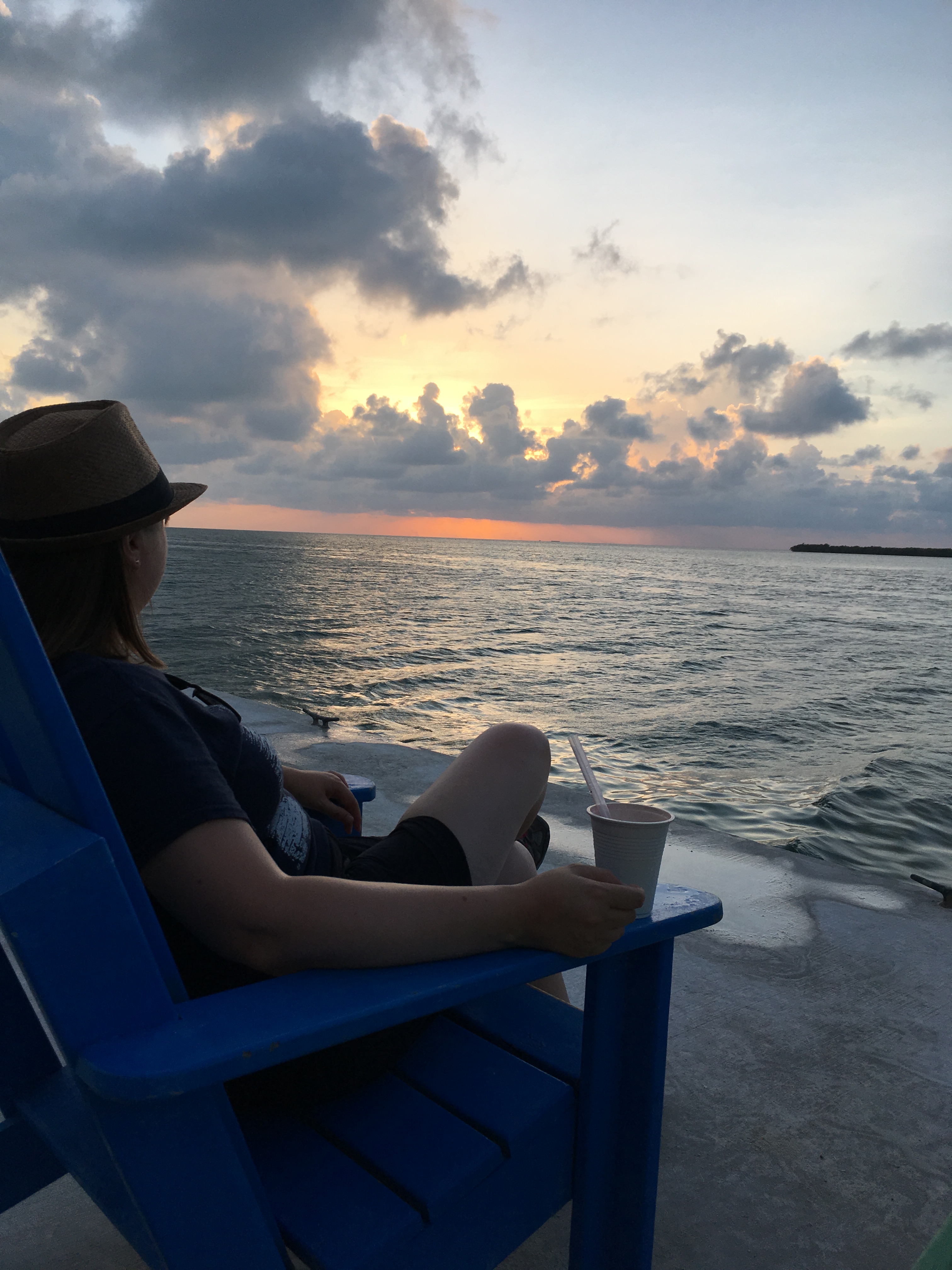
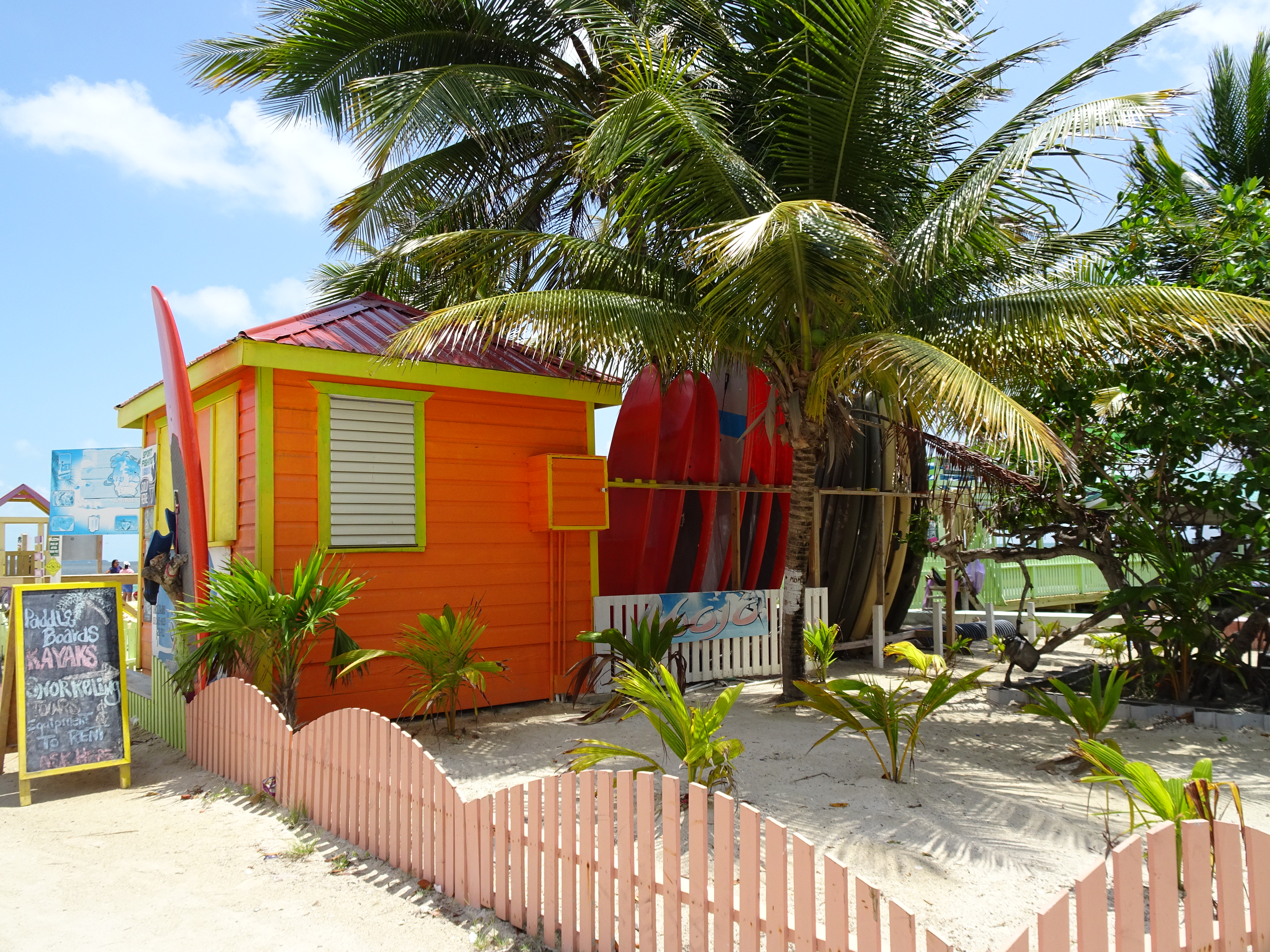
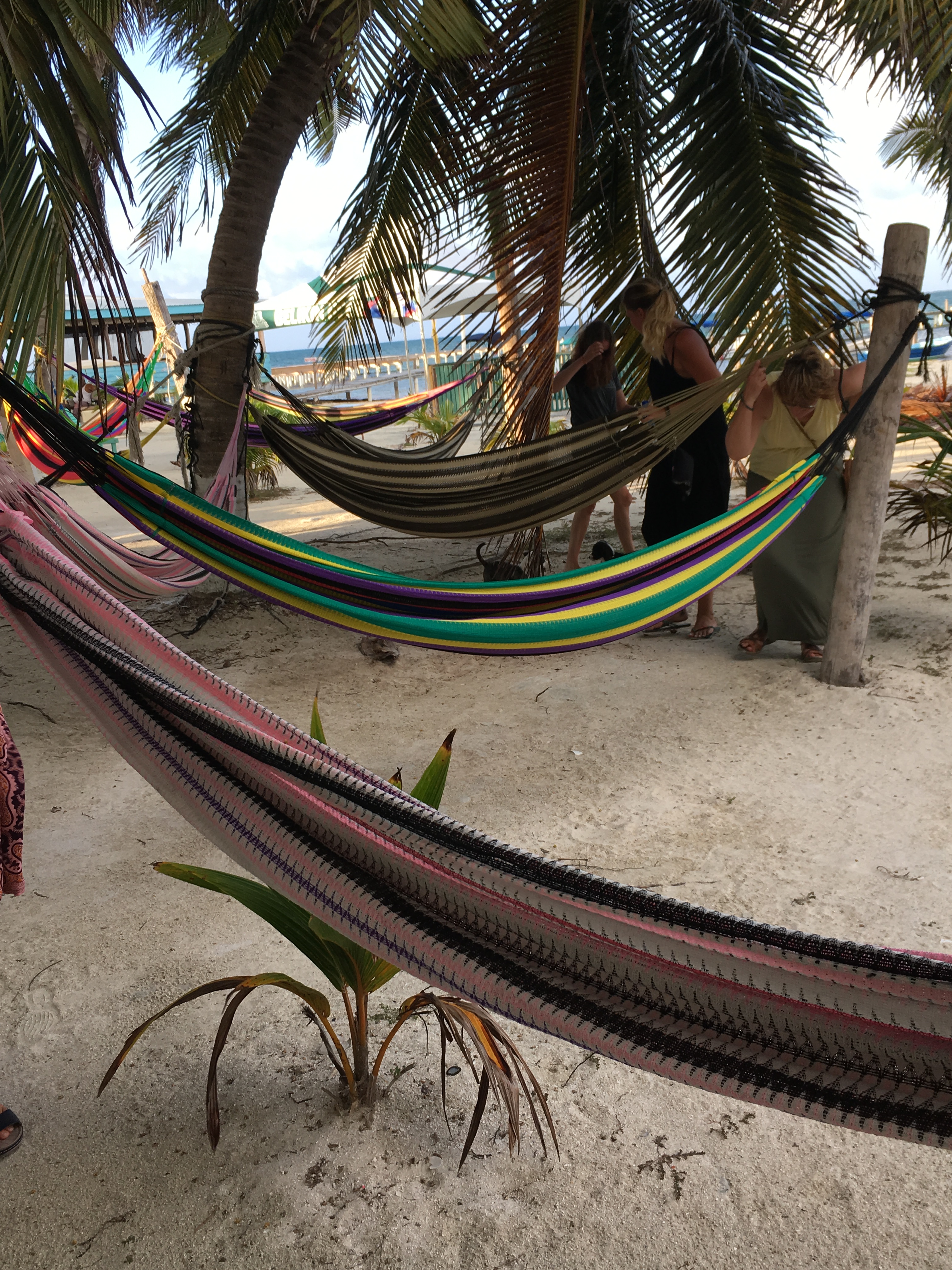
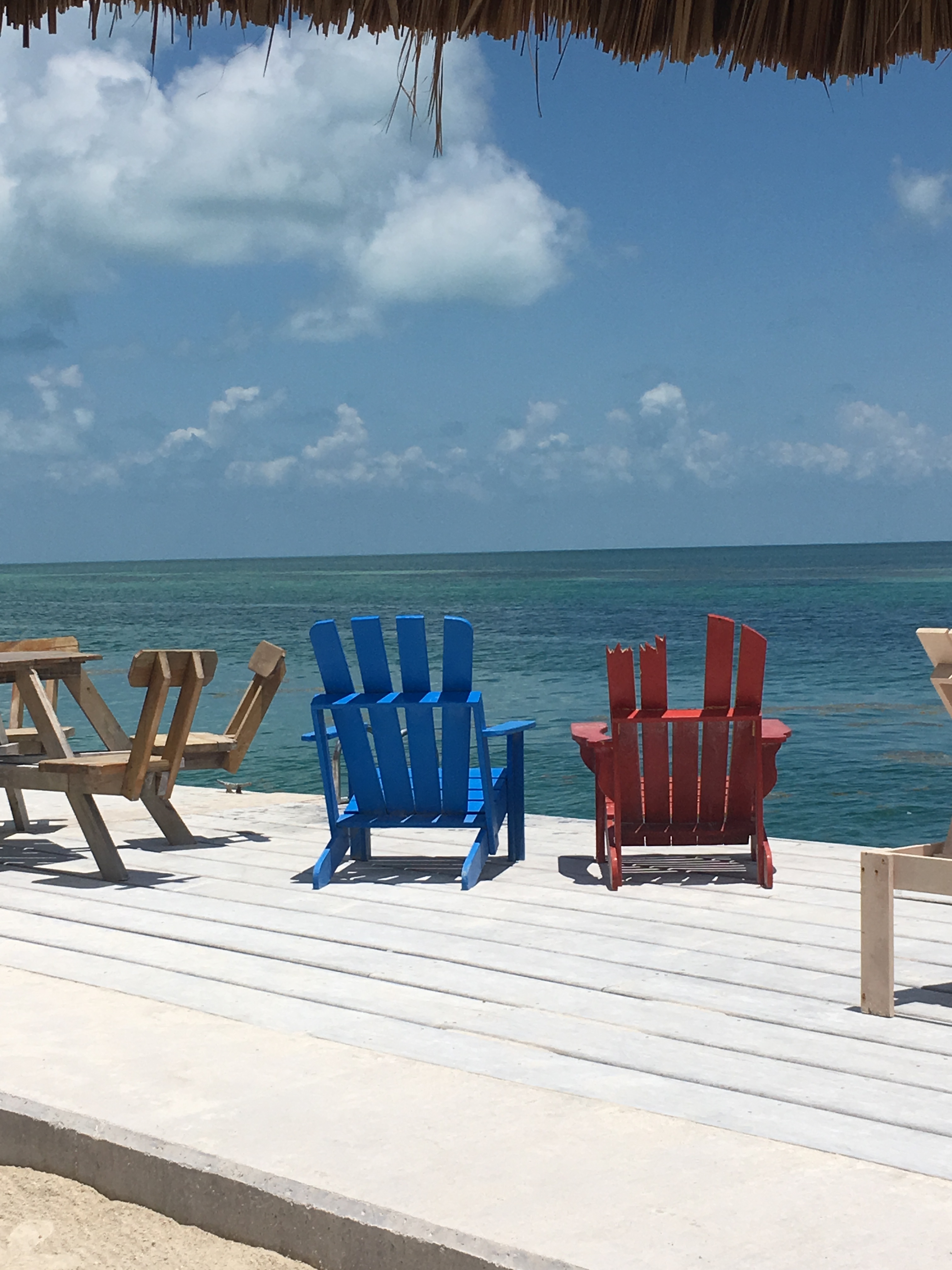
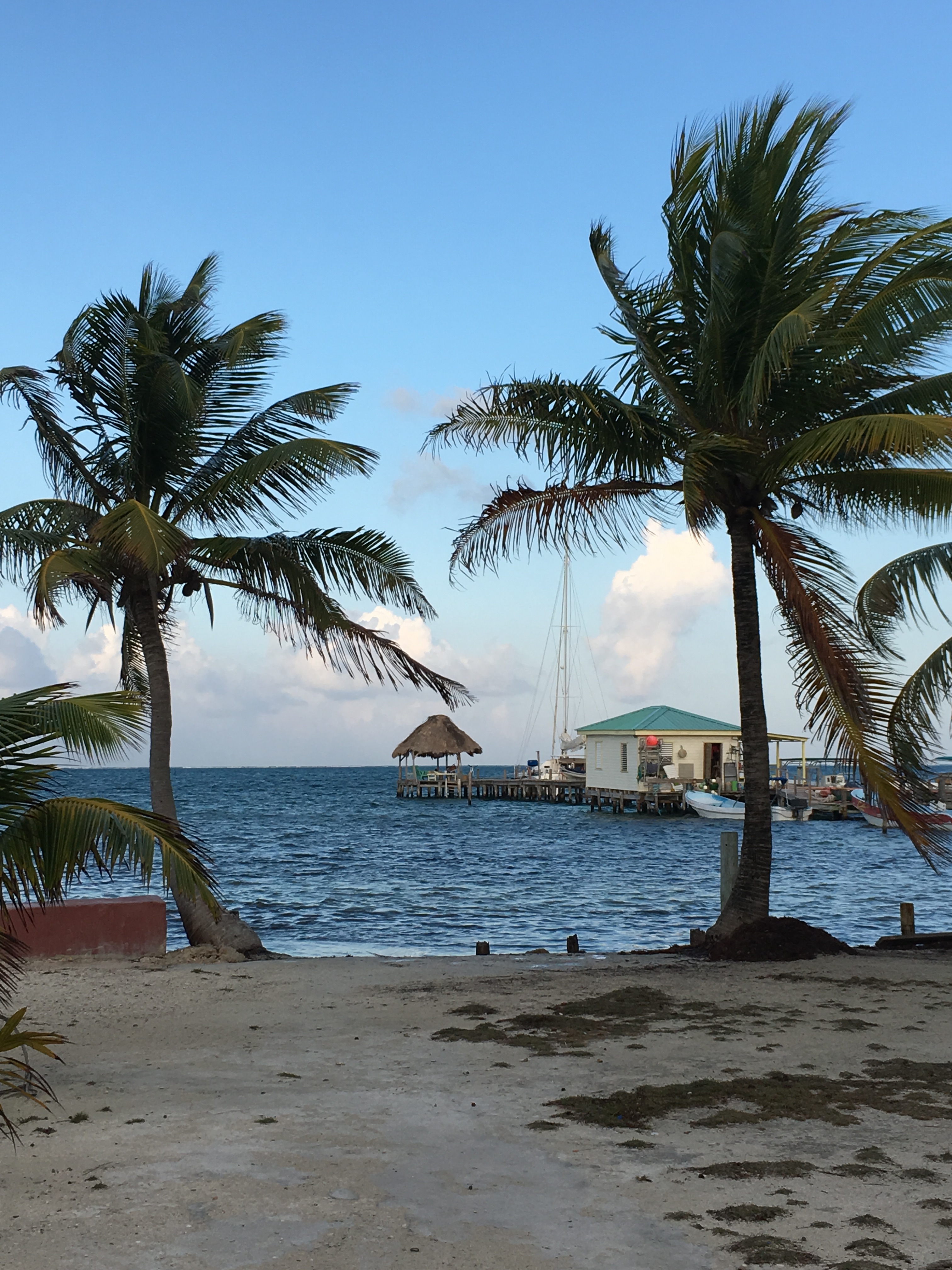
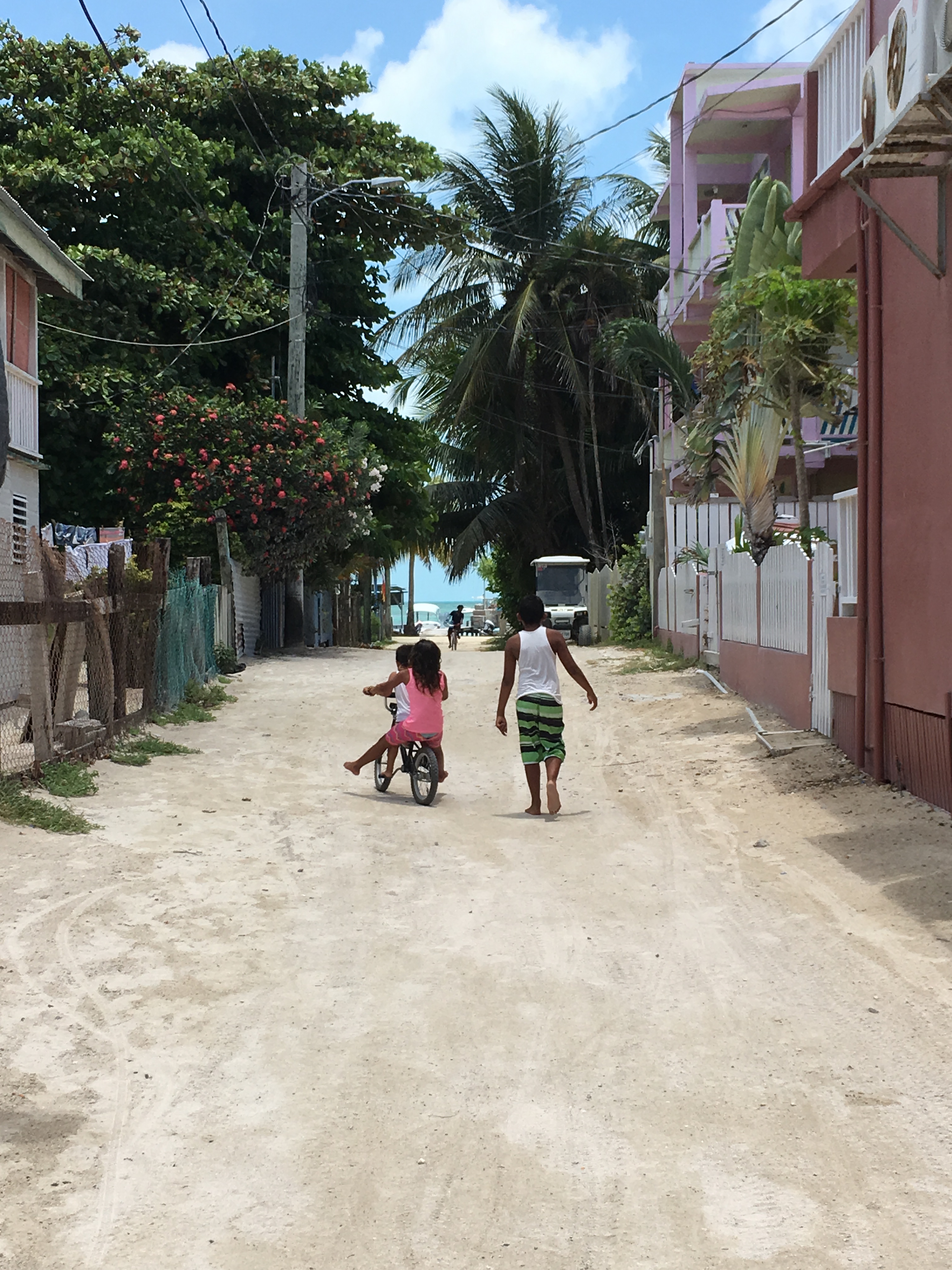
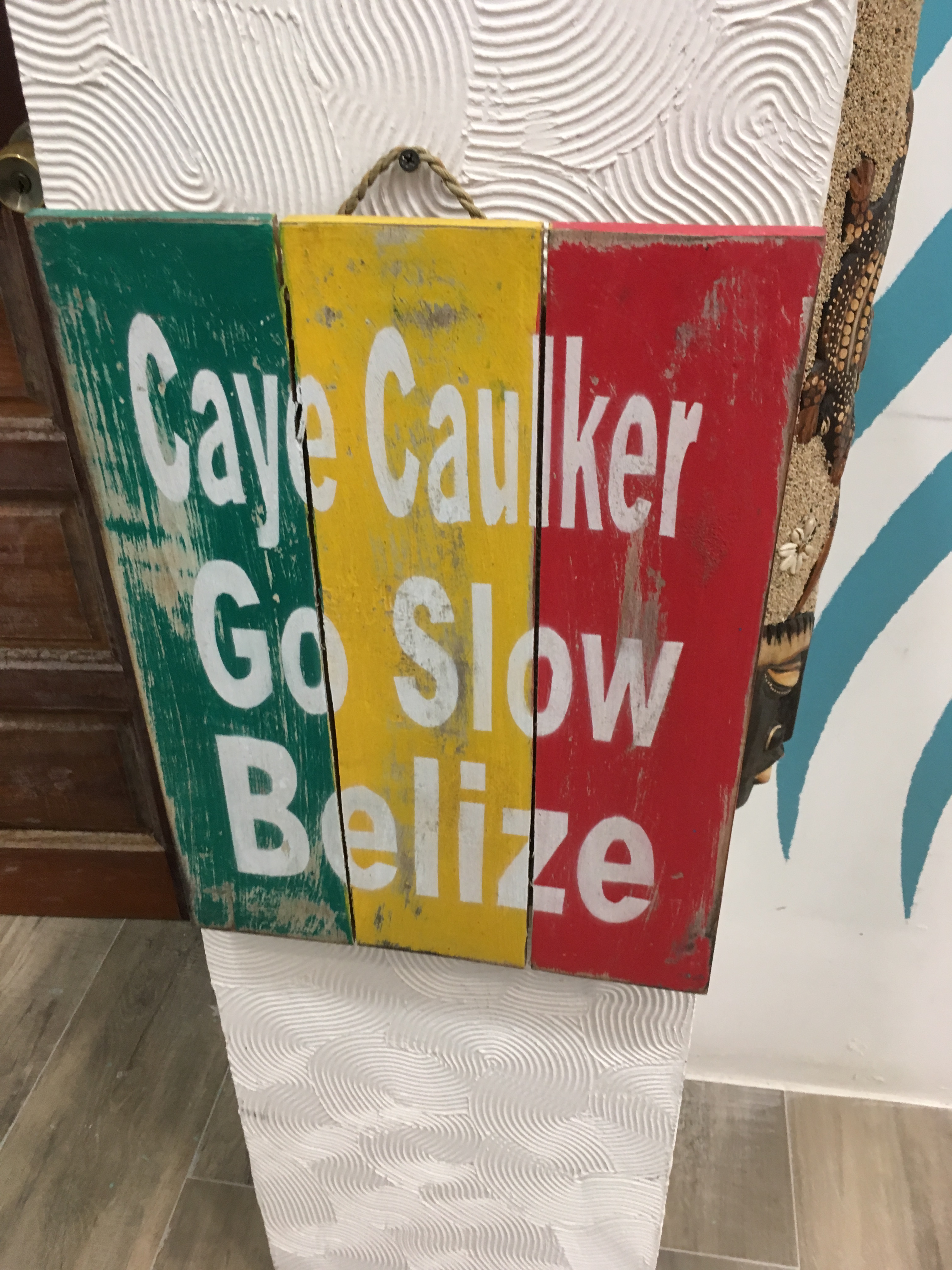
The pay off for the journey on the chicken bus is our three day stay on the island of Caye Caulker. The motto of the island is ‘Go Slow.’ So for the time we are there that is just what we do; relax by the sea, drink at the bar, enjoy local food that is actually tasty, spot sea horses and fish, and go swimming and snorkeling (not me!).
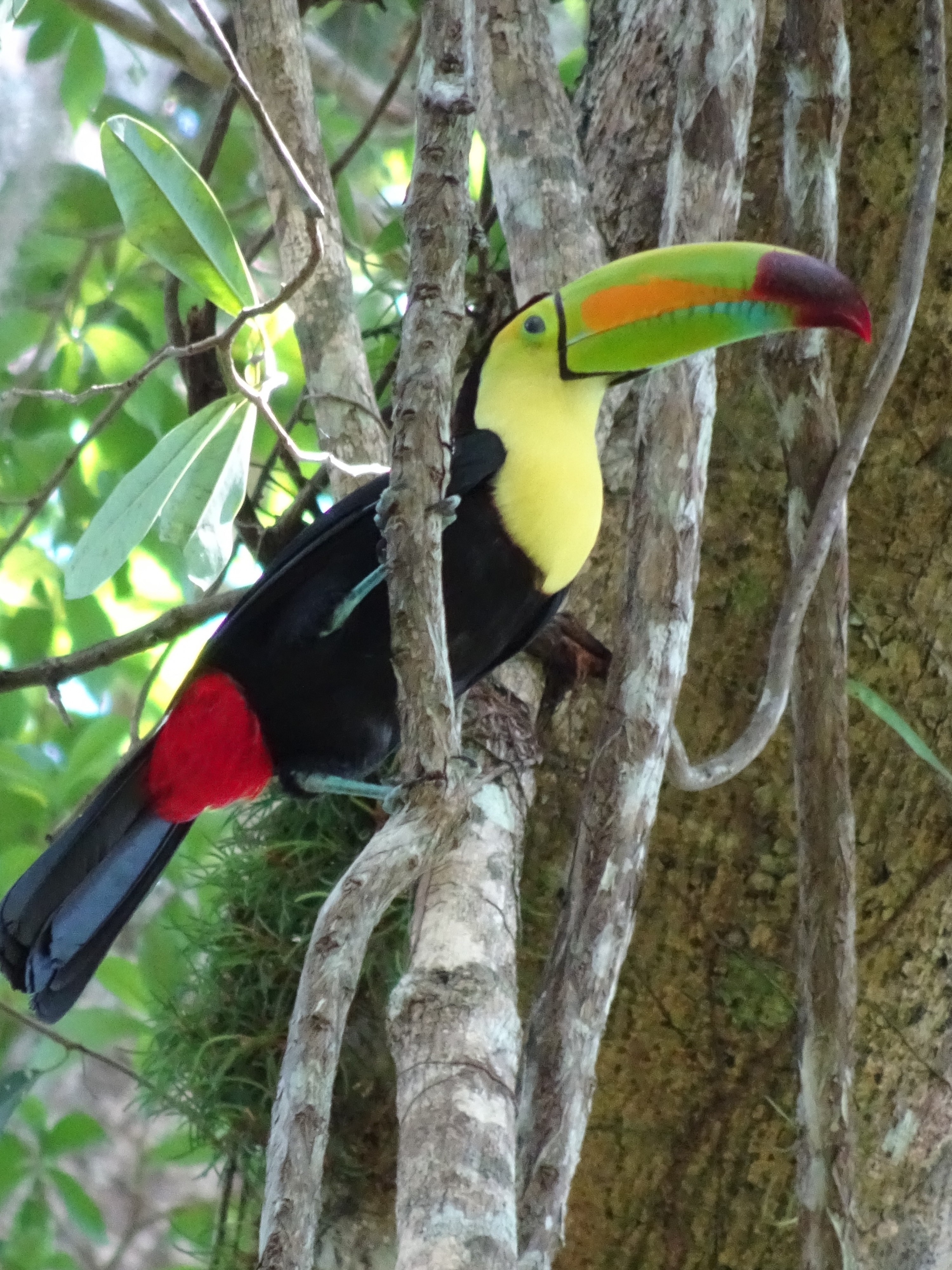
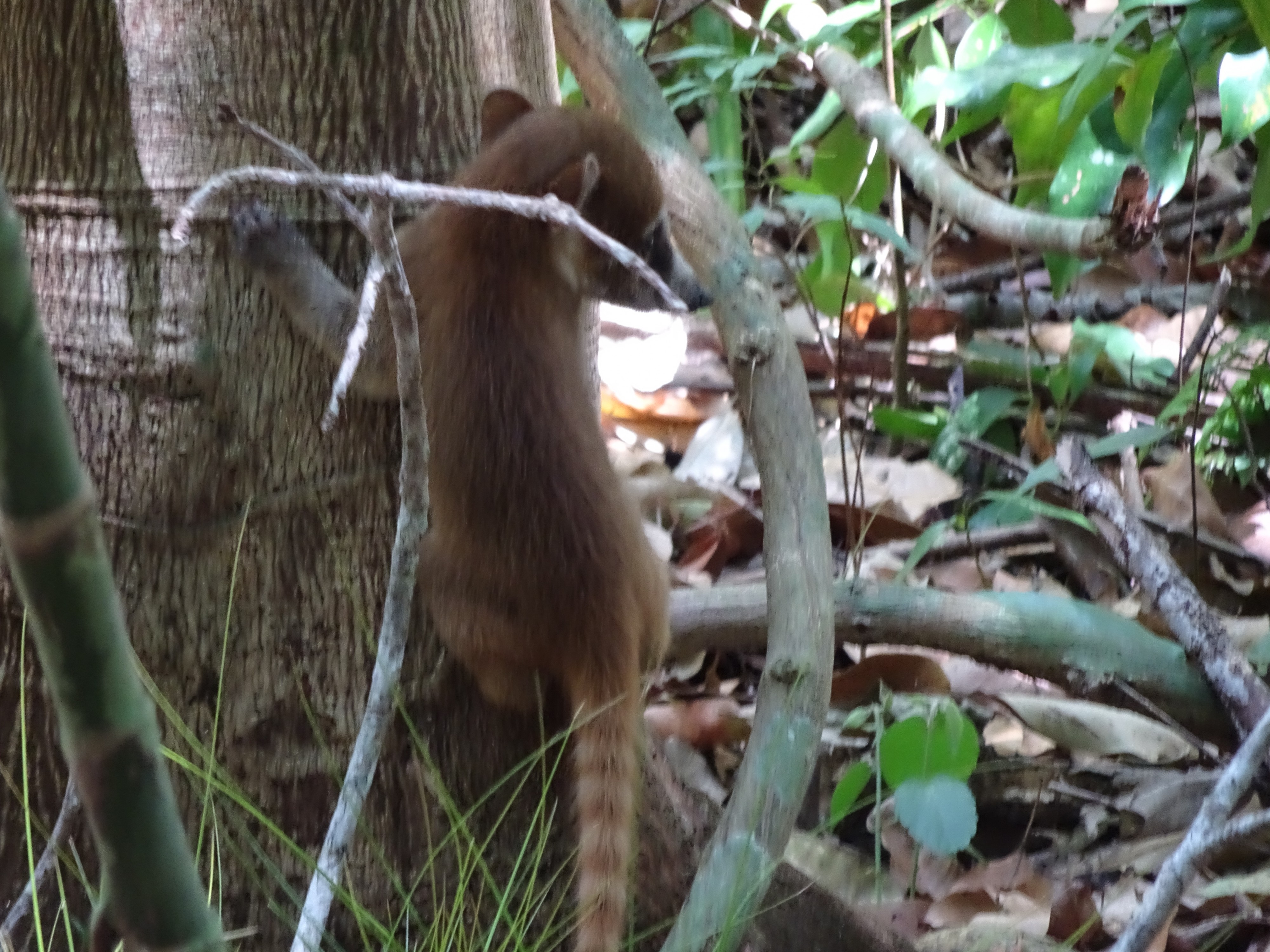
The guide points out the toucan. It’s high up in the branches making its clicking noise. I zoom in on my camera – the colours on its beak are so vivid. I manage to get a great photo. I’m so pleased that I’ve been able to see one in the wild. There is also a group of Coati foraging on the ground. Silently we watch them. The guide says the babies are not very old; the adults have recently brought them down from the trees. (We later see an adult scamper down the trunk, a tiny baby dangling from its mouth.)
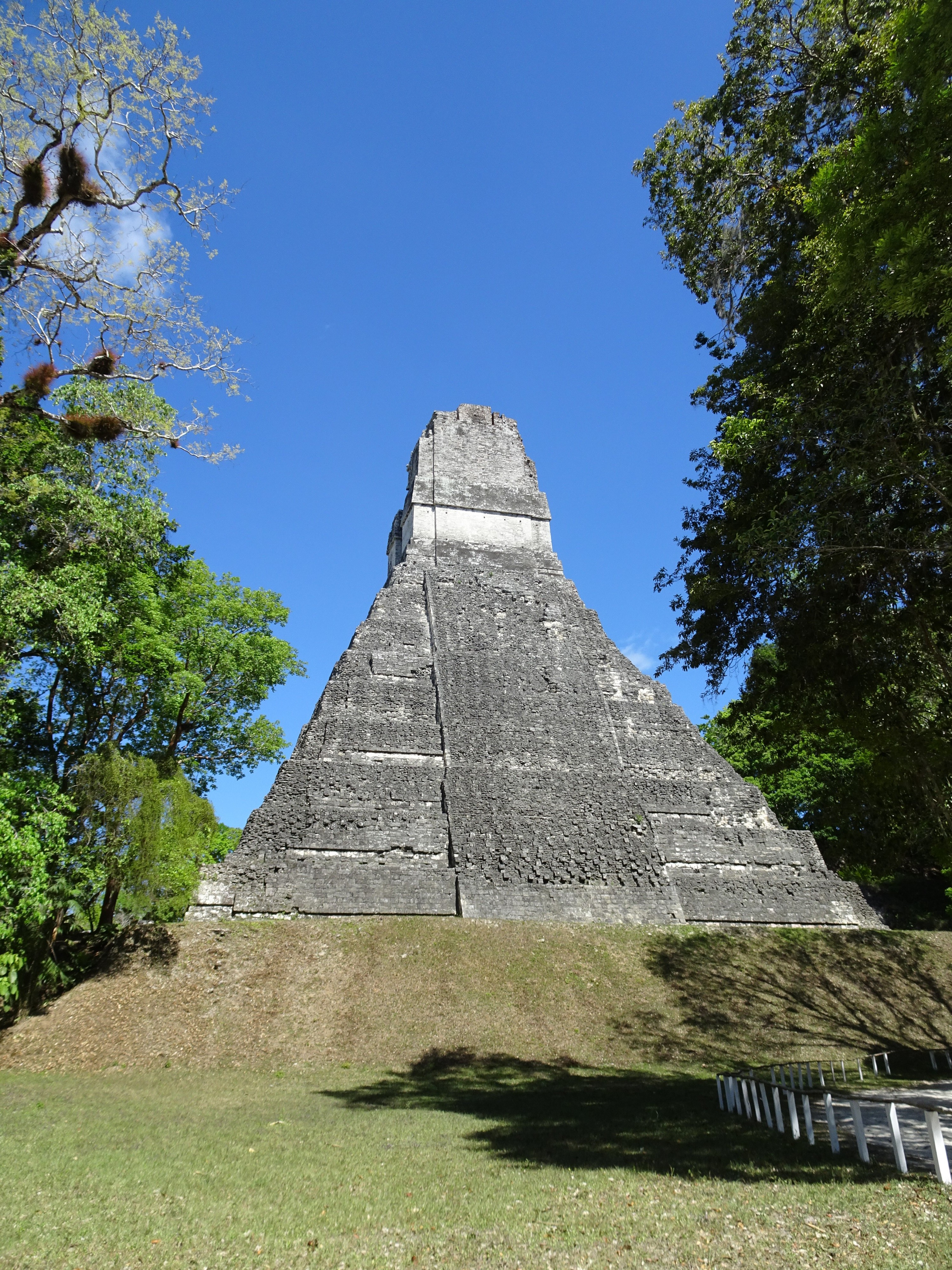
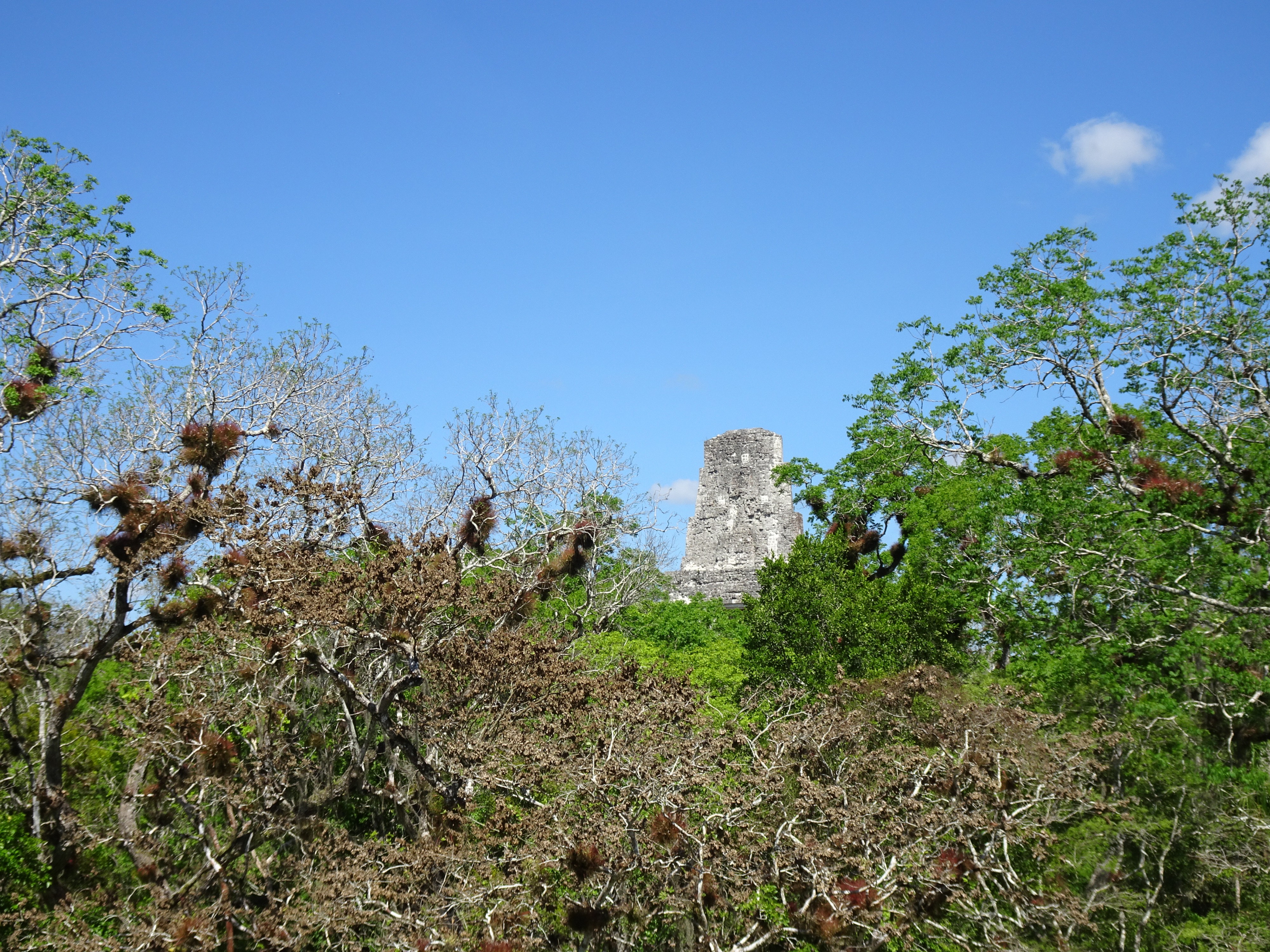
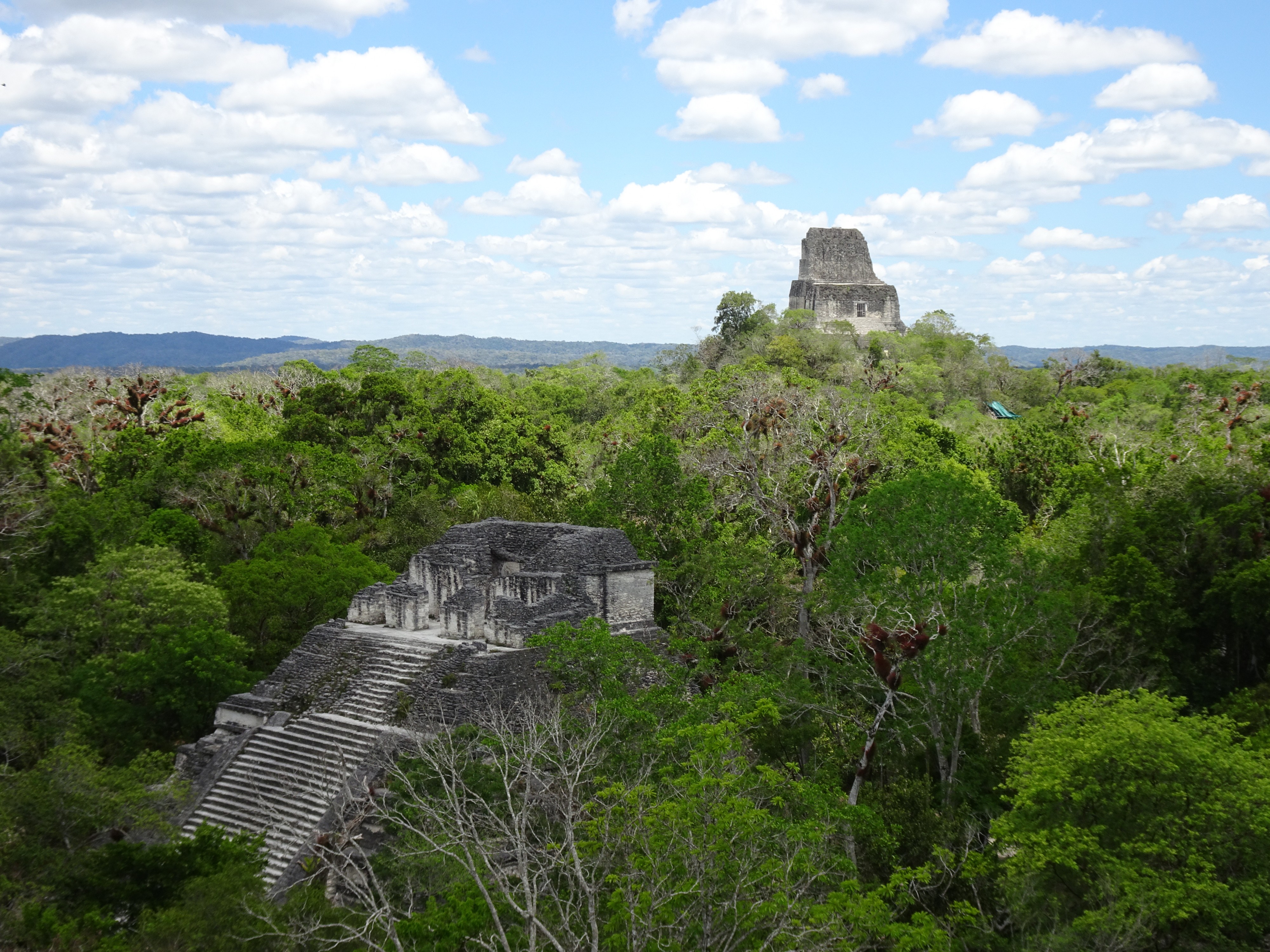
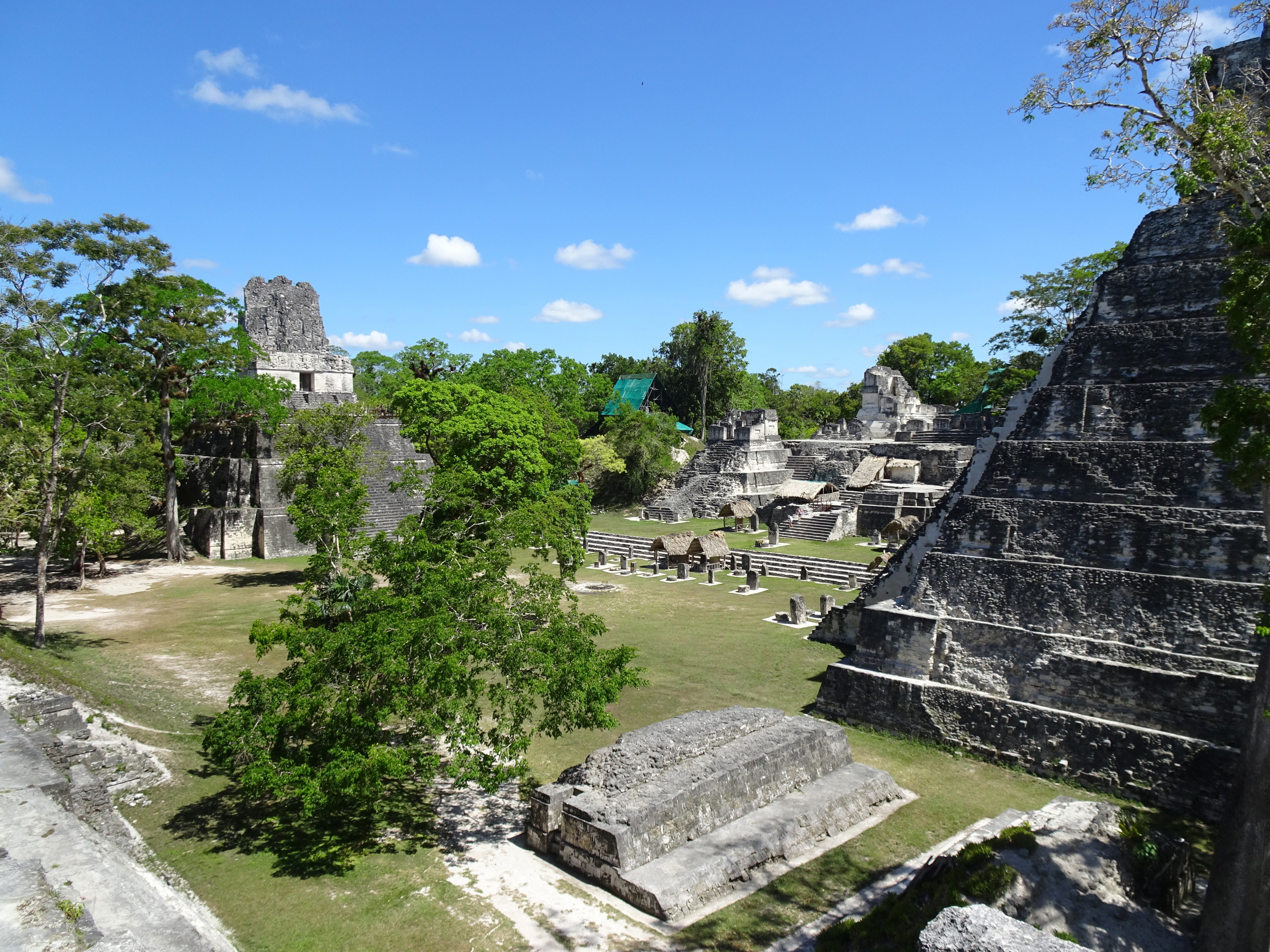
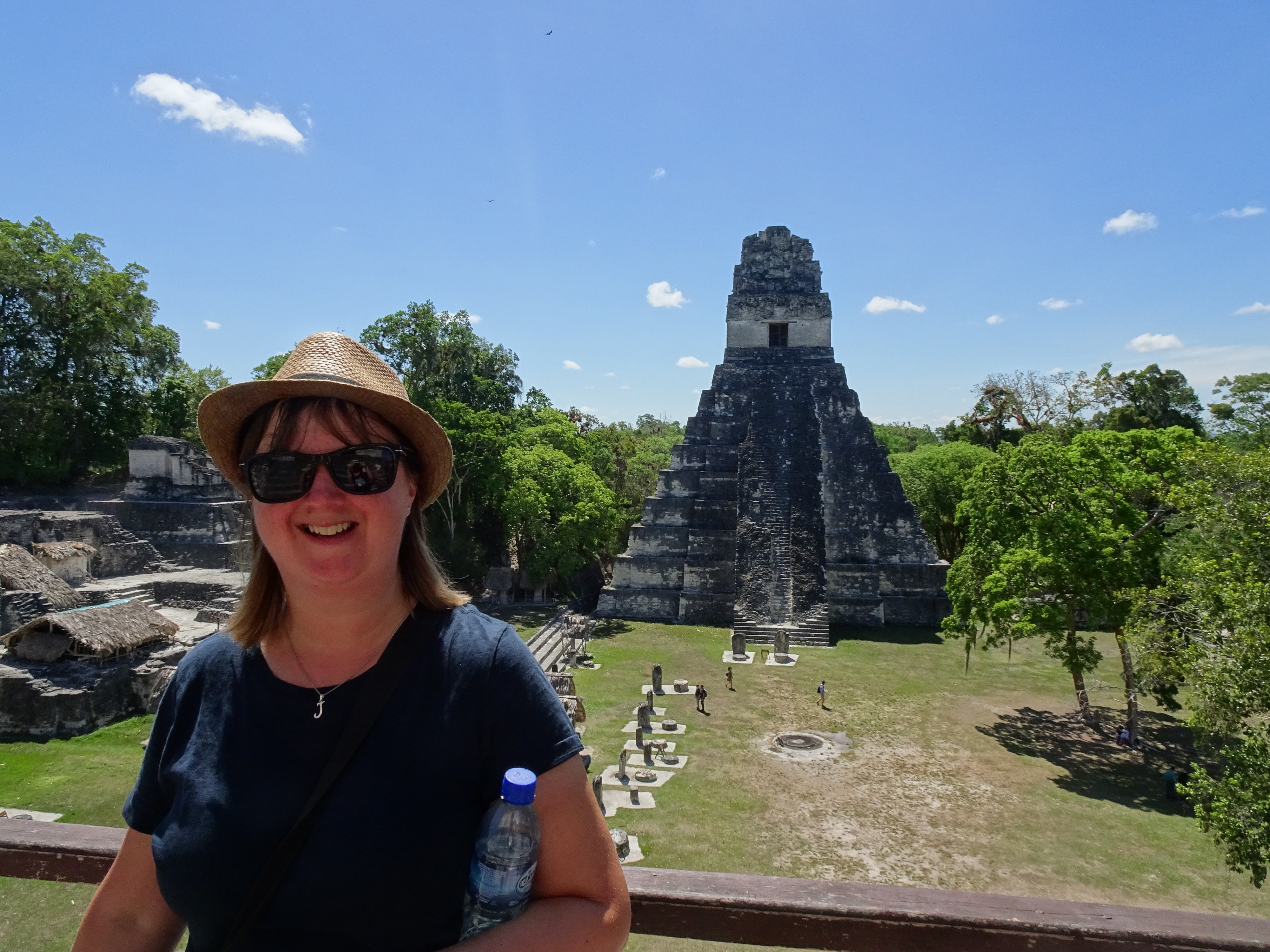
The site of Tikal is vast. Covered in jungle, it seems the only way to see another pyramid is to climb up one. It’s well worth the effort. This time there are wooden steps with a railing rather than the usual uneven stone steps. Looking out over the jungle canopy, the tops of the stone ruins can be seen stretching into the distance.
We walk, for what seems like miles, in the shade of the trees between the different temples. Although providing welcome cover, it is still extremely hot and by the time we reach the minibus we are exhausted and dripping with sweat.
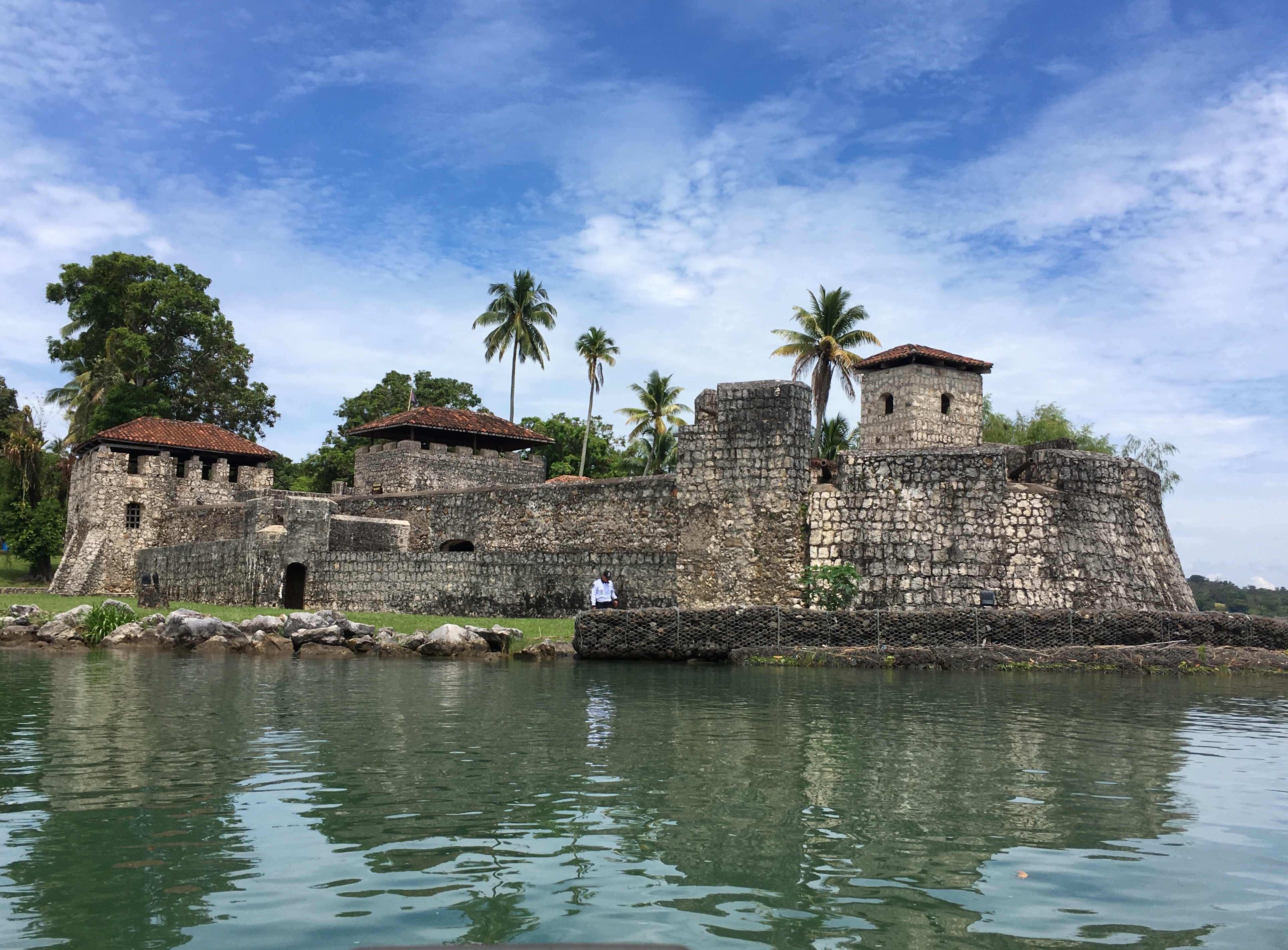
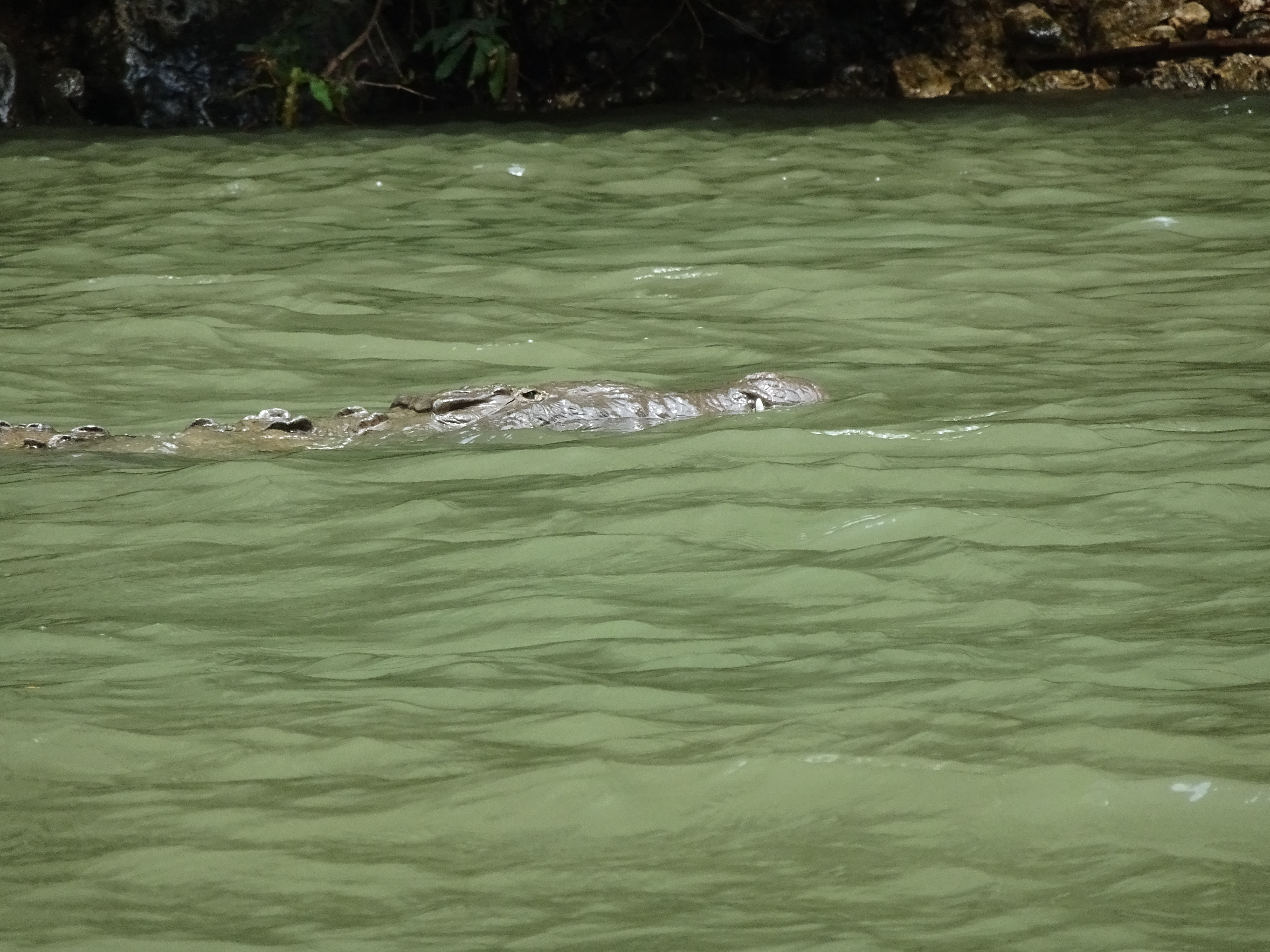
The air stirred up by the speed of the boat, makes the trip along the Rio Dulce river cooling and enjoyable. We see the fort, Castillo de San Felipe de Lara, first of all, at the head of the river. Again there is a variety of bird life, animals, possibly even crocodiles, as well as local communities living along the banks. We pull into Livingston, the town at the mouth of the river. Livingston looks a bit worse for wear. Boats are left rotting in shallow water, houses look in need of attention. There is not much there – it seems to be just a stop before the Caribbean Sea.
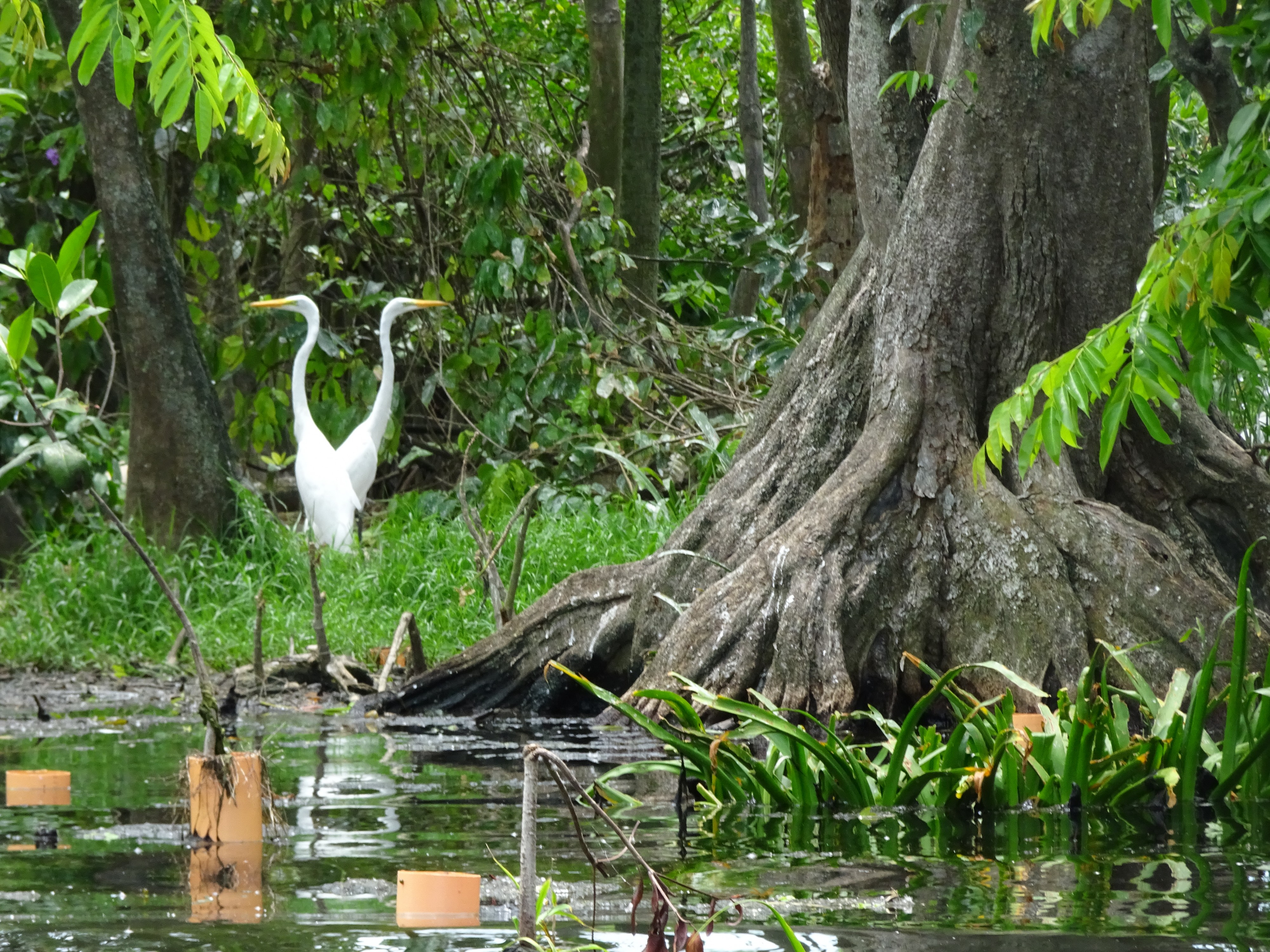
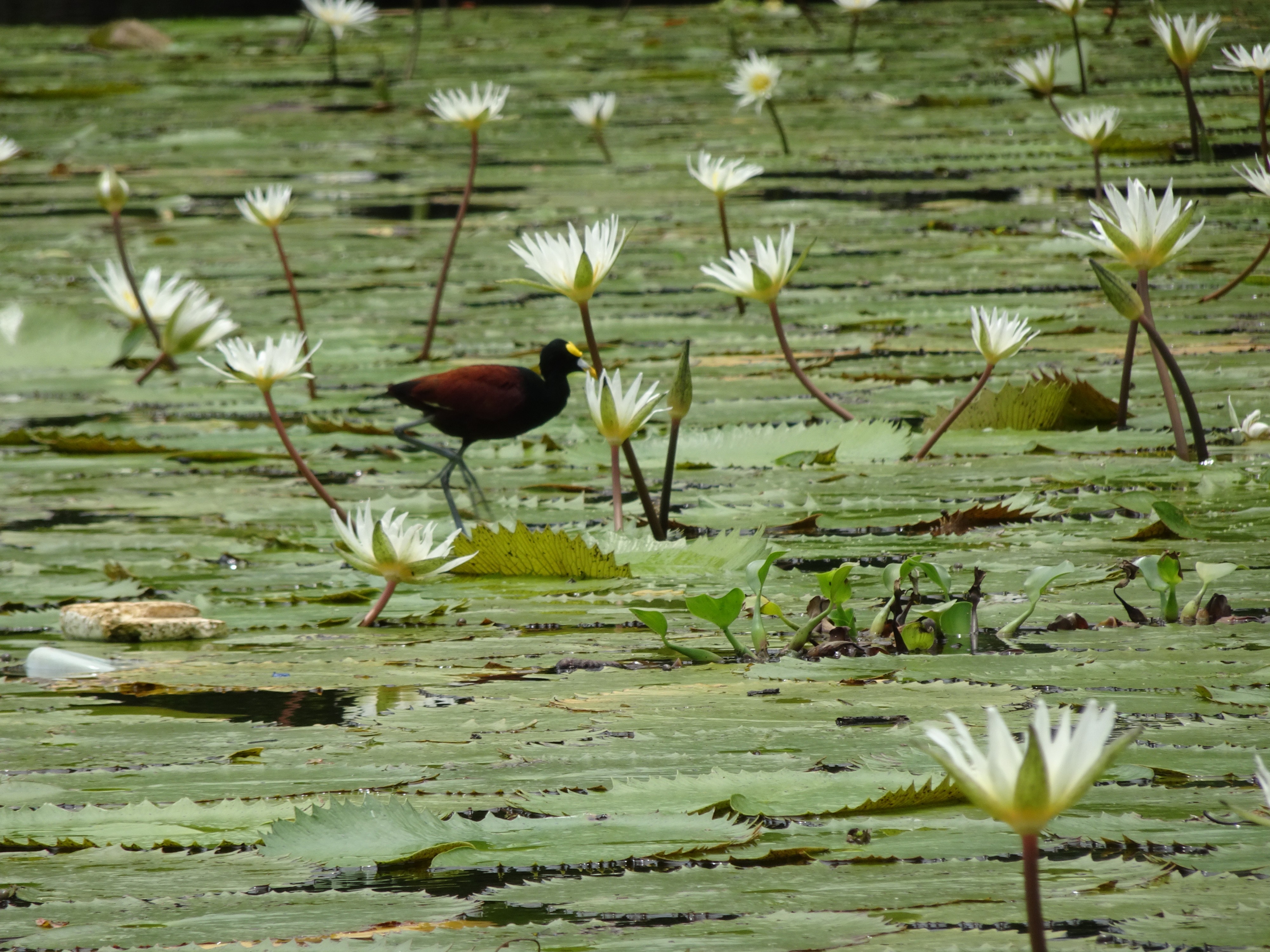
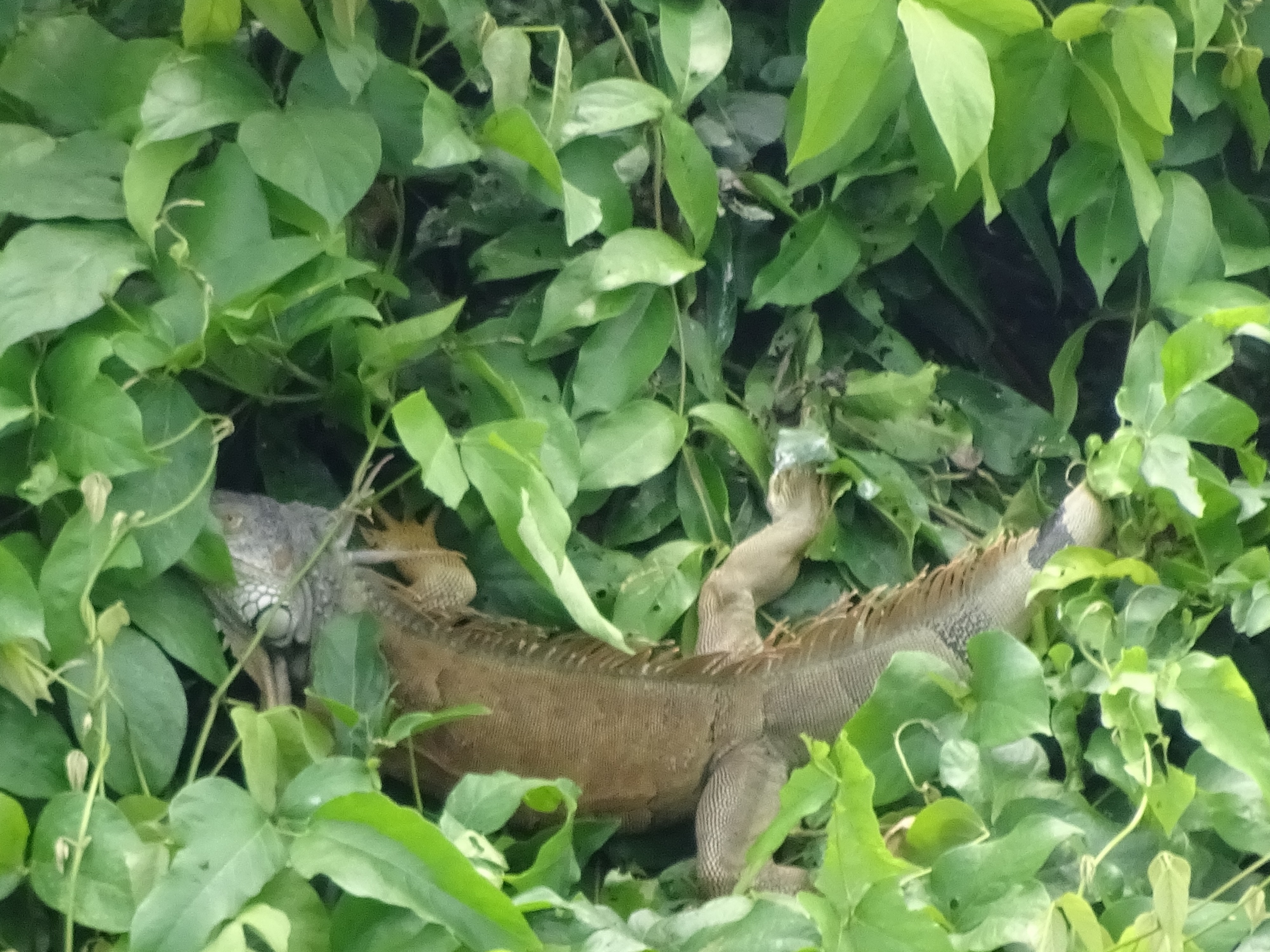
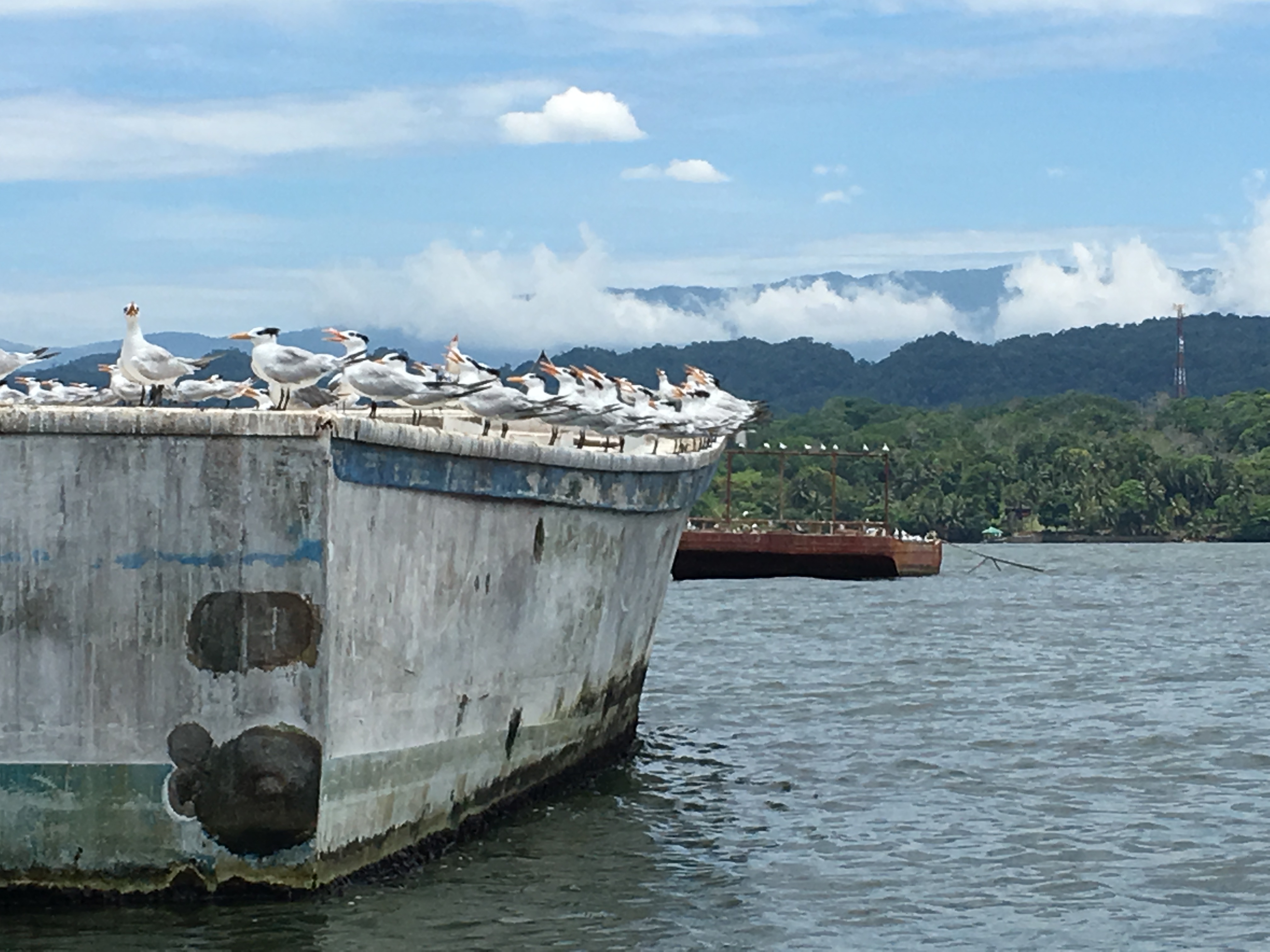
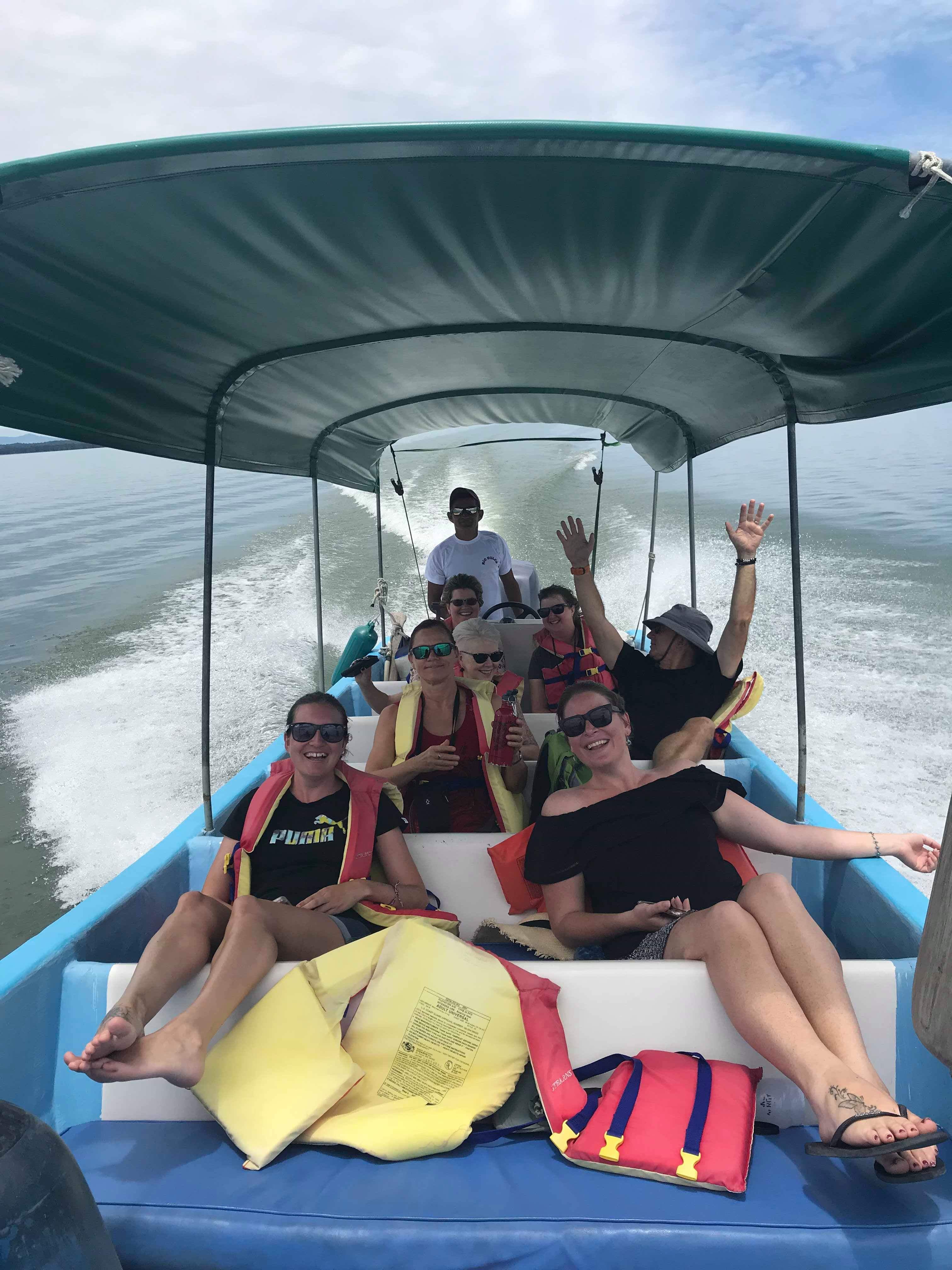
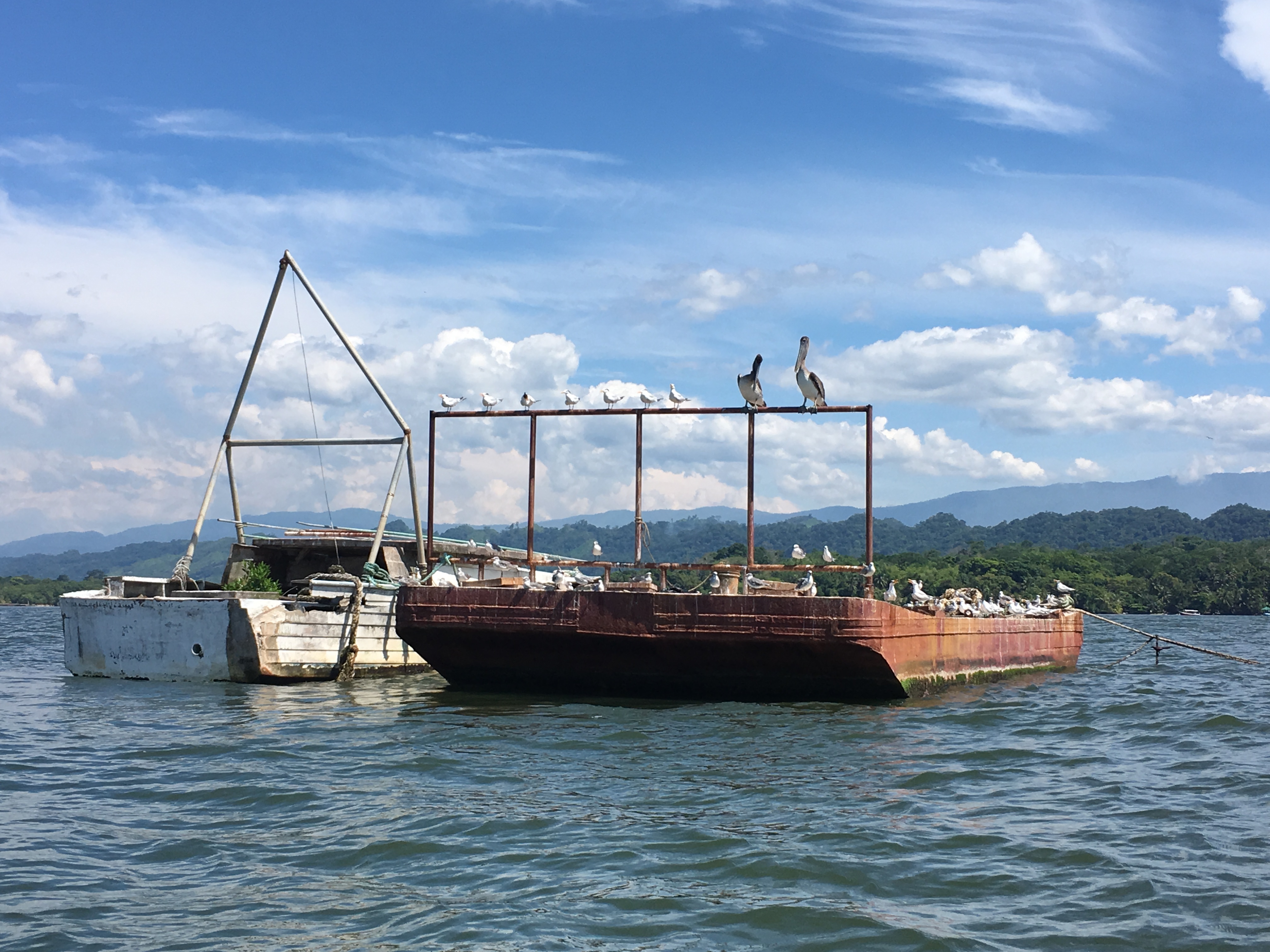
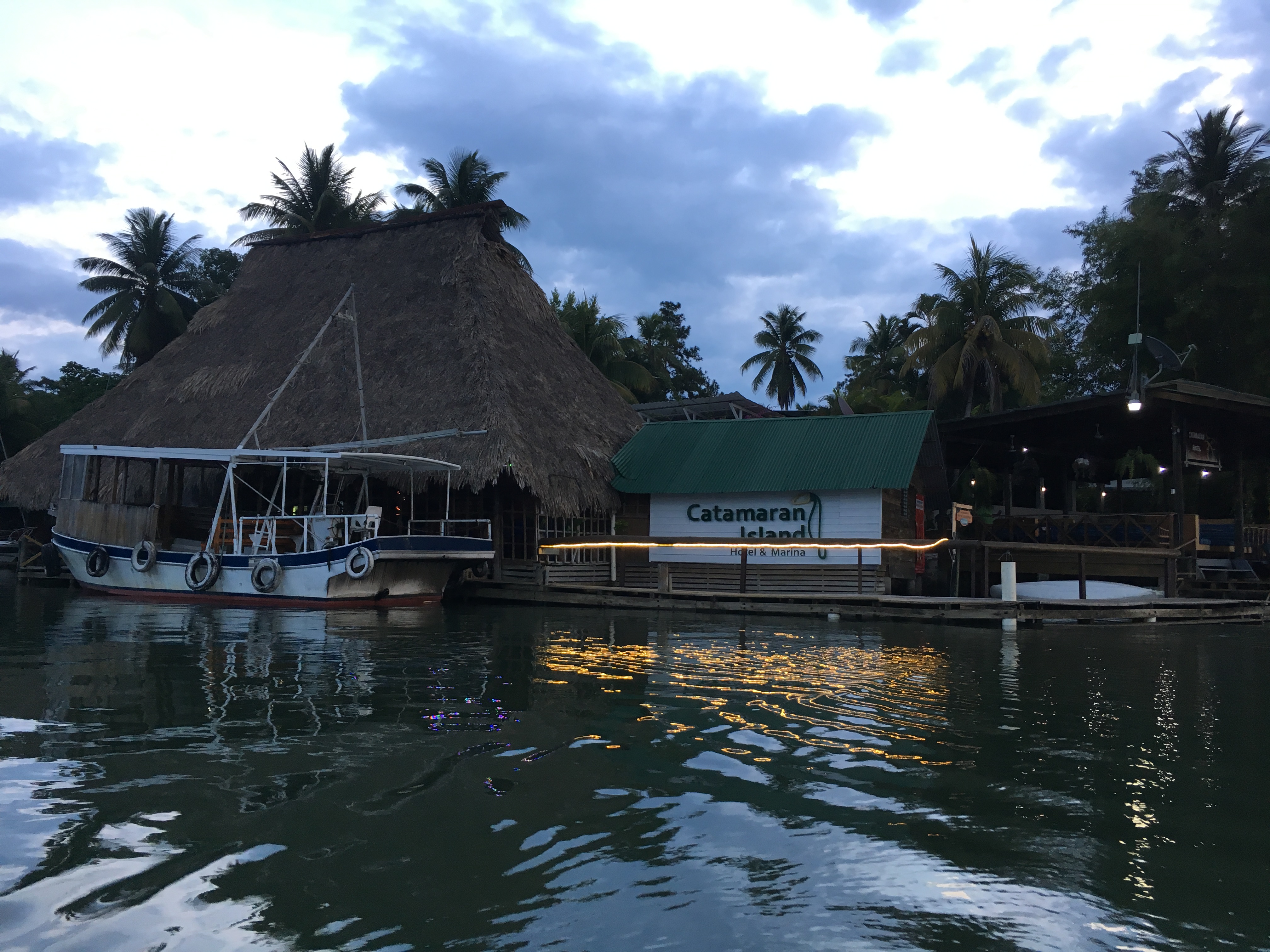
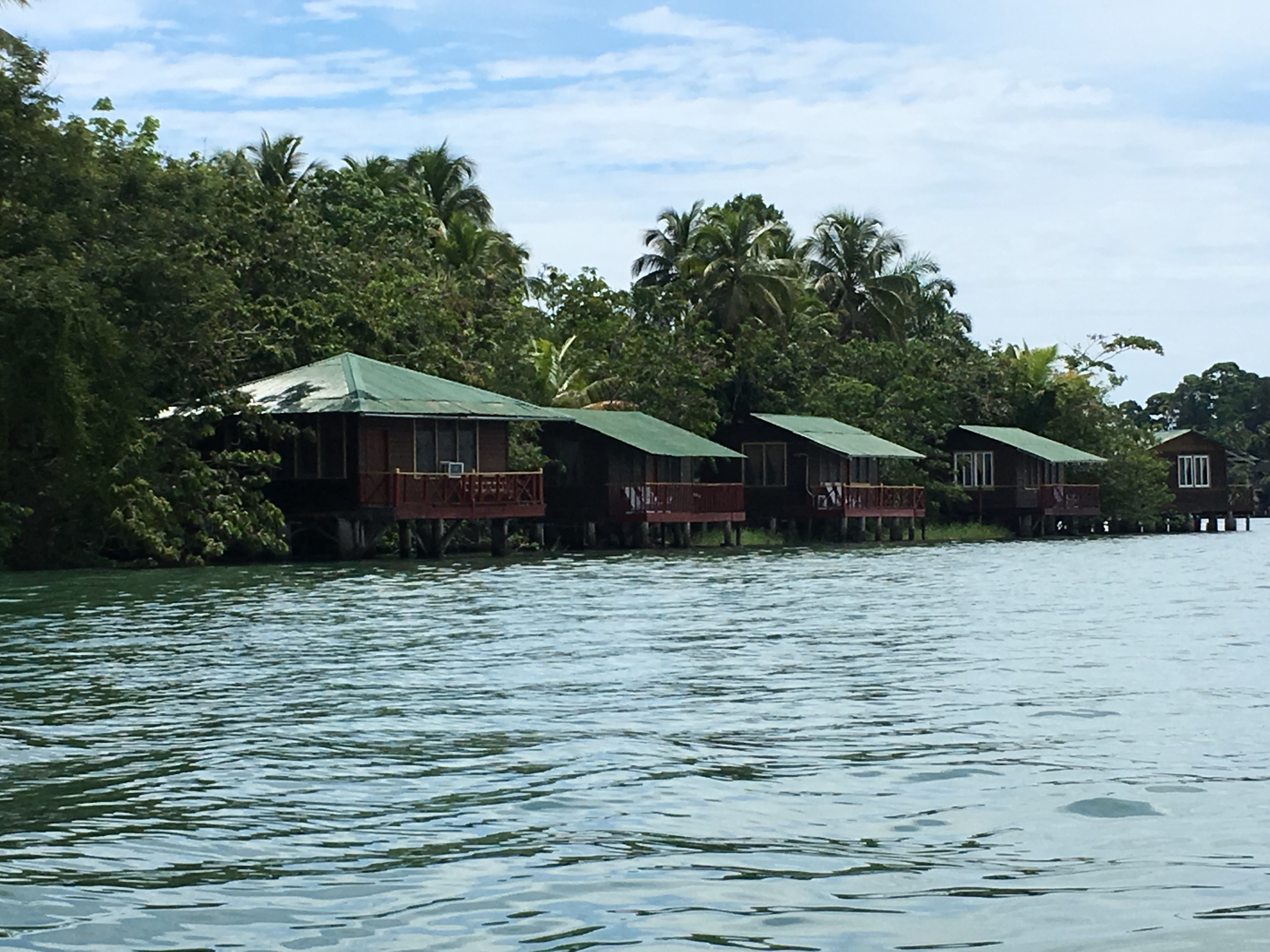
We return to our ‘hotel’. We are staying in lodges that are built right over the water. As we sit, chatting , in the swimming pool, we all feel that we could probably stay here a lot longer than just one night. It’s such a relaxing place.
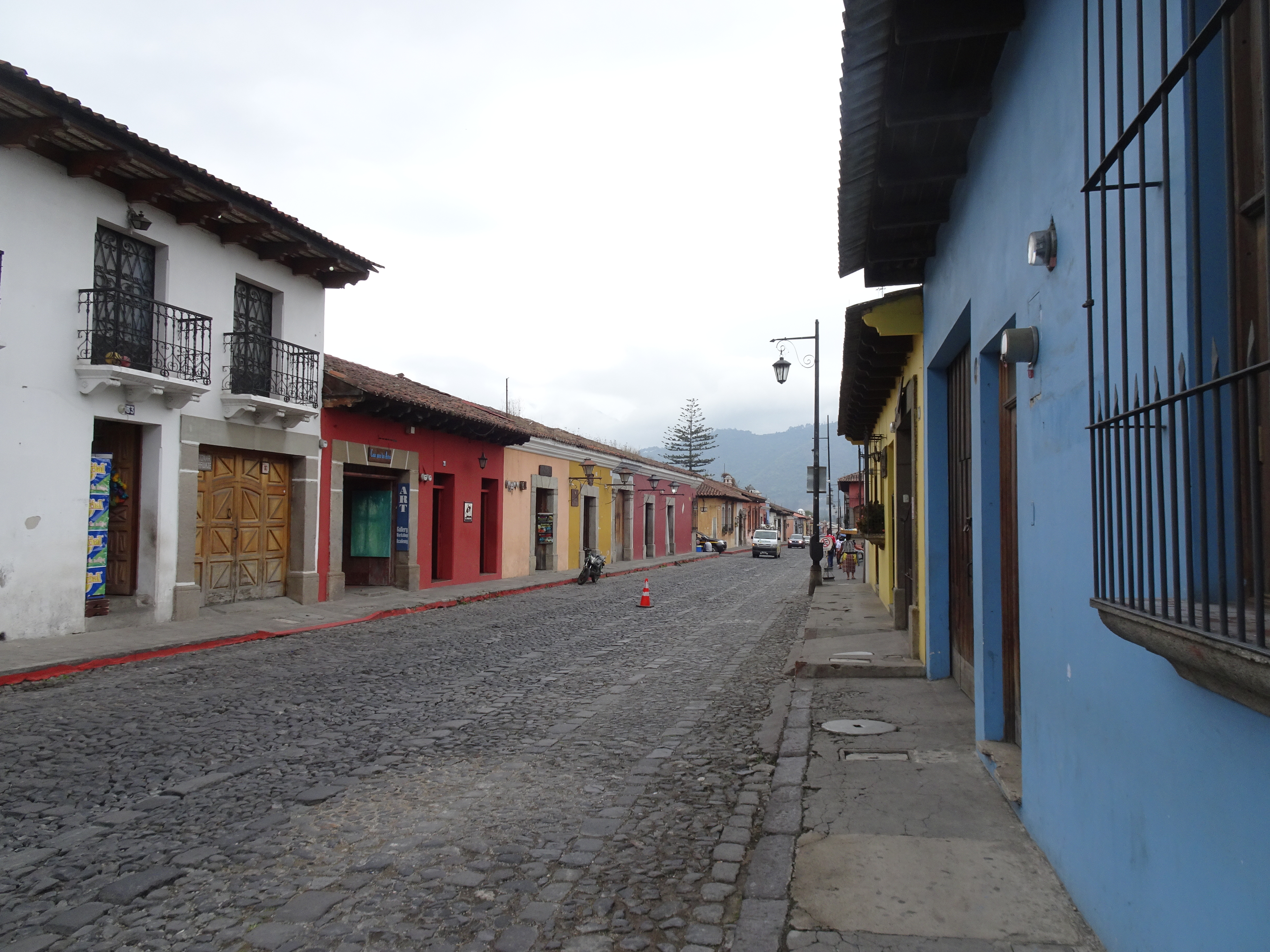
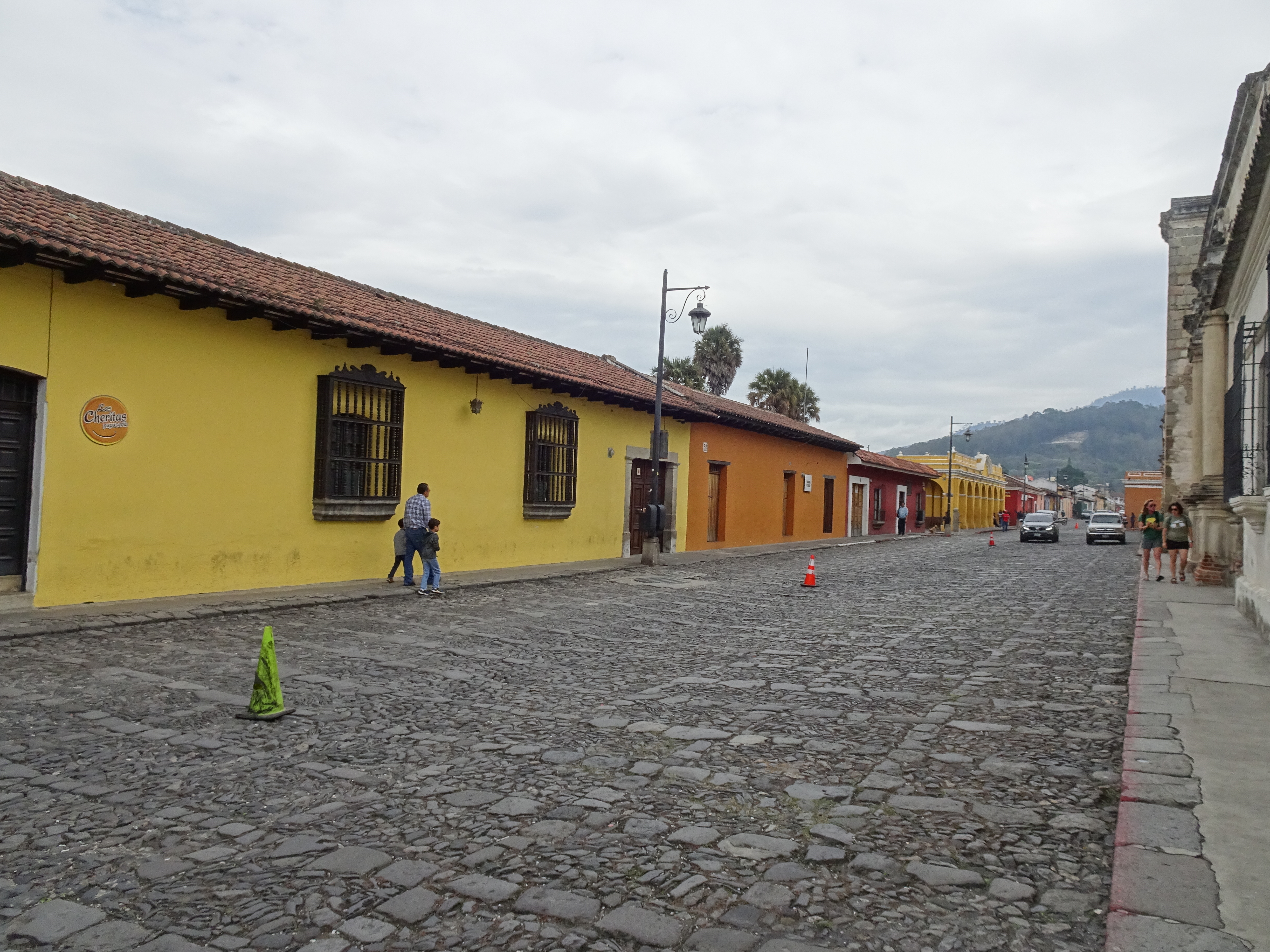
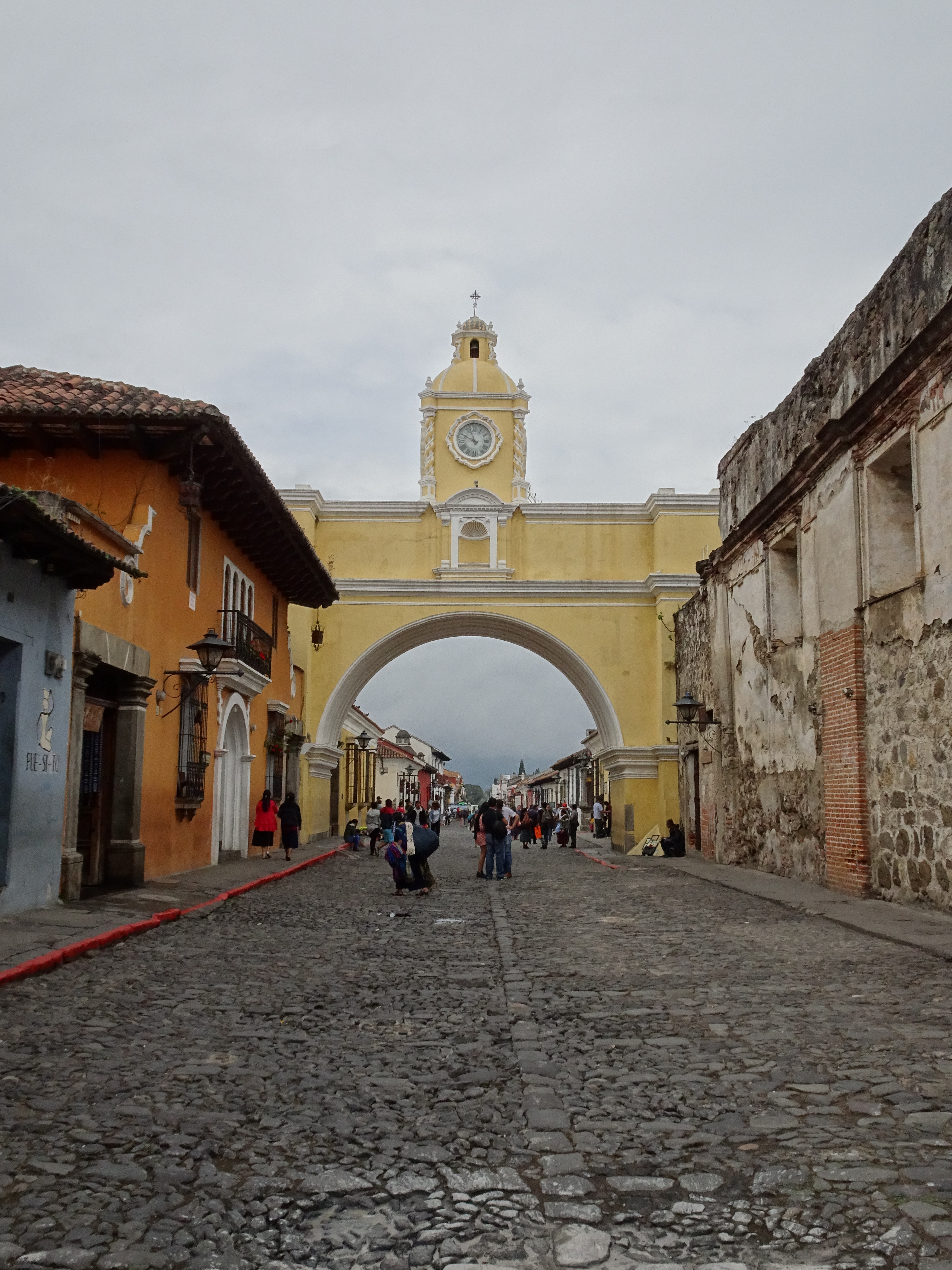
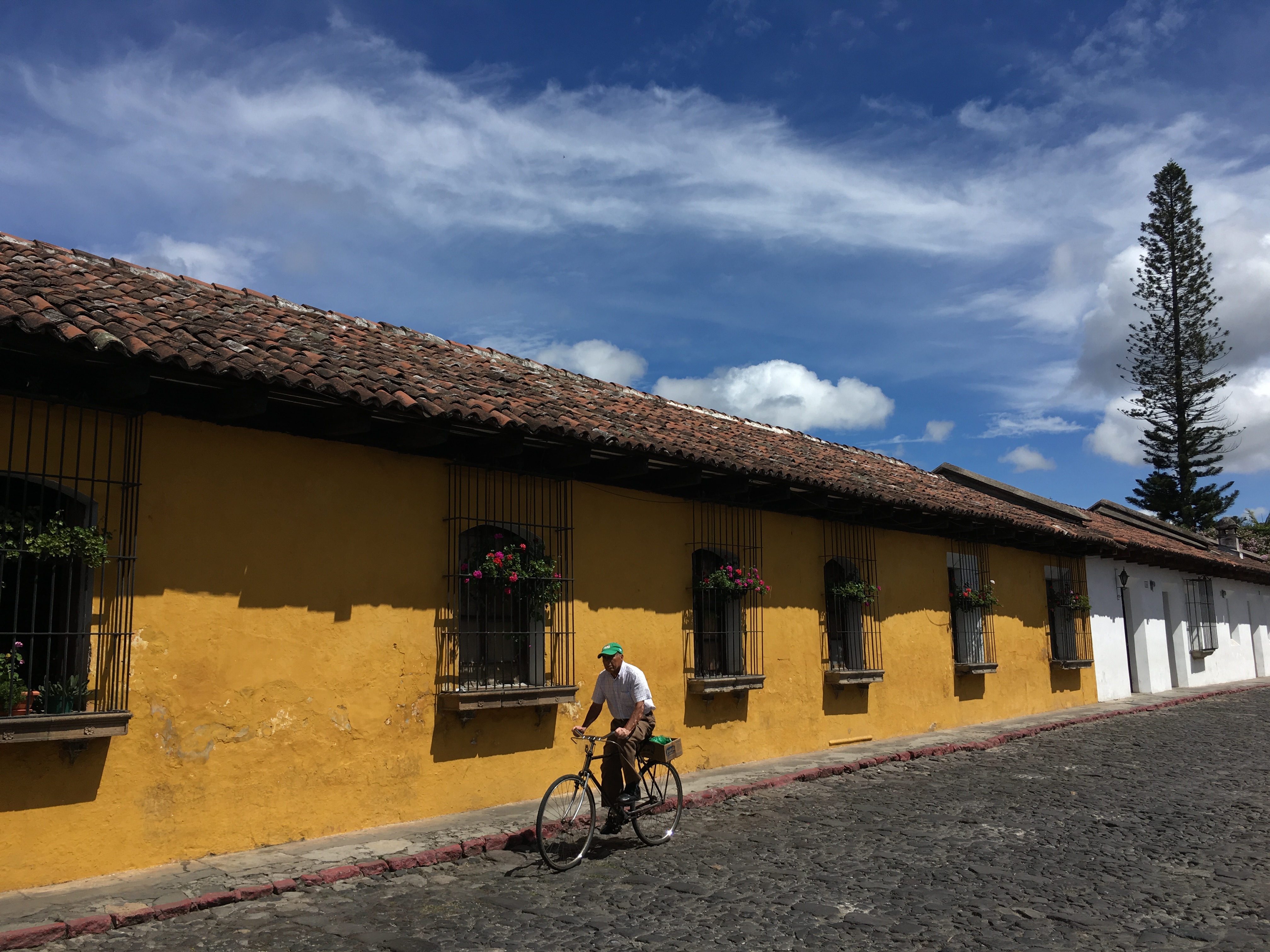
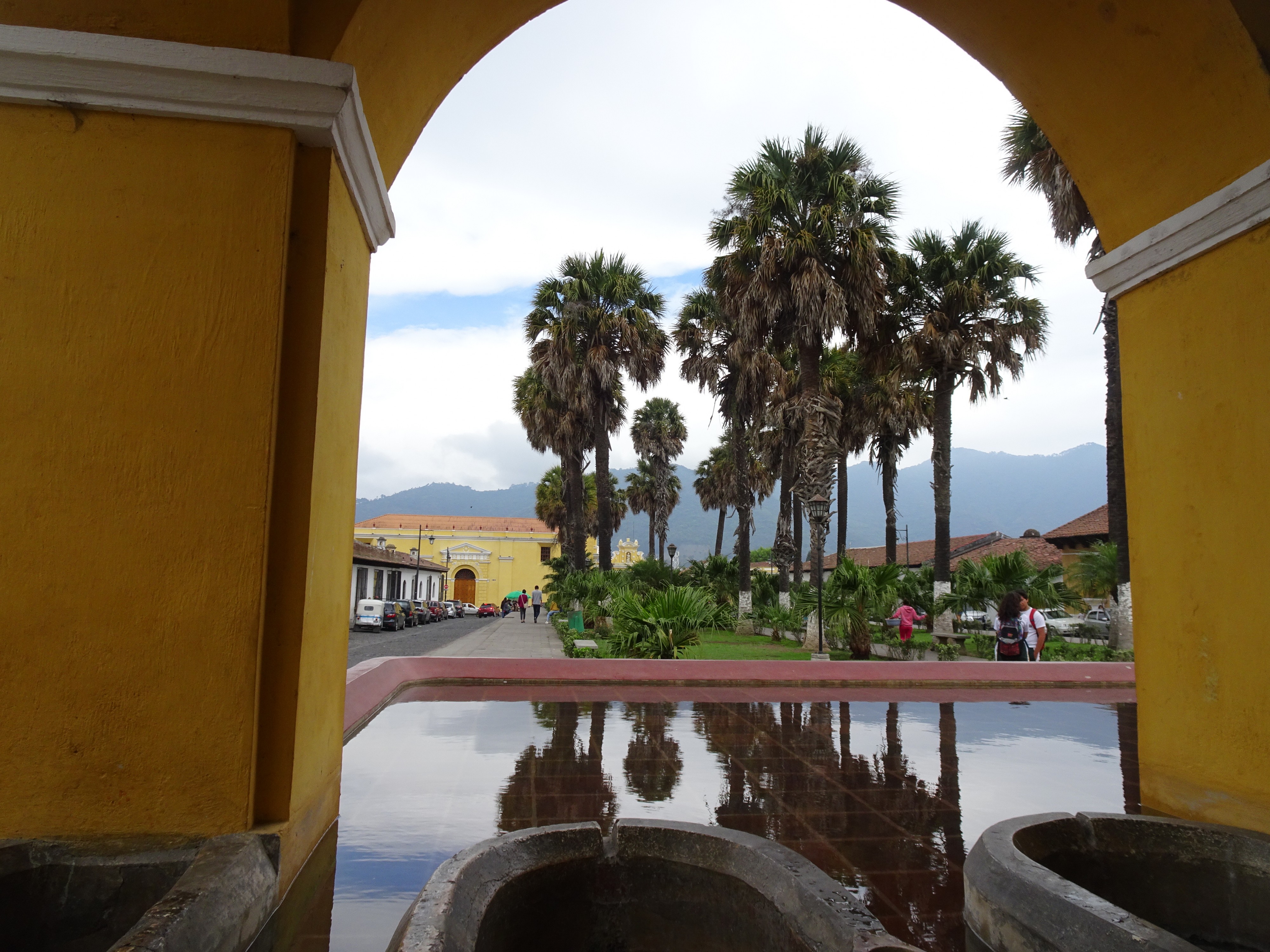
Antigua is the last stop on my part of the tour; the others are carrying on. The town is surrounded by volcanoes; some active. It is quite touristy but it has a nice feel. It’s good for just wandering and taking photos. I do a walking tour with Dave and Judy, have an excellent coffee and carrot cake with Jacinda, chat to Laura and Sarah. We all go out for a meal and watch some salsa dancing (Some of us join in, although unsurprisingly not me!).
We have a meal together and I say goodbye to everyone. I have loved the tour and enjoyed the obviously excellent company. Thank you Magda for such a great time on the ‘Fun in Mexico’ adventure.
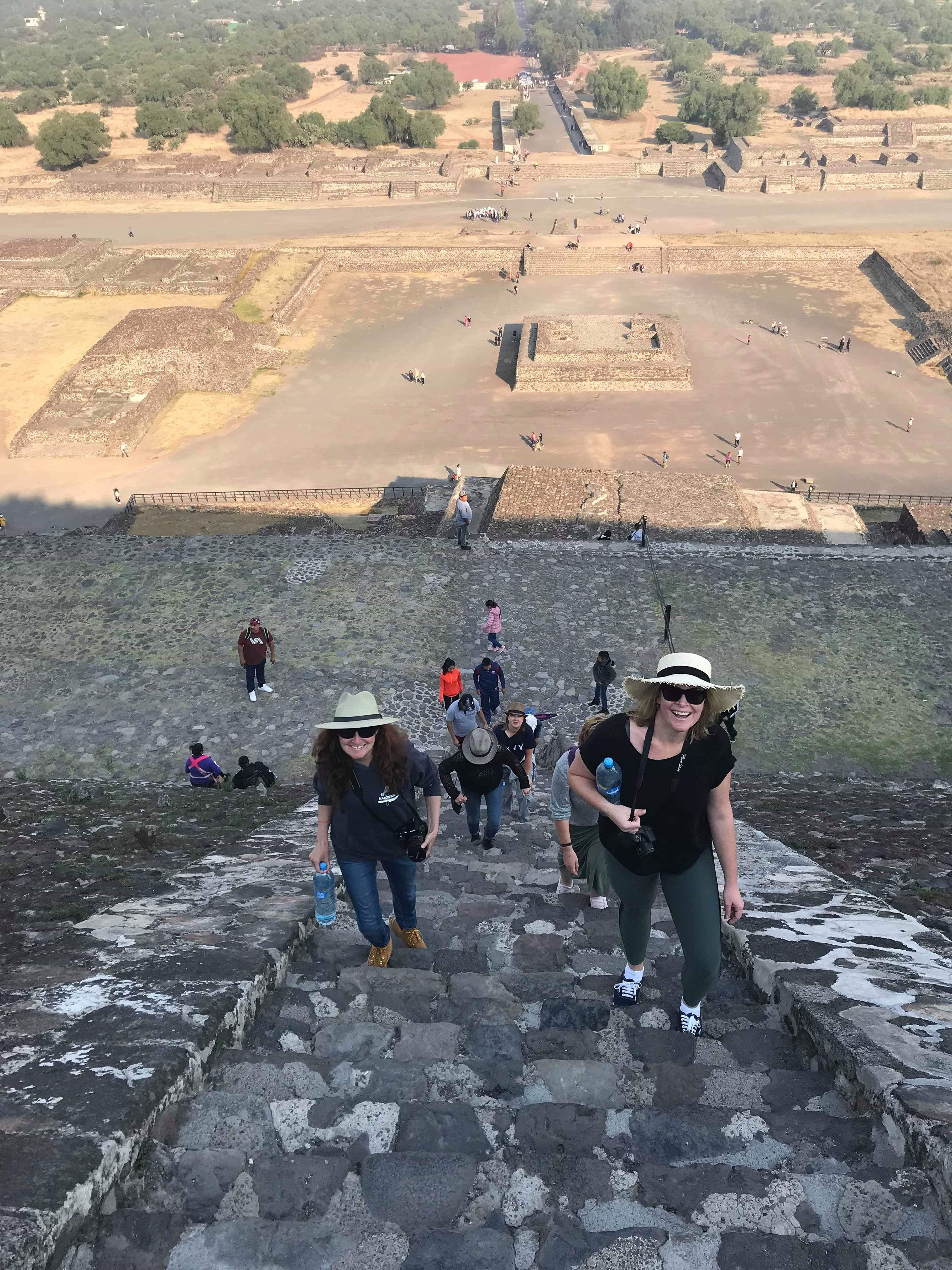
Nimble dogs dash past me as I struggle up the steps of the Sun temple. The rest of the group just look cool. I’m huffing and puffing by the time I reach the top but the view is most definitely worth it.
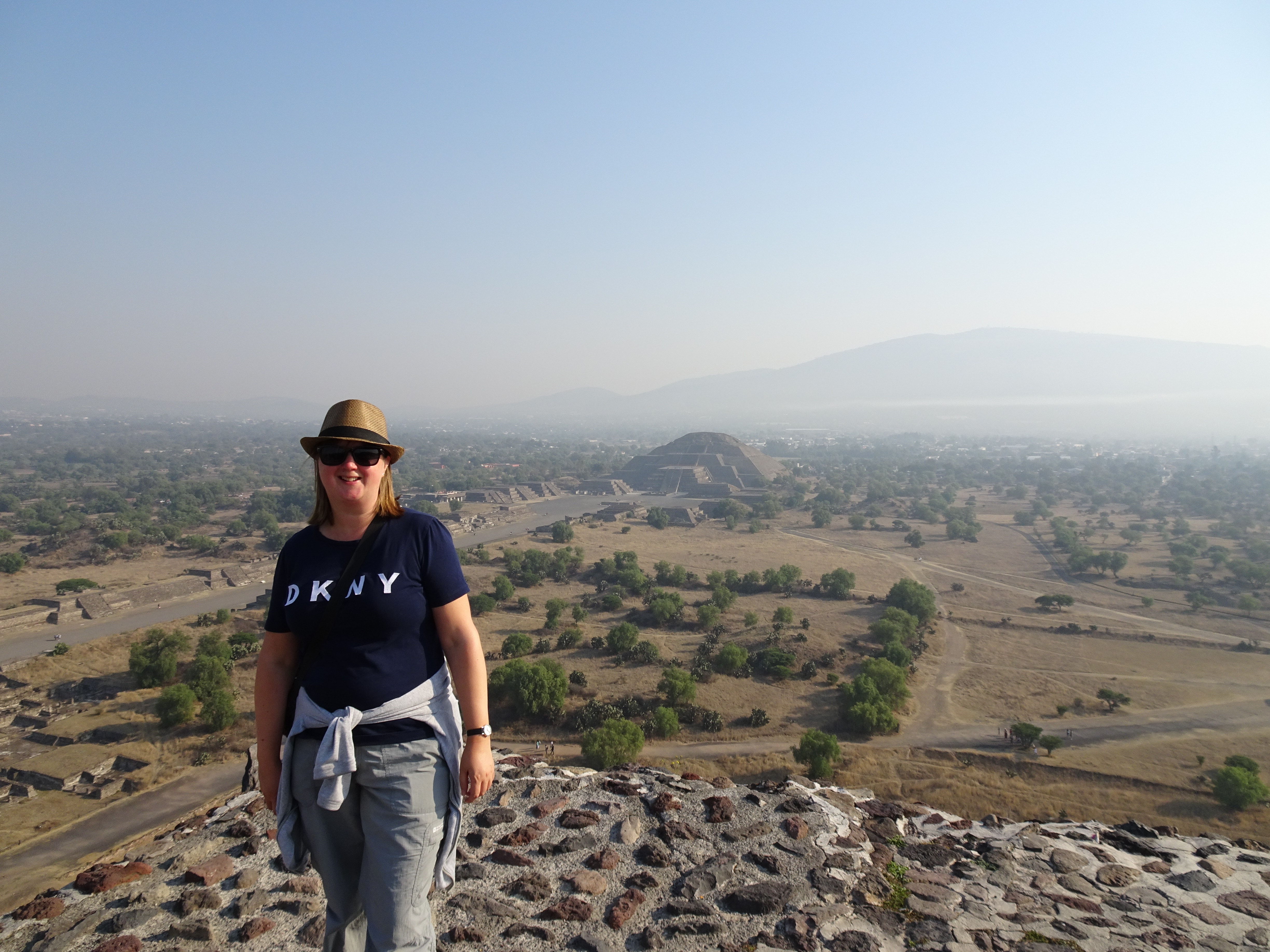
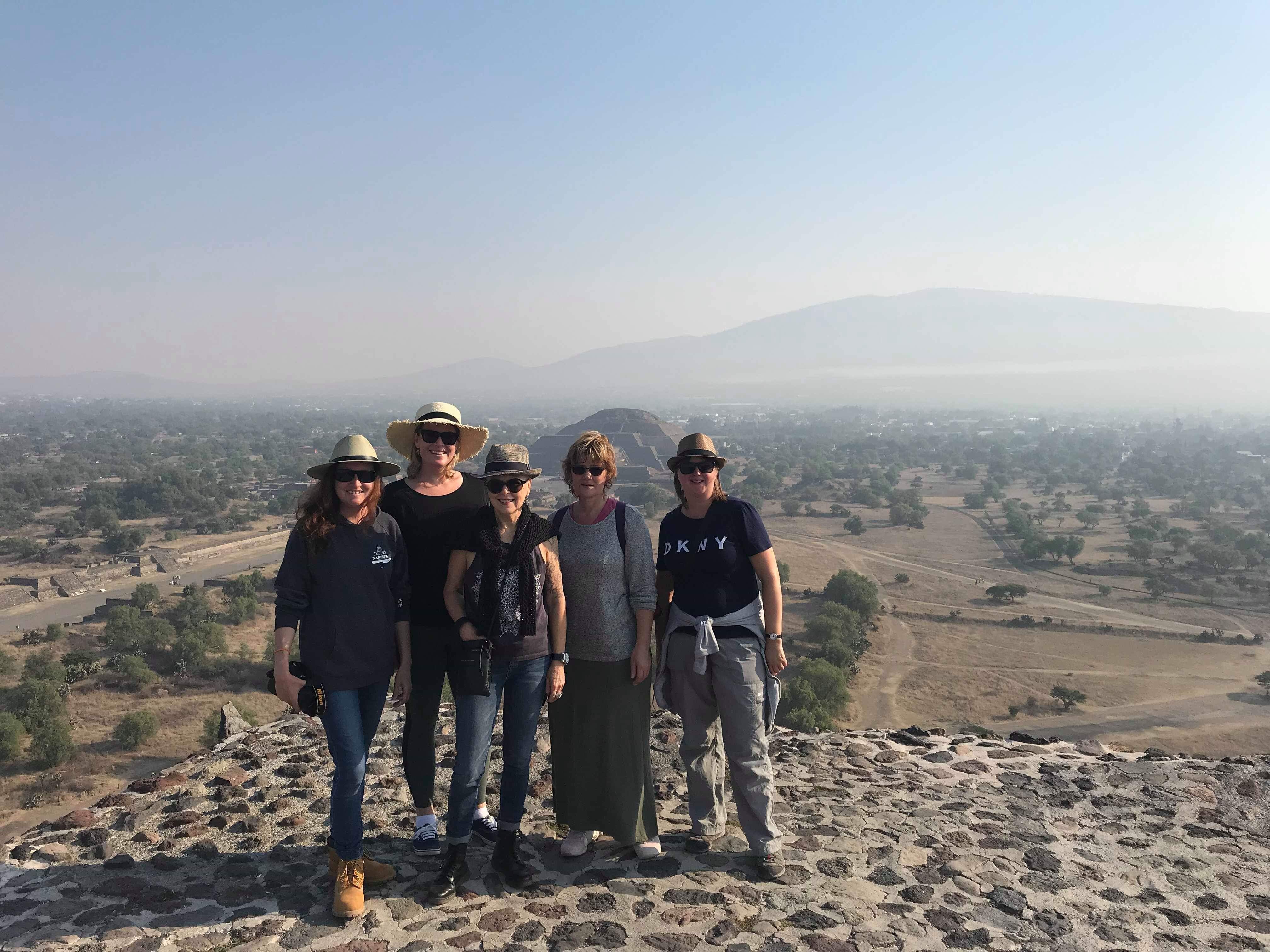
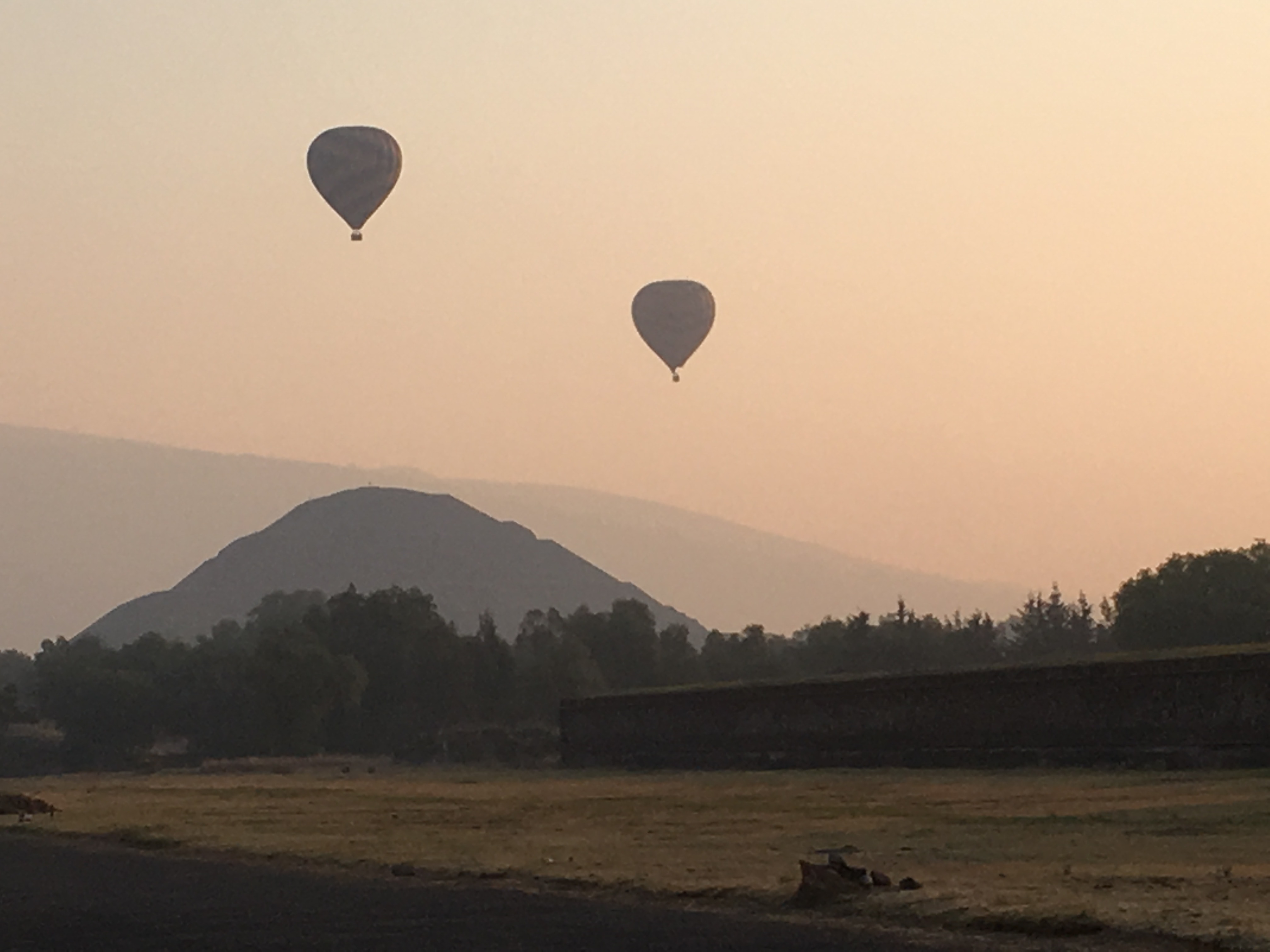
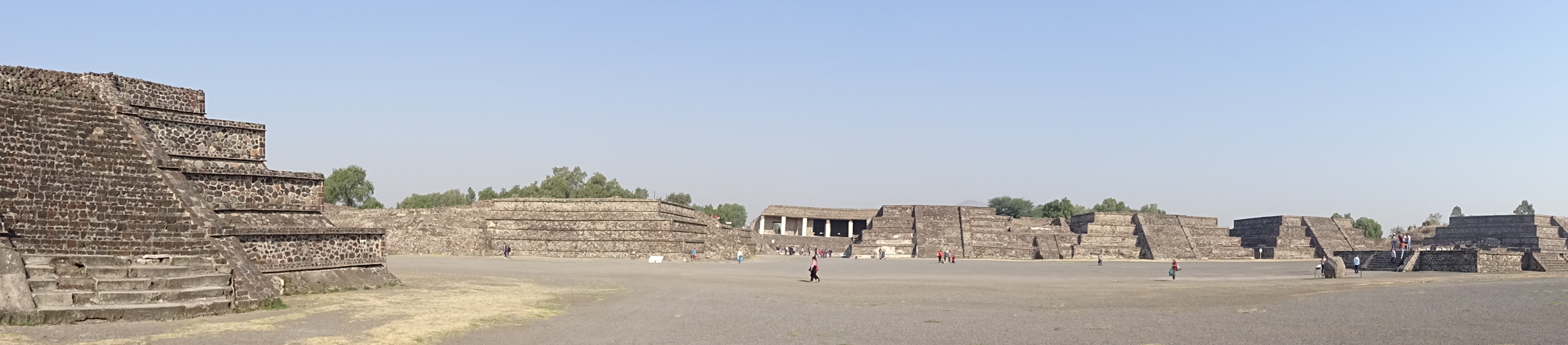
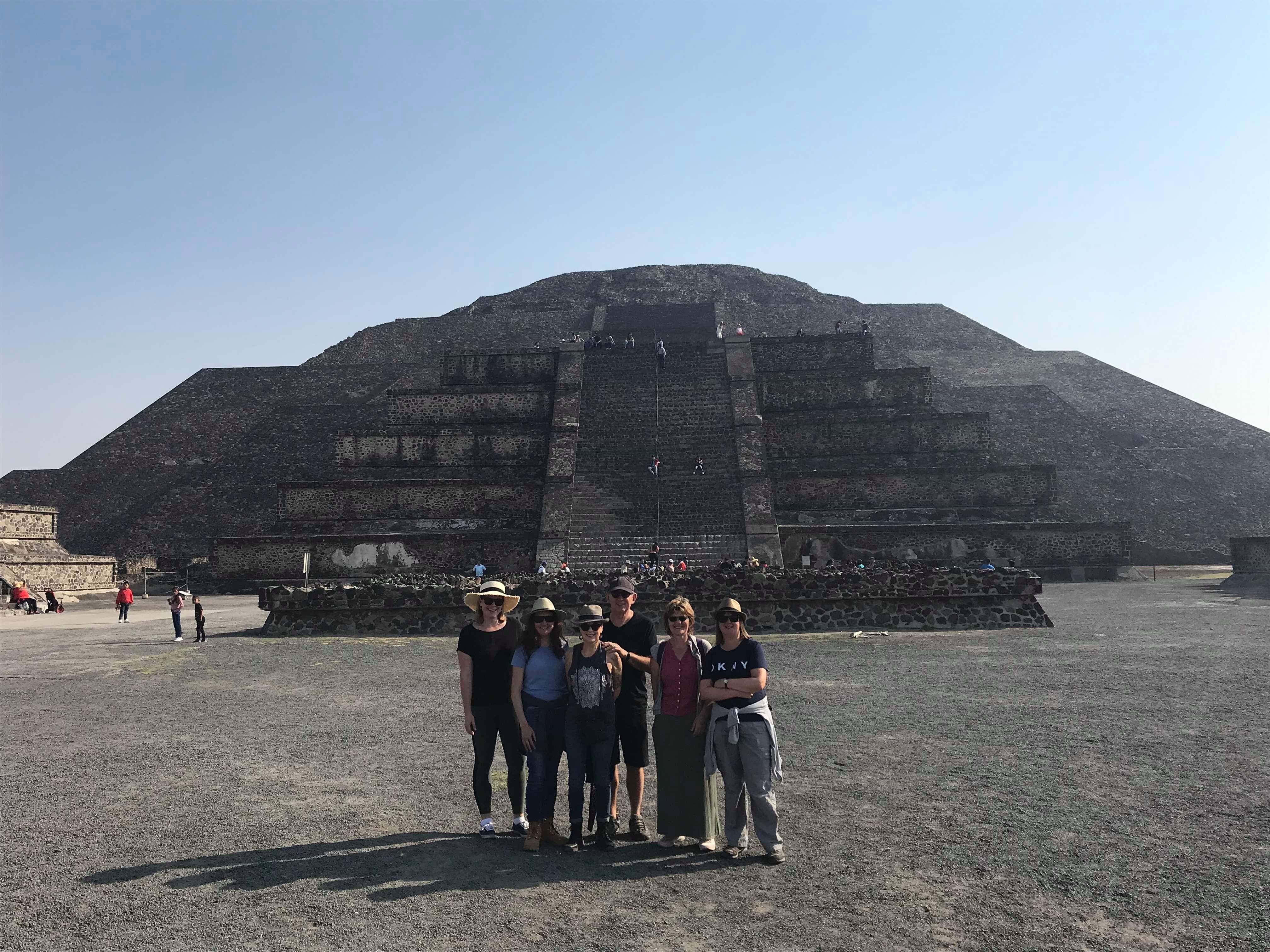
We arrive early enough at the ruins of Teotihucan to see the hot air balloons drift across the red morning sun. The site is massive and impressive. It was built around 300 BC and home to approximately 125,000 people, and as our first experience of the many ruins in Central America, its a good start.
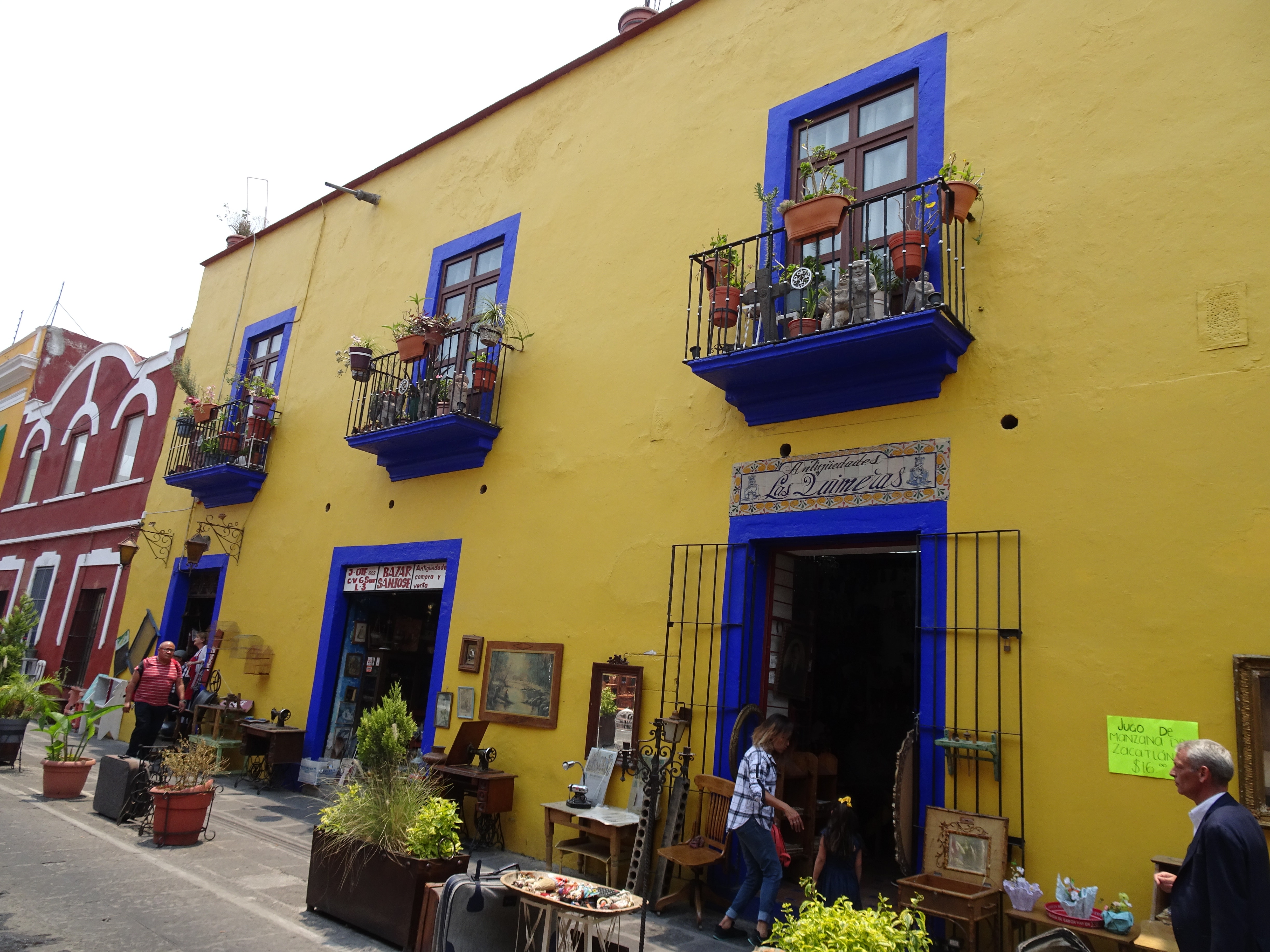
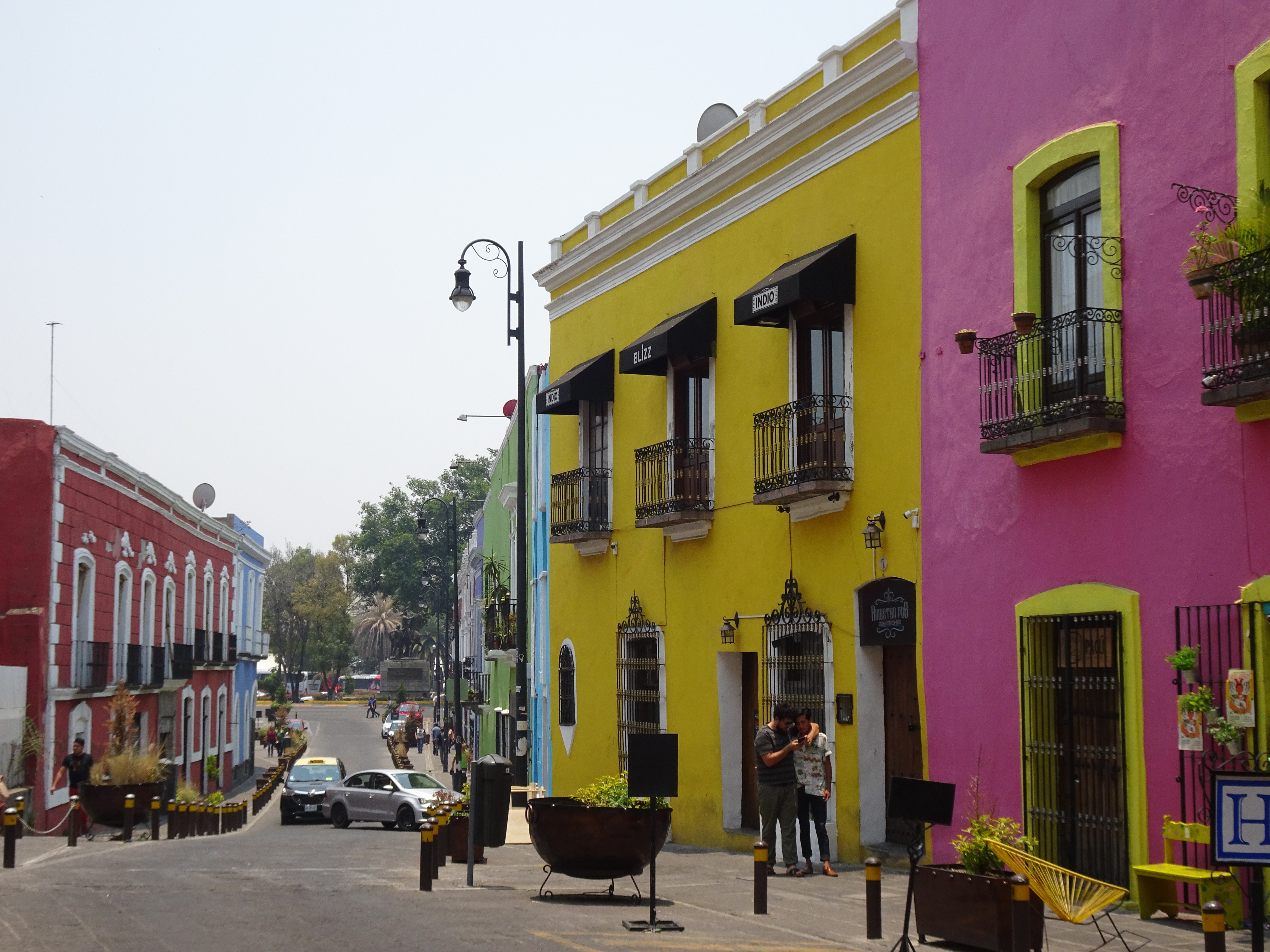
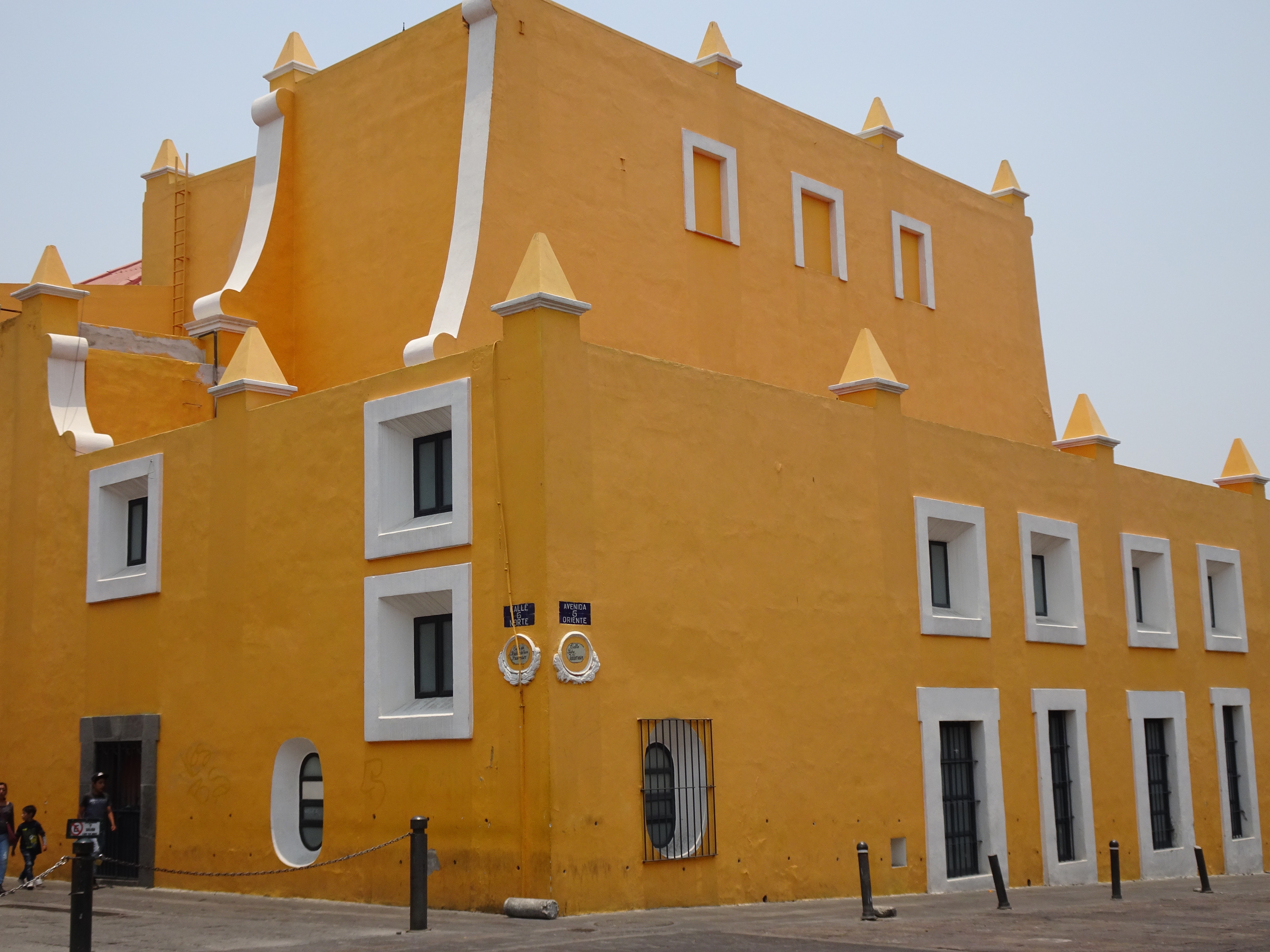
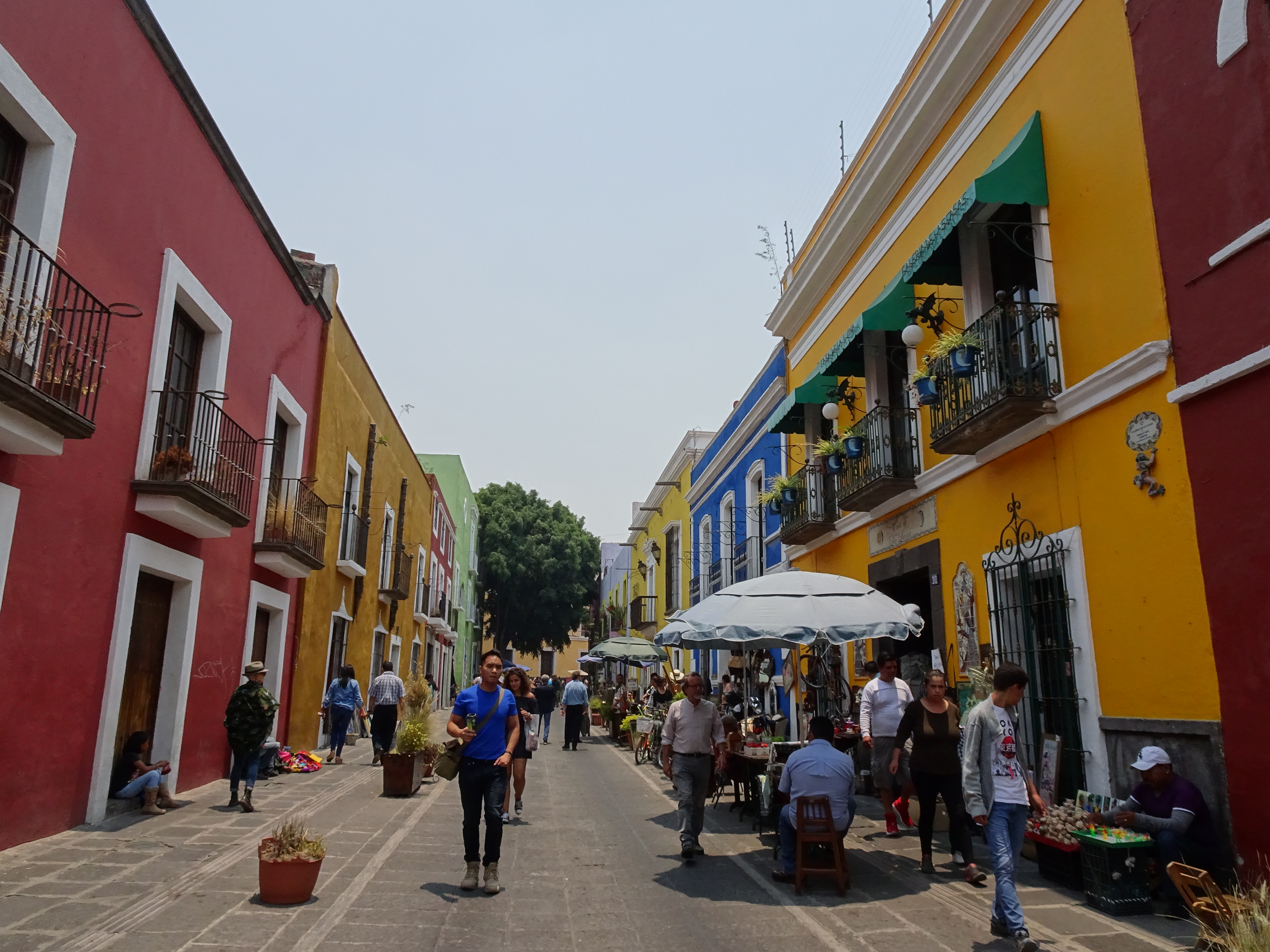
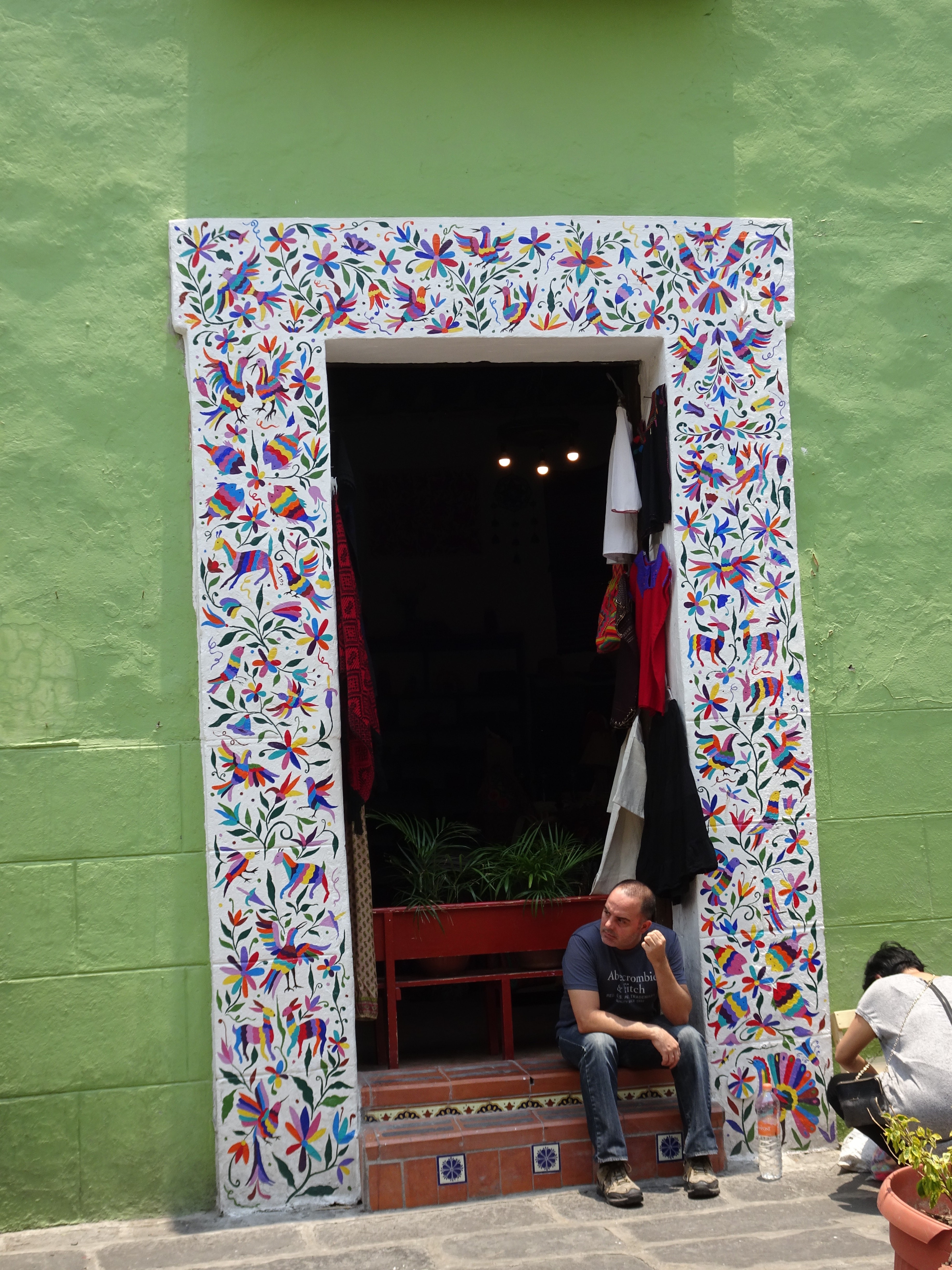
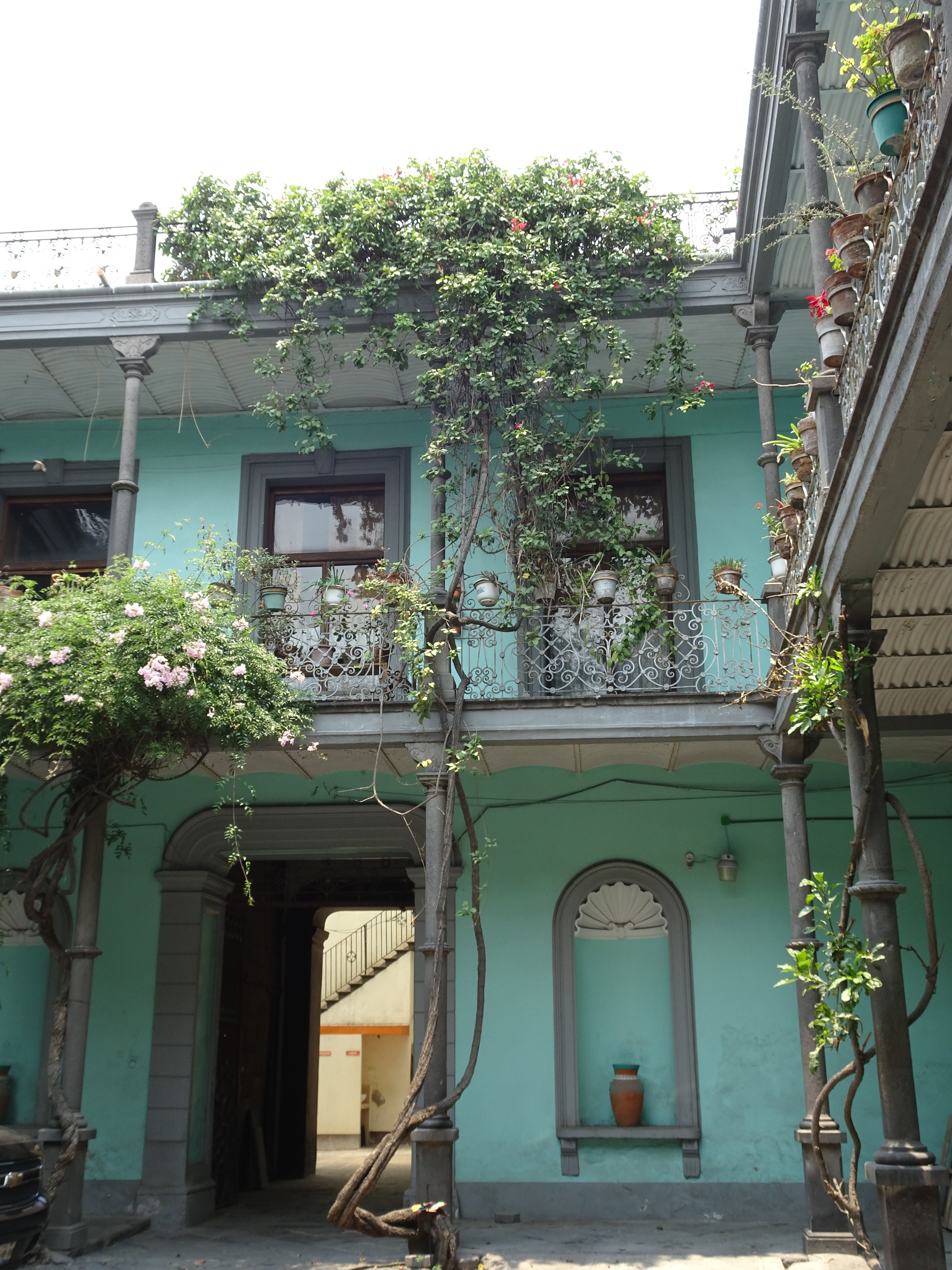
We turn left out of our hotel, walk through a small shopping centre and are straight out into the main square of Puebla. The cathedral borders one side, a selection of restaurants cluster on the other edges. What is most striking about Puebla is the colourful buildings. Even the most run down dwelling looks attractive painted in a bright colour. We spend a hour or so walking round the town. It is hot (I must remember to take snacks next time). Later we go out for a meal at a local restaurant and try Mole, a spicy chocolate sauce that seems to come with everything and doesn’t actually look particularly appetising!!!
So we’ve been on a 5 hour bus journey with no food and now we are walking round on our orientation walk in the heat without snacks and water. (Again, I must remember something to eat and drink). Oaxaca (pronouced Wa-ha-ka) is another colourful town with a central square.
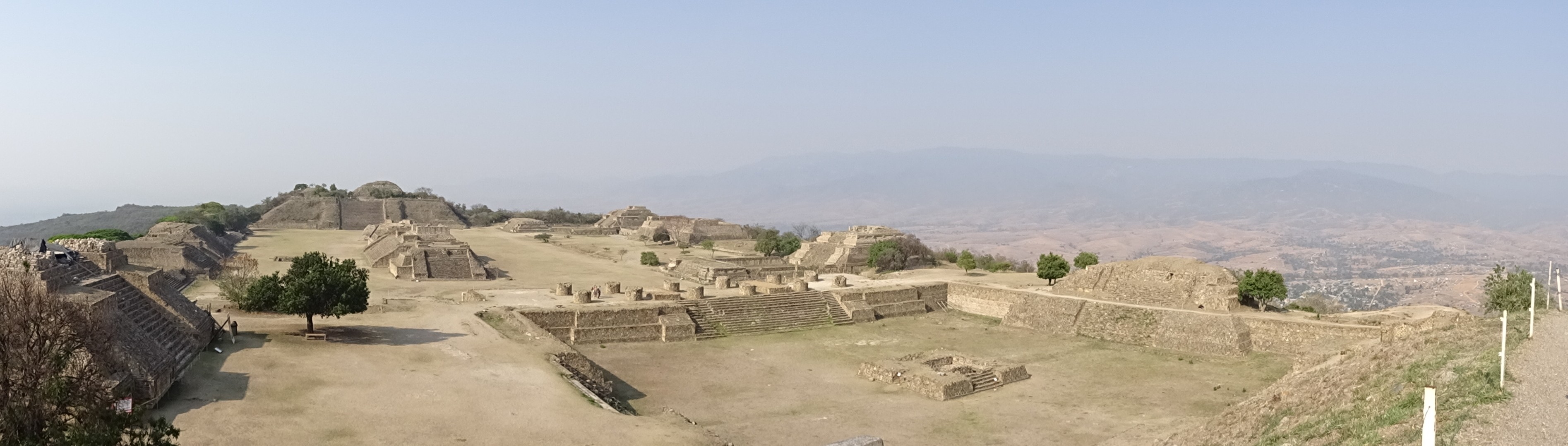
A friendly dog attaches itself to us for most of the tour, seeming to enjoy our company, or at least he knows the guide. The guide takes us around the side and then up to the top to see the stunning view over the Grand Plaza. We climb down into the main area and see some intricate carvings, still well preserved.
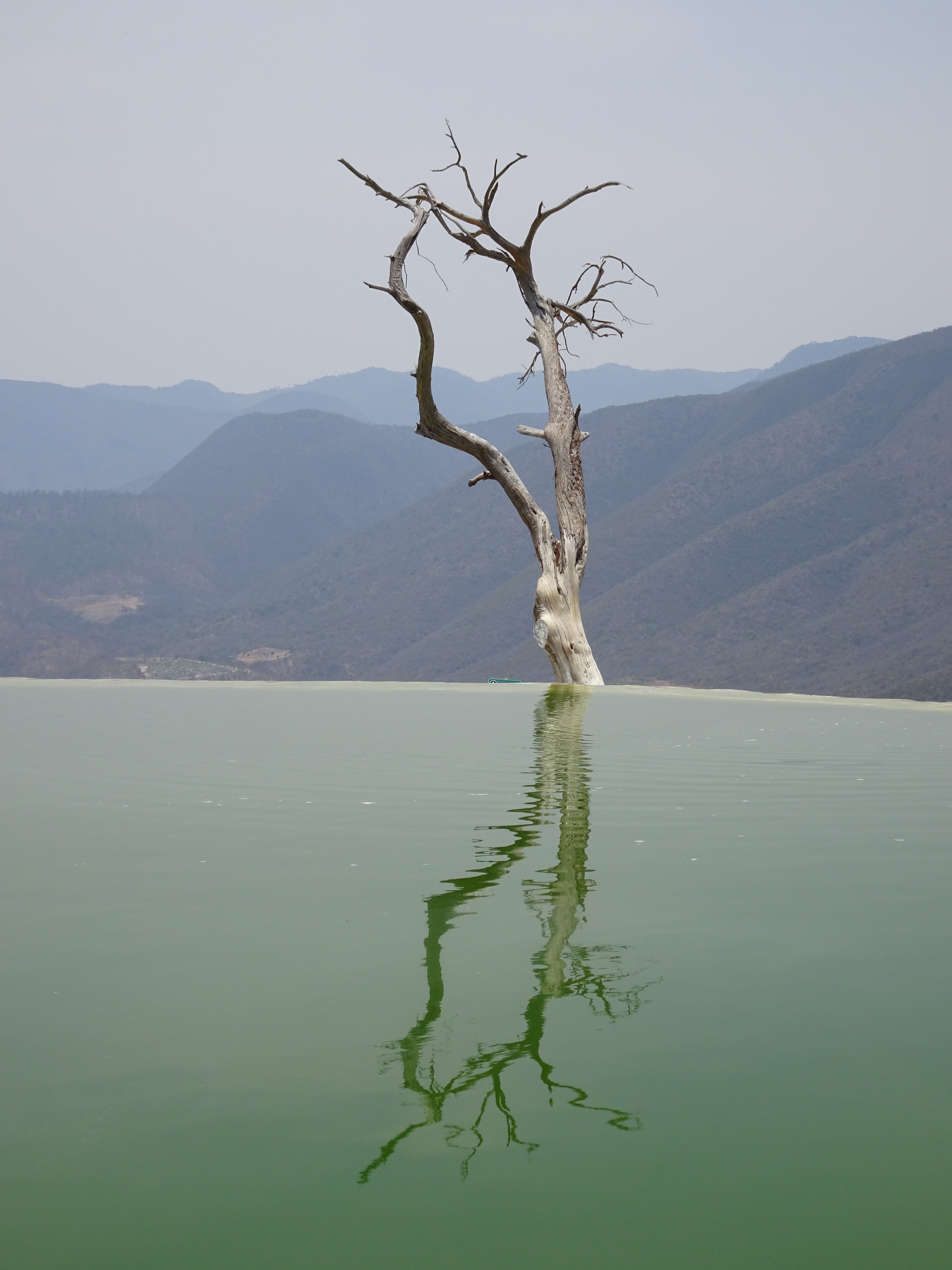
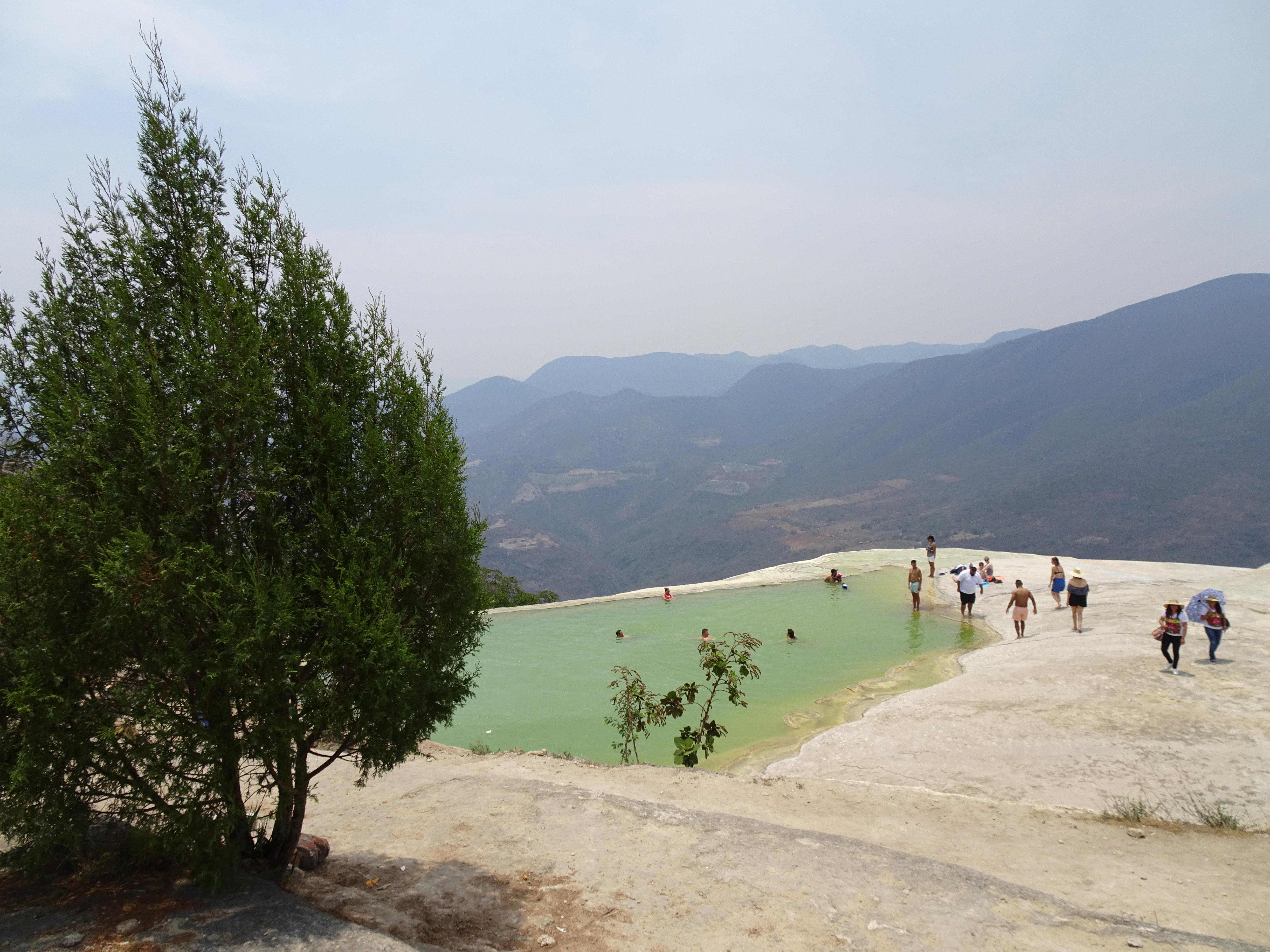
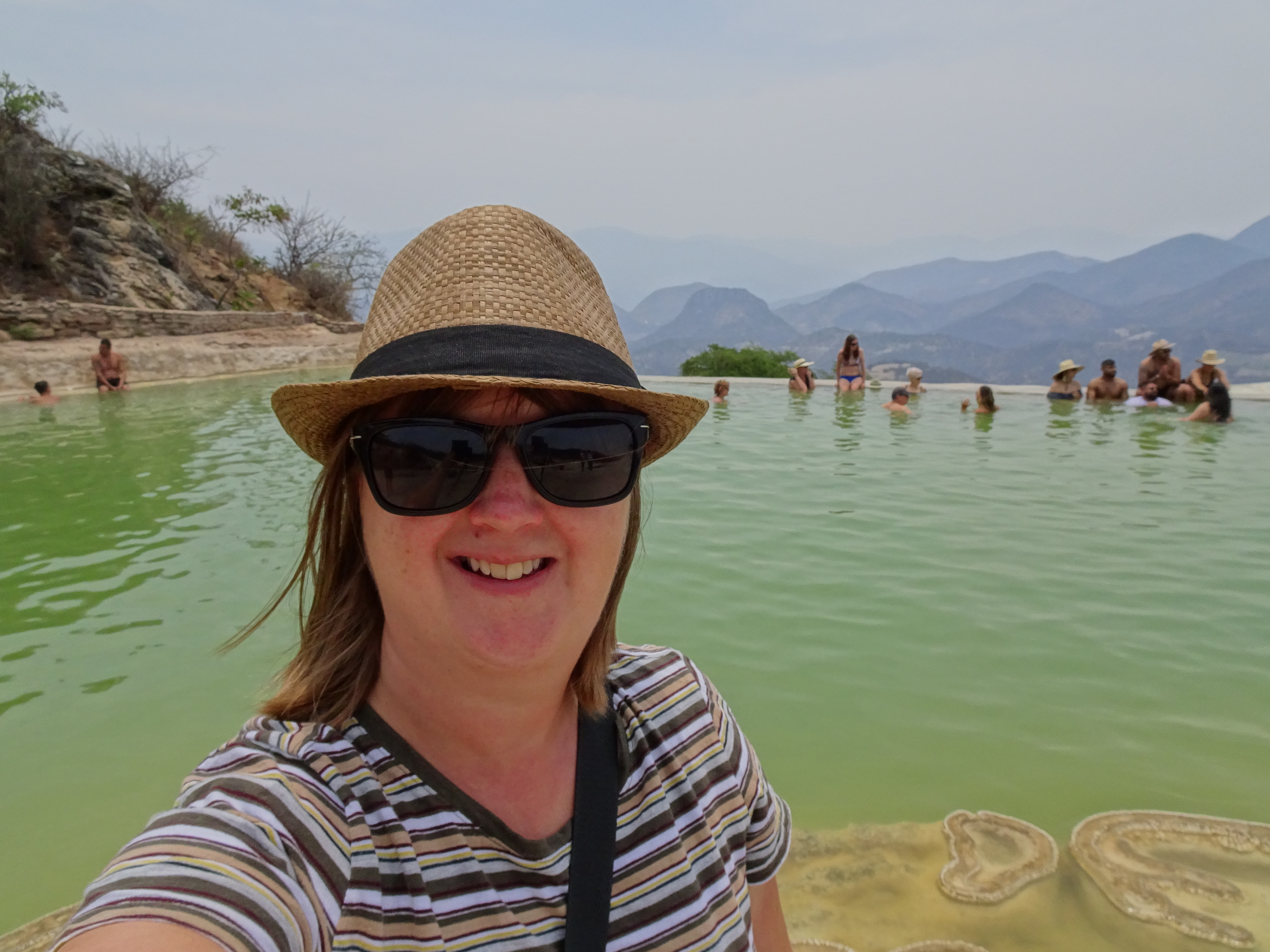
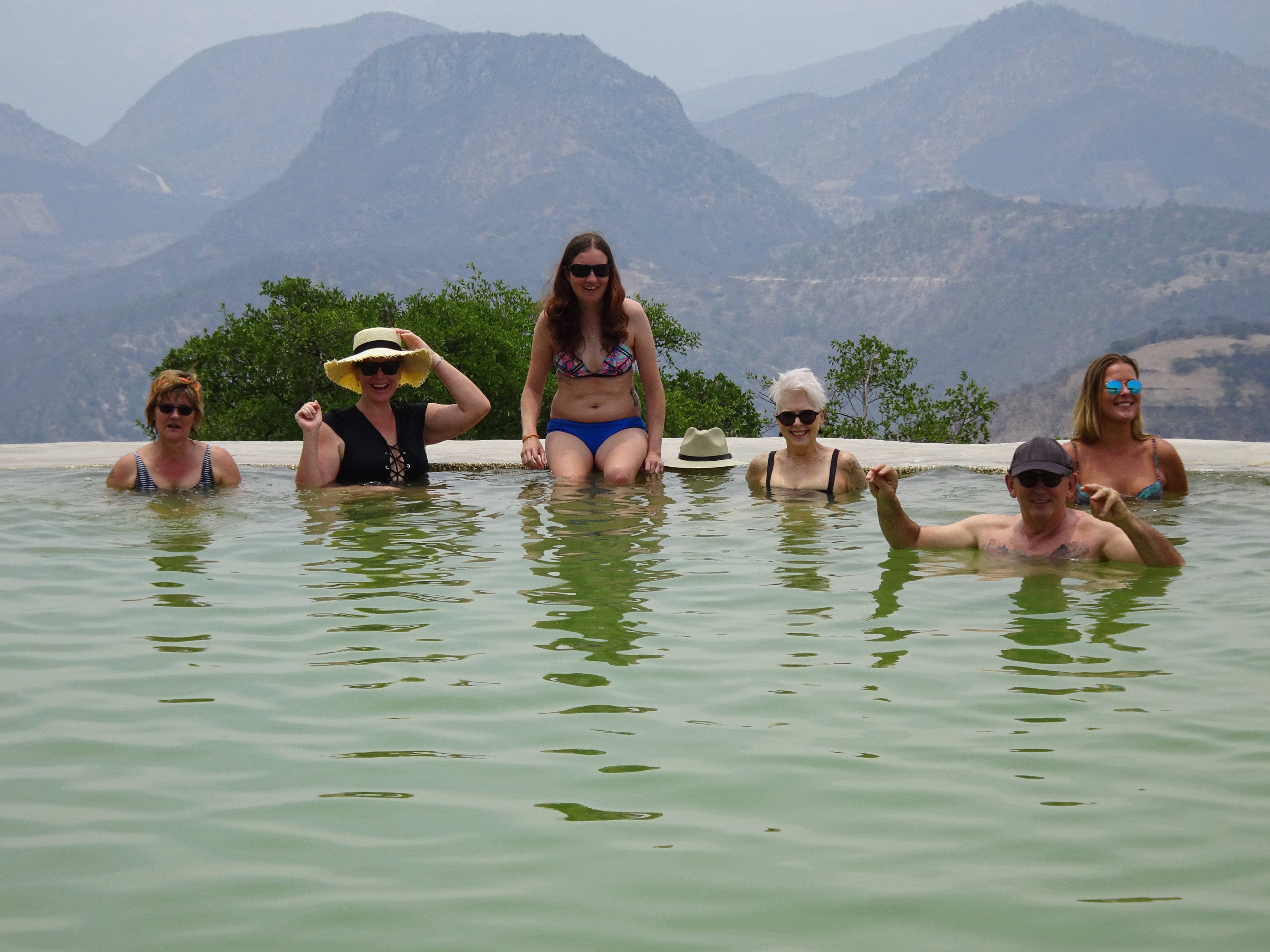
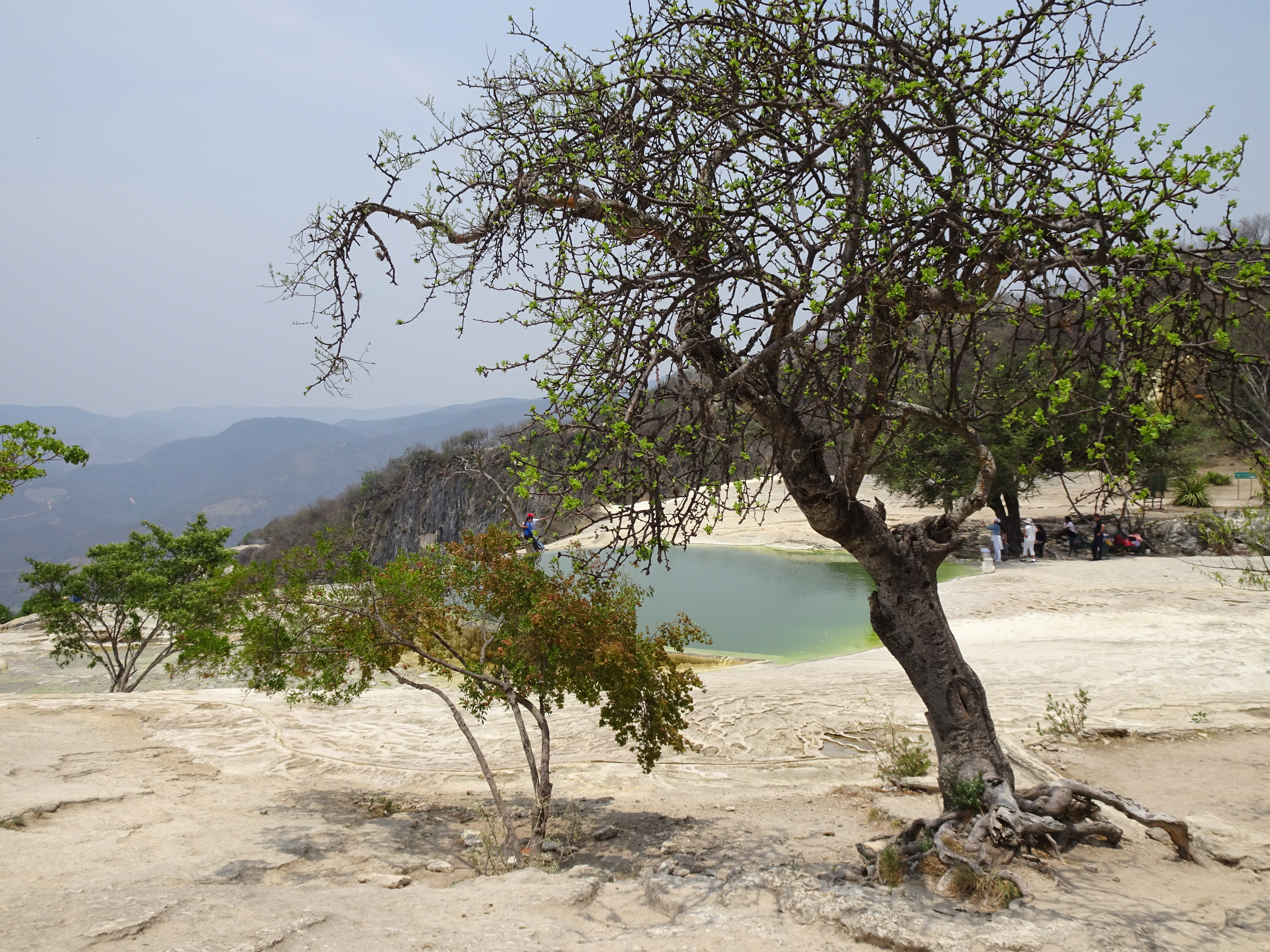
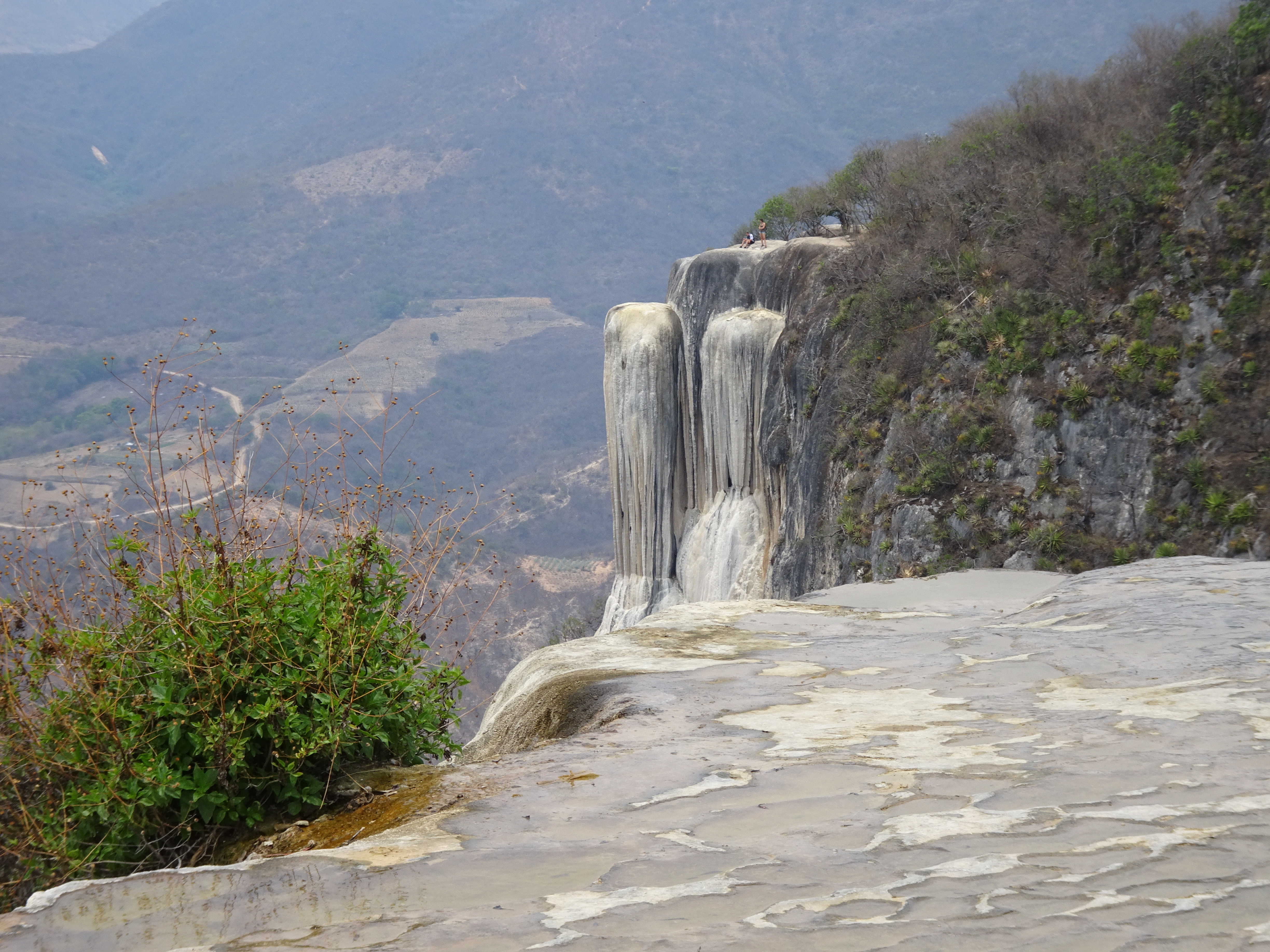
The pools at Hierve el Agua look like they are ready to plunge over the cliff. Across the valley, a waterfall tumbles over the edge; calcified limestone mimicking water. The group swims; I take photos and relax.
Now if anyone tries to lure you in with visions of reclining seats, back to back films, a free drink, usb ports etc – don’t listen to them. Let’s just say the overnight bus journey was a way to get to San Cristobal and not to be used by those people that value their sleep. We arrive in the town, obviously full of life and raring to go. Breakfast done, orientation walk completed, we can check into the hotel. And sleep.
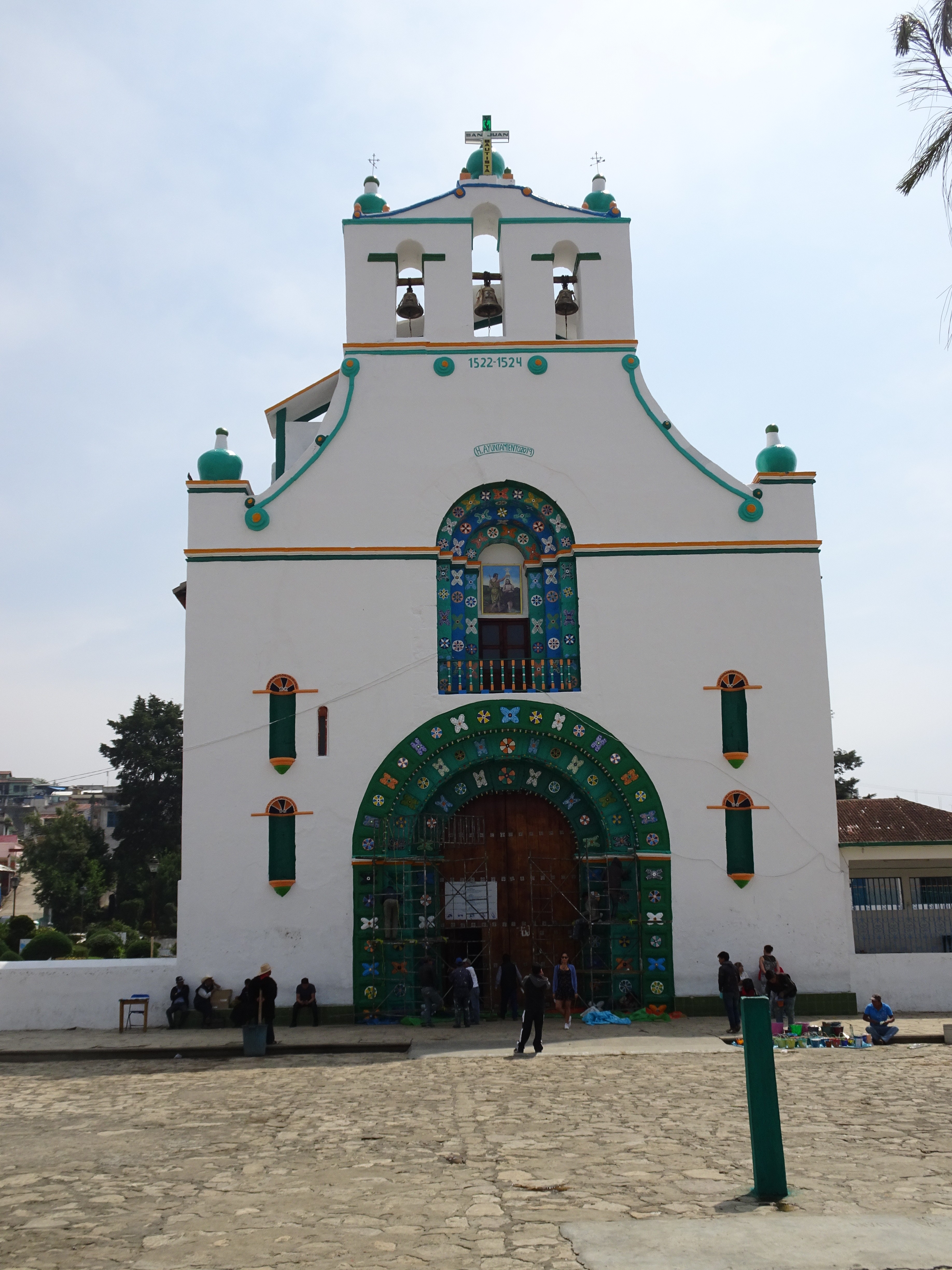
Visiting indigenous people and local communities is not something that I really enjoy doing. It makes me feel uncomfortable. I feel like I am invading someone’s life, intruding on their privacy. So I am not particularly keen to go on our day trip from San Cristobal to see the local people. We visit the church. It is a mix of Catholicism and Animism. The glow from the many candles give a fuggy light to the building. Fresh pine needles scatter the floor. People are in groups gathered around a Shaman to receive healing and prayers. A chicken has its neck broken as part of the ceremony. There are many Catholic saints lining the walls. Each saint has a different purpose; people pray according to their needs. Despite my reluctance to go on this trip, I still feel privileged to witness this ceremony.
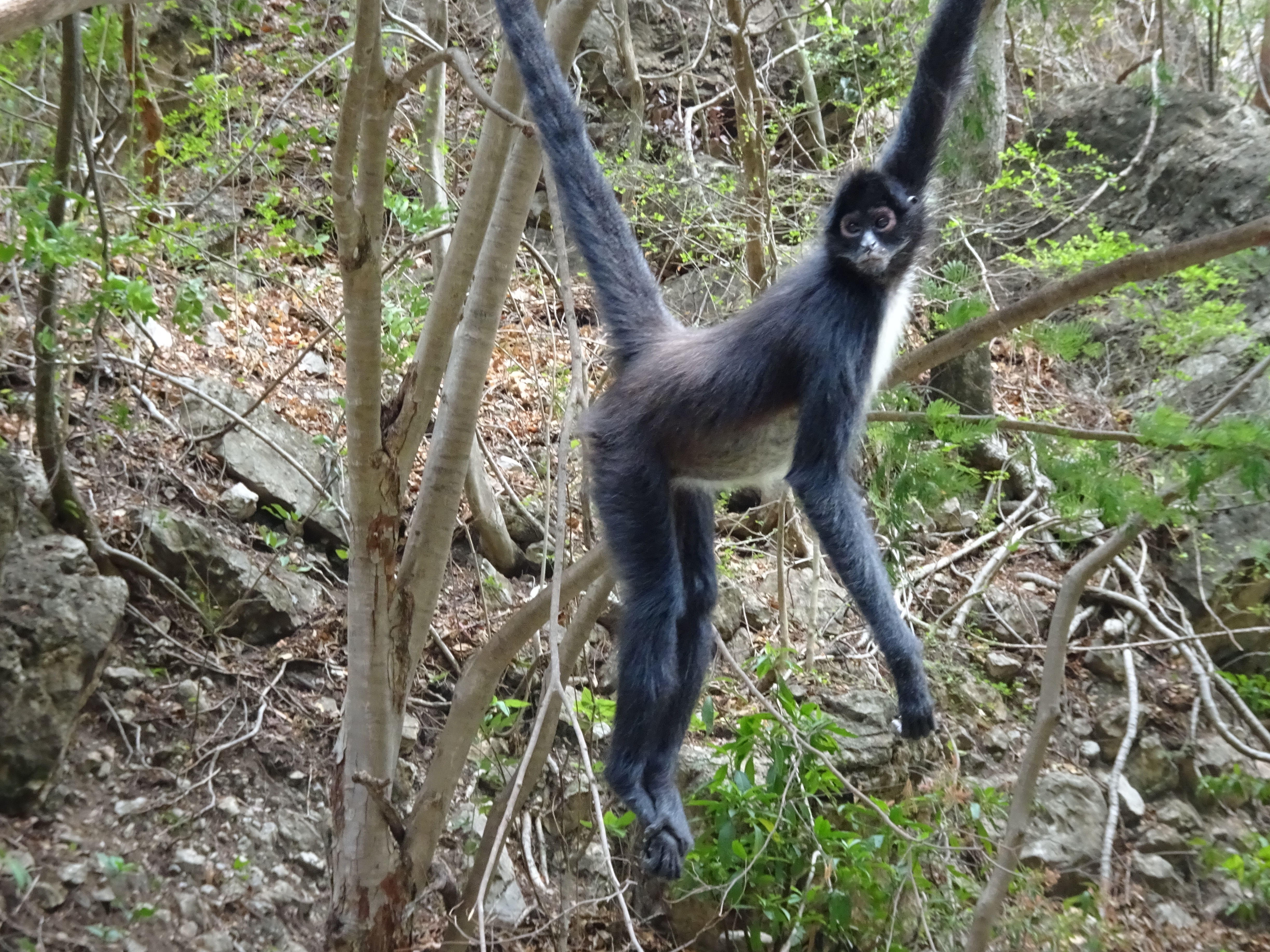
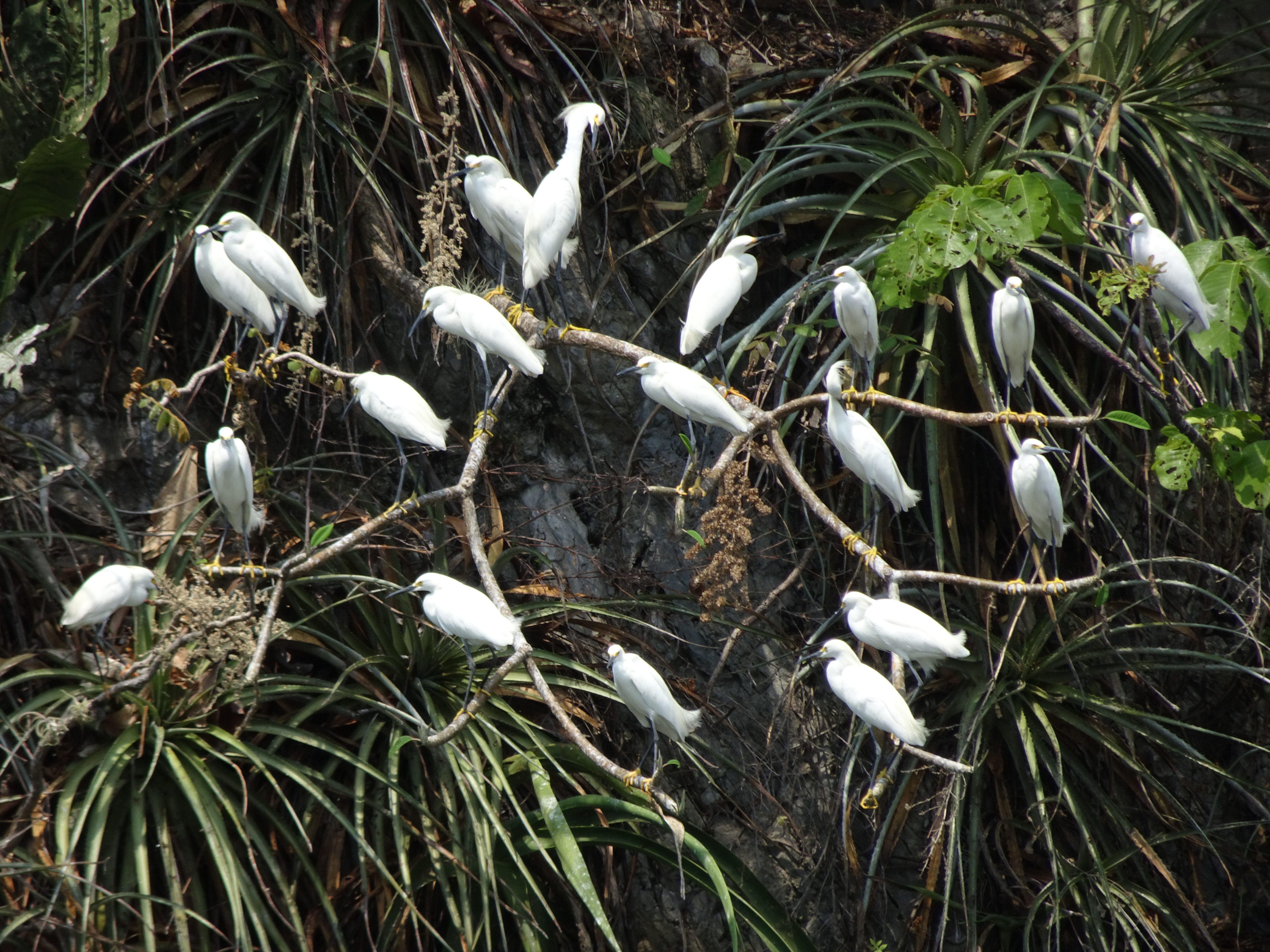
The monkey is showing off for the tourists. It is holding onto the branch with one arm and almost ‘smiling’ at the camera. The driver has stopped the motorboat so we can look more closely. At other stops we have seen lots of bird life and even crocodiles, before zipping off again. The rock walls rise up from the water an impressive 1000 m. The cloud cover today gives the canyon a brooding feeling.
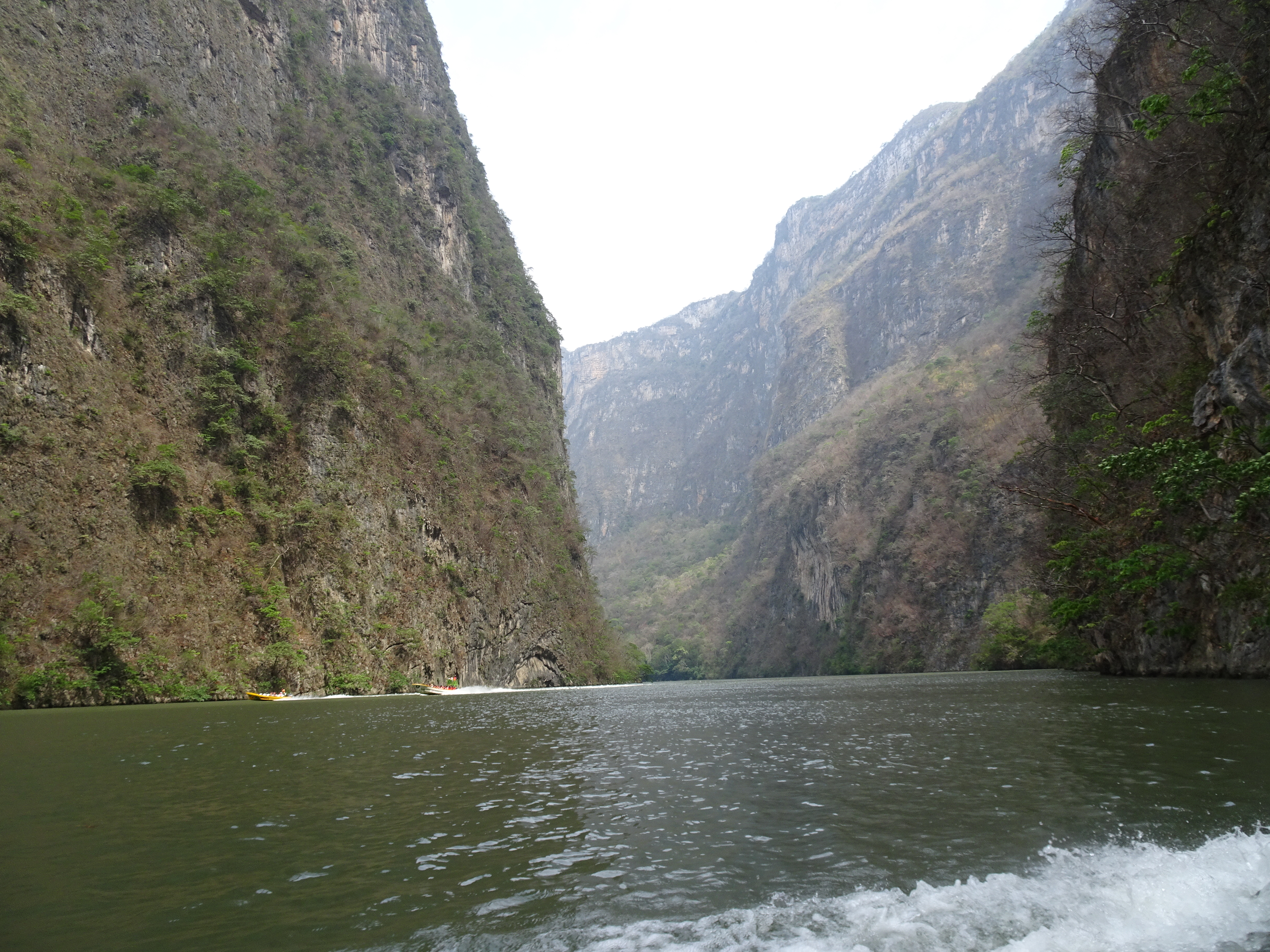
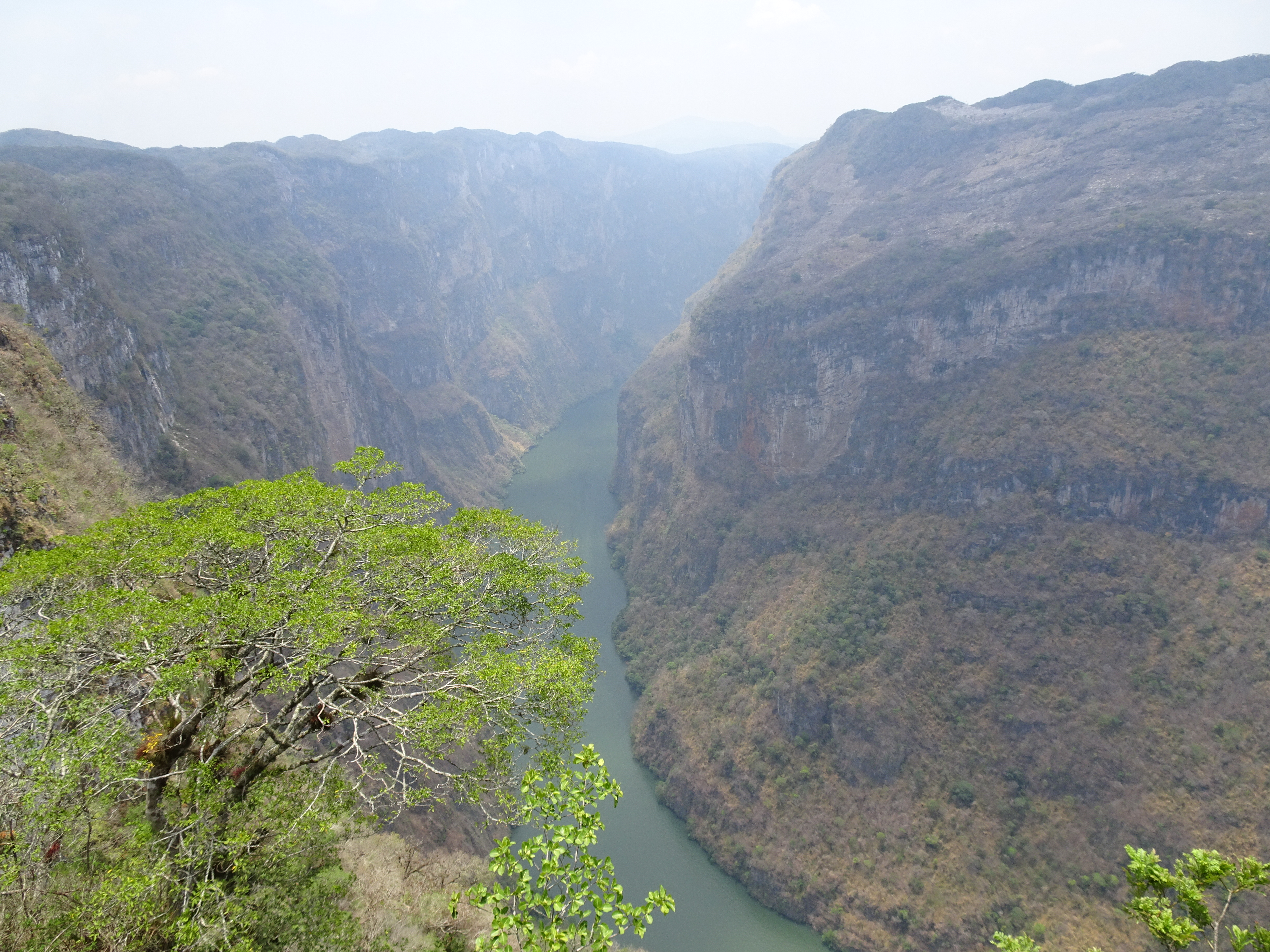
Memories of previous winding roads appear in my head, so I shut my eyes as the mini bus driver steers like a he’s in a car rally up, and later back down the mountain. The lookout over the canyon is impressive; you can see how far the down the river is by leaning precariously over the edge. I am relieved to get back down to the valley floor, and secretly amused when the minibus breaks down in the next town.
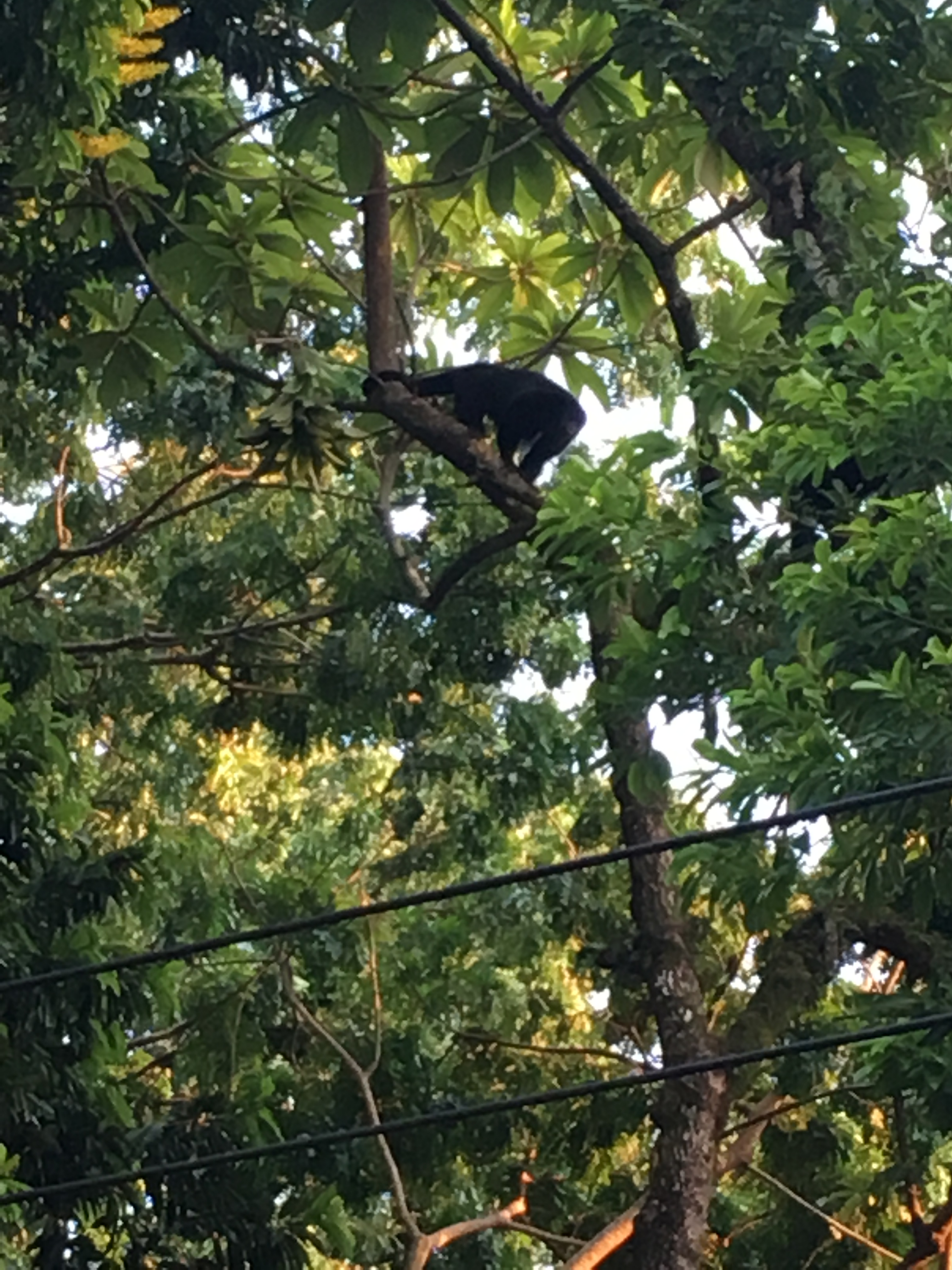
The noise is awful. It sounds like a dinosaur in pain. In the trees outside our hotel, two howler monkeys are making their presence felt. I’ve never heard anything like it.
Palenque is hot. It’s nearly 40c with very high humidity. I’m not sure I’m going to cope very well with the heat.
Now I didn’t plan on crossing a waterfall today. If I’m being totally honest I wasn’t that keen on going……Now before that….
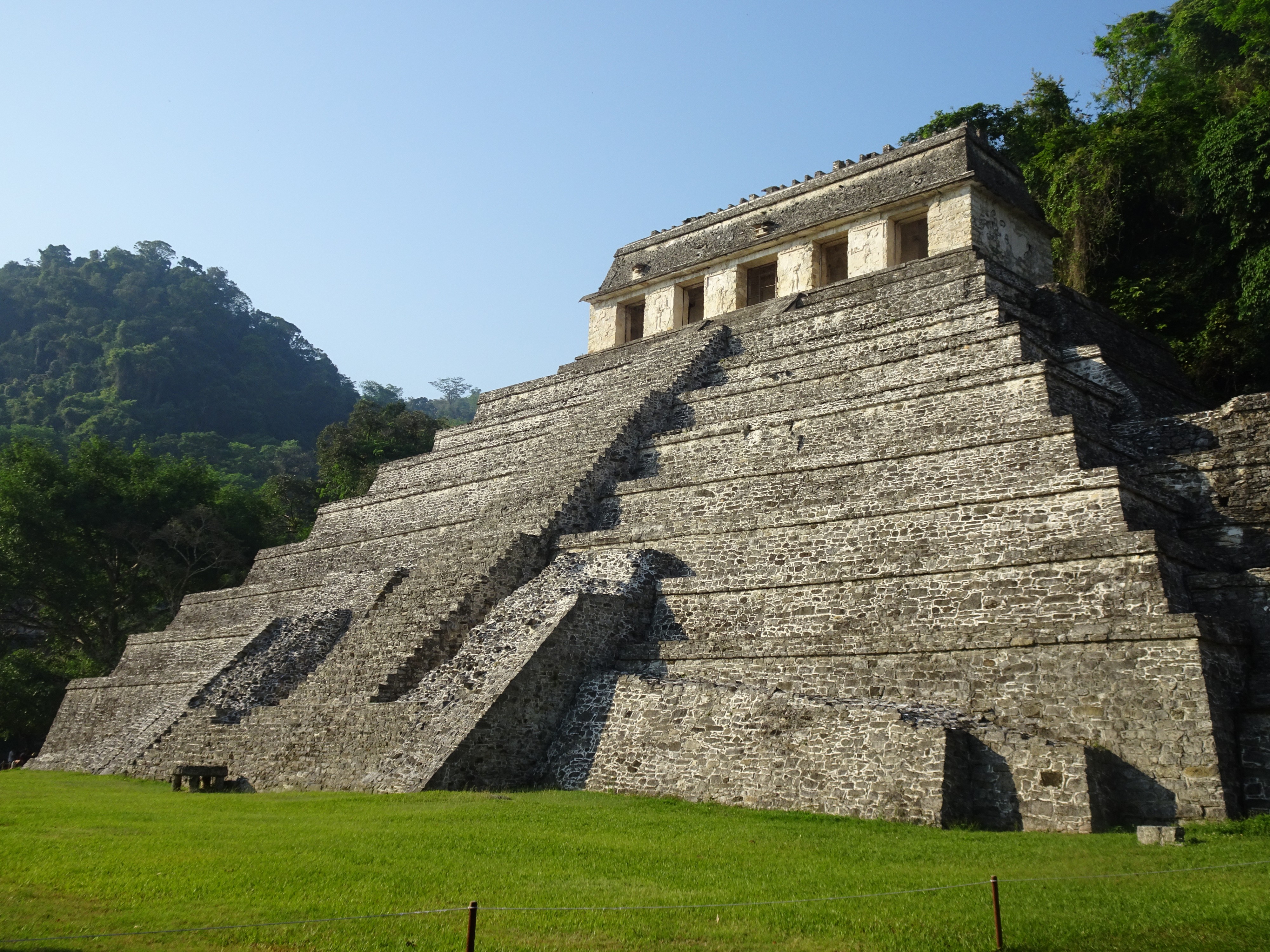
We visit our first Mayan ruins at Palenque. Most of the site, which consist of over 1000 buildings, is still covered by jungle. The main pyramid, The temple of Inscriptions, has been partially restored. It is stunning against the vegetation of the jungle. The guide is very interesting. He tells us all about the Mayan calendar and its cycles of 20 days. We climb into an excavated tomb, thought to be the burial place of Lord Pakal, and also up and into the palace area.
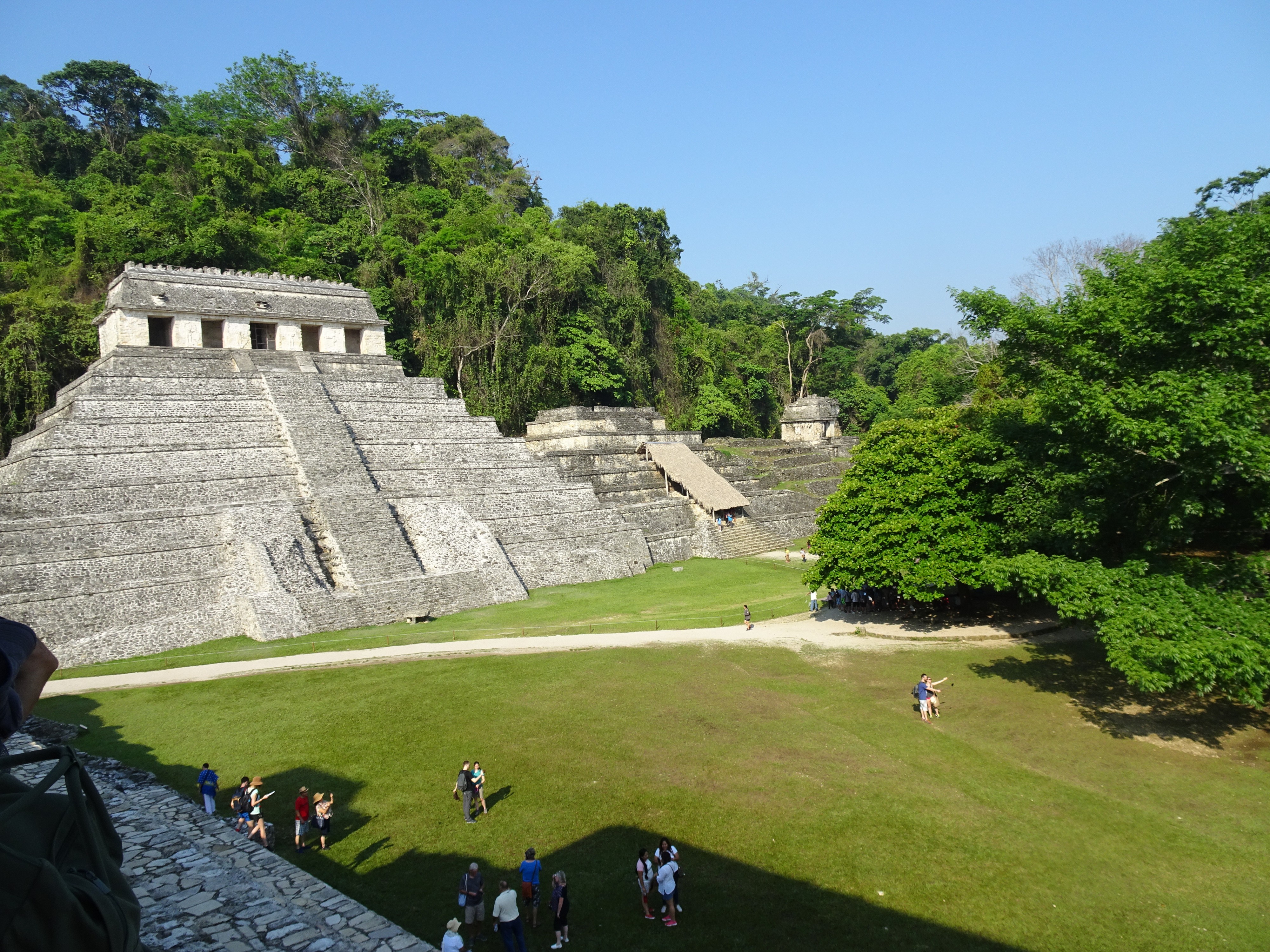
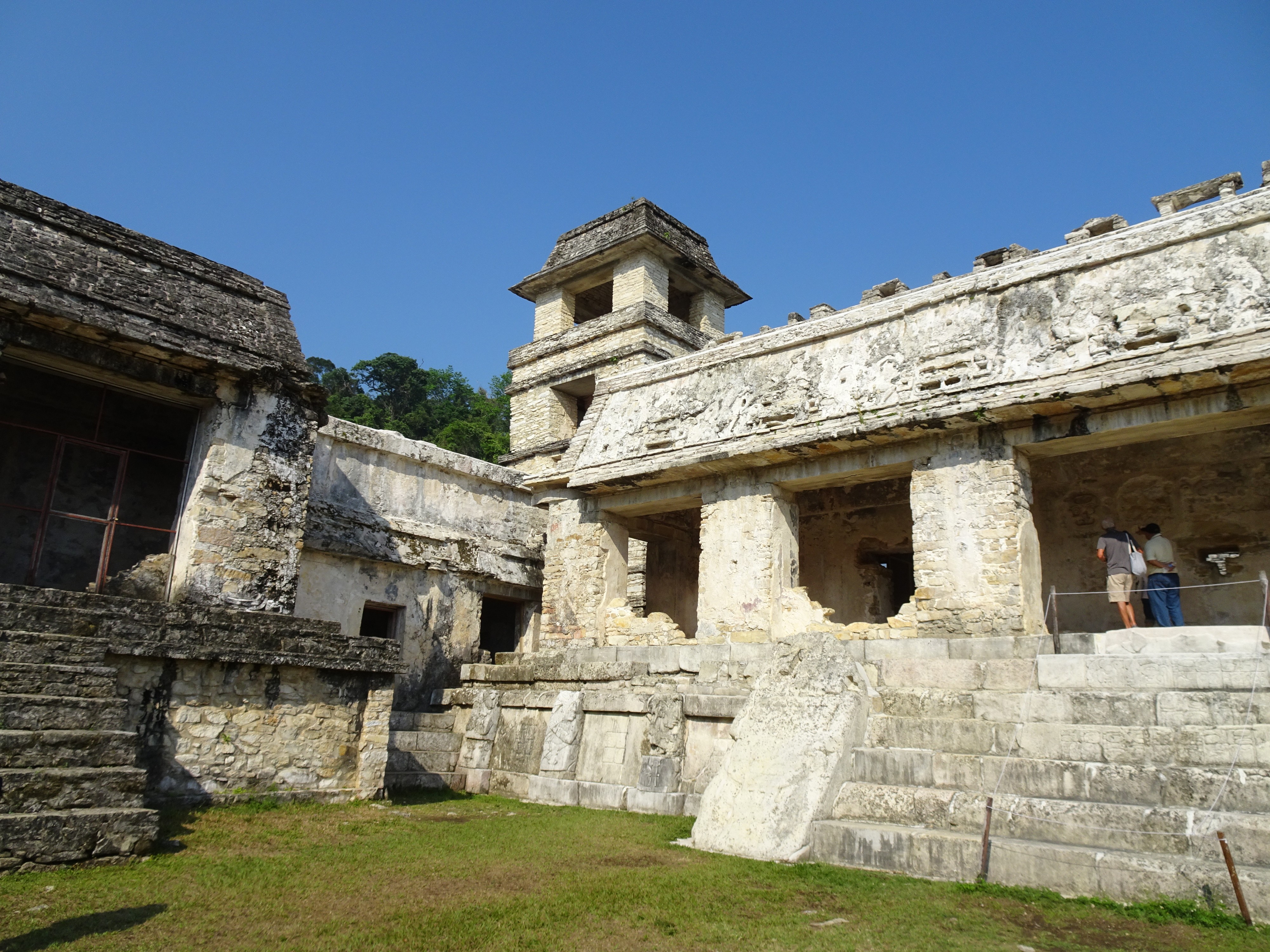
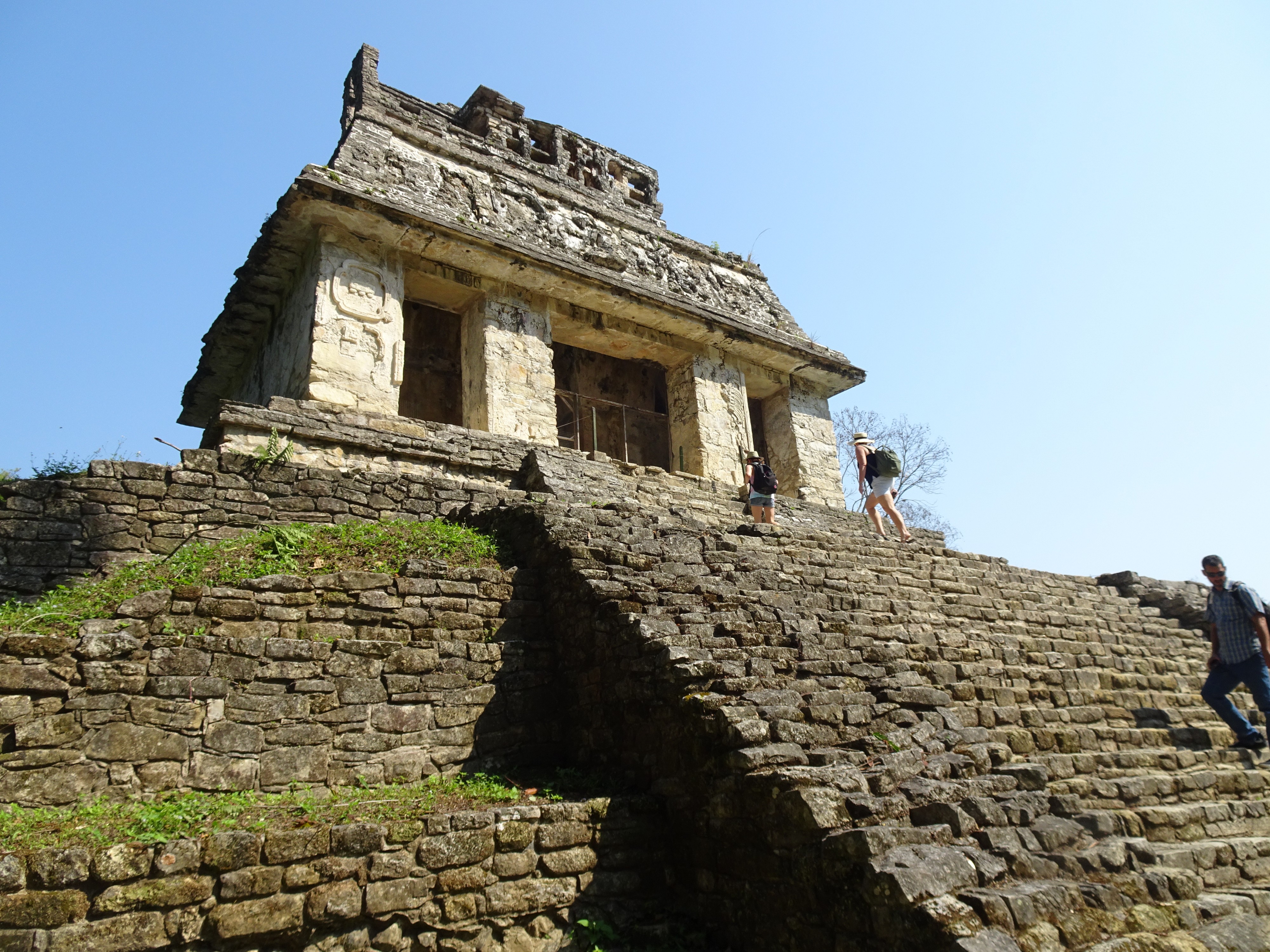
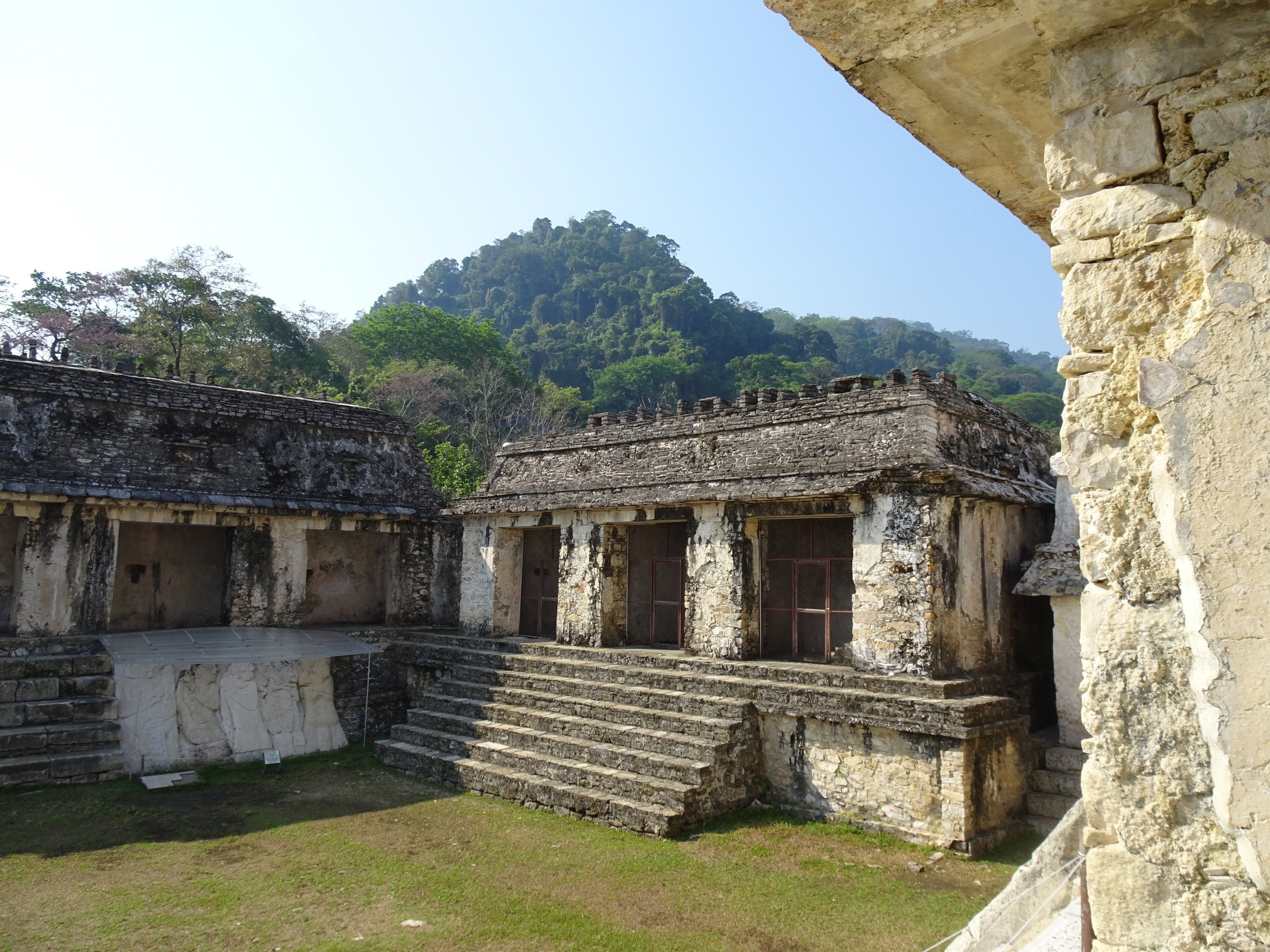
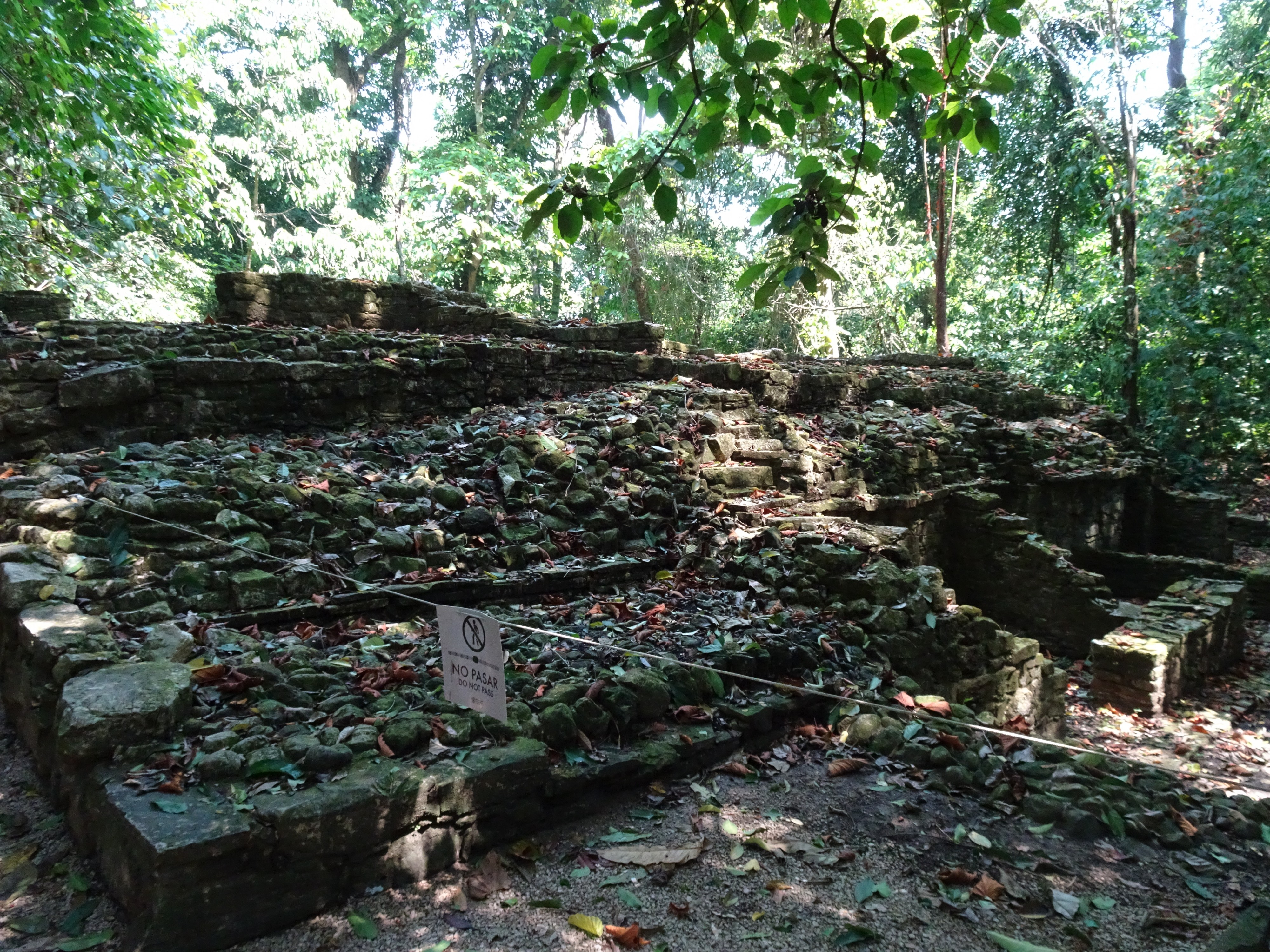
We walk down through the jungle in the way out to the museum and car park. There are the remnants of buildings smothered in vegetation. It would take an incredible amount of money and effort to excavate the site.
Anyway back to the waterfall.
I’m just about coming to terms with the fact that I’m going to swim in the pools but nearly back out when Magda, our tour leader, indicates that to get to the better area for swimming we need to cross the waterfall. Secretly, although I’m concerned that I might slip over, make a fool of myself and get soaking wet, I’m actually more worried that I’ll drop my camera, phone and wallet in the water and they will be wrecked. Treading carefully, with the help of Dave and Laura I make it safely across.
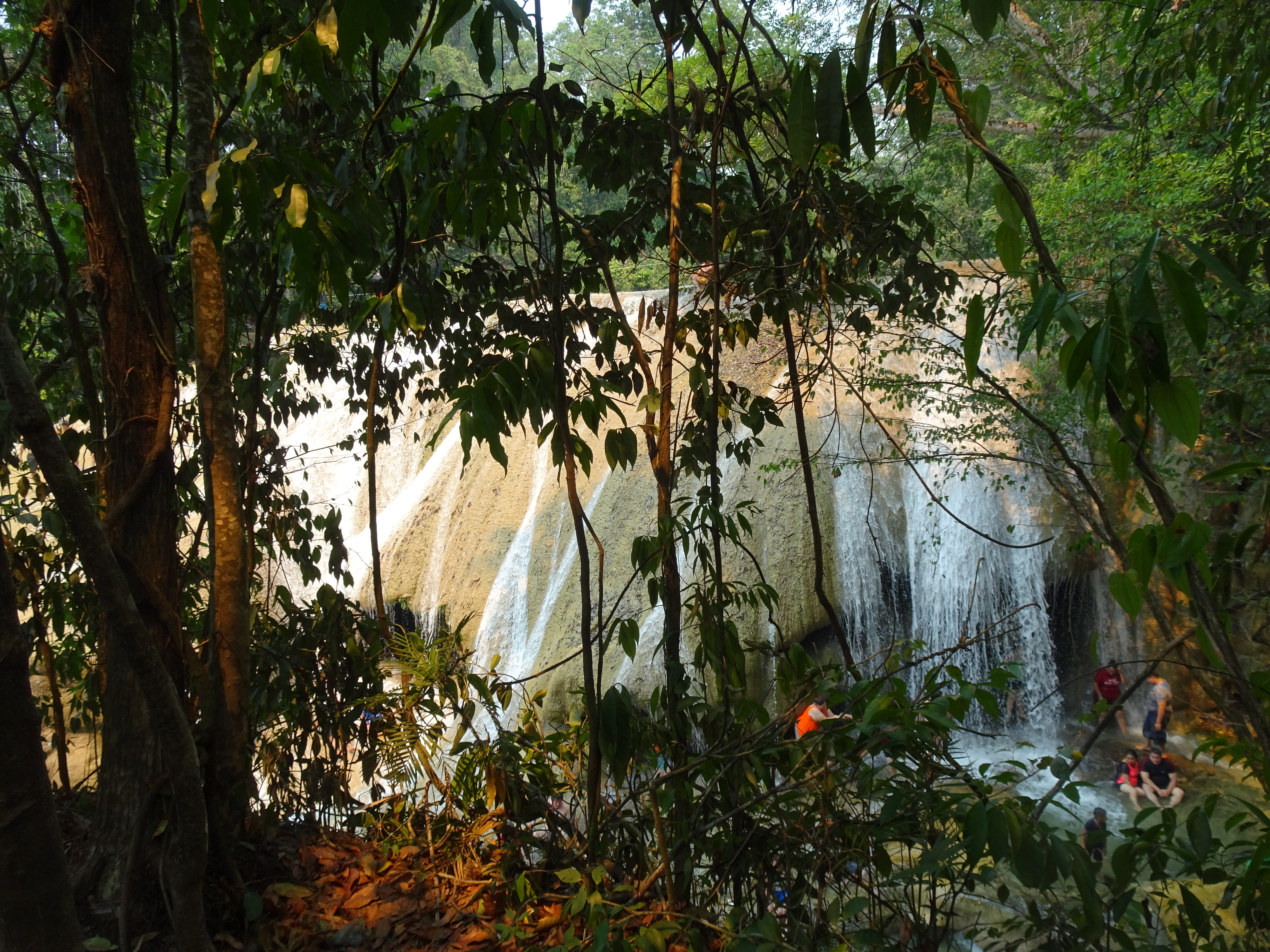
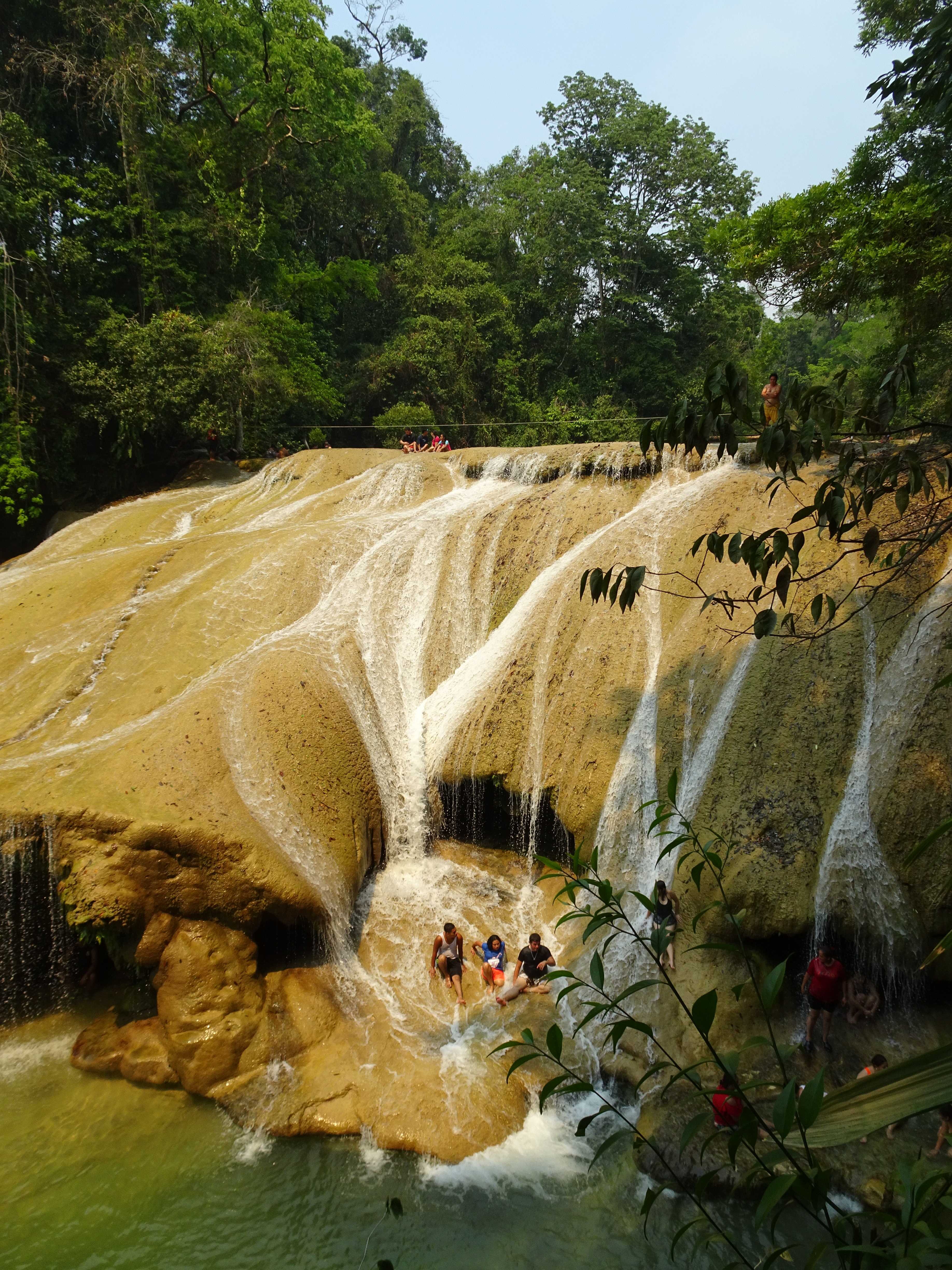
I manage to swim in the pool. The water is the perfect temperature and it’s tranquil resting on top of one of the falls. There are Mexican families having picnics and swimming, creating a relaxing atmosphere.
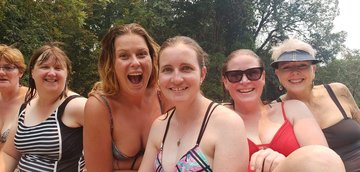
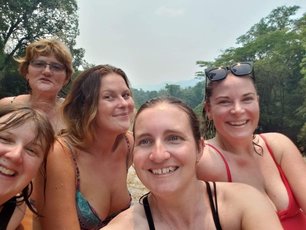
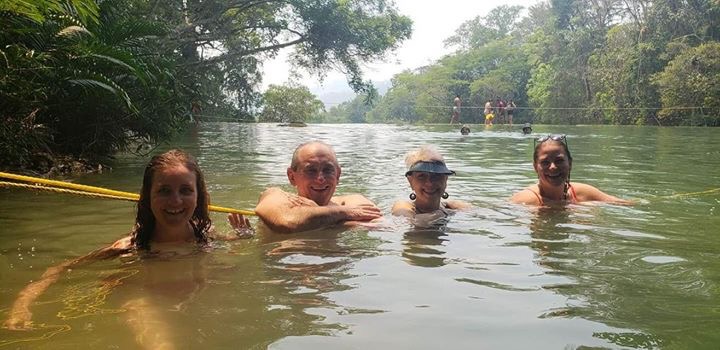
I survive the foray back across the water and arrive unharmed on the other side.
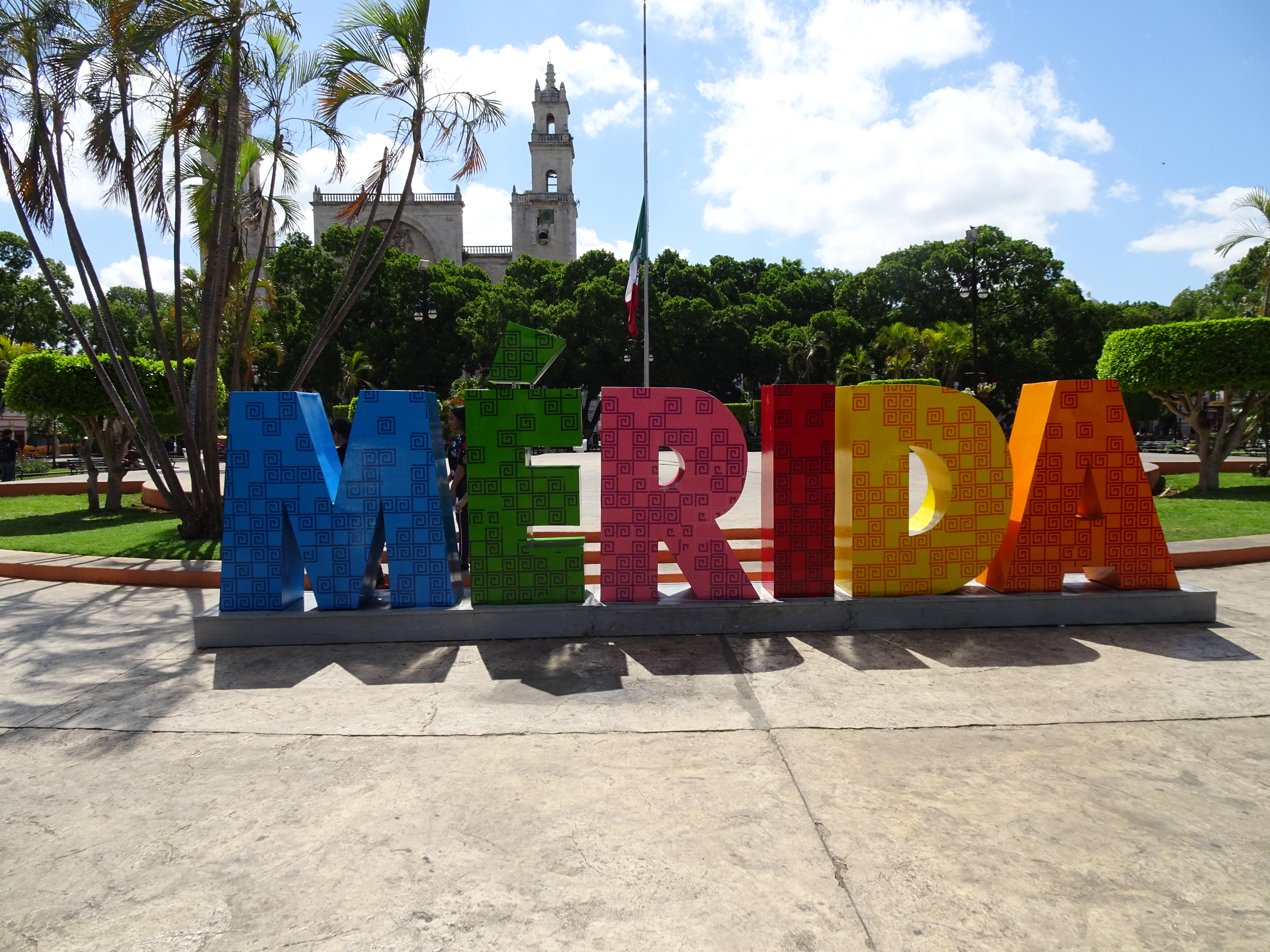
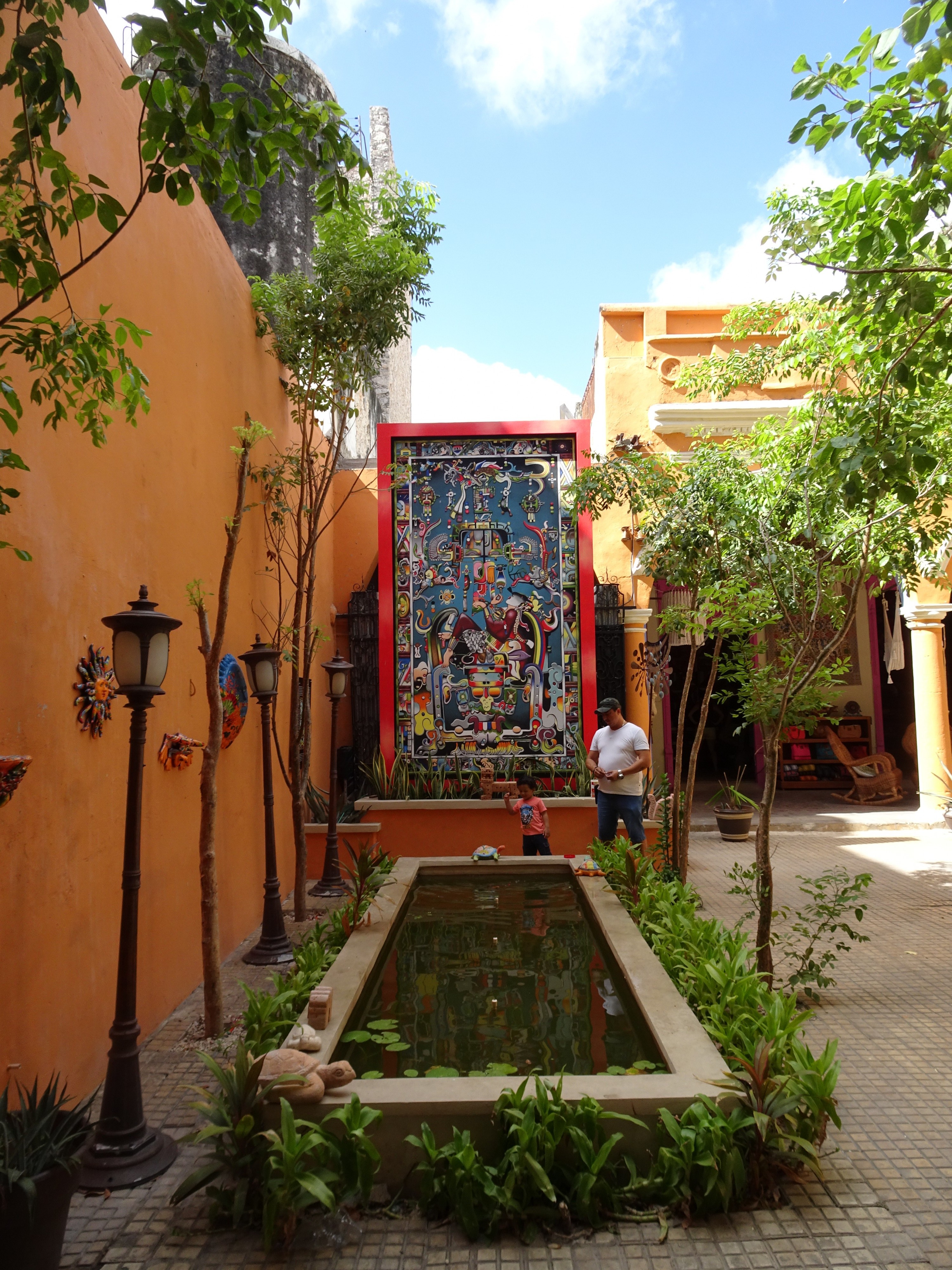
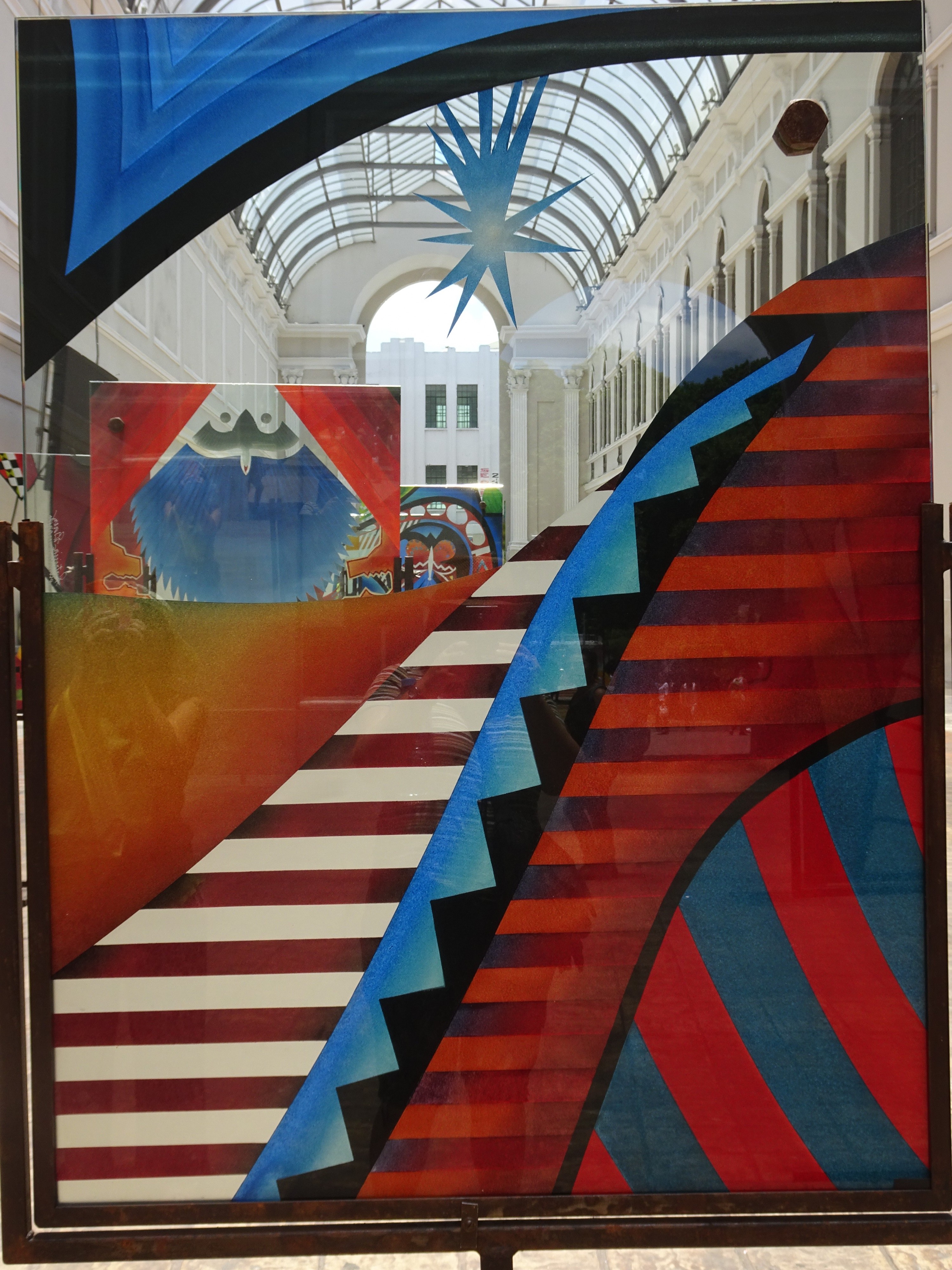
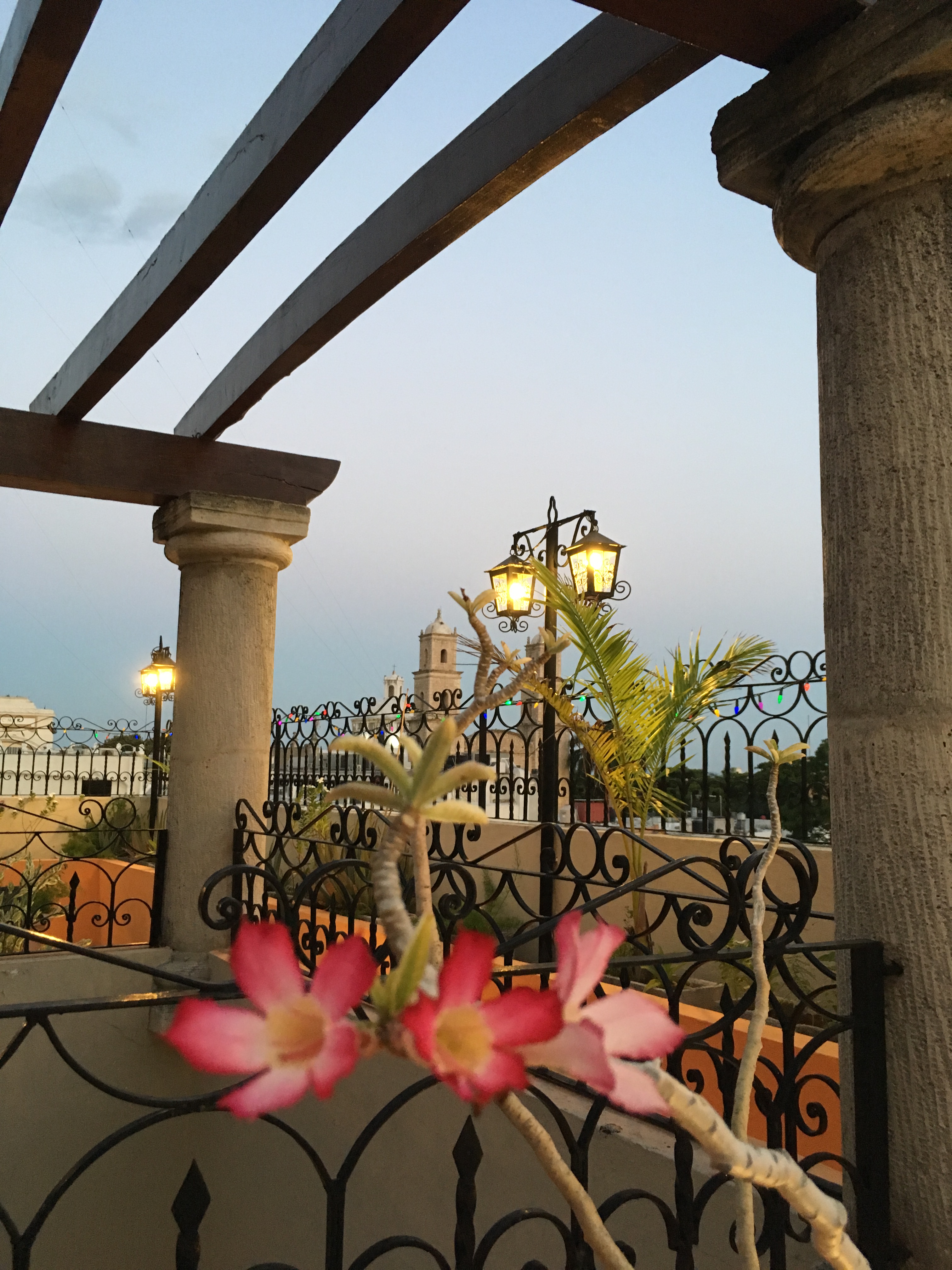
Merida is another lovely town with a square and bright colours. I use it as a recouperation place. It’s good for wandering and shopping.
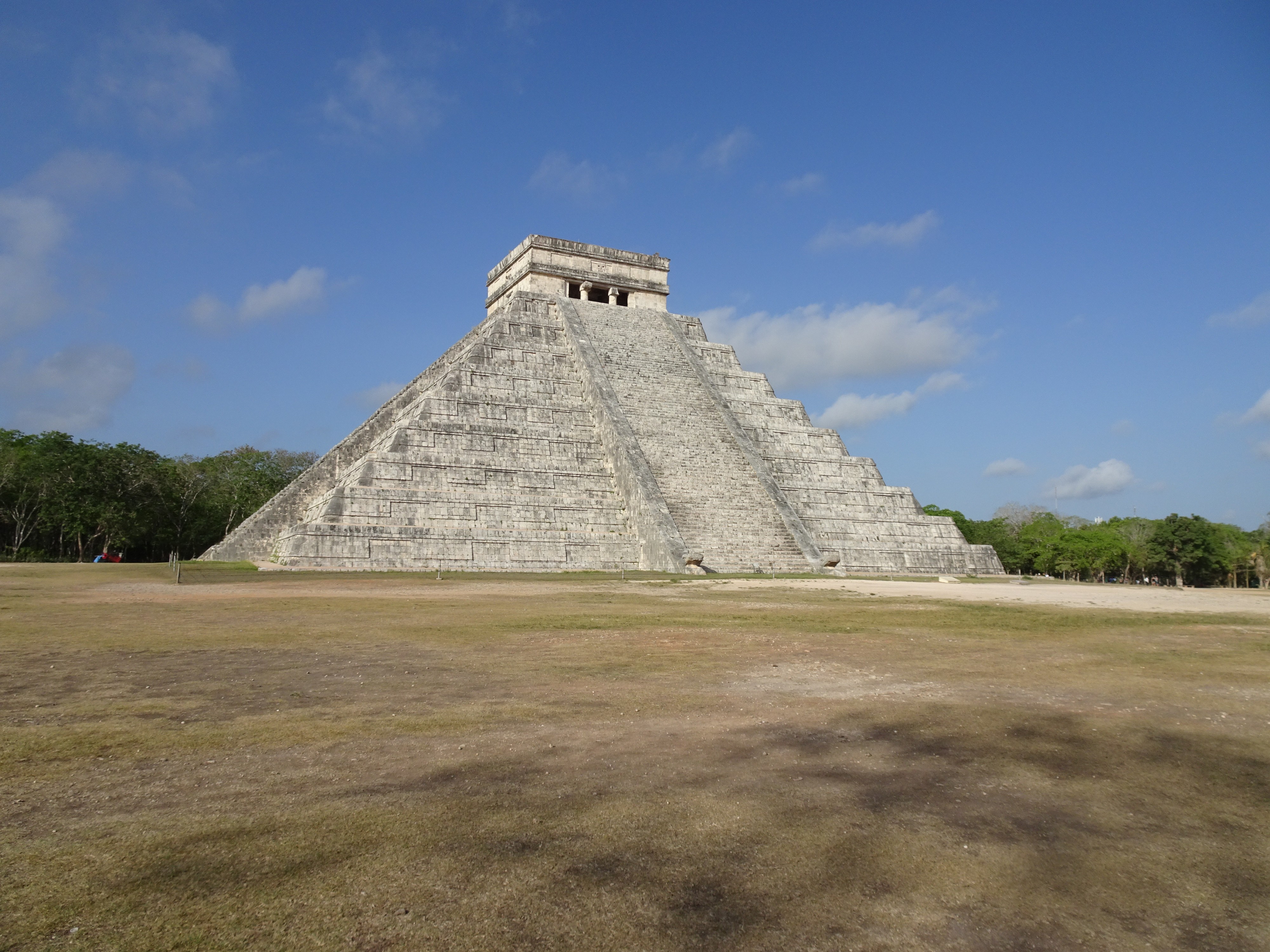
We are so lucky to be one of the first few people to enter the site. That means photos of the ‘famous’ pyramid with no people in front of it and relative peace and quiet as the guide tells us some of the history, particularly about the ballgame that the Mayans played. It is quite a short tour this time but I think that we are glad as it is very hot.
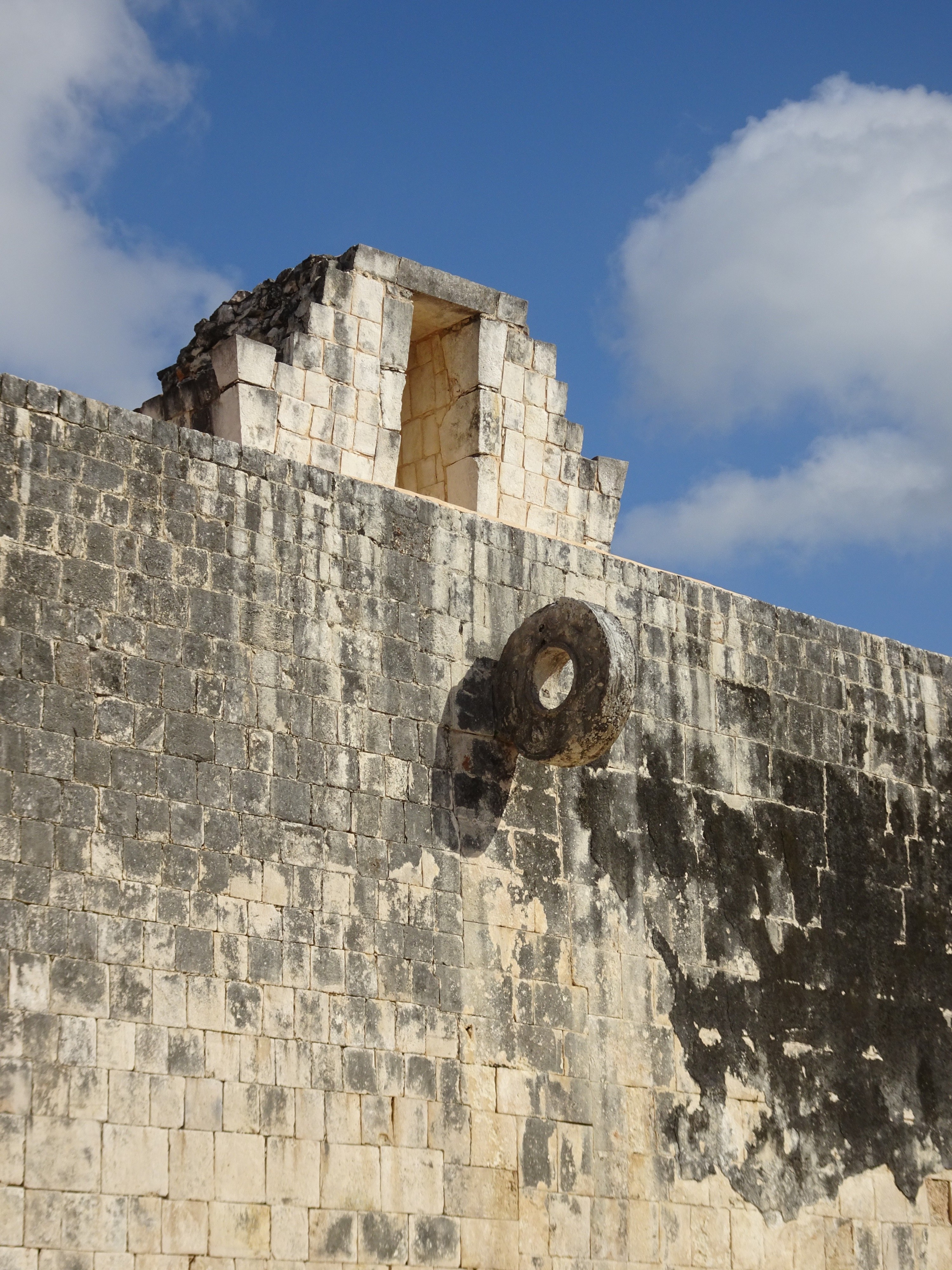
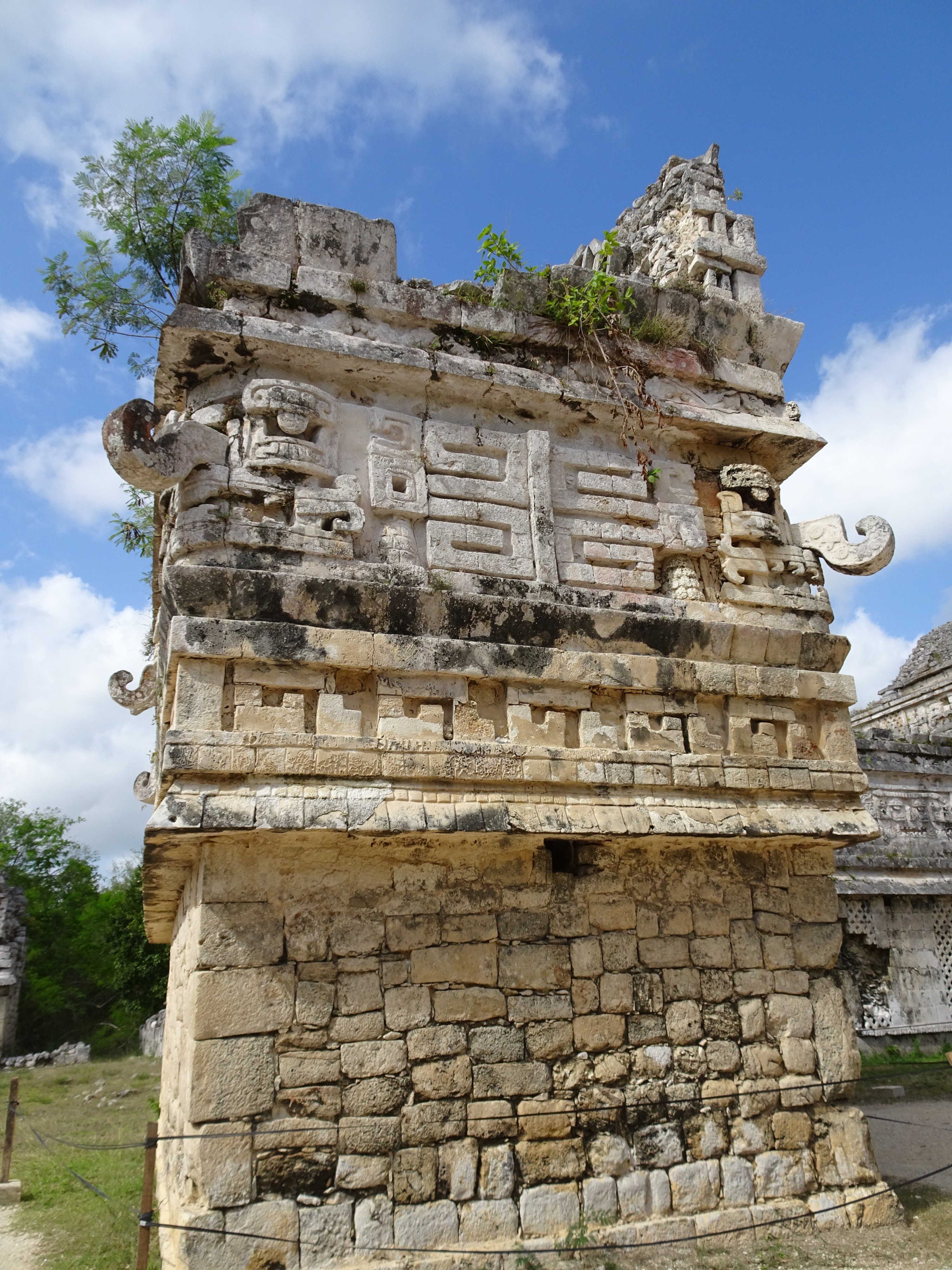
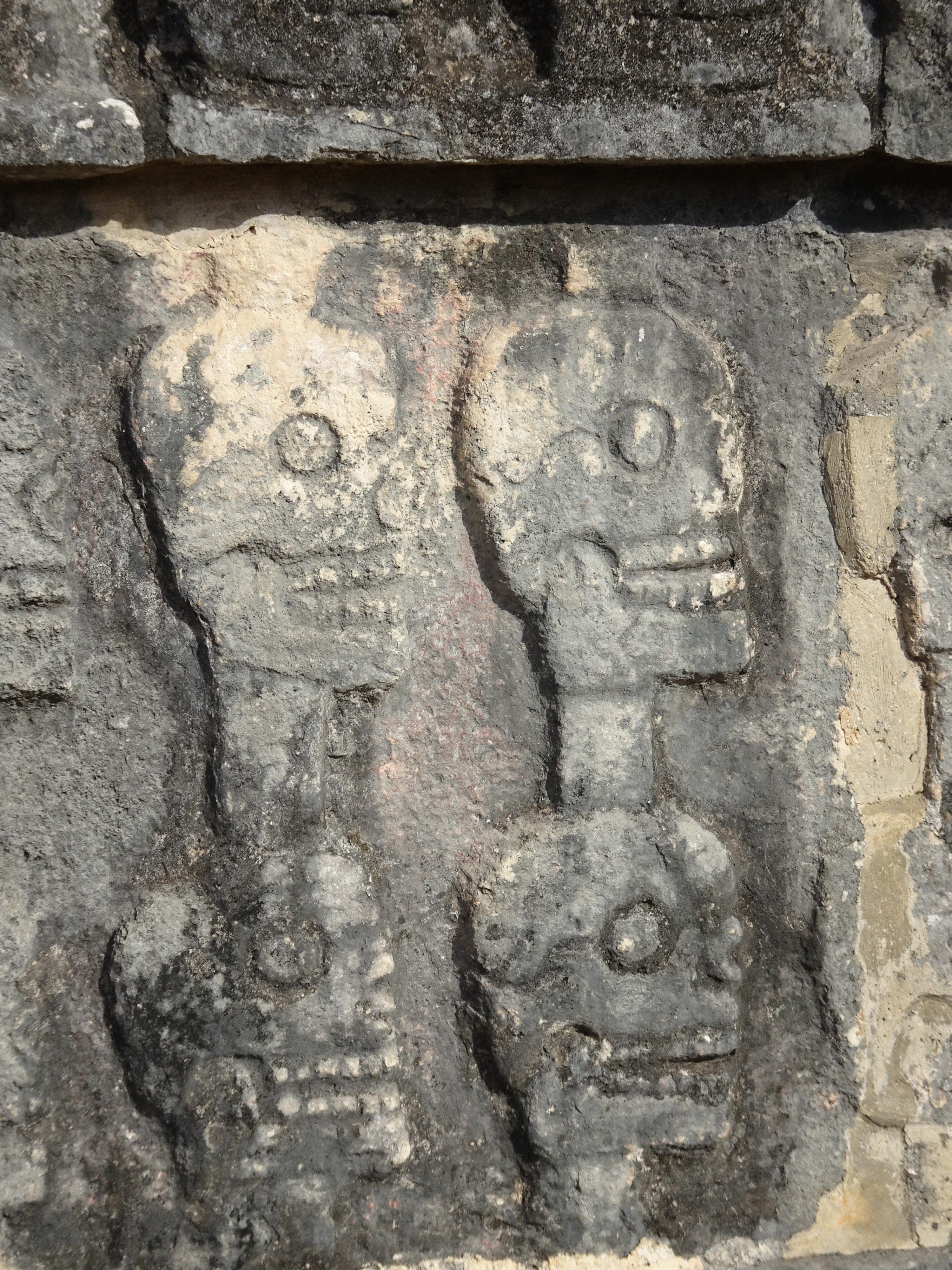
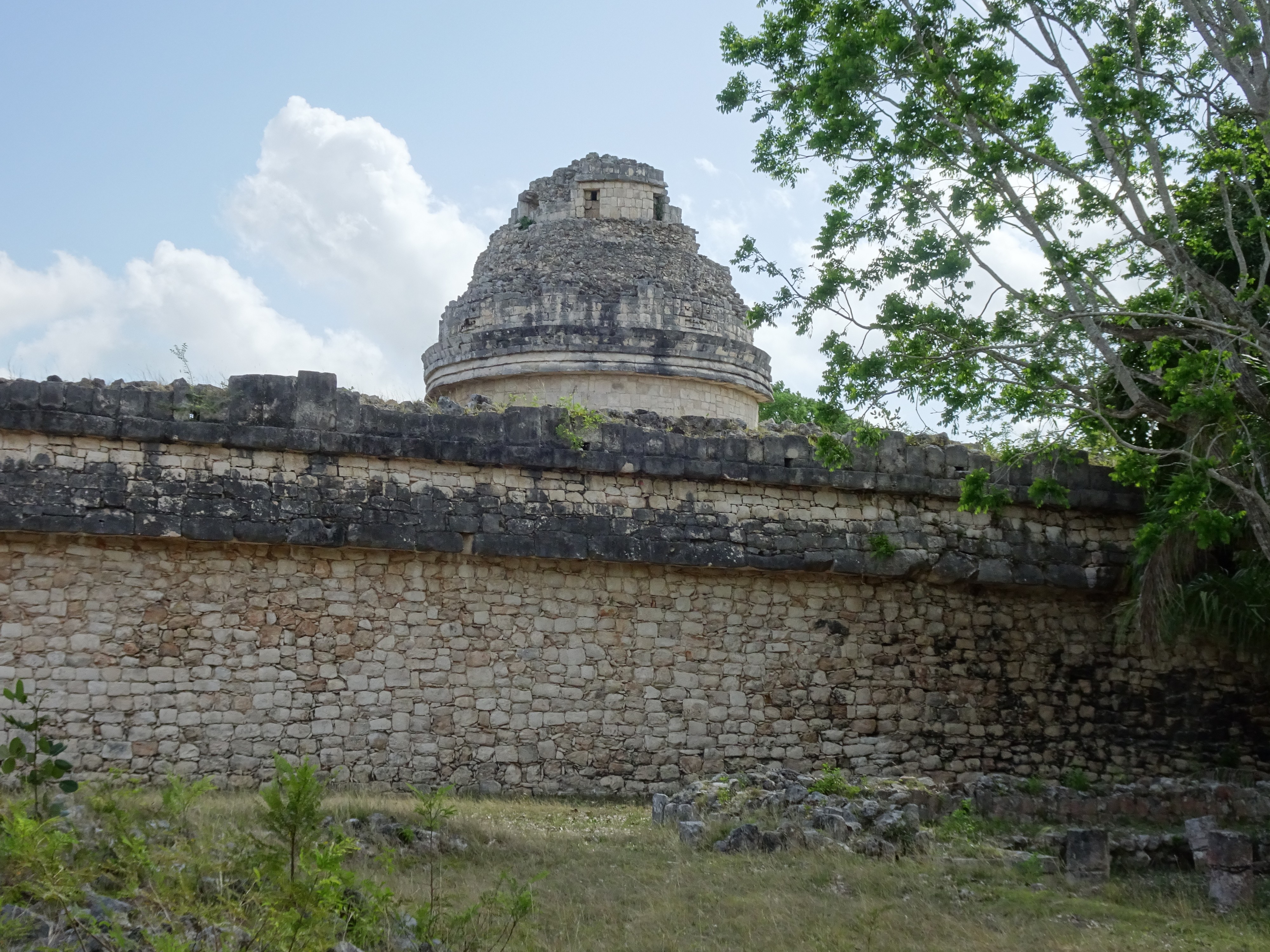
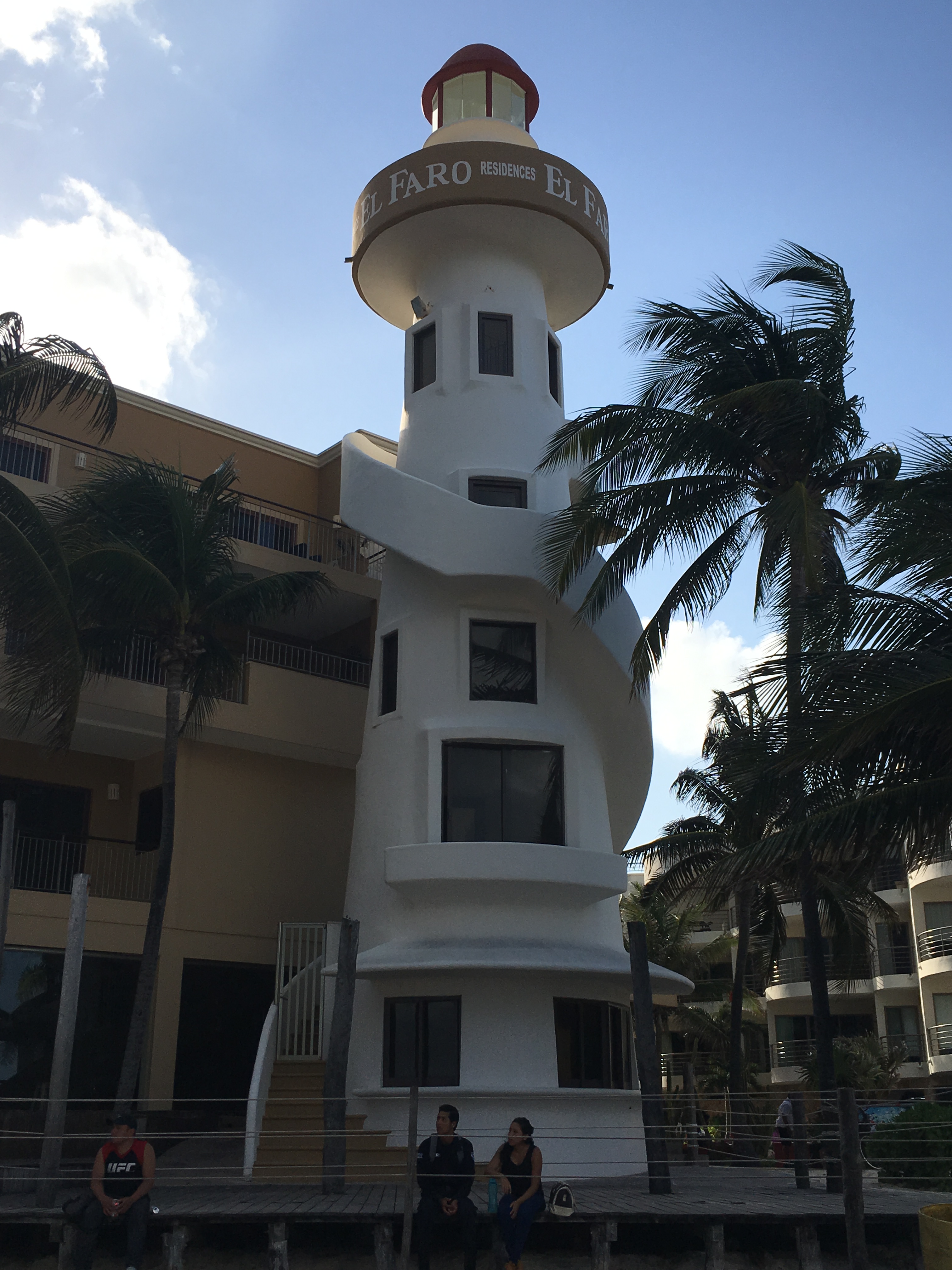
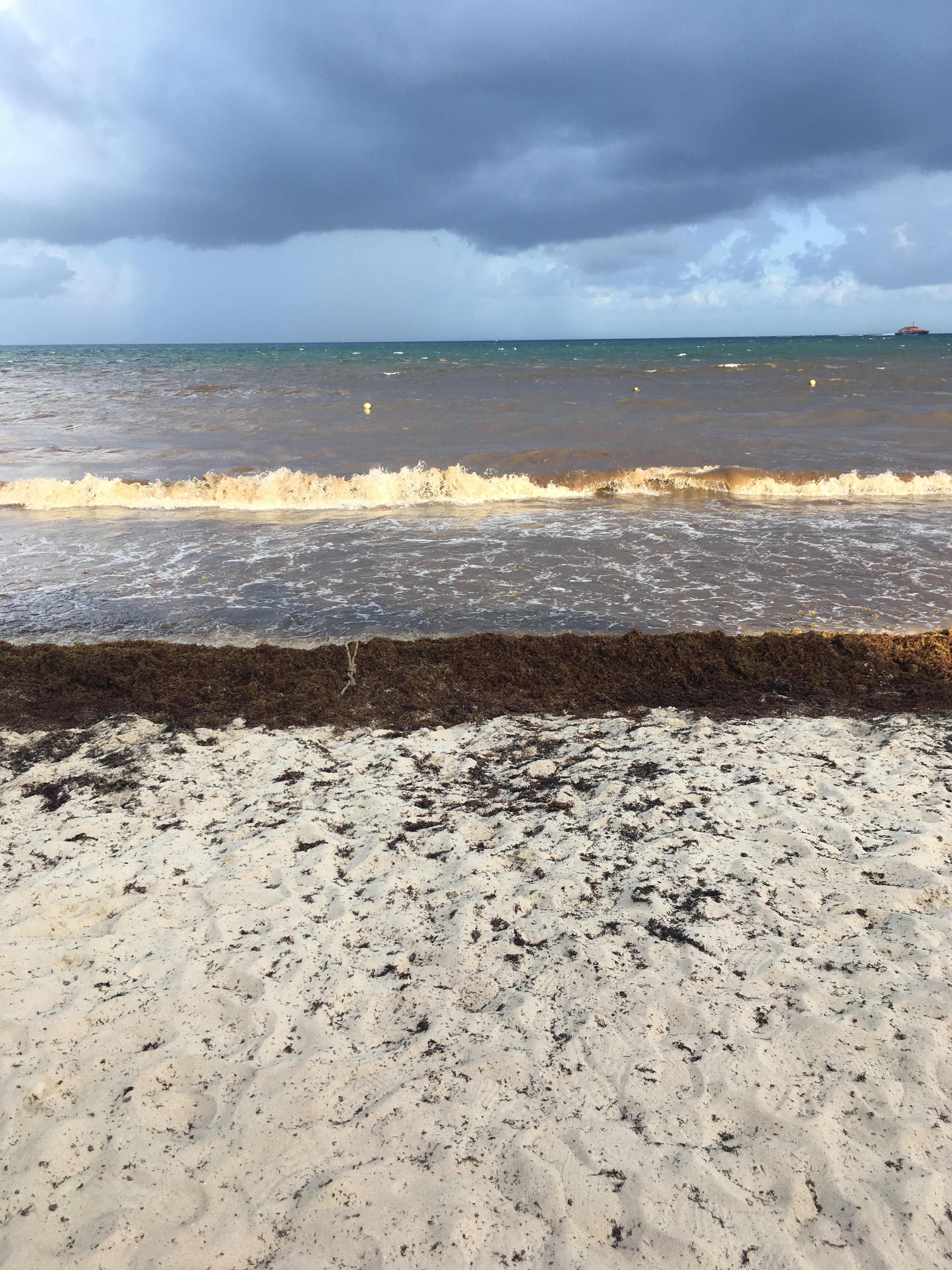
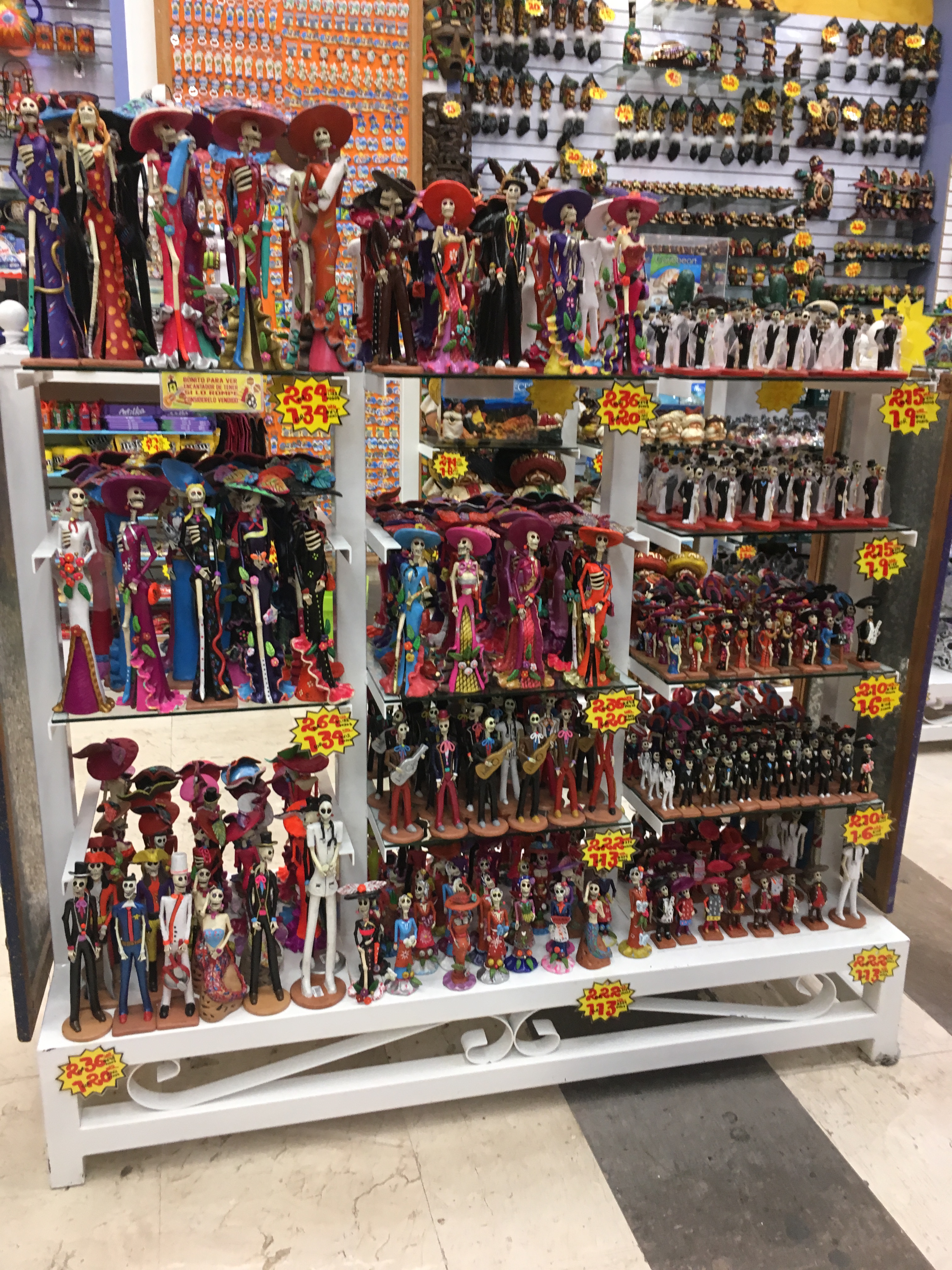
The stink of rotting seaweed dominates the beaches at Playa de Carmen. There are tacky souvenir shops selling skulls, t-shirts, bracelets. I feel like I’m in Spain or the Uk. You can visit the ruins at Tulum or swim in one of the many cenotes in the area. It is a shame I’m not feeling well and miss out on the trip to Tulum, a Mayan ruin which I really wanted to see. Next time….
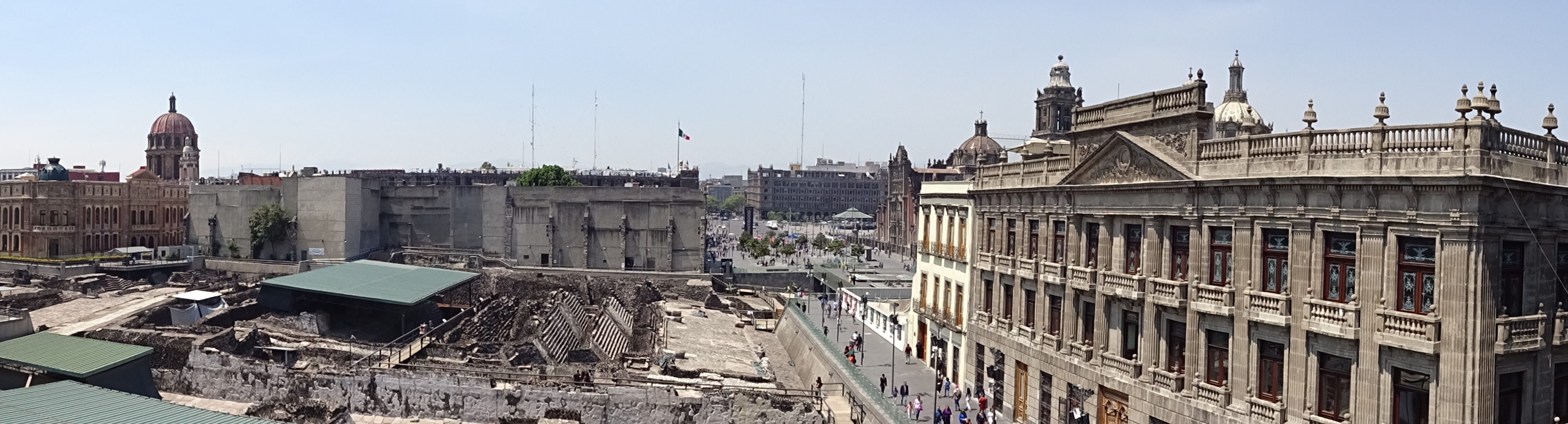
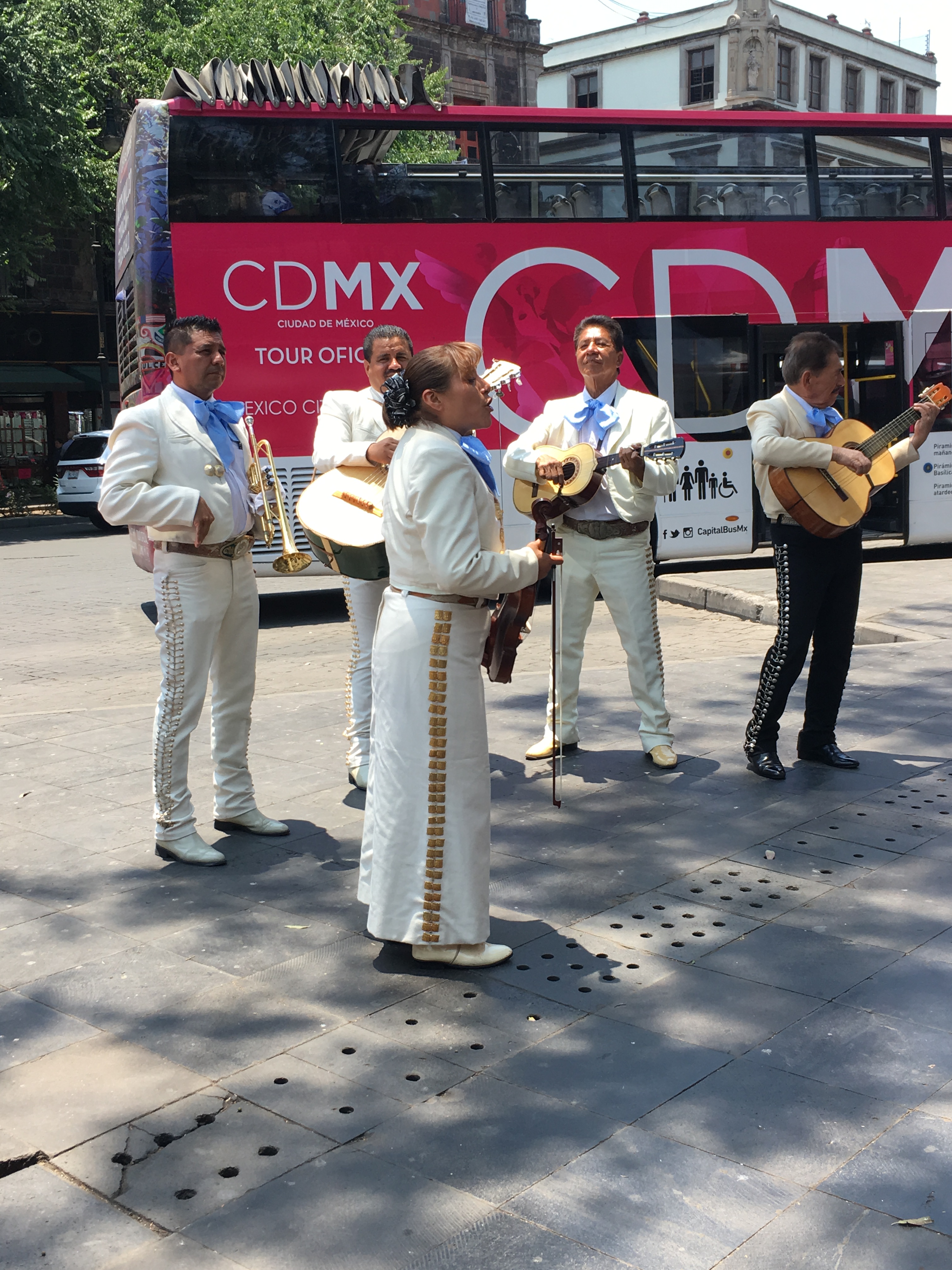
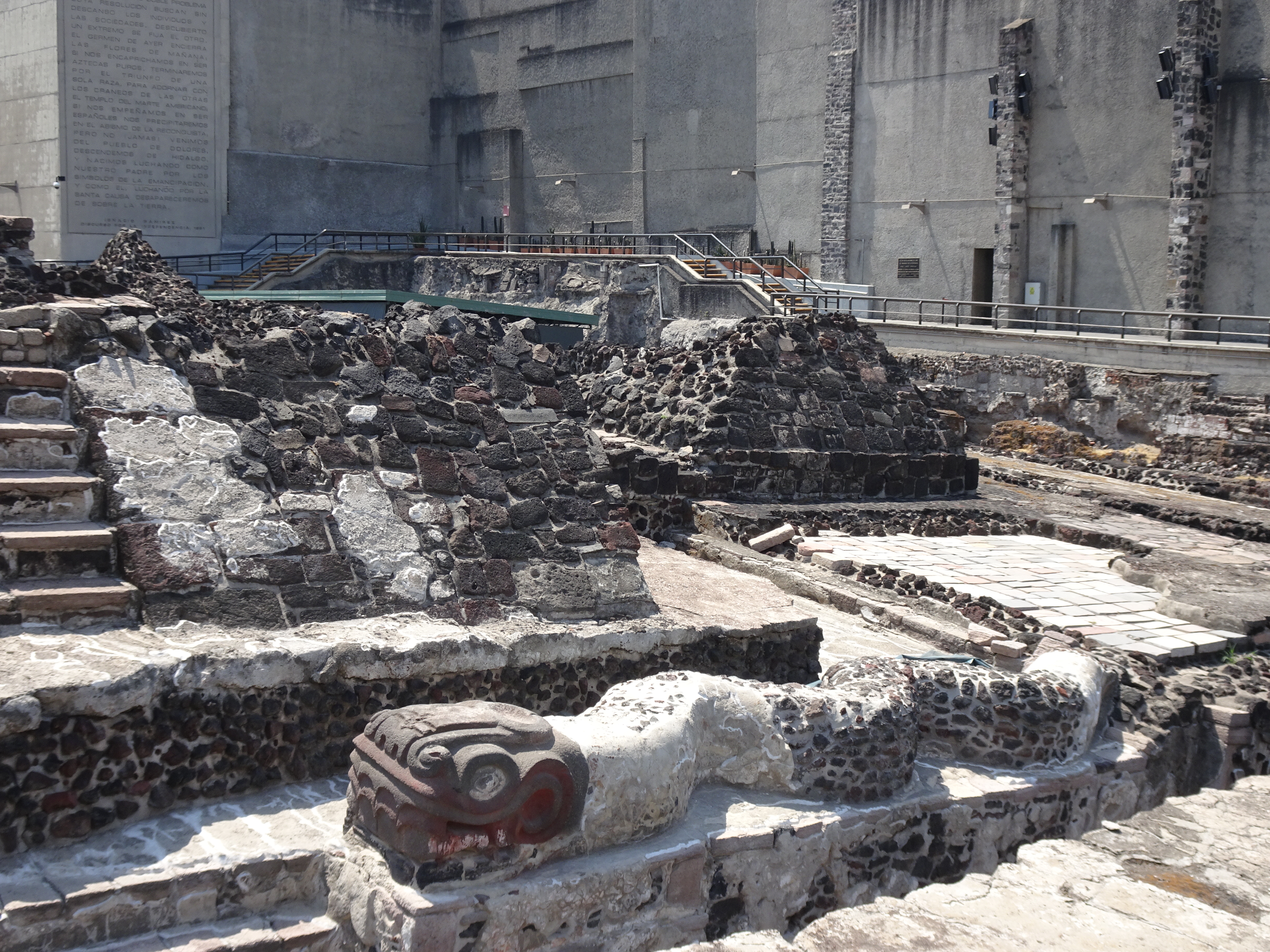
Sitting in a rooftop bar overlooking the main square or Zócalo in Mexico City, I’m surprised by how much I like the city. Looking down I can see my first Mexican ruins, the ornately decorated cathedral and the enormous flag.
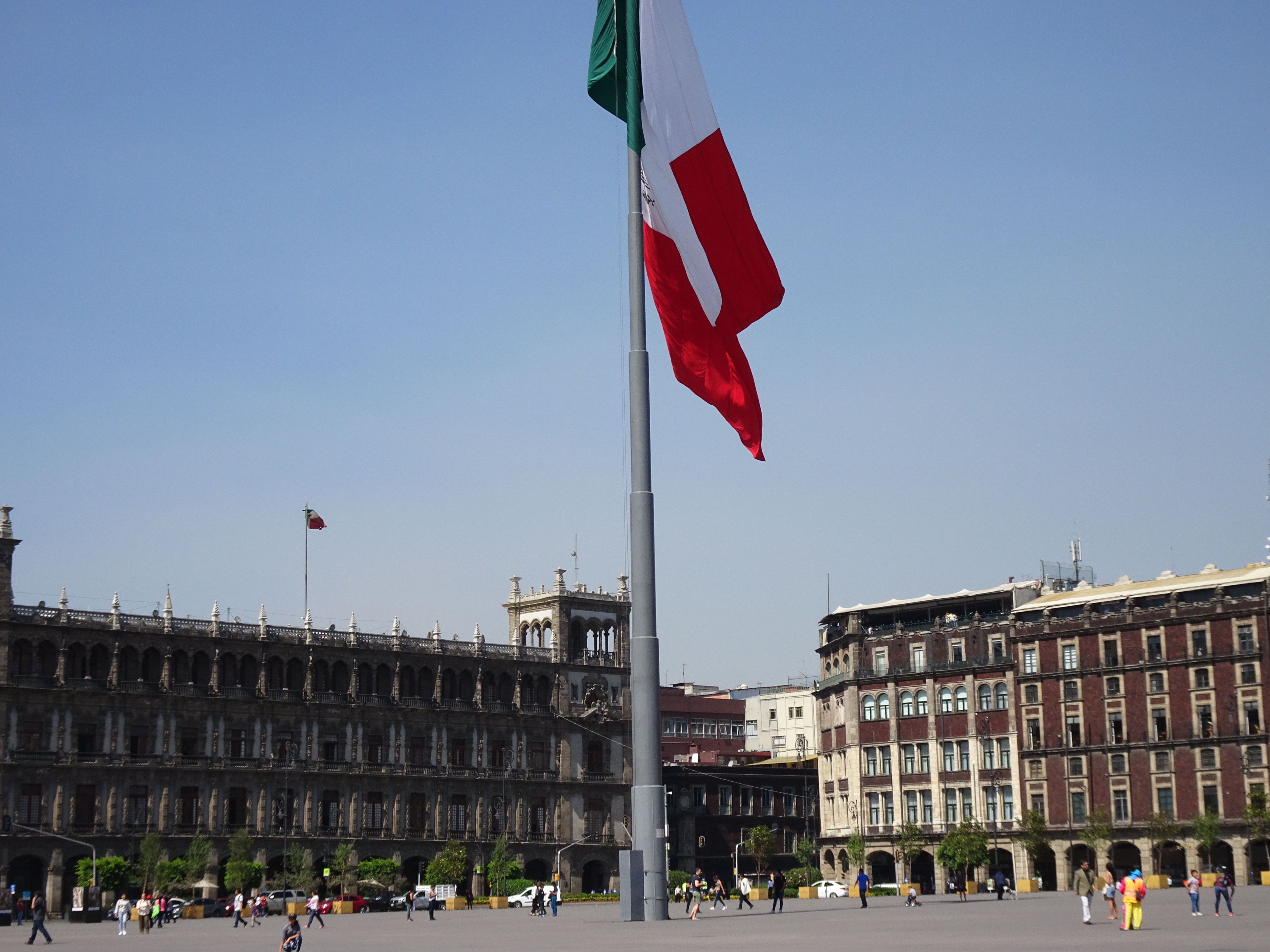
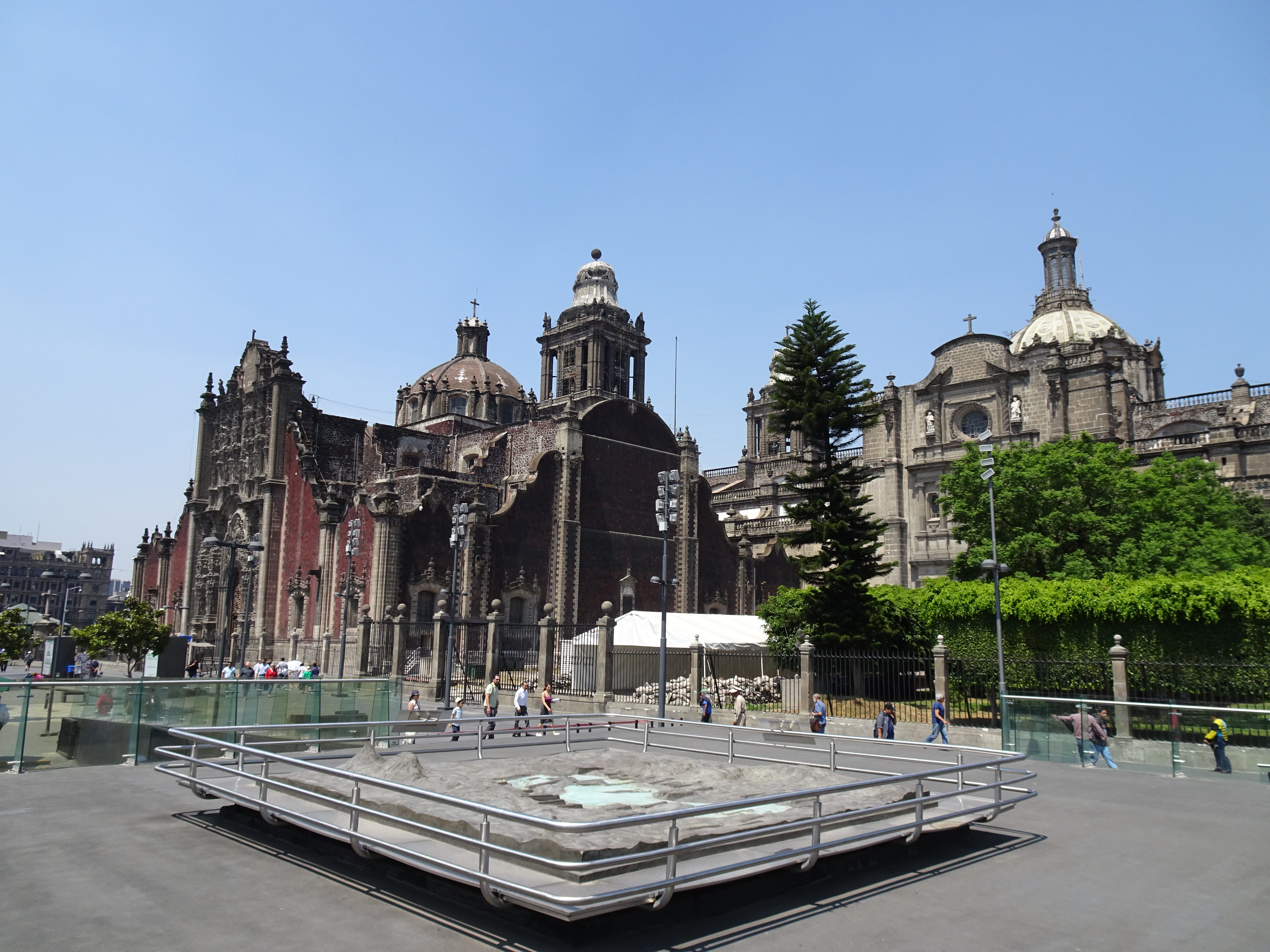
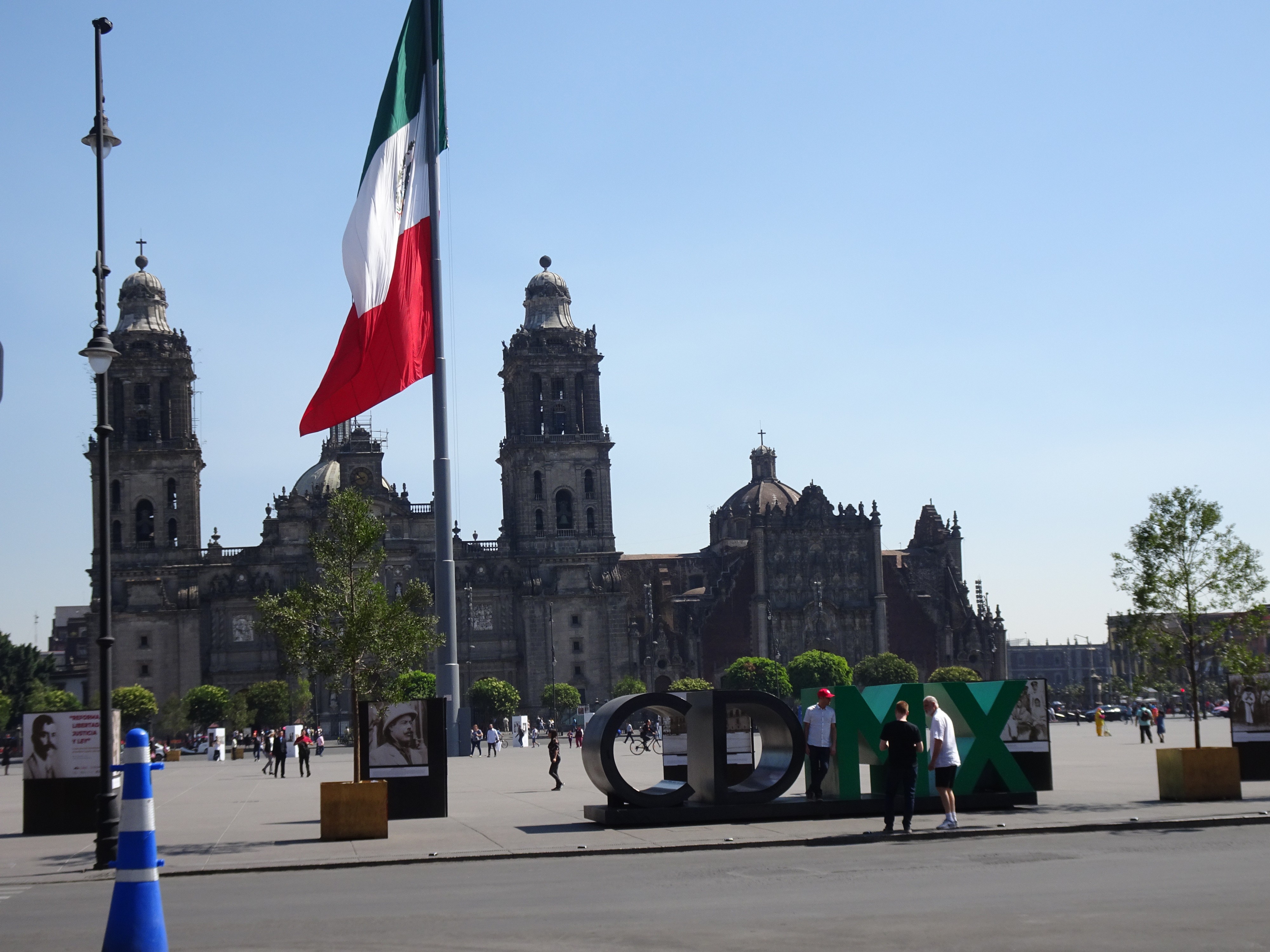
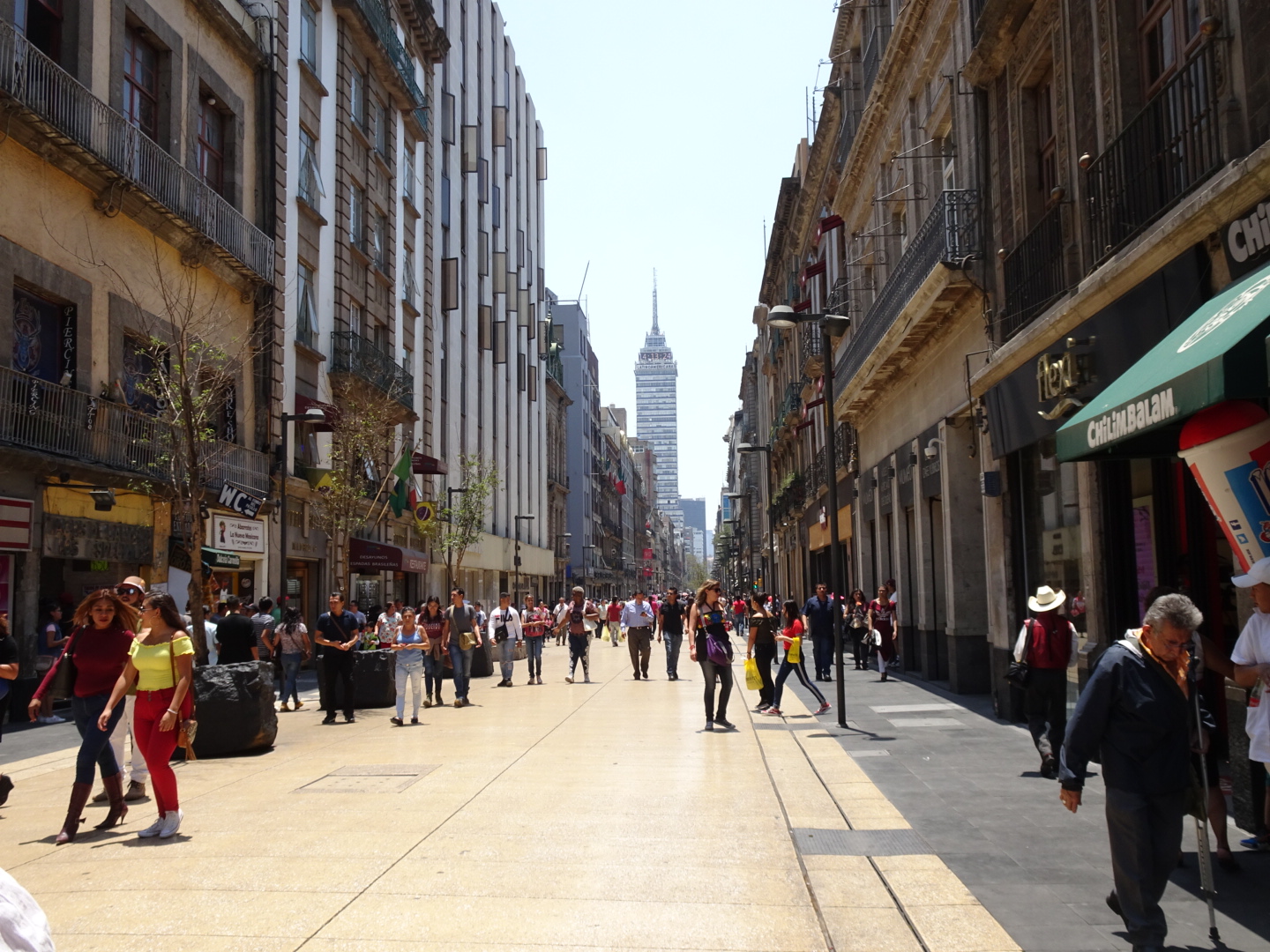
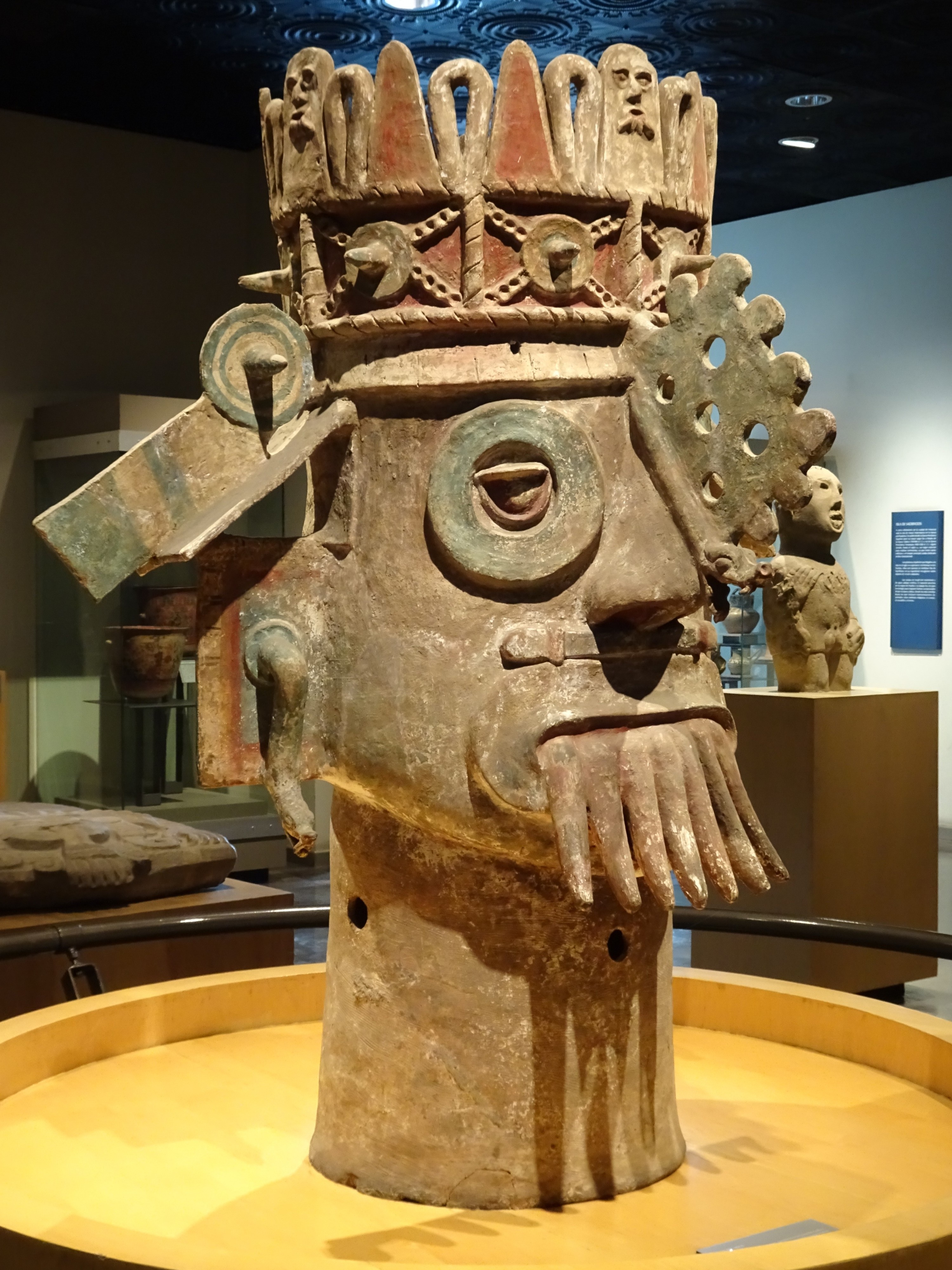
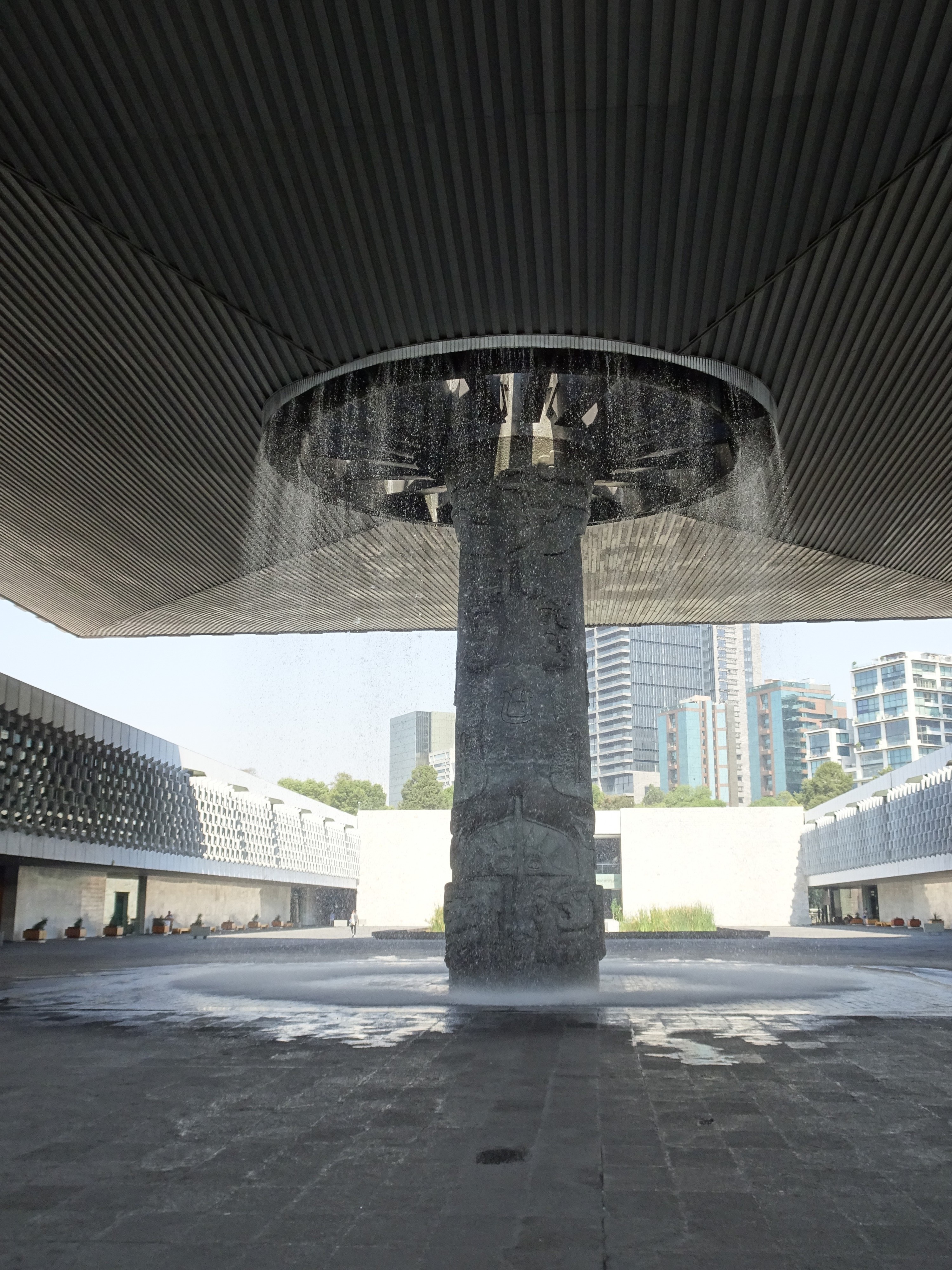
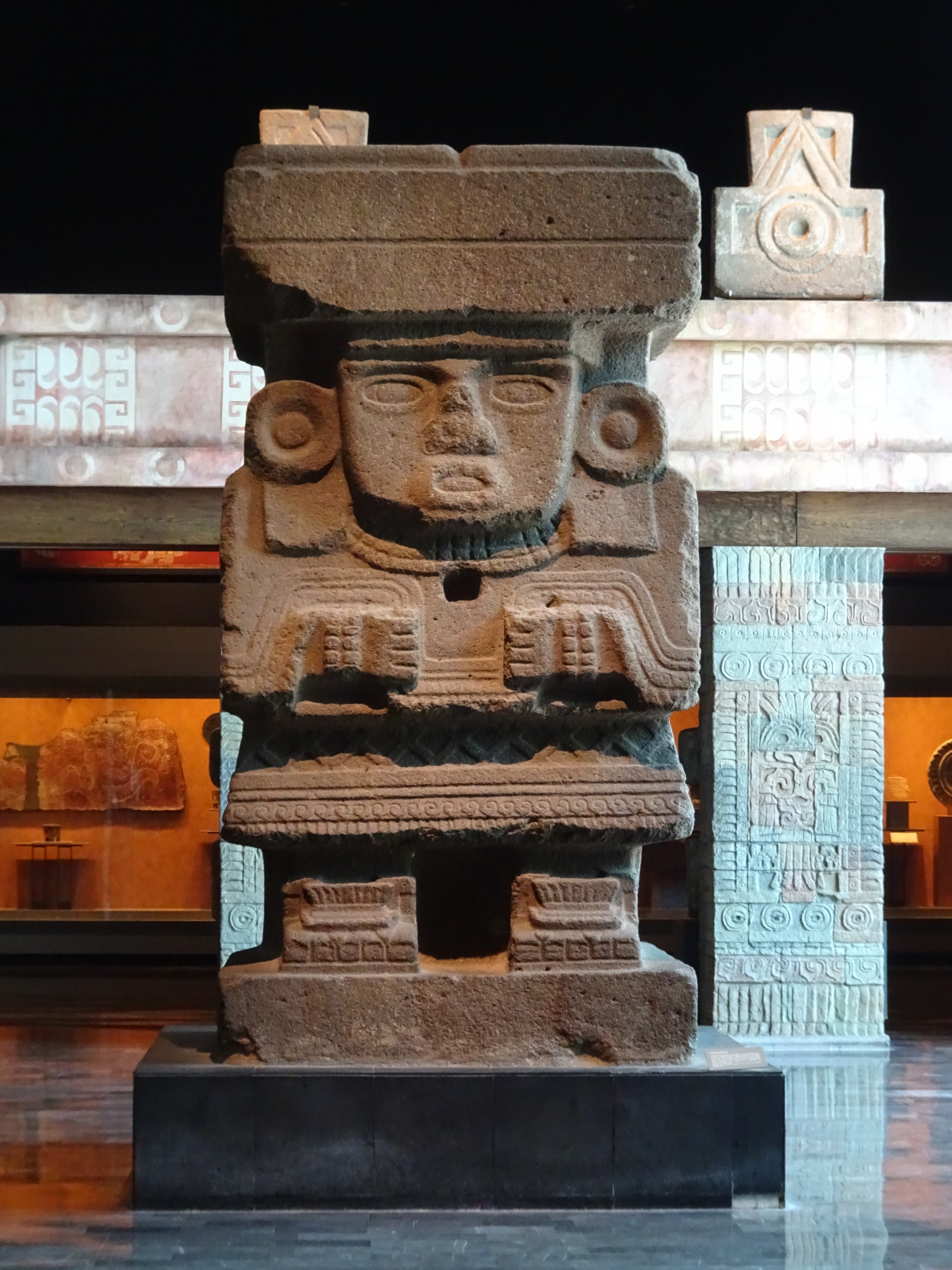
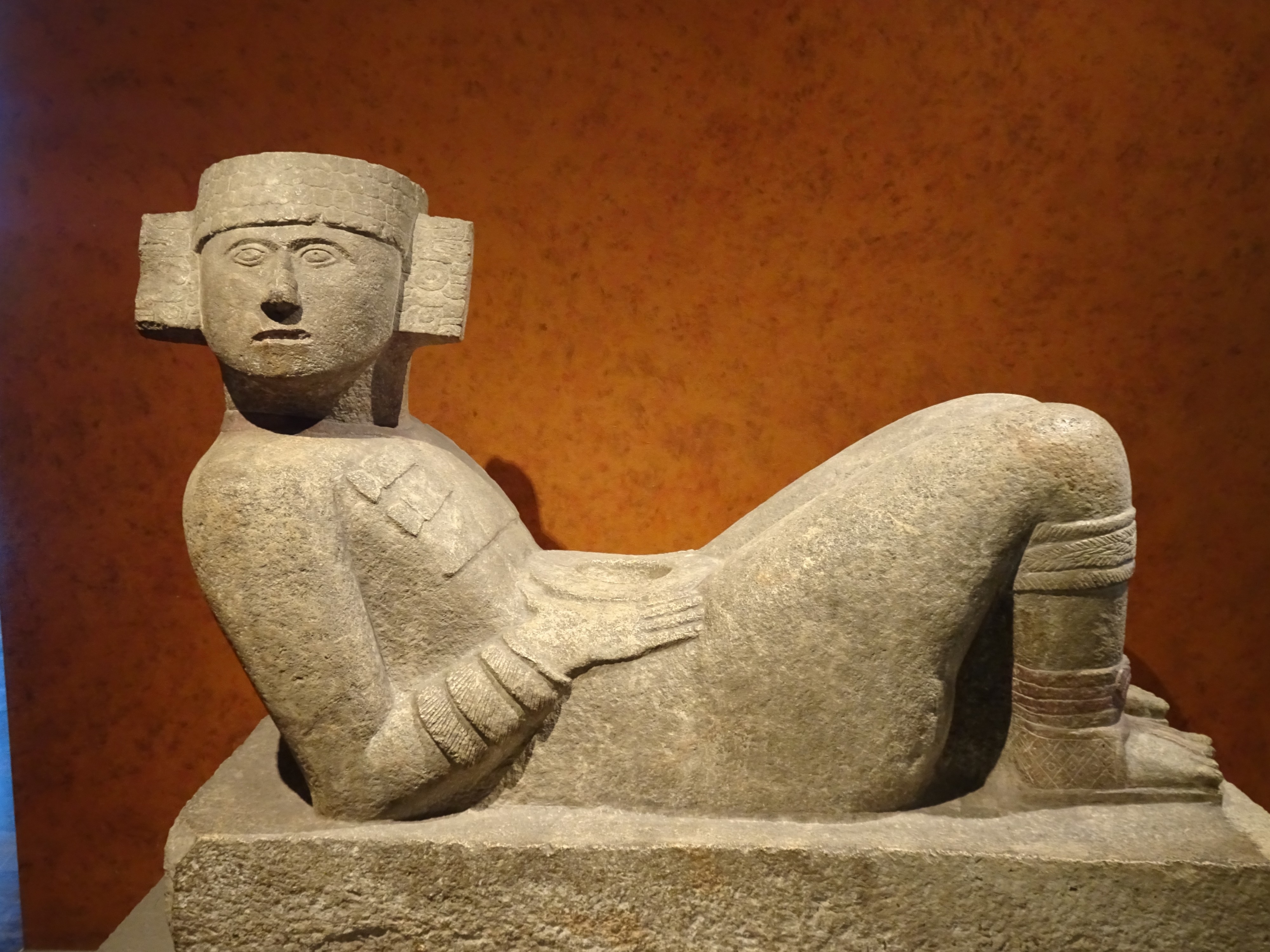
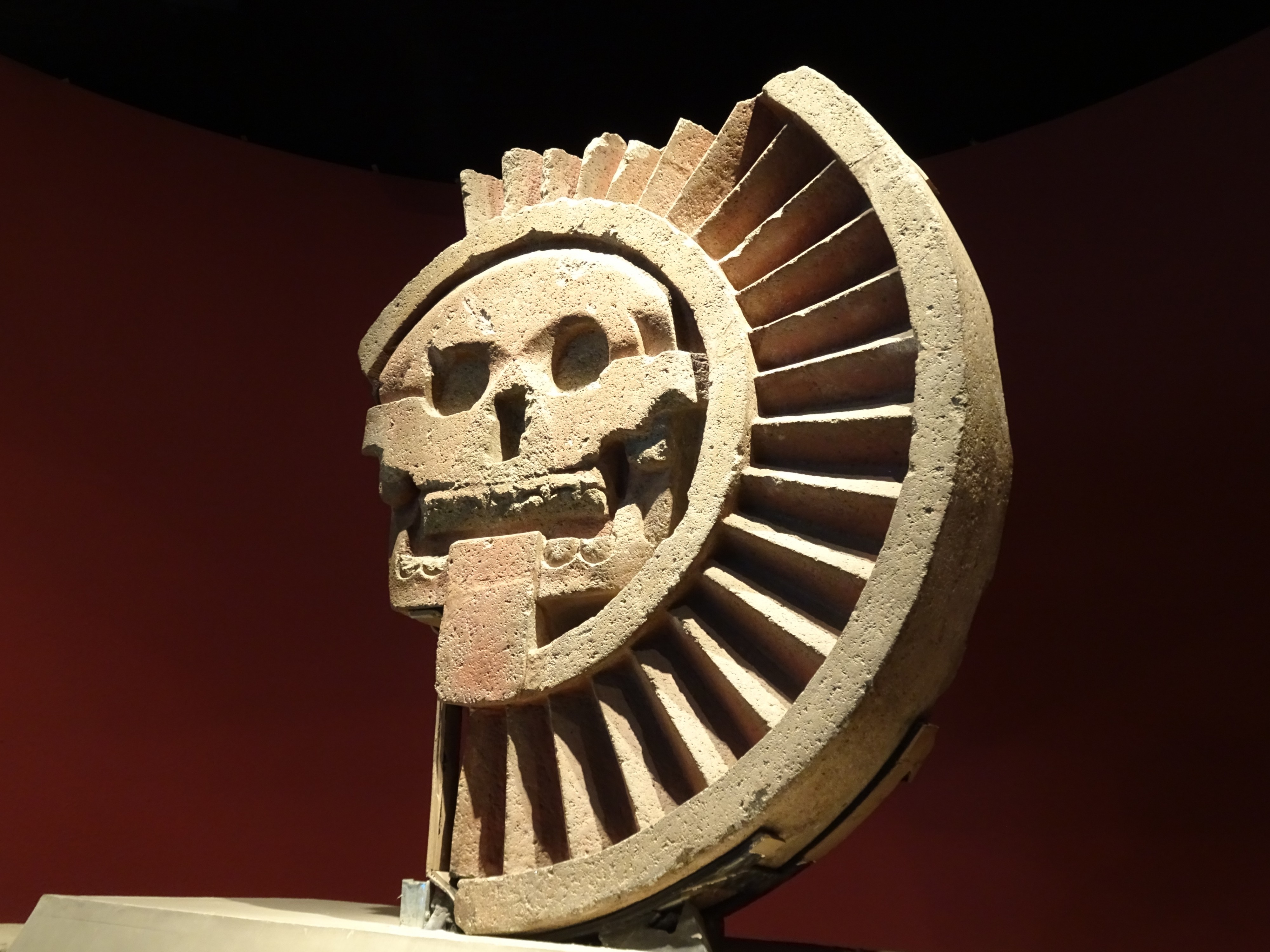
I visit the Museo Nacional de Antropología, which goes through the archaeology and culture of the people of Mexico. It is an fascinating museum. I half wish as I’m writing this now, that I could go again after the tour has finished to make better sense of all the temples, ruins and artefacts that I’ve seen.
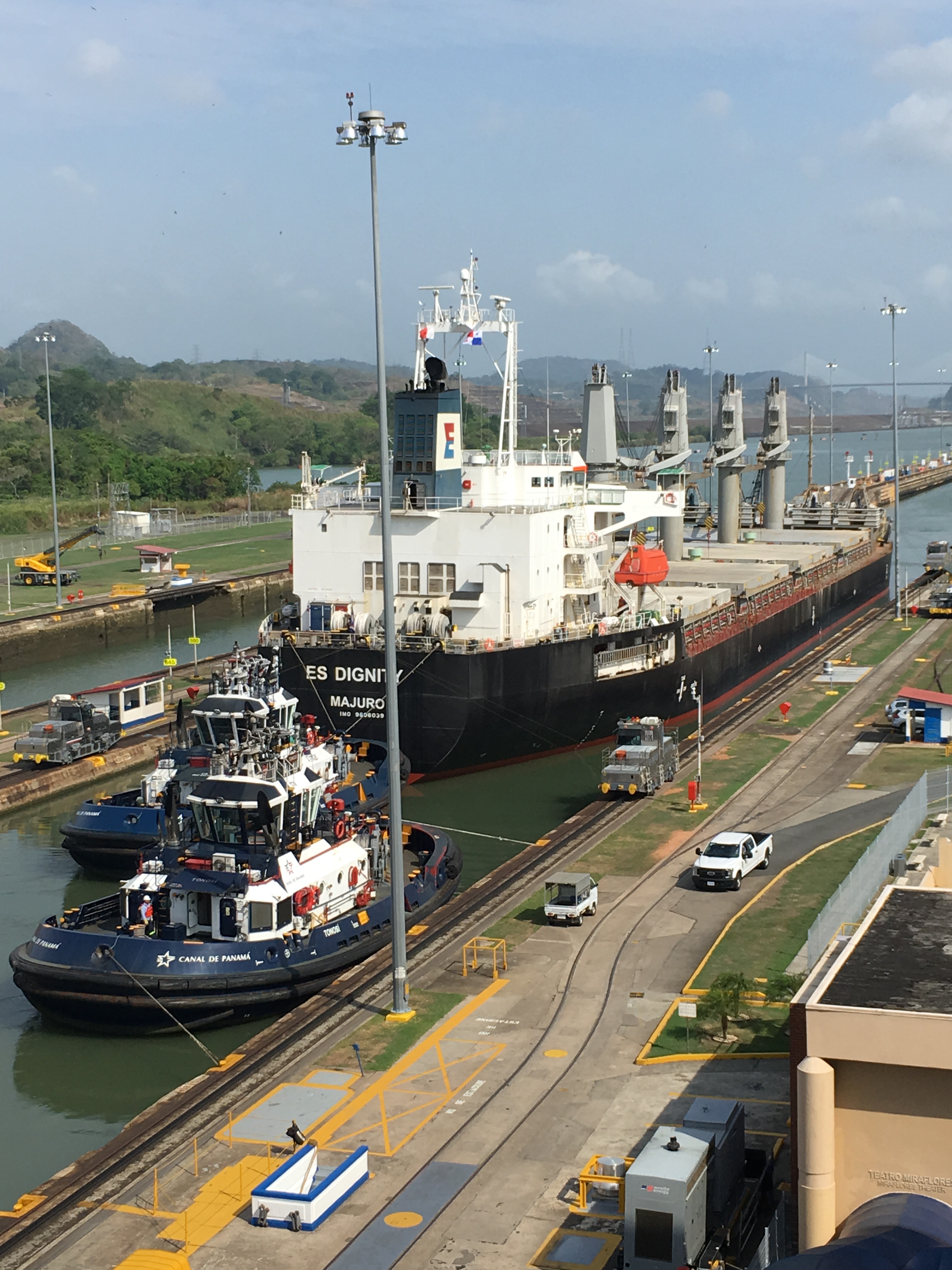
The bells sounds and the lock gates open. Slowly two electric ‘mules’ run along the tracks and guide the ship through the lock. The boat is huge – you can’t really get the size from the photos. It takes around 5 minutes for the ship to pass through. Behind, a tug boats pushes it along. We watch it skim smoothly, still guided by the mules as it approaches the next lock and then it is out in wider water at a higher level and continuing its journey.
All this is accompanied by a man narrating on a microphone. It feels a bit like a show.
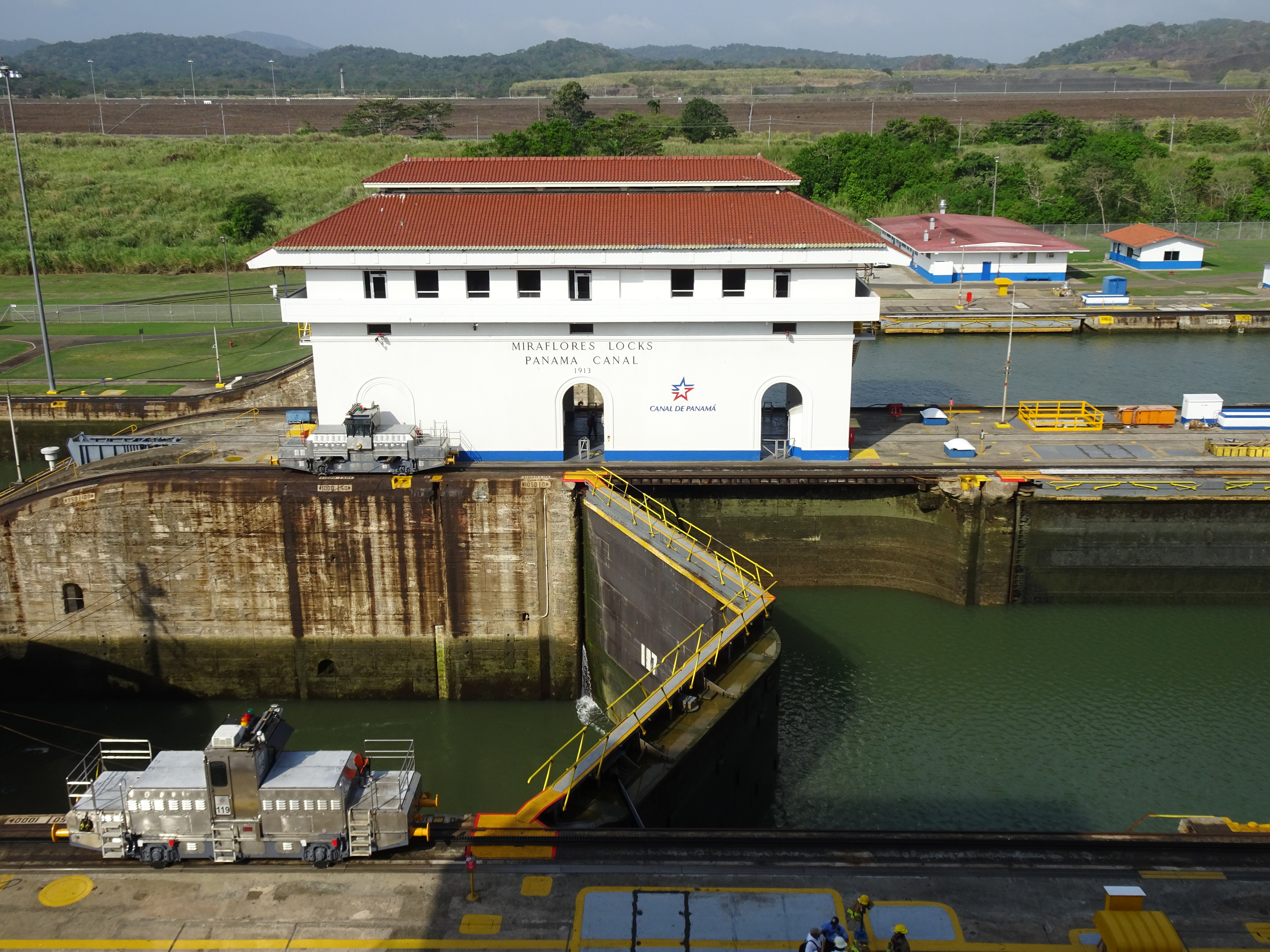
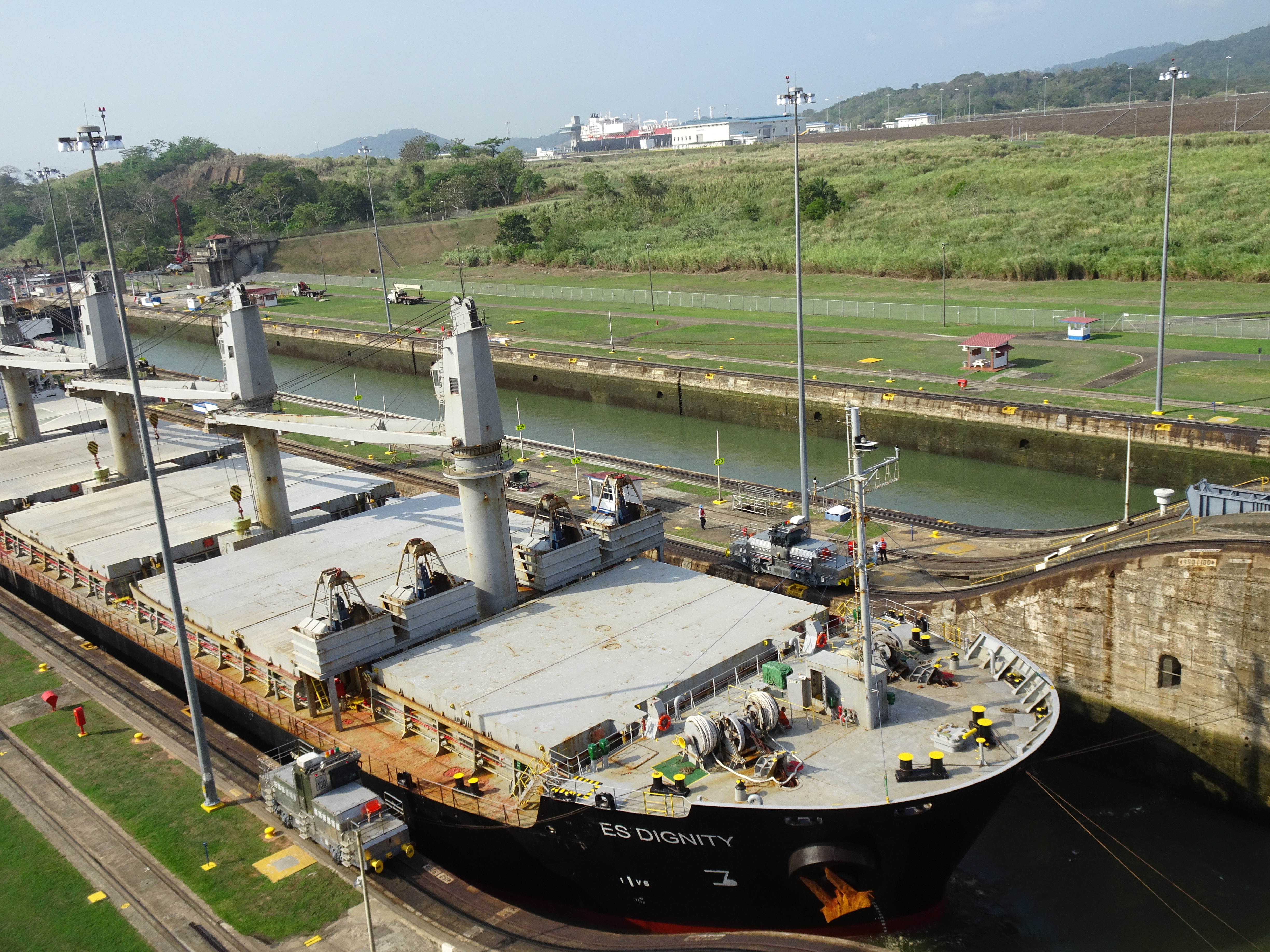
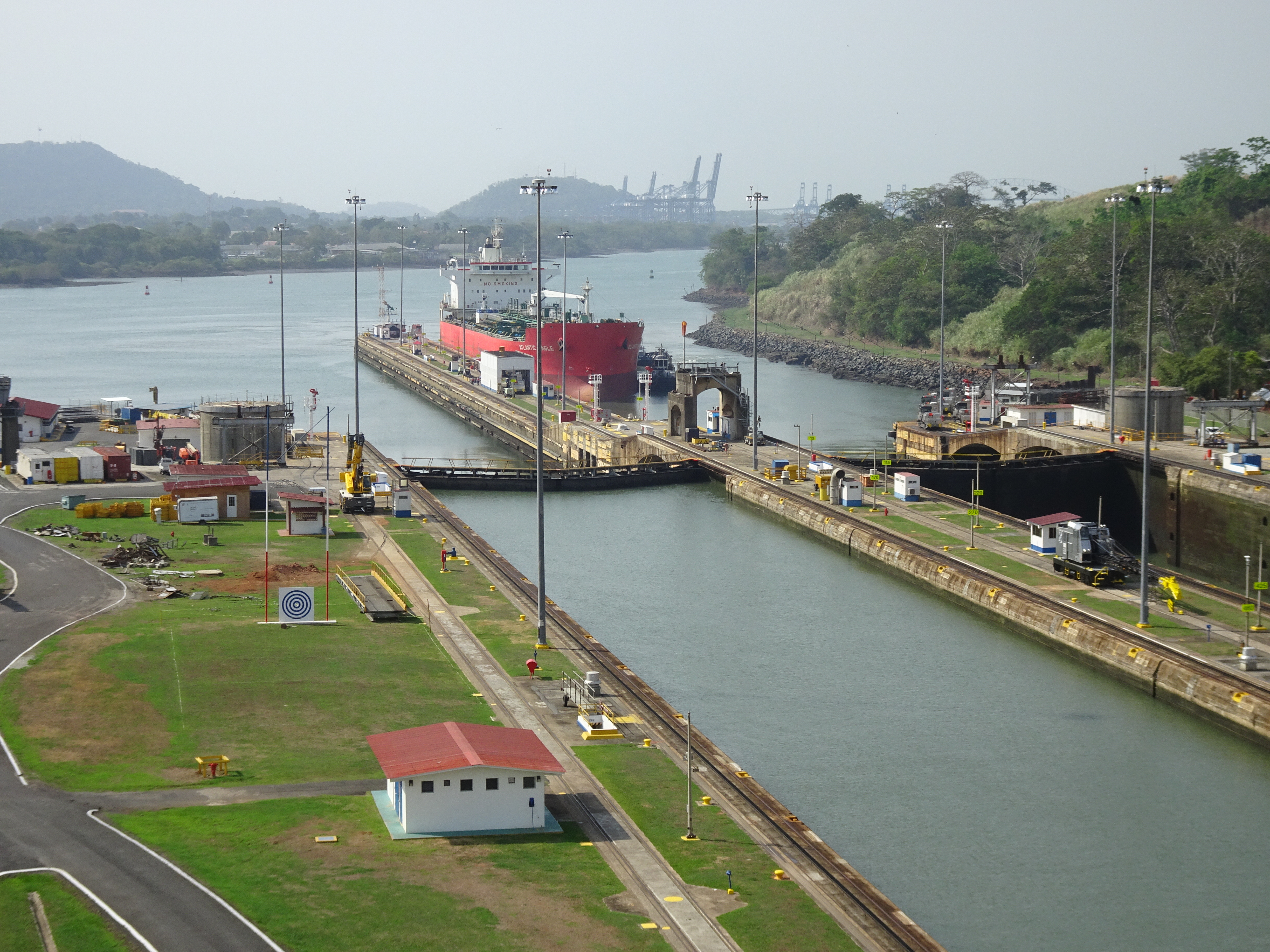
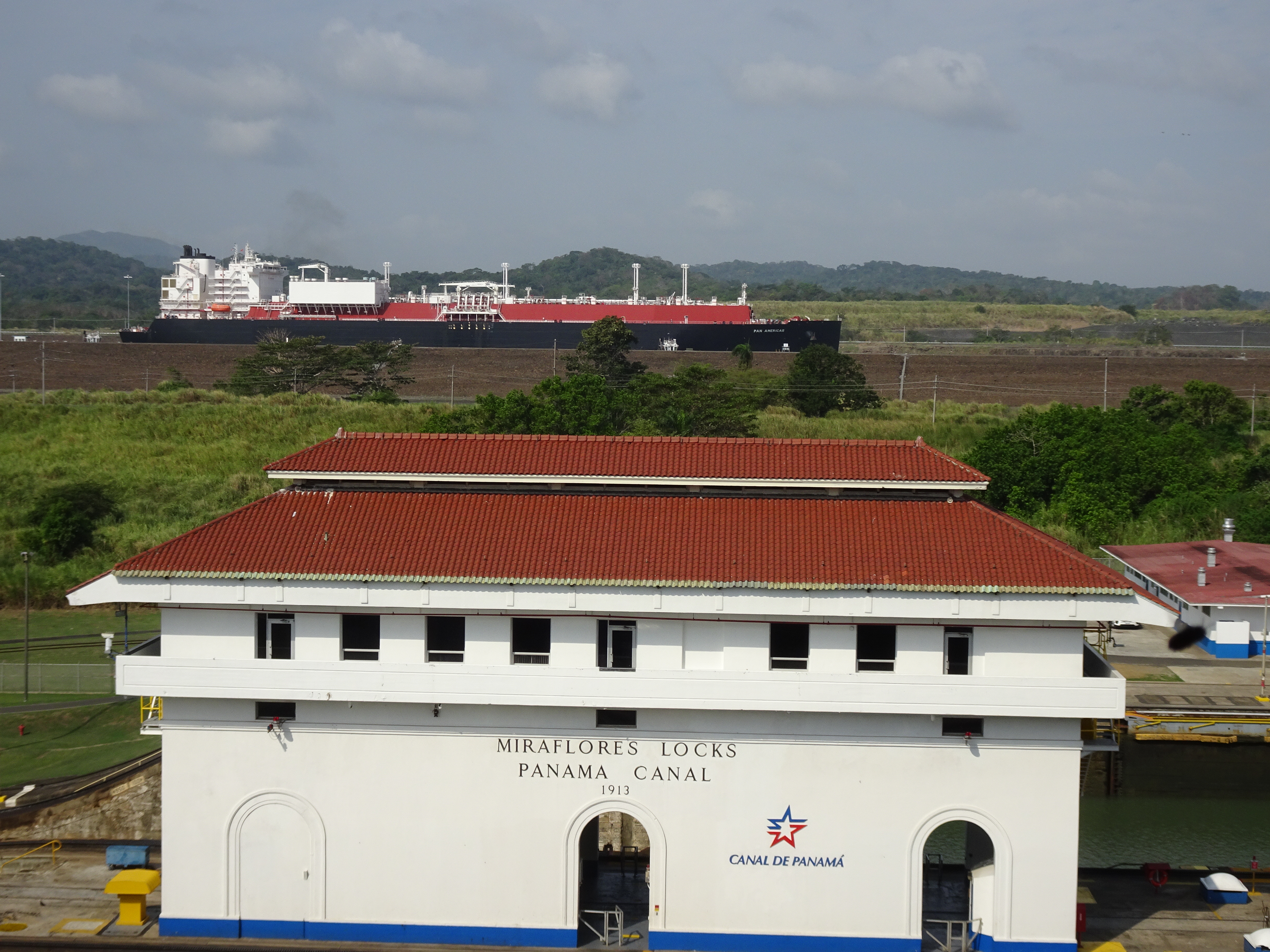
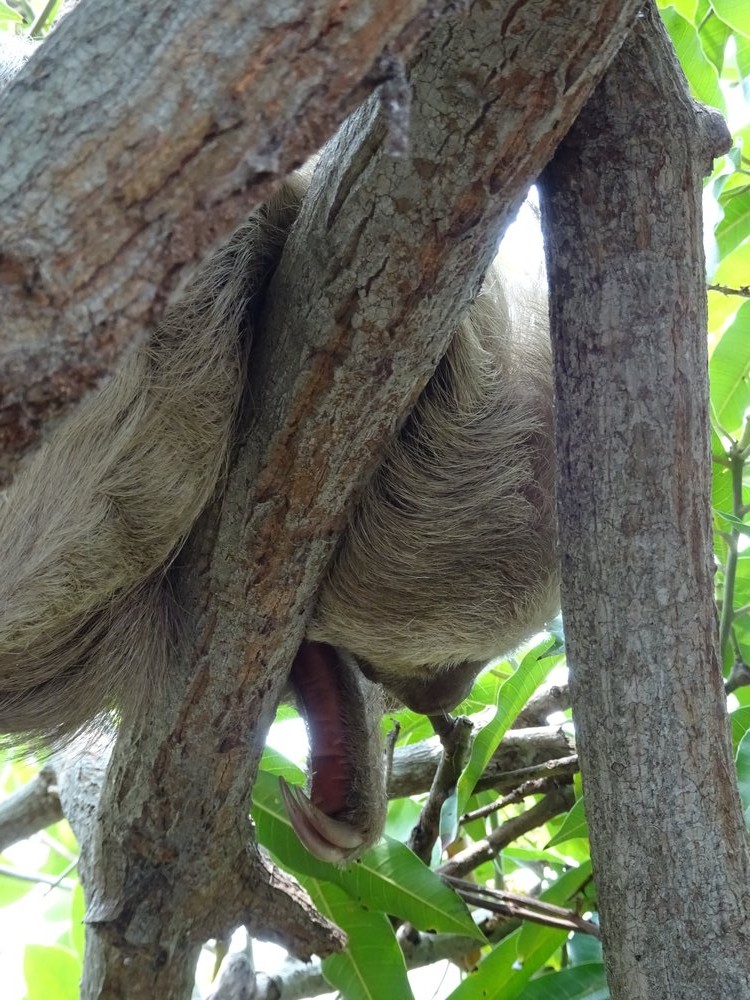
The day is humid- sweat is dripping off me – it reminds of being in Asia. The guide on our tour takes us to a wildlife centre. He points out sloths in the trees; I must say they are excellent at camoflague – I wouldn’ t have spotted them at all.
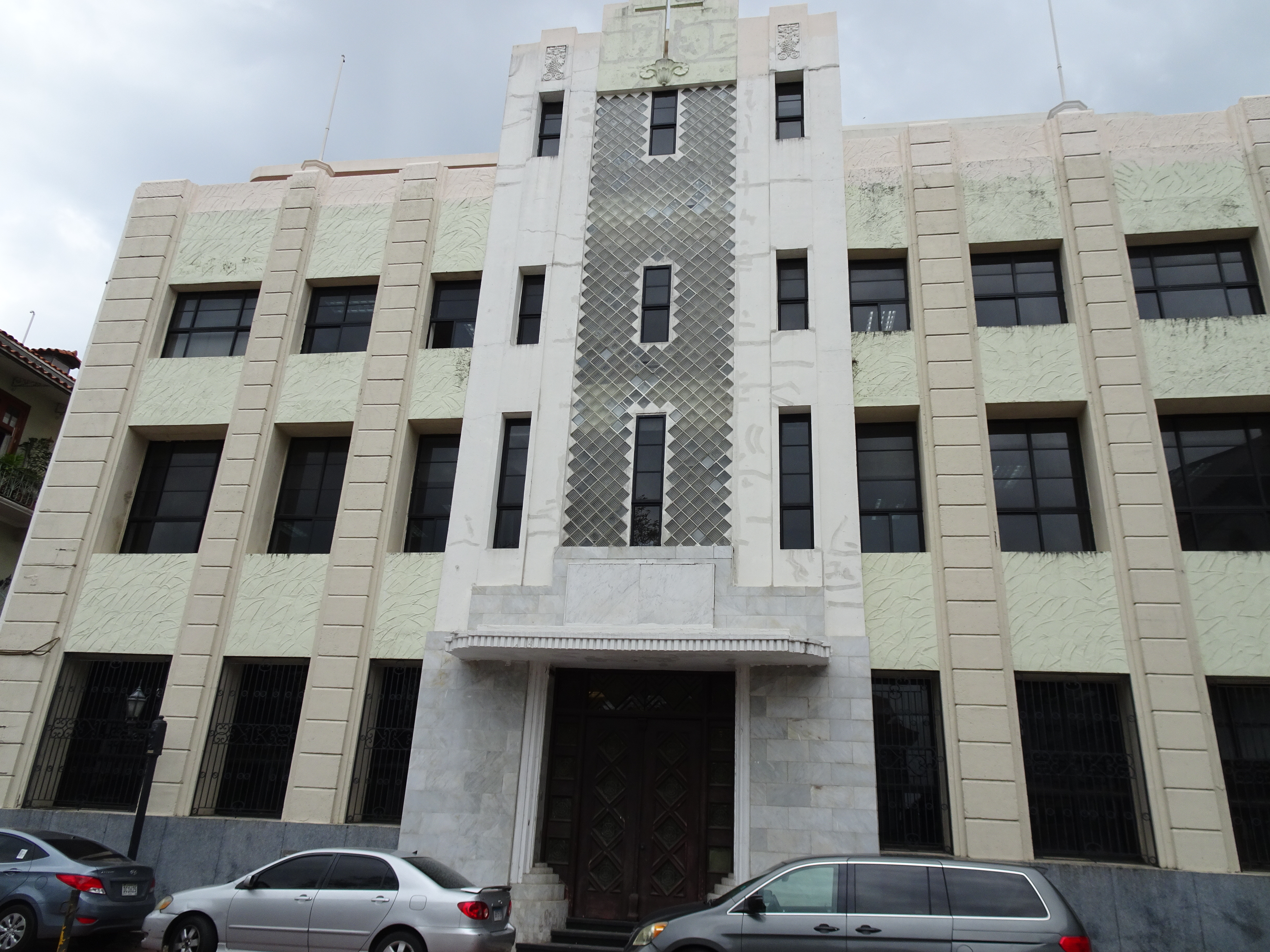
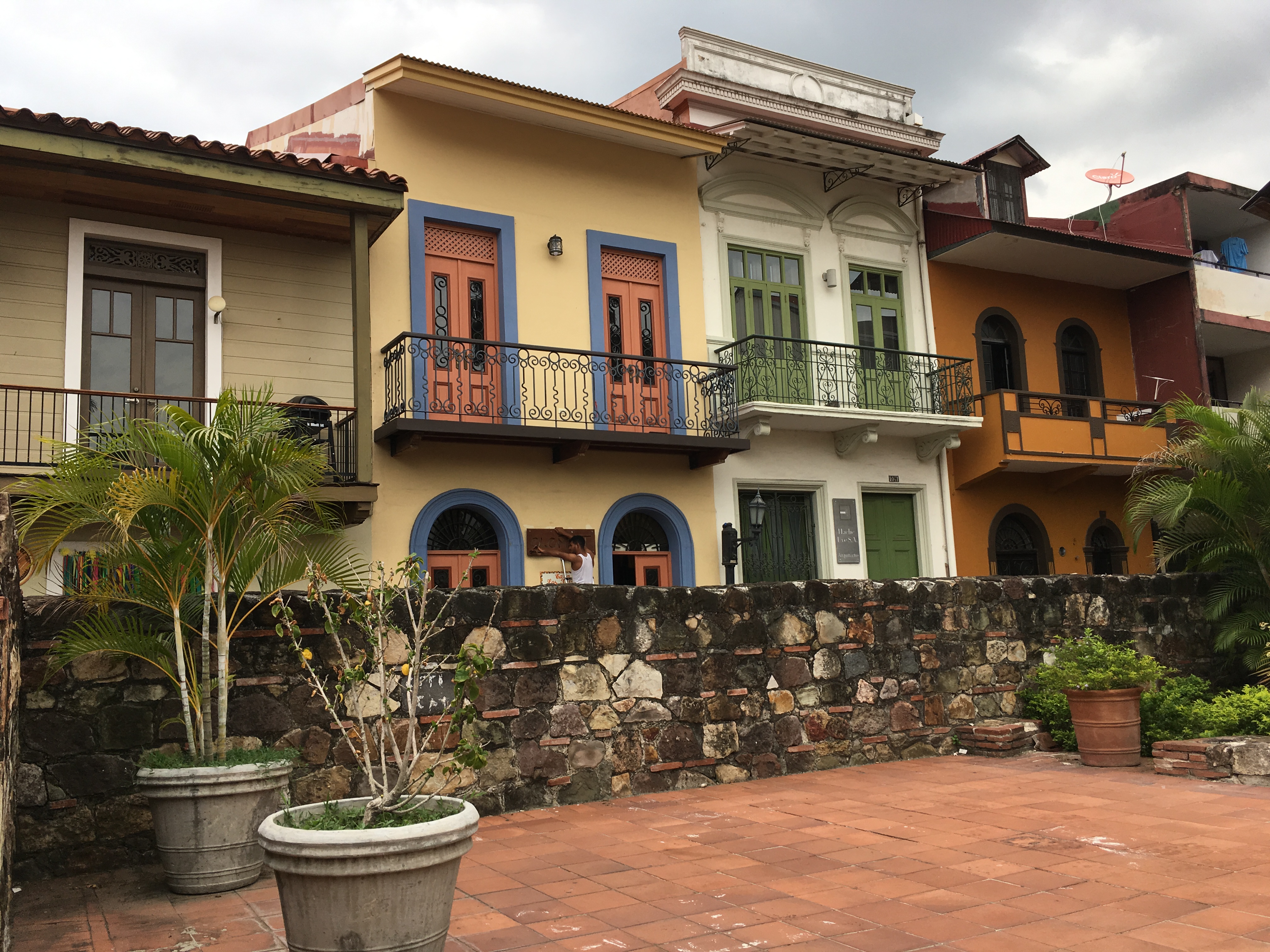
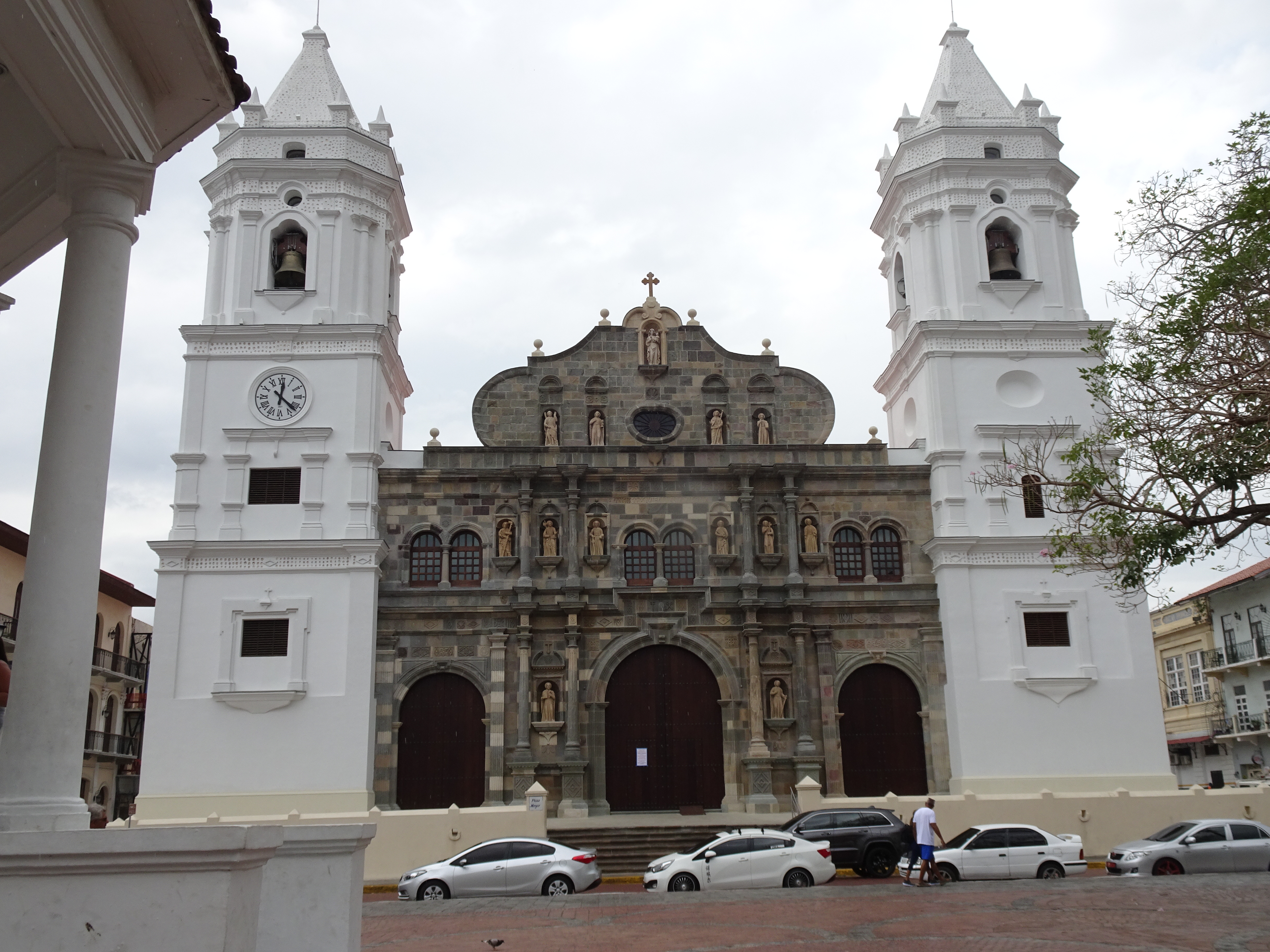
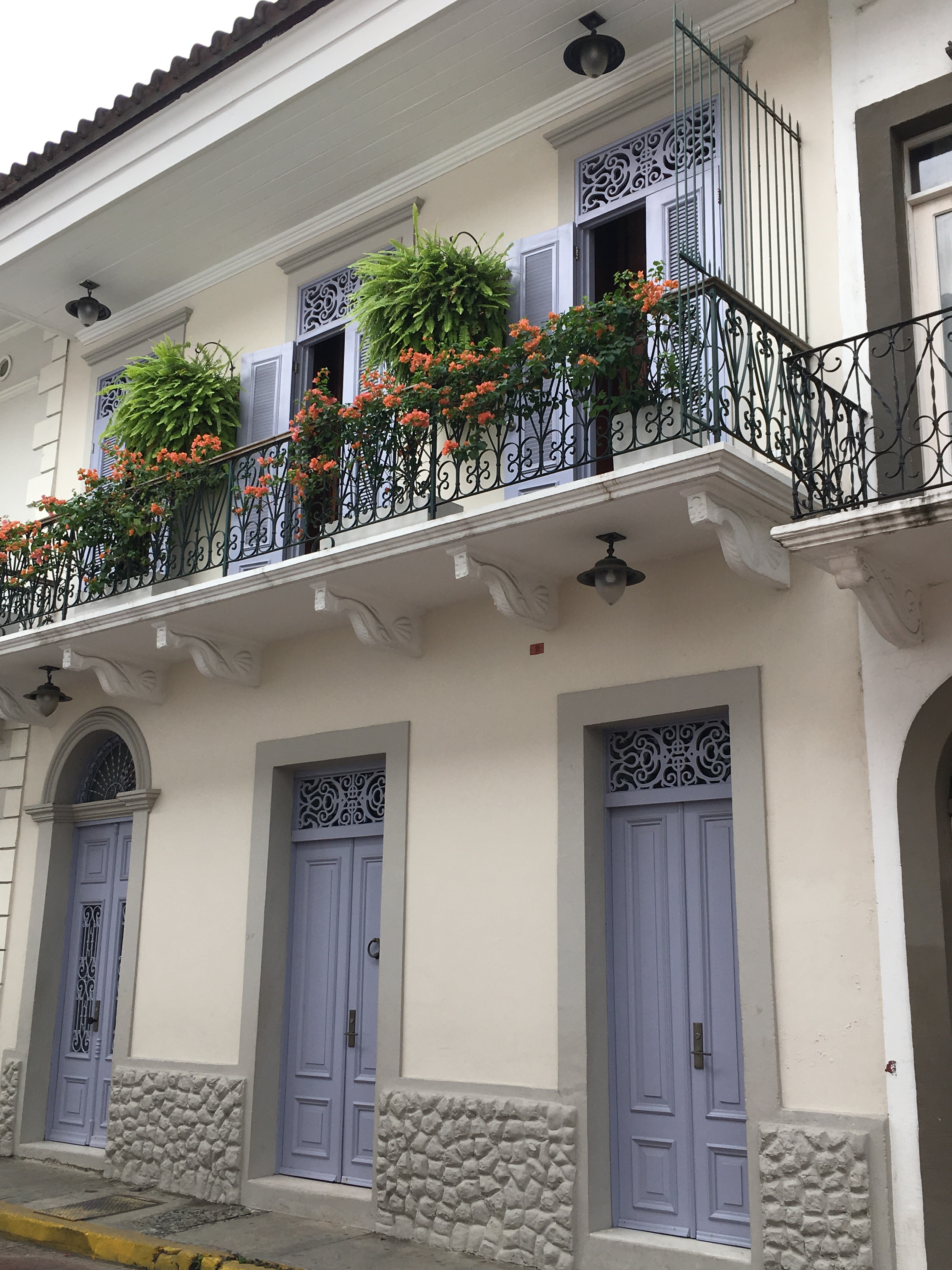
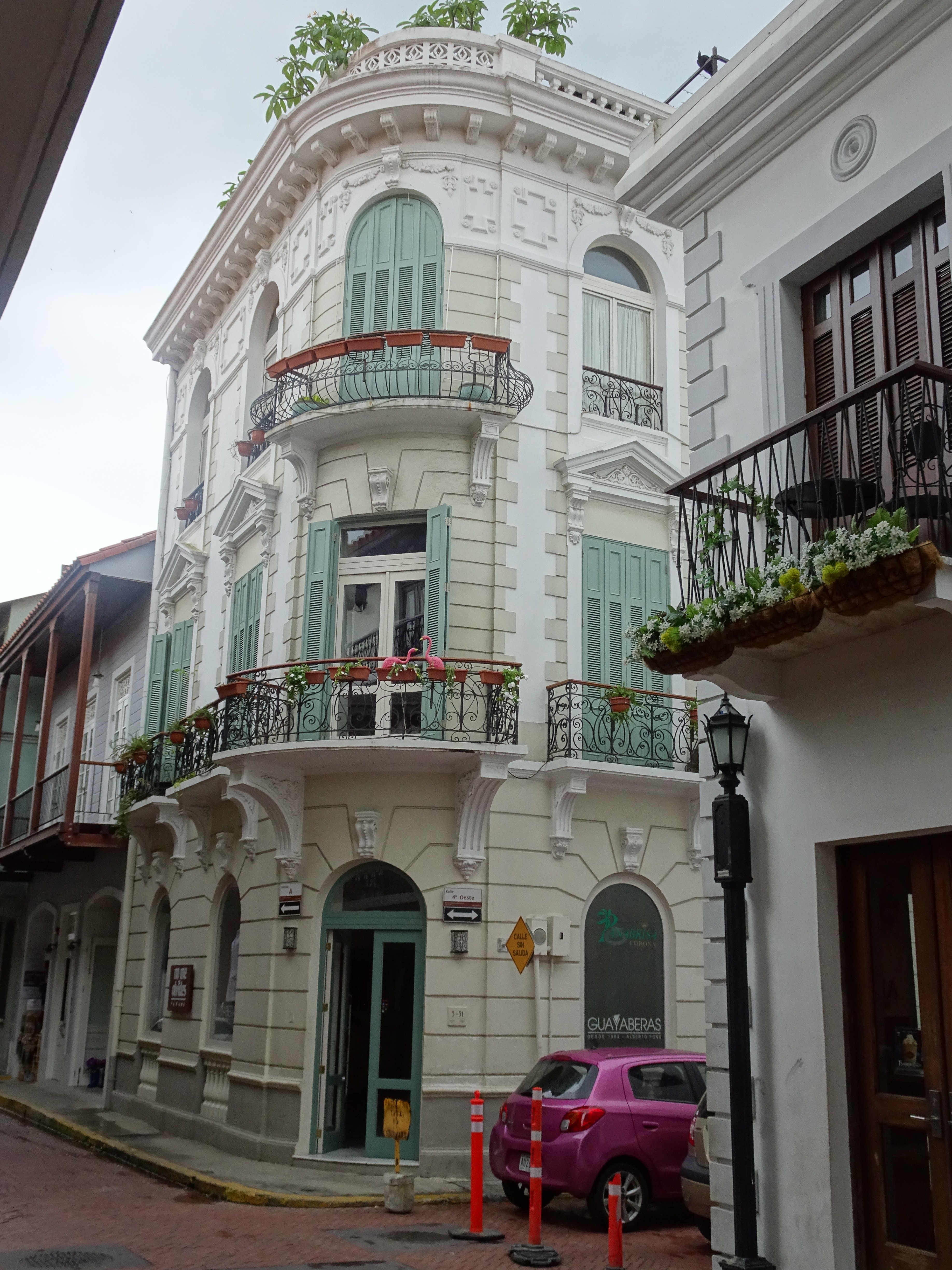
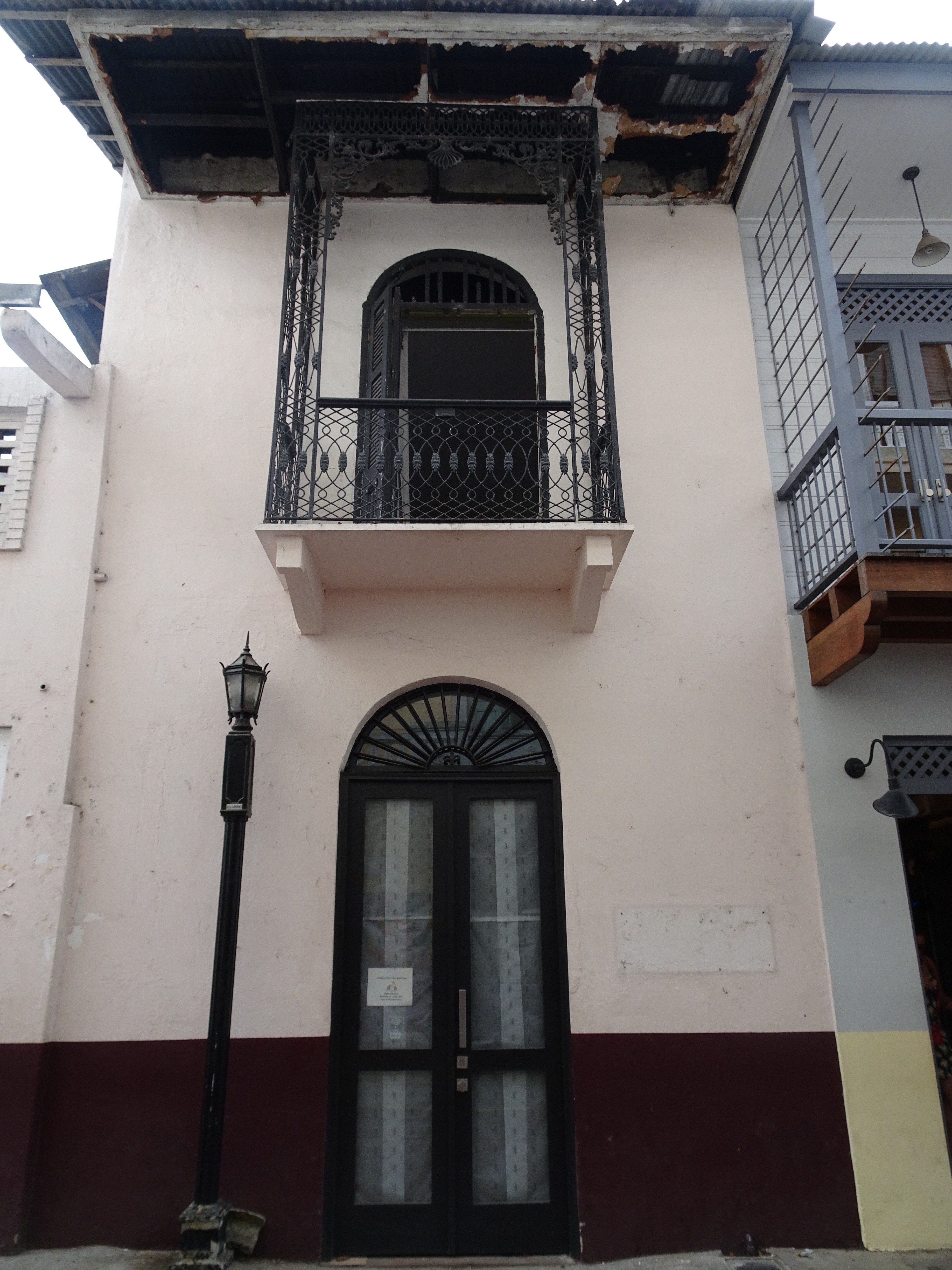
I visit the old quarter. It is in the middle of regeneration. It is full of a mix of different styles and ages of buildings.
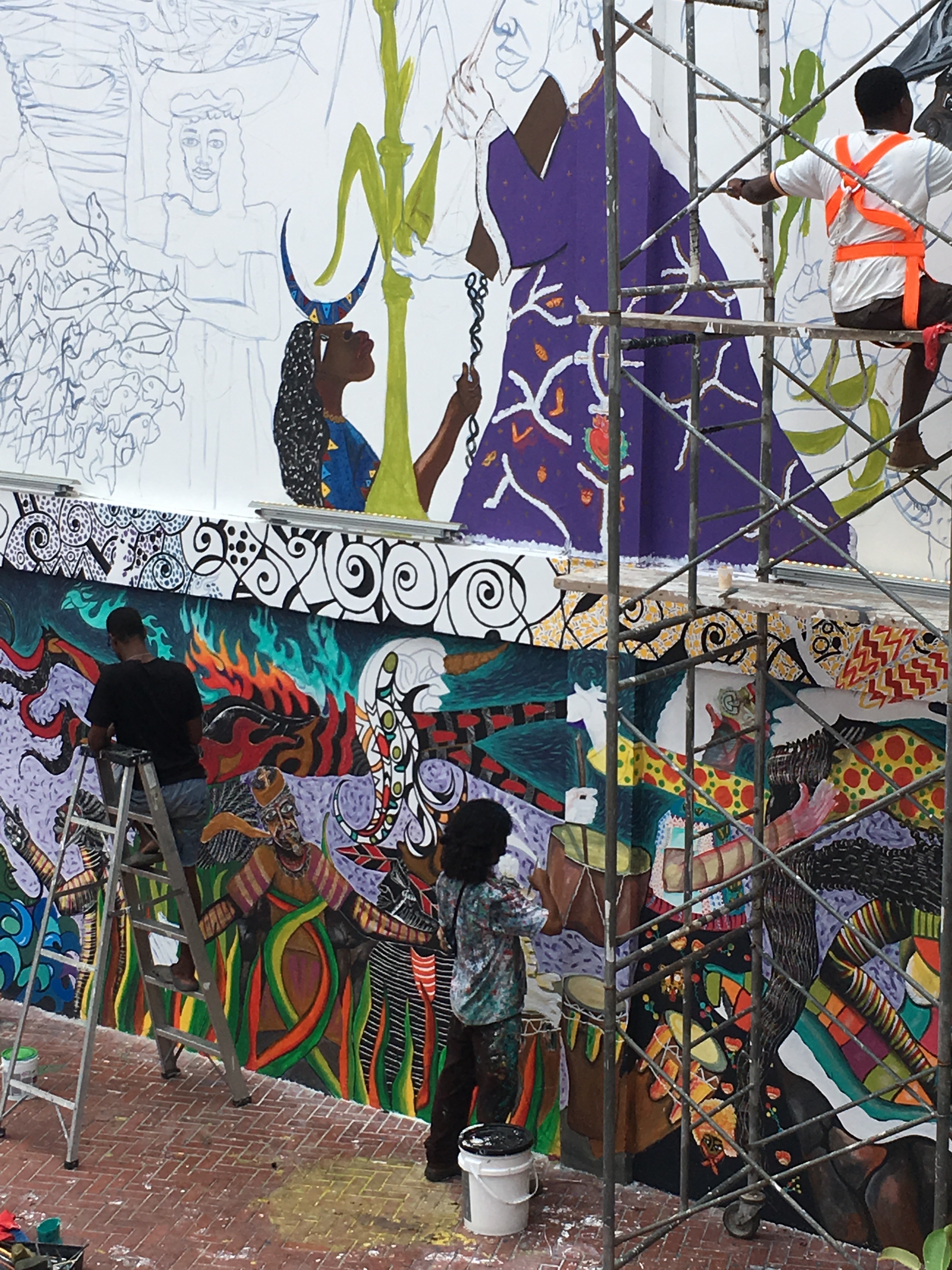
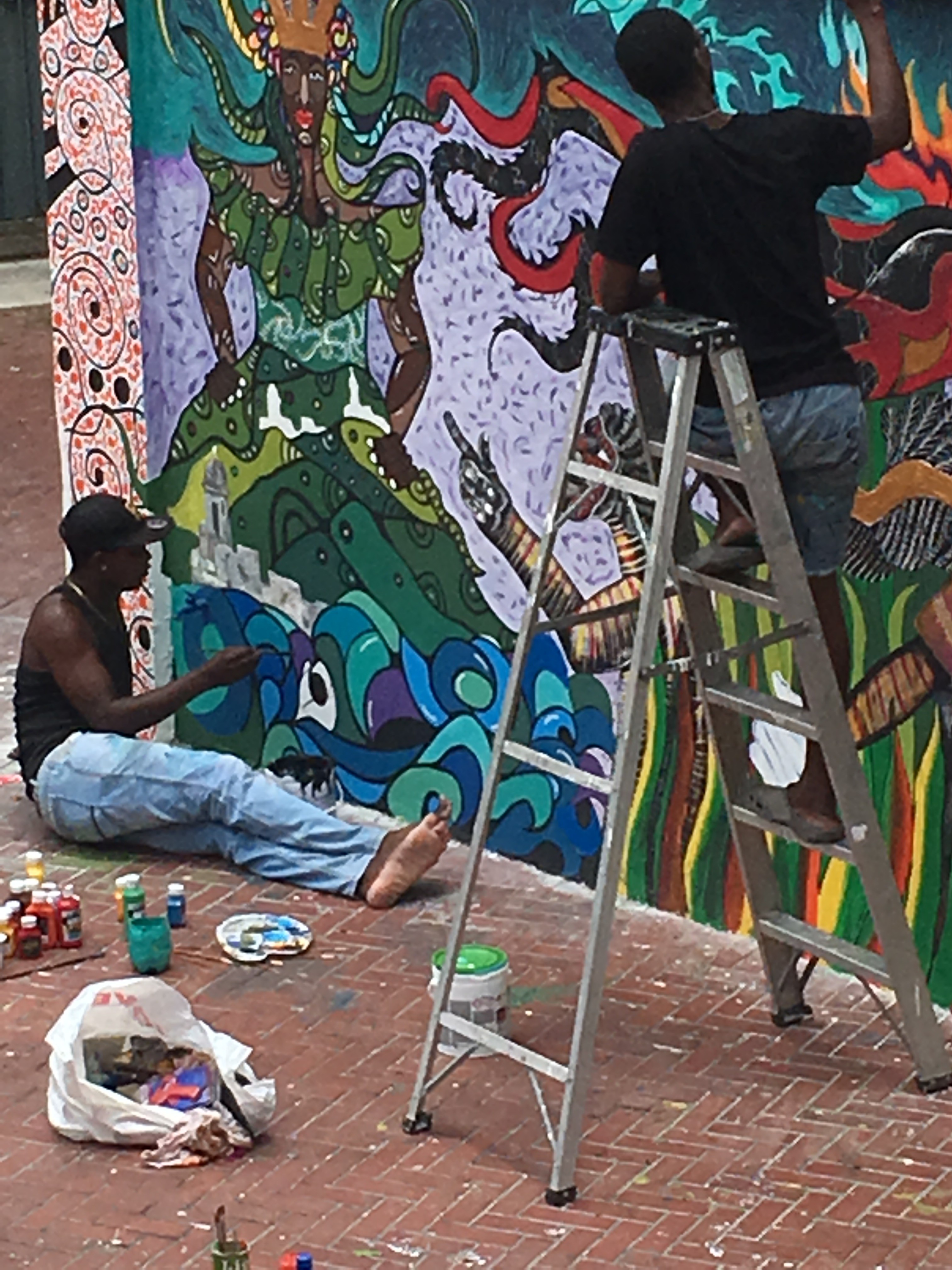
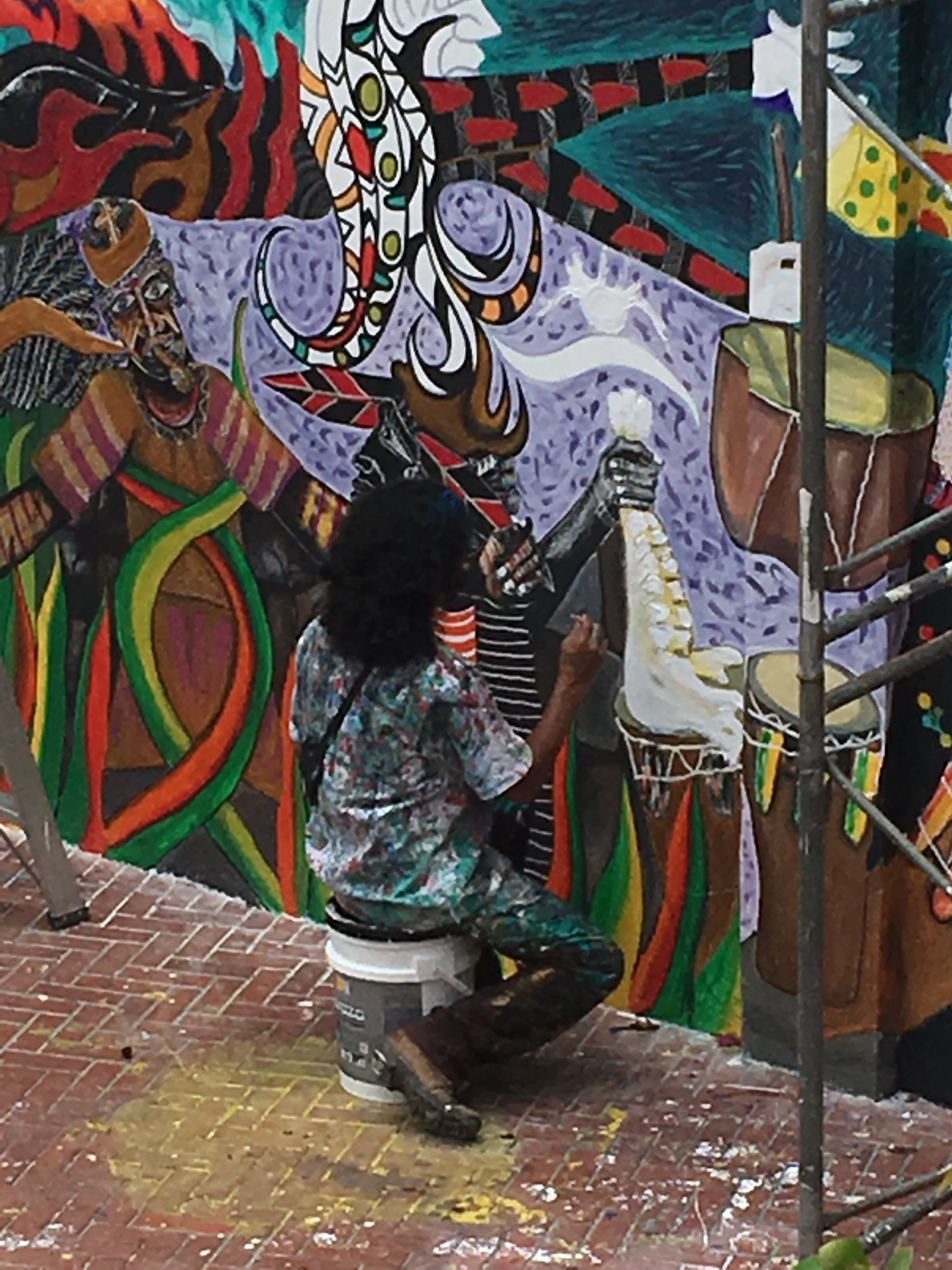
I stand for quite a while and watch some men paint a huge mural. The amount of work involved in it is incredible. I half wish that I could stay and see it finished.
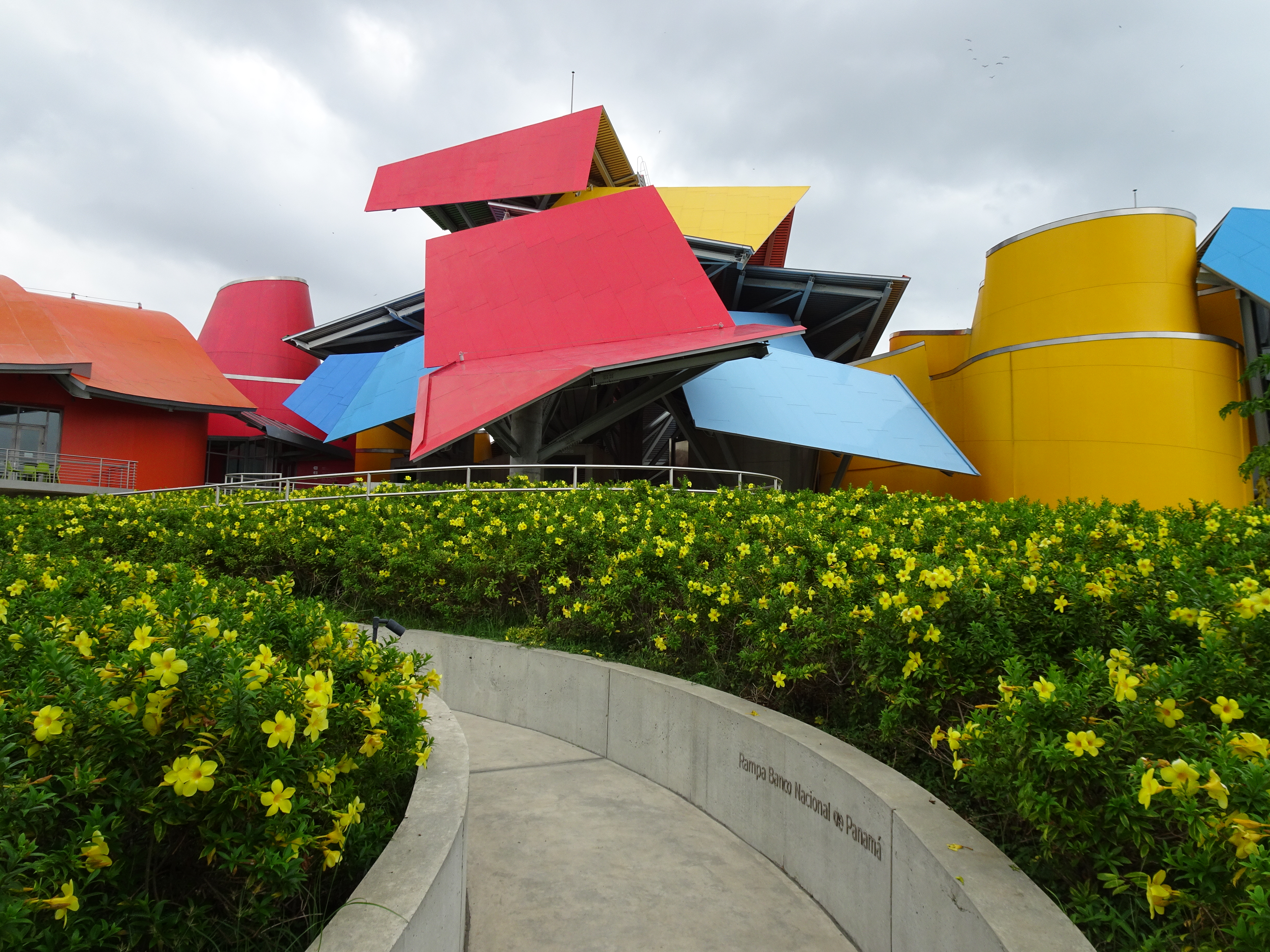
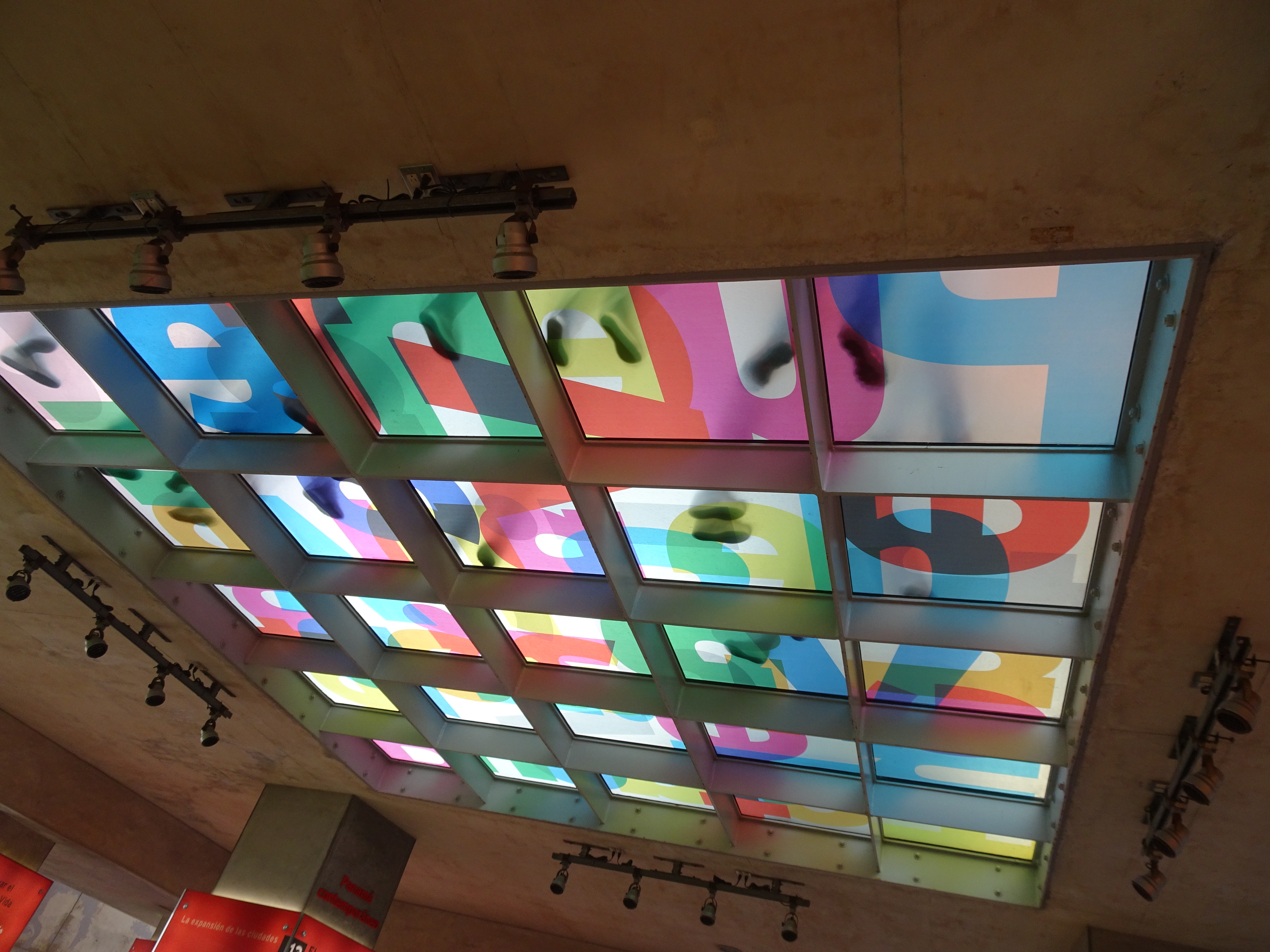
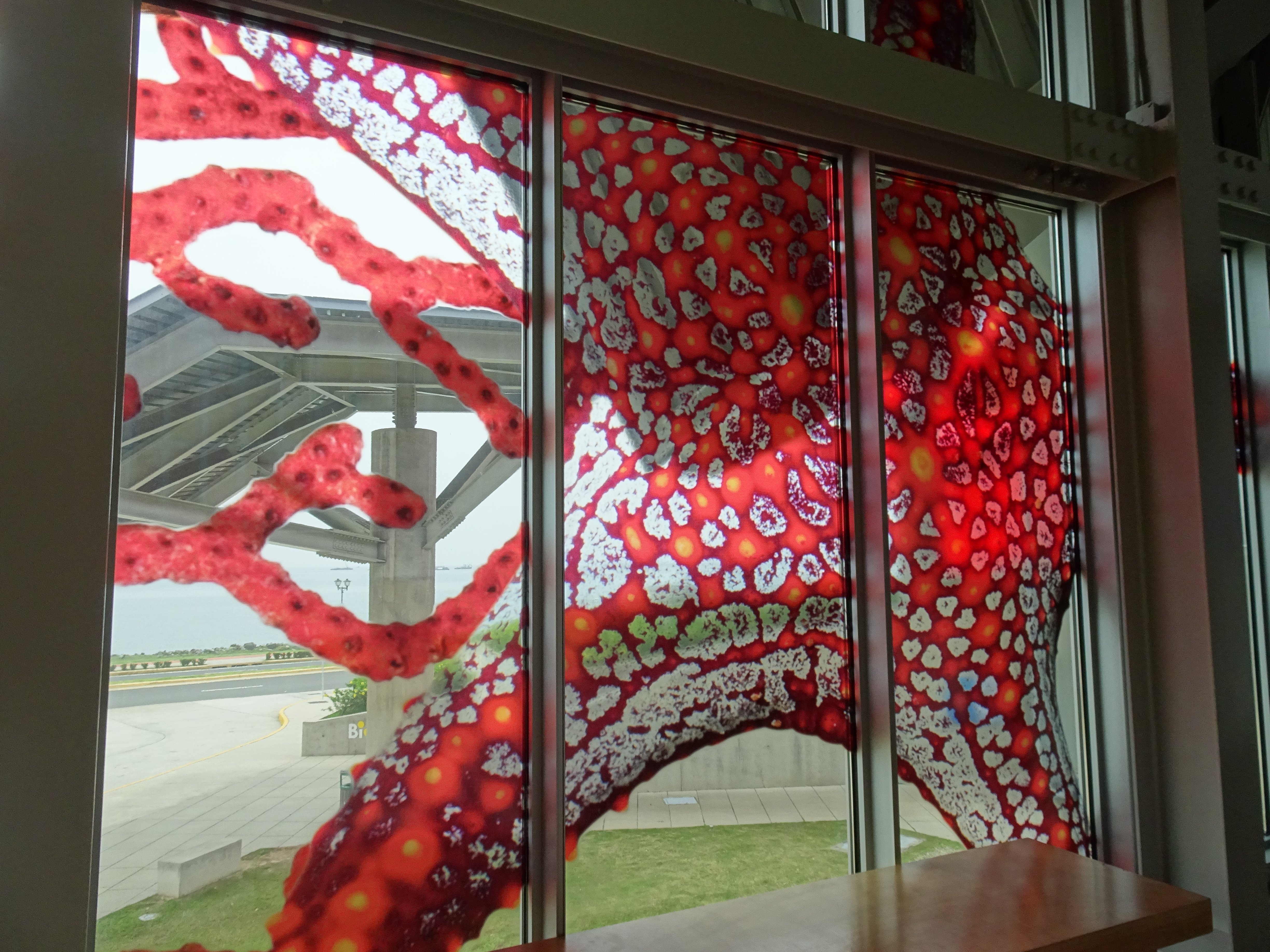
I also visit the Bio Diversity Museum which explains how Panama, thousands of years ago became a land bridge for mammals to move between North and South America. The building is interesting in itself as it is designed by Frank Gehry who also did the Guggenheim Museum in Spain.
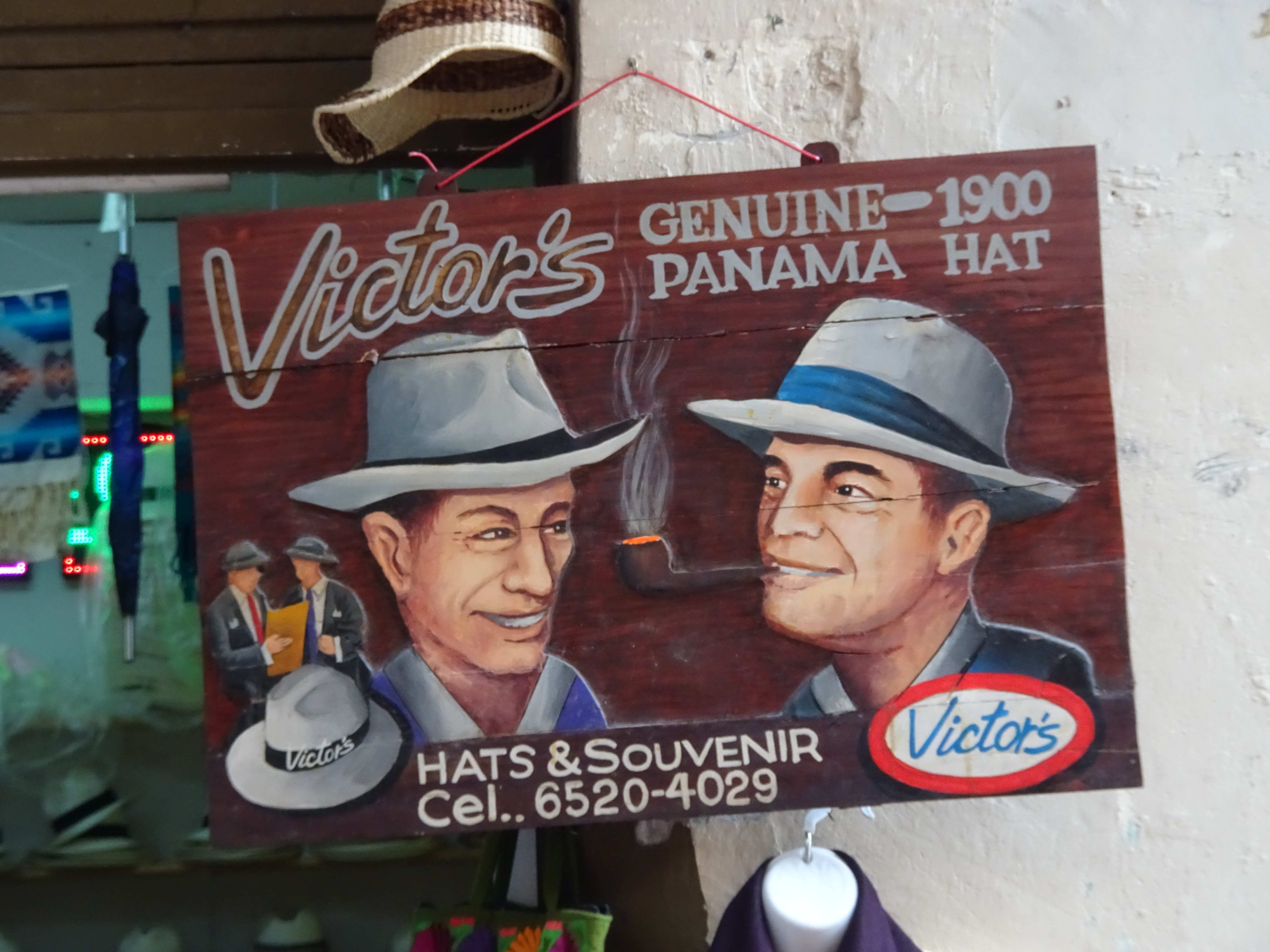
Of course there is the ubiquitous Panama hat shop. One of many actually; Panama hats are sold just about everywhere here. And of course (as you will see in later entries) buying one in Panama just has to be done!
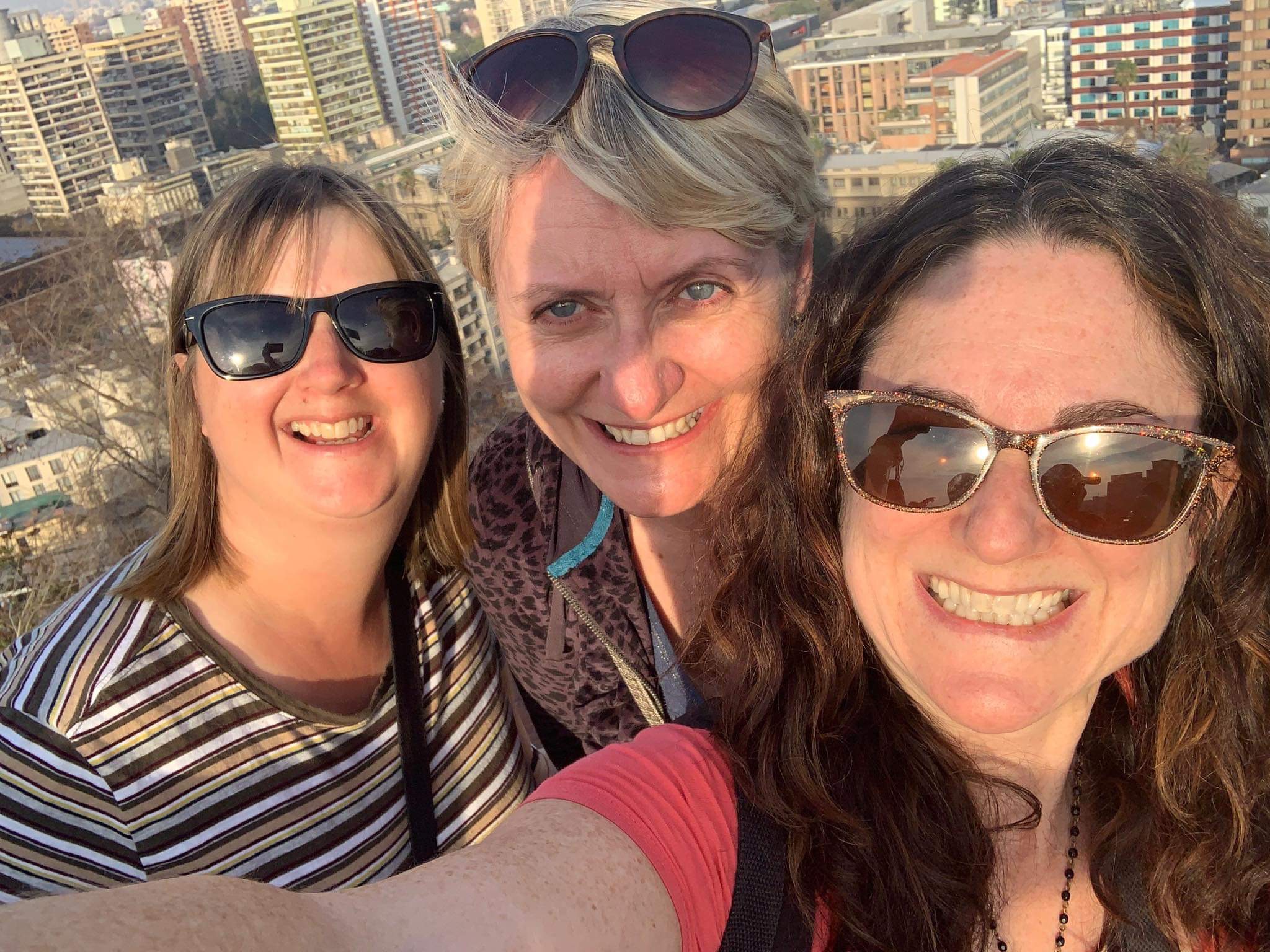
So lovely to meet up with Heather again in Santiago for a meal and a little sightseeing. Hope to see you again soon whenever our travels cross paths.
So sad to say goodbye to Teresa. It’s been fab. See you soon.
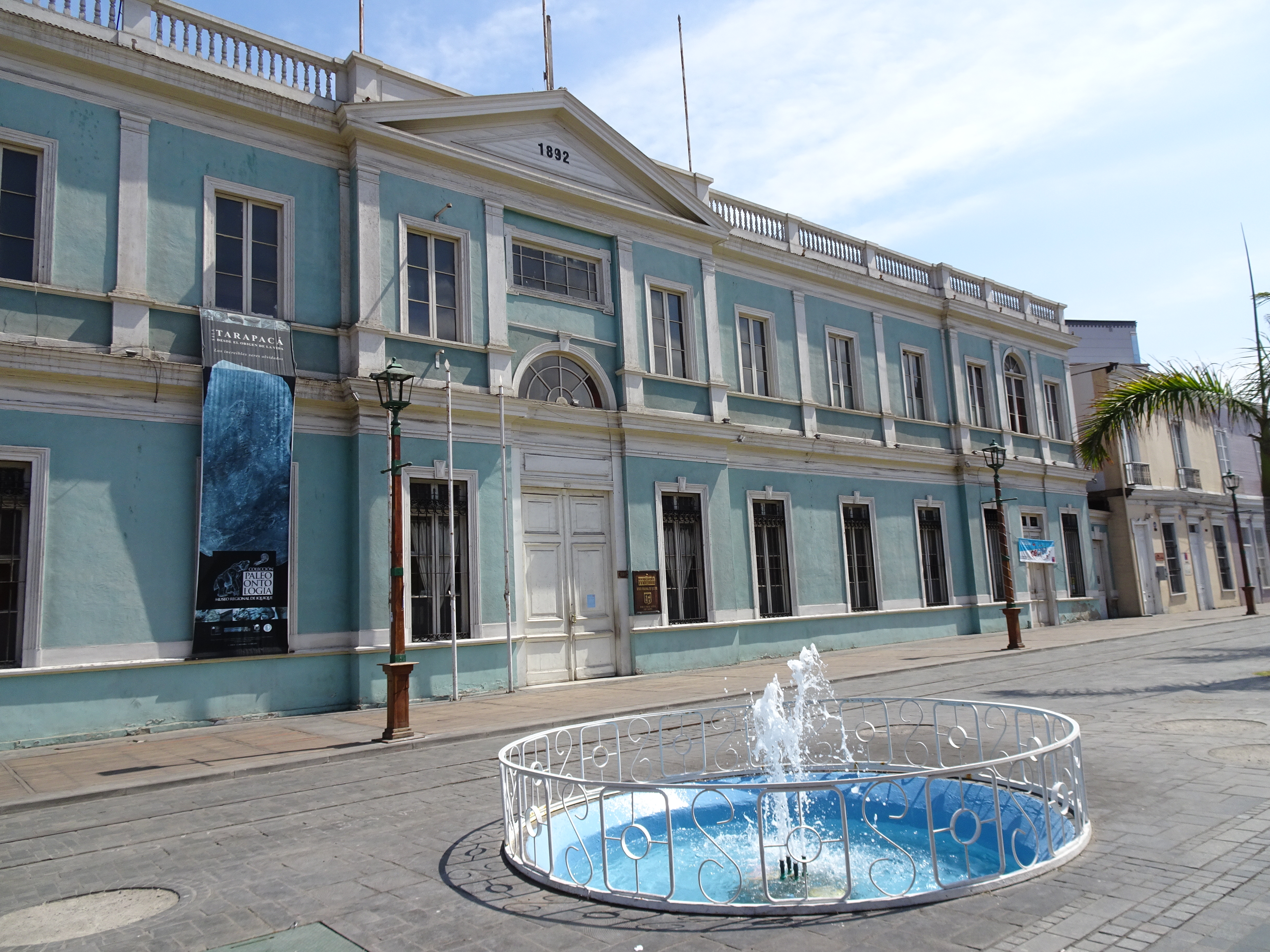
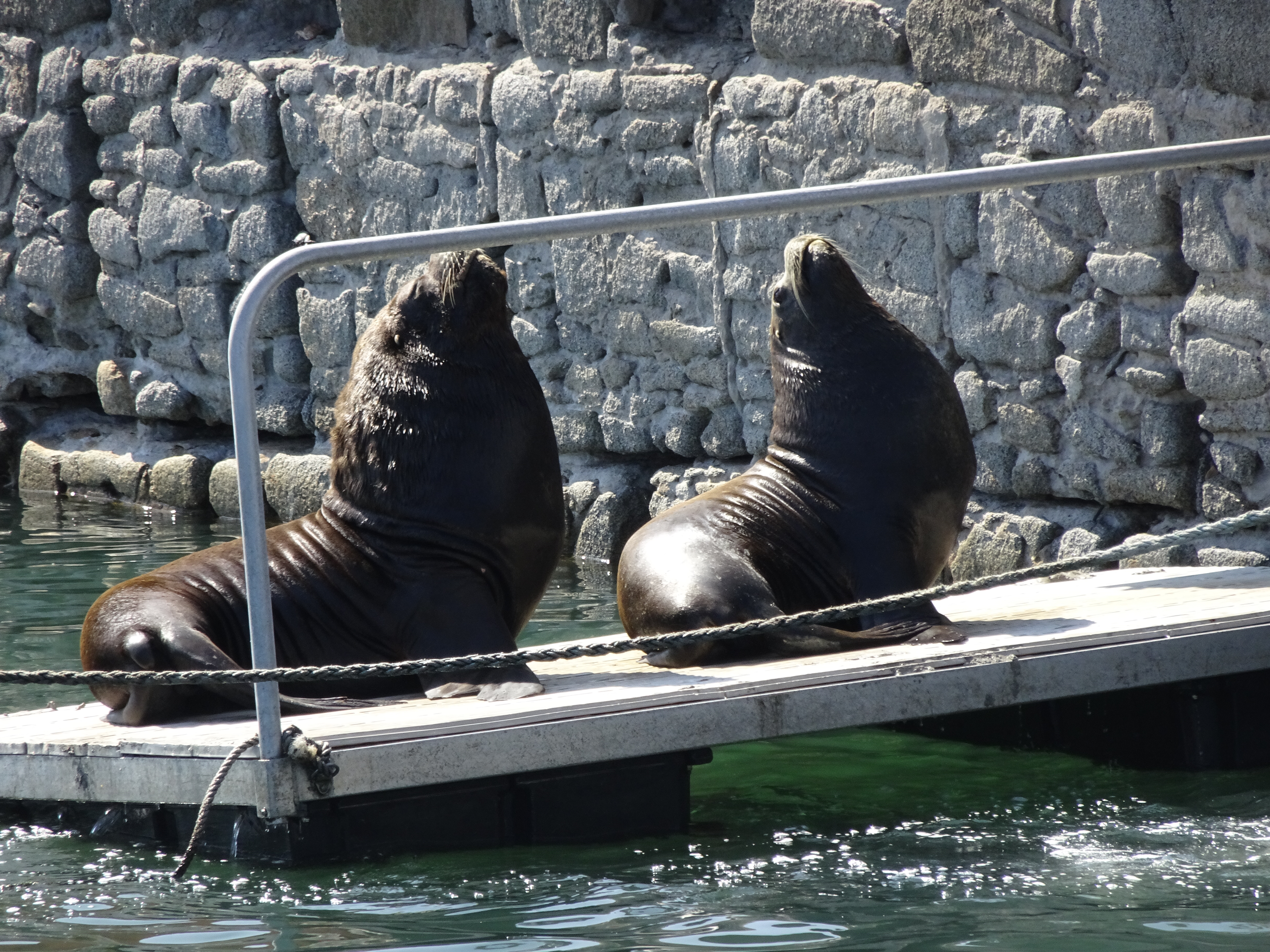
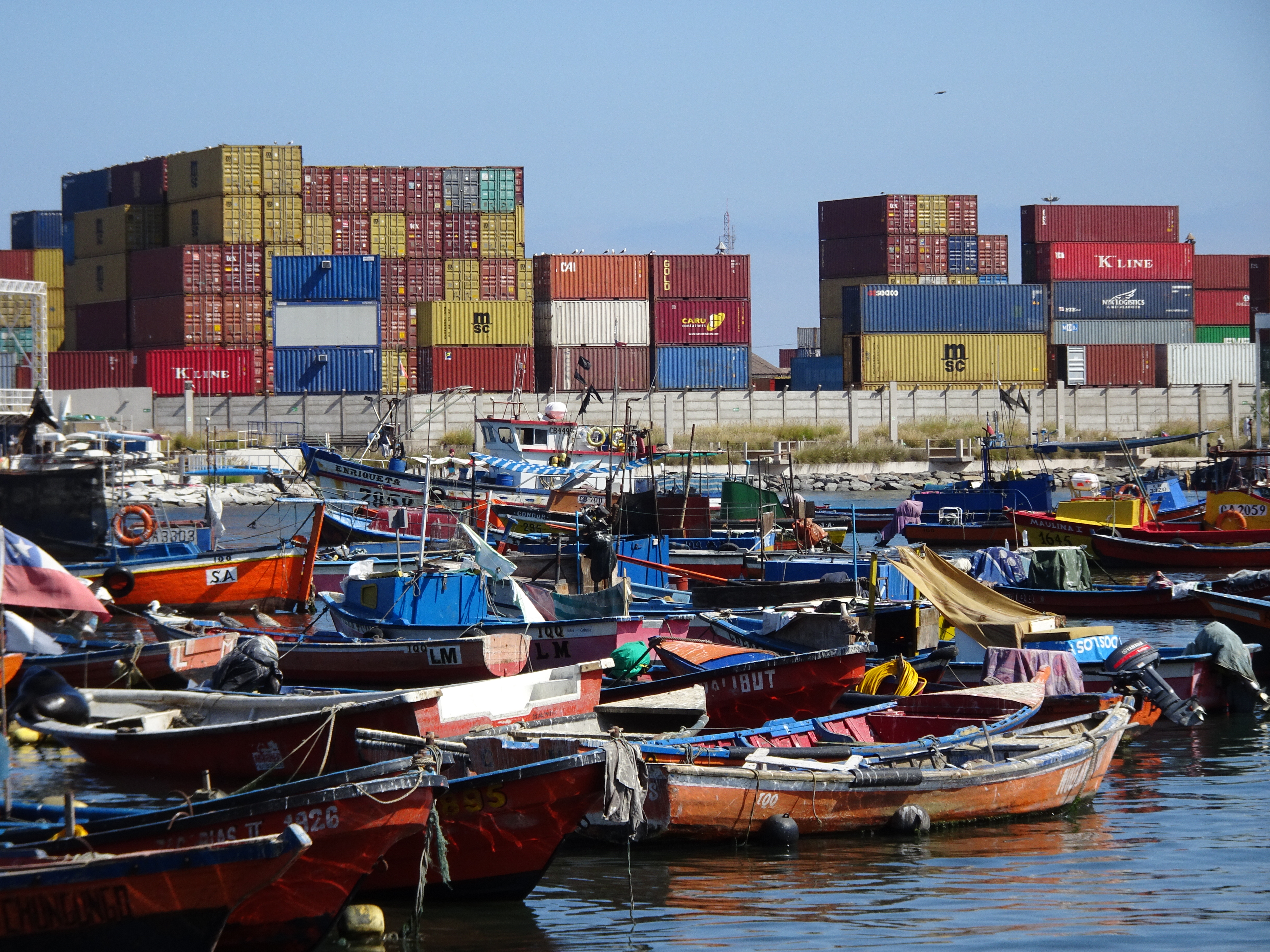
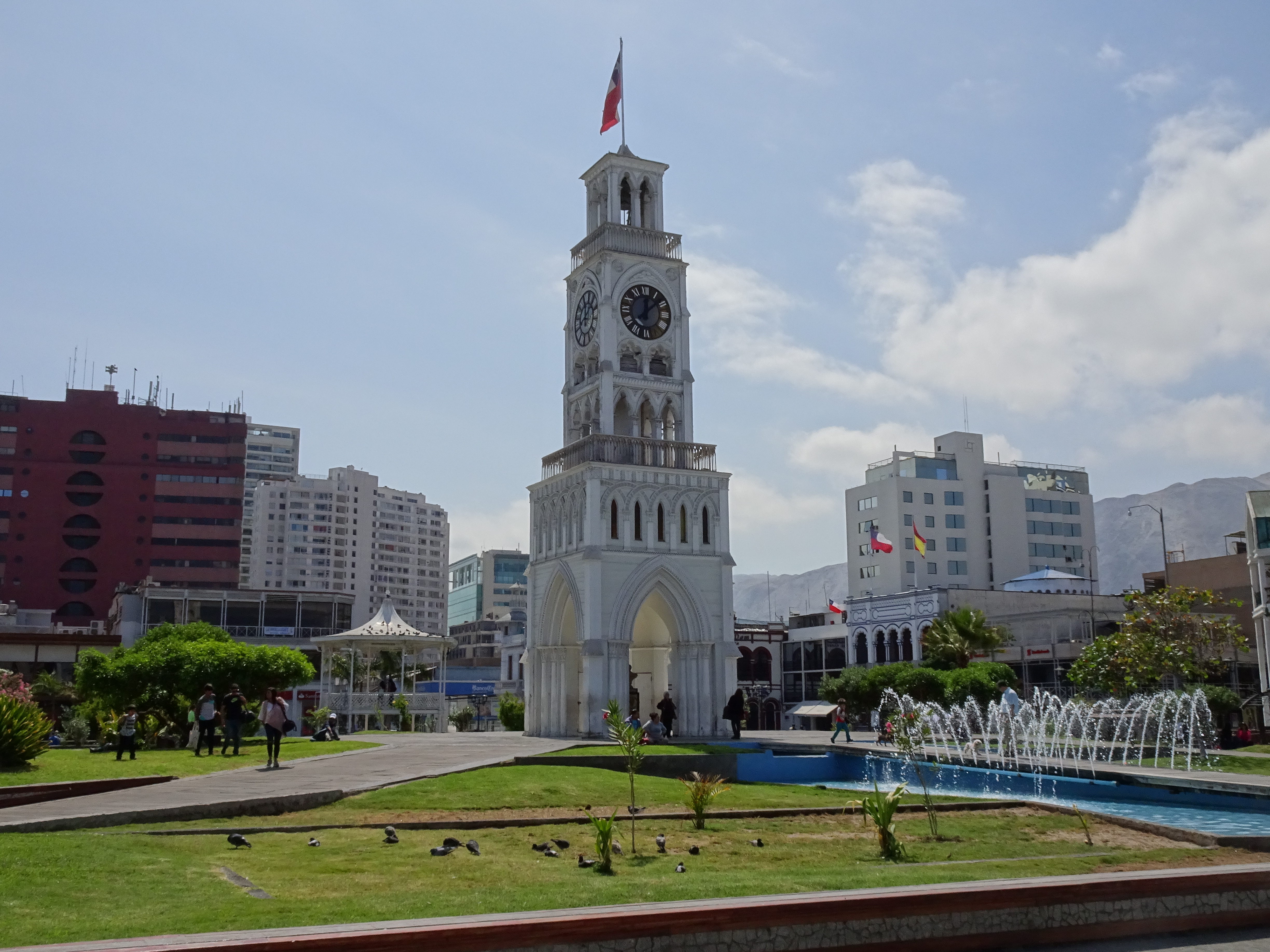
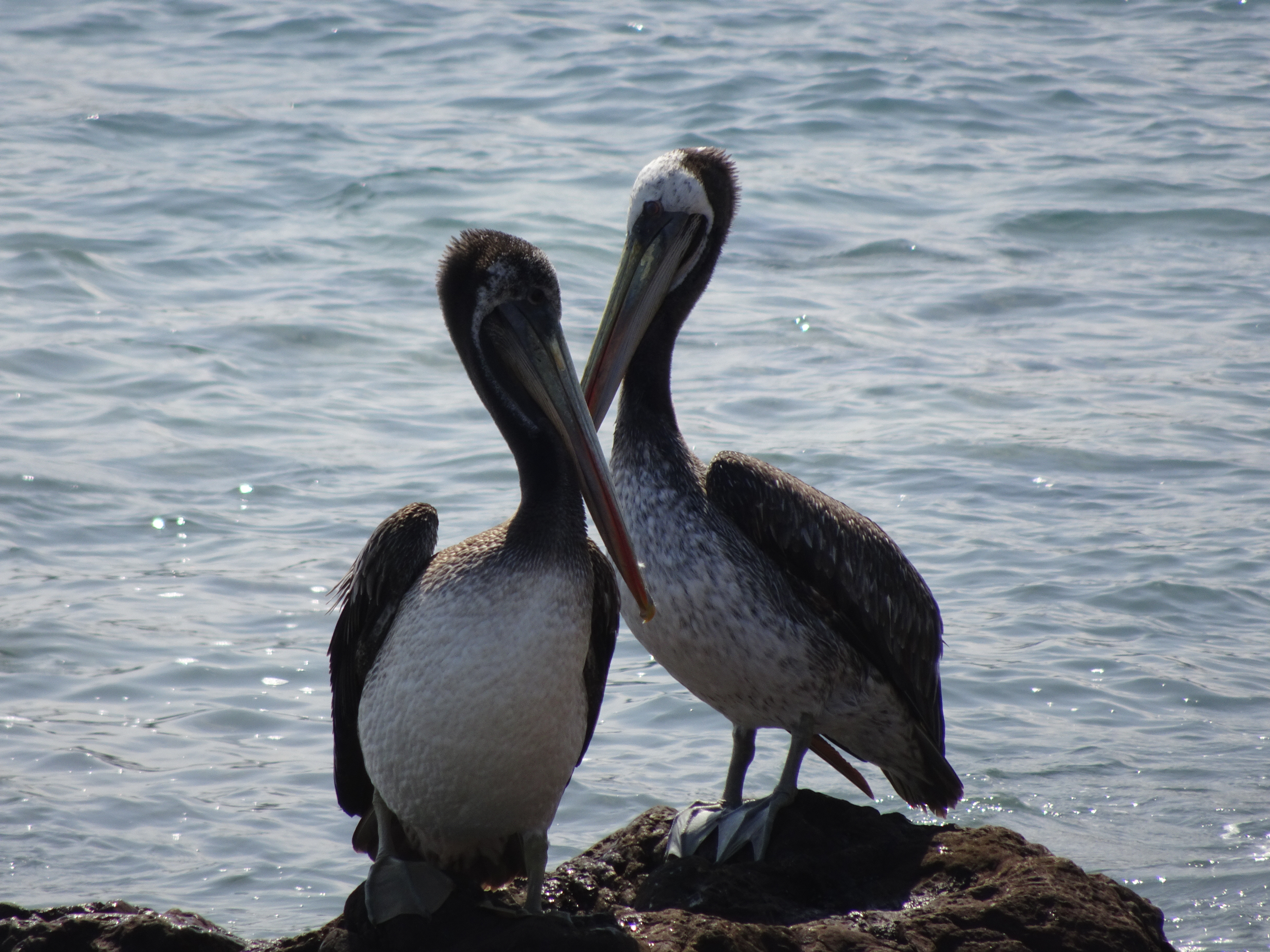
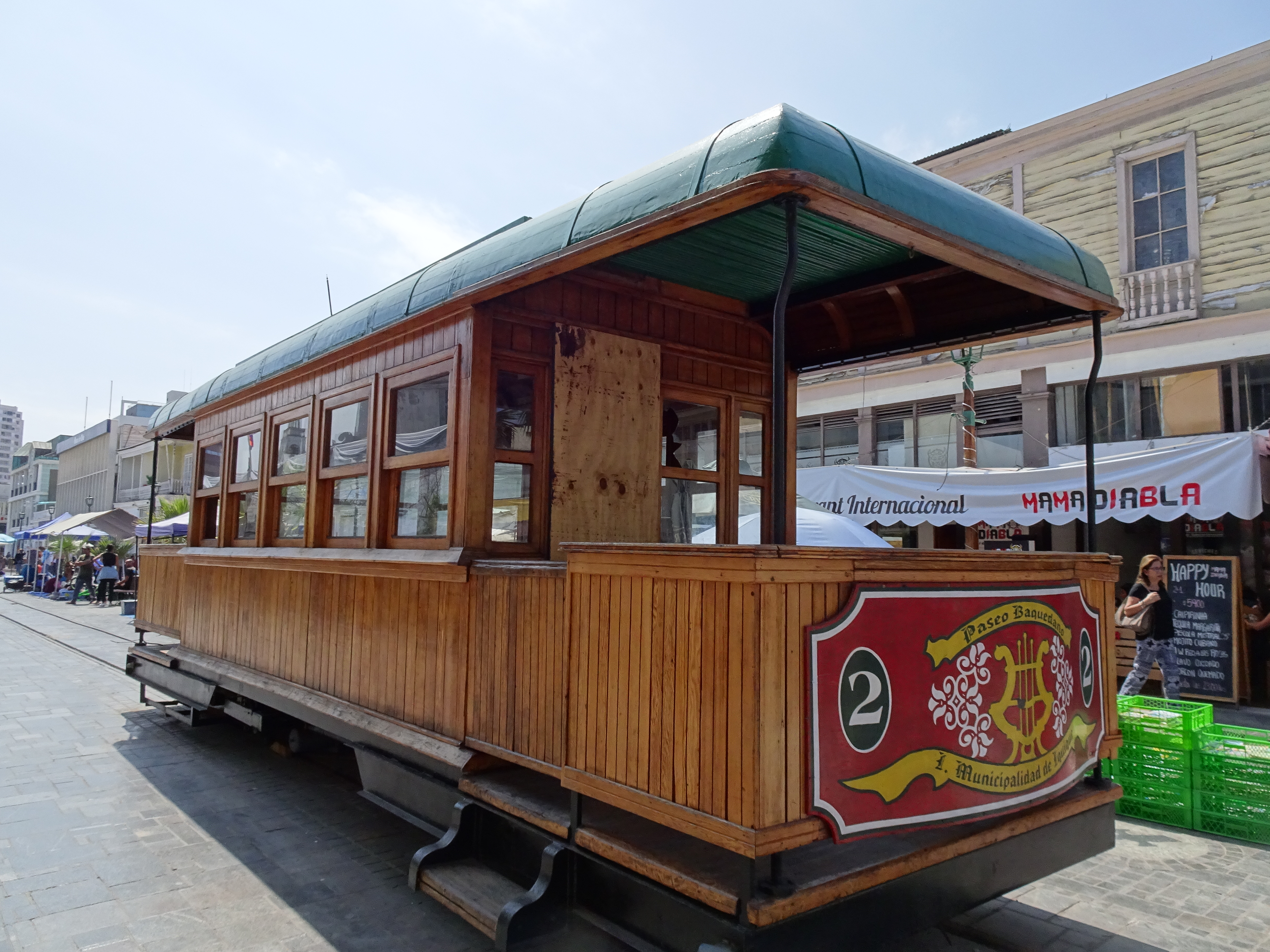
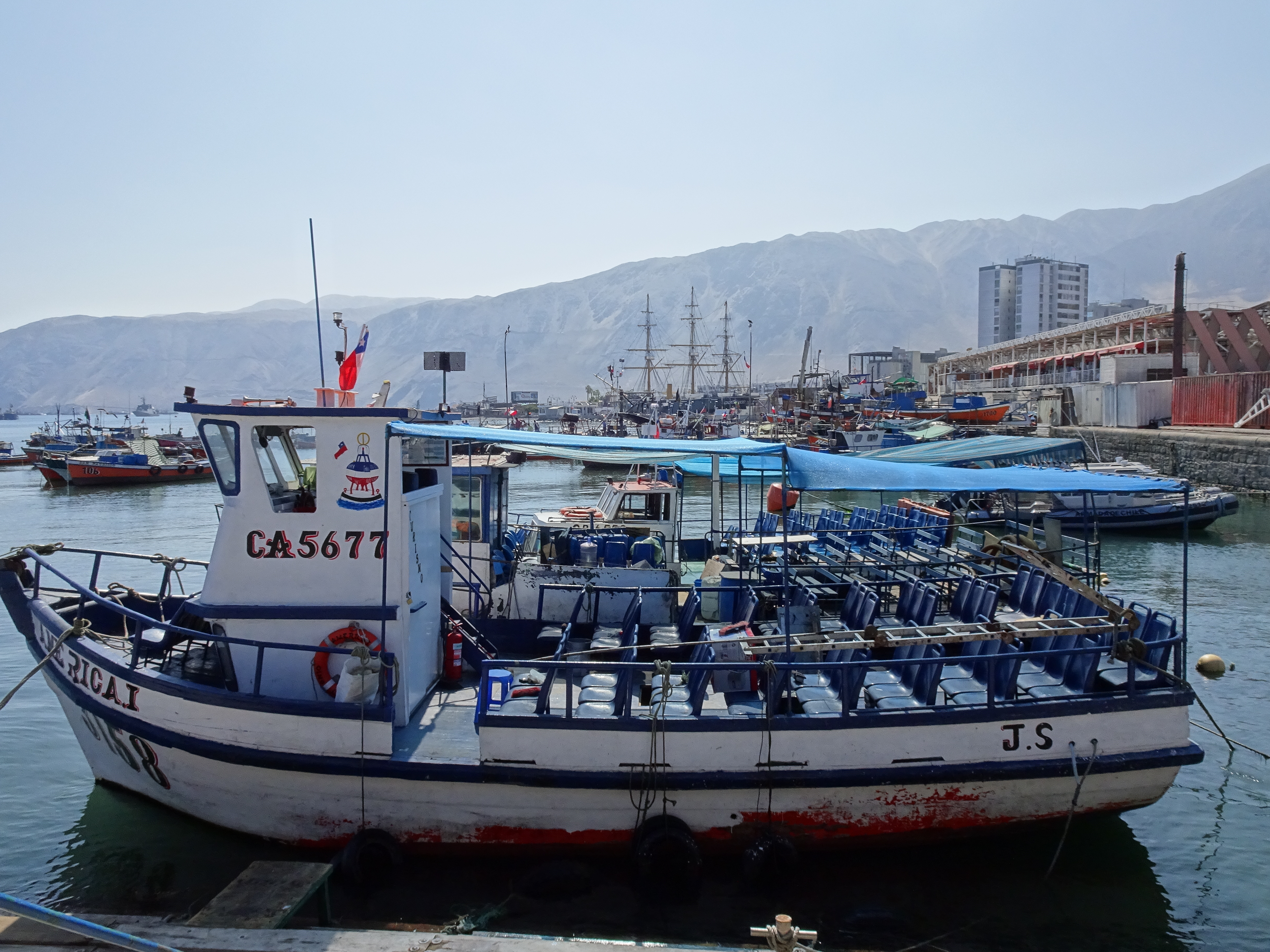
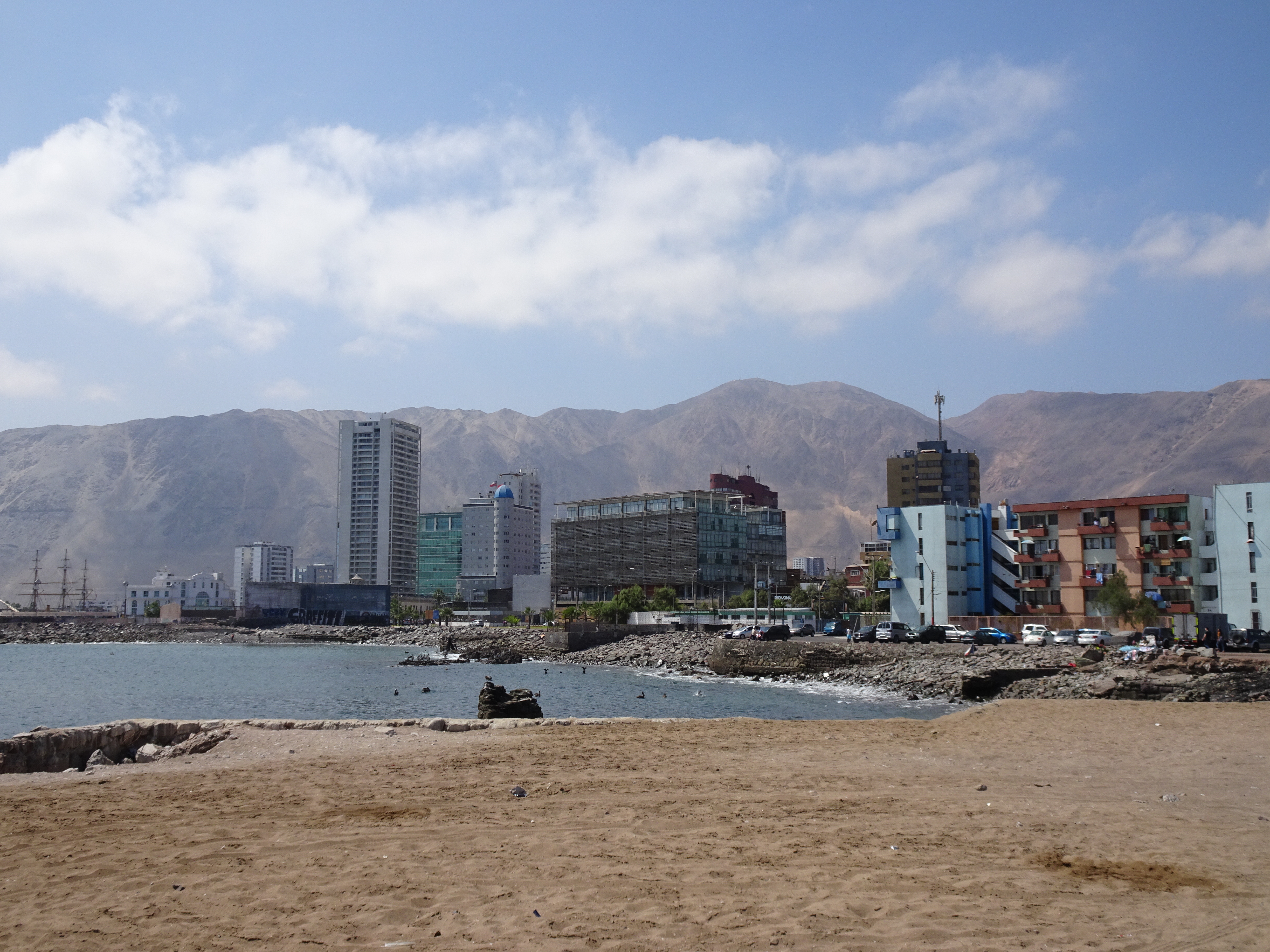
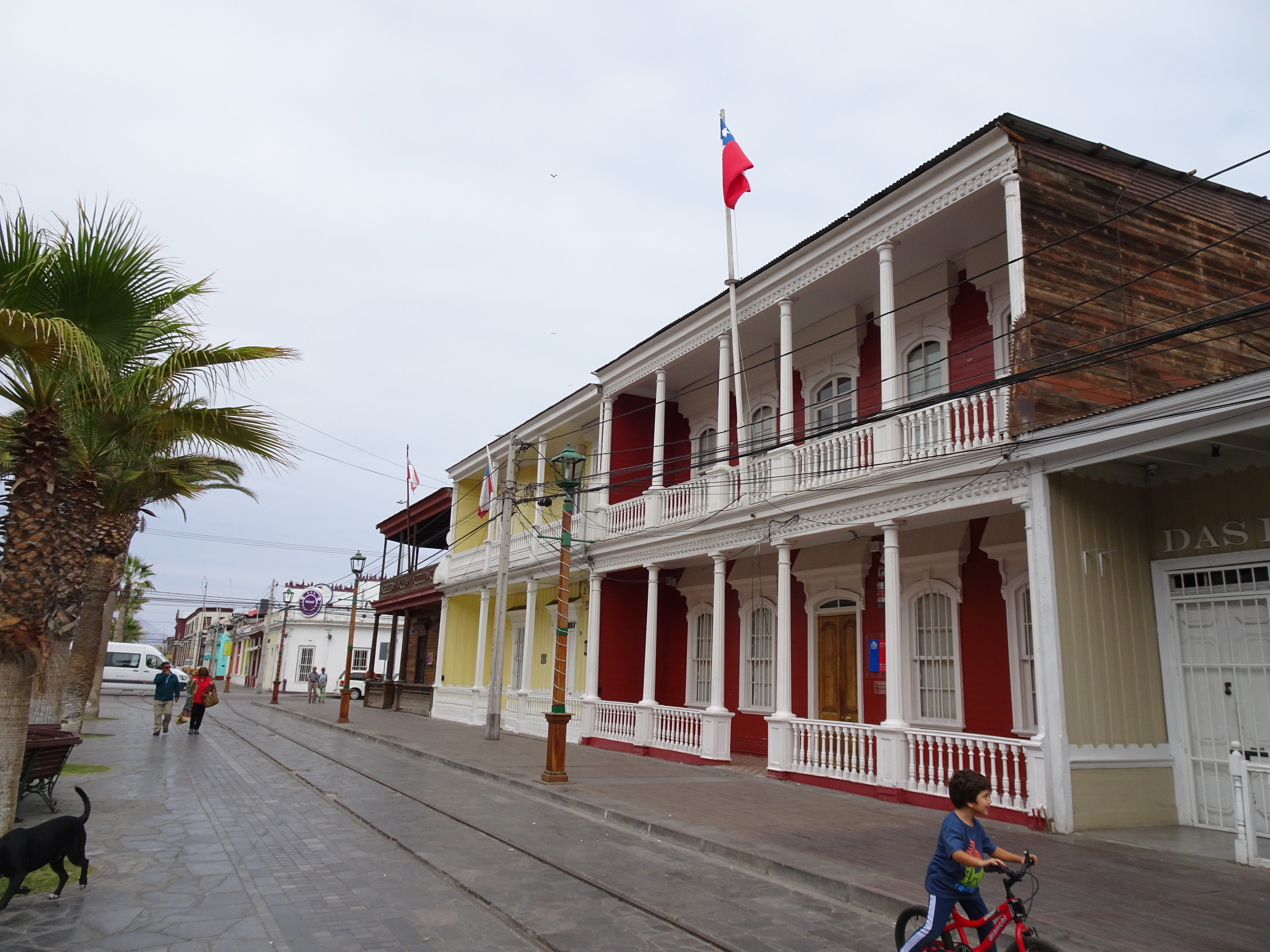
The road from San Pedro to Iquique on the coast, consists of miles of desert. The road is straight and monotonous; it takes us 6 hours.
The thing that no one seems to mention about Iquique, is the massive sand dune that is dumped right outside the town. As you wind down to sea level, the dune dwarfs the area. Apparently it is the world’s largest urban sand dune and is 20 000 years old.
We enjoy our time in Iquique pottering along the inland boardwalk and admiring the wooden painted houses, watching people in the town square, scrunching our noses up at the less than fragrant sea lions and laughing at the way pelicans come down to land on the water. And yes, for some odd reason, we also seem to eat every variety of beige food too!
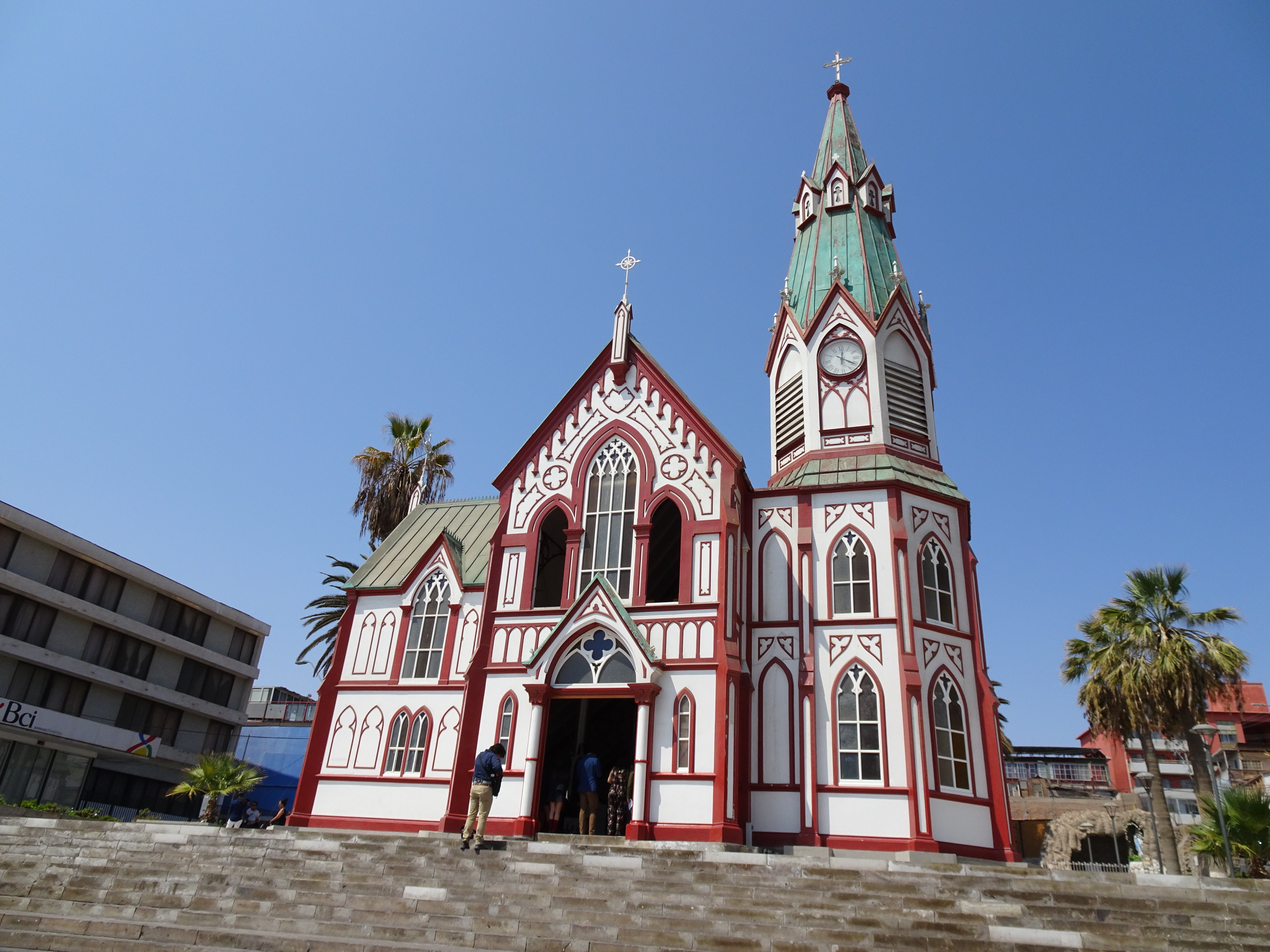
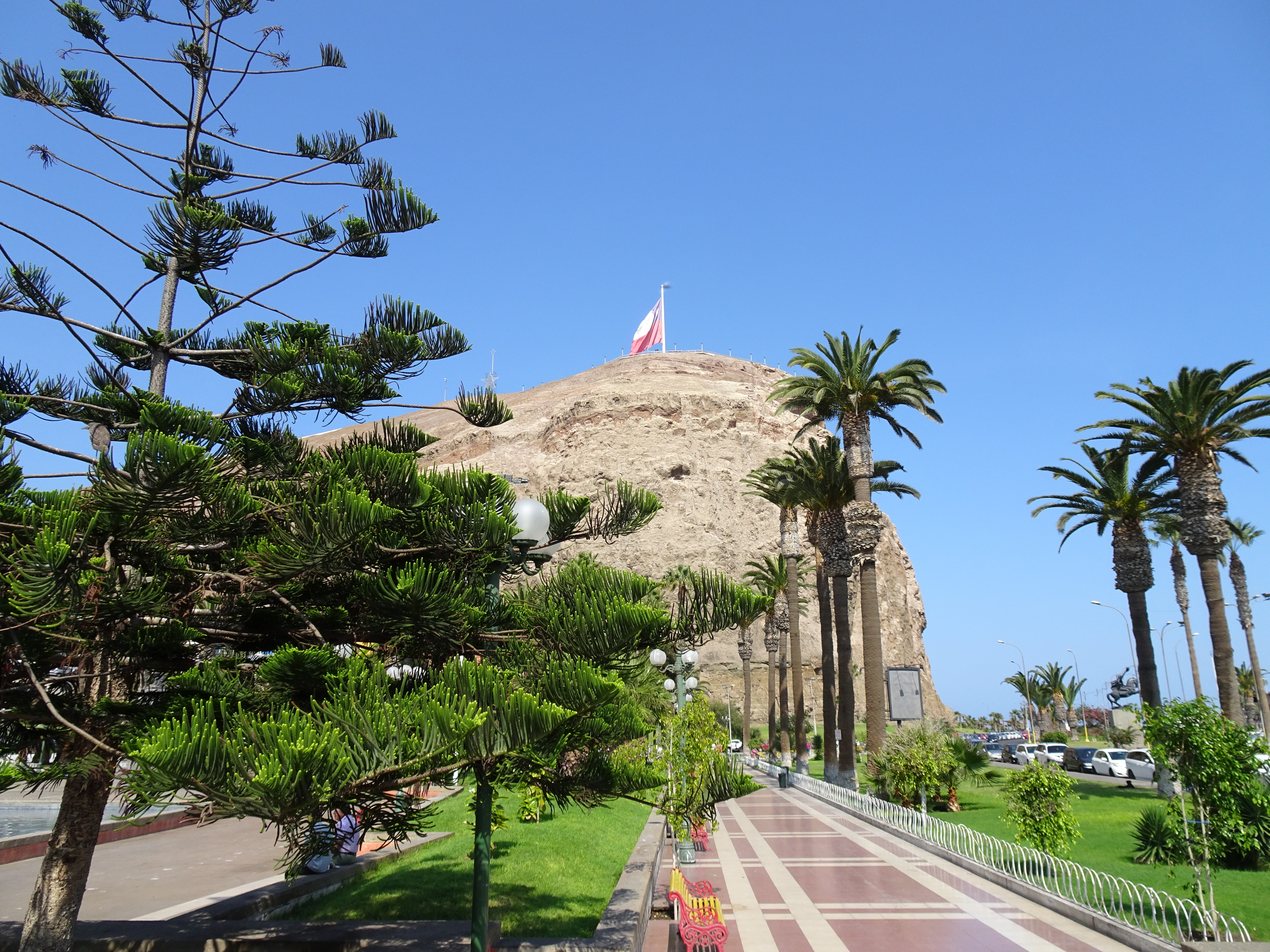
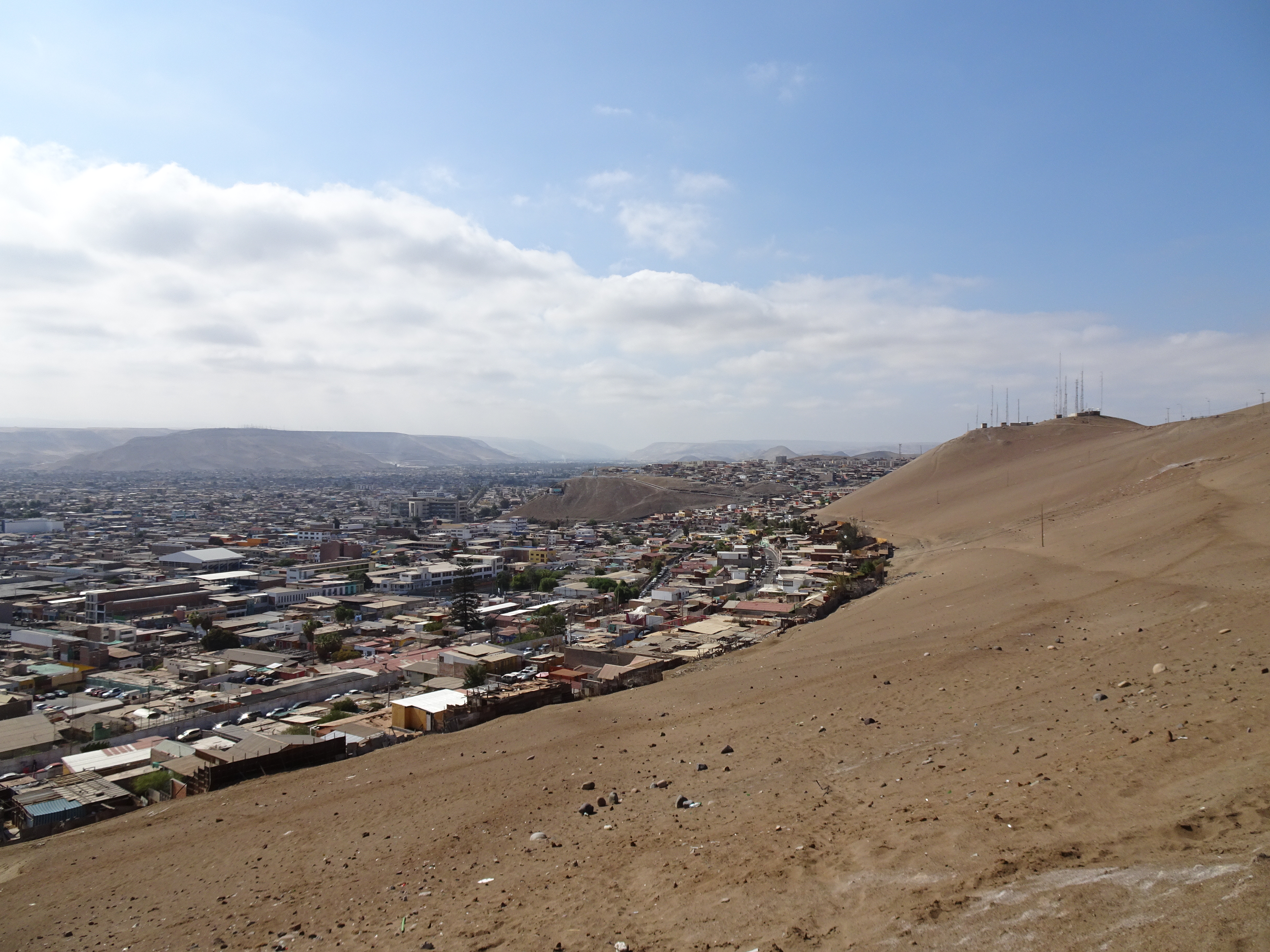
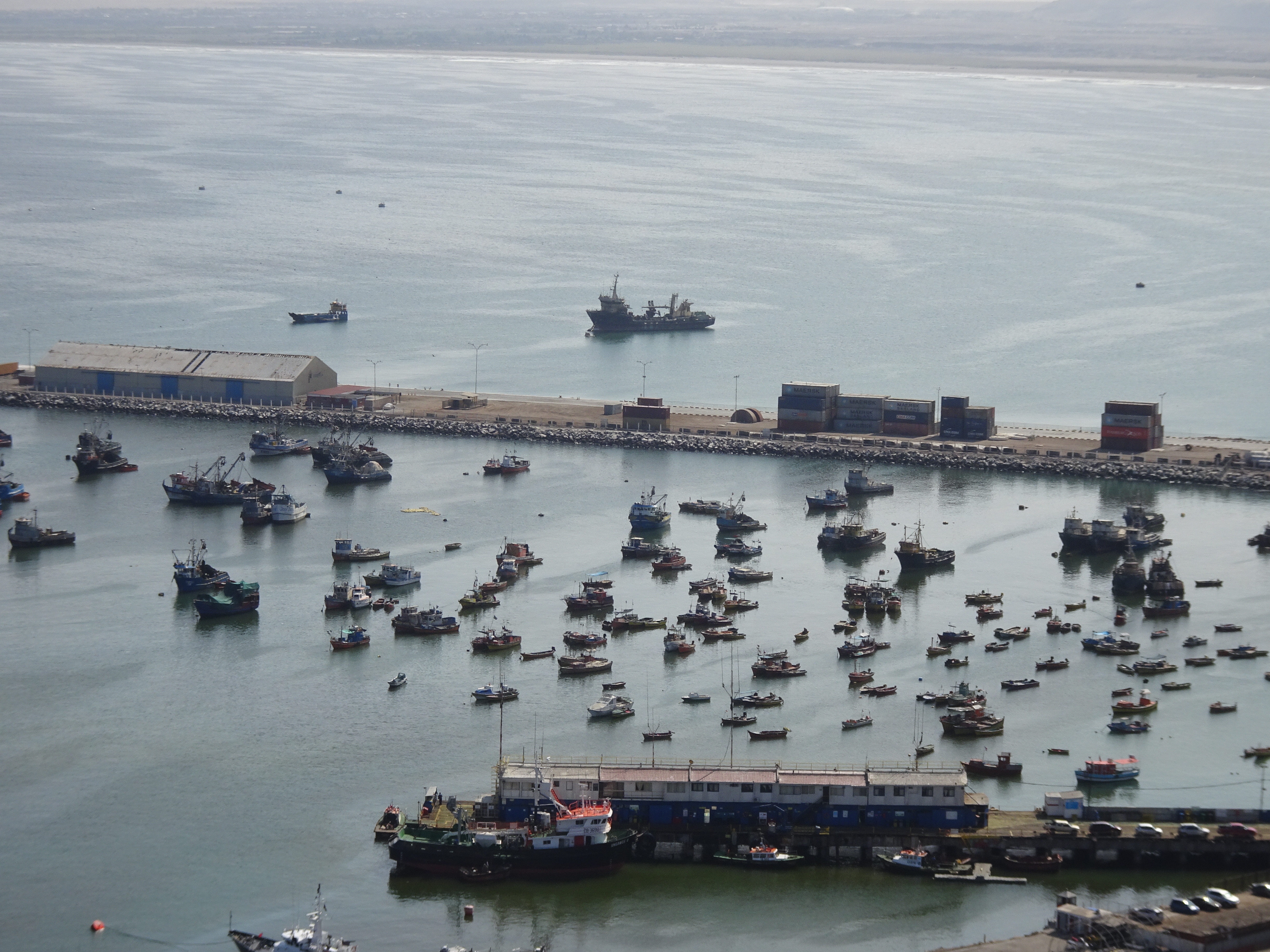
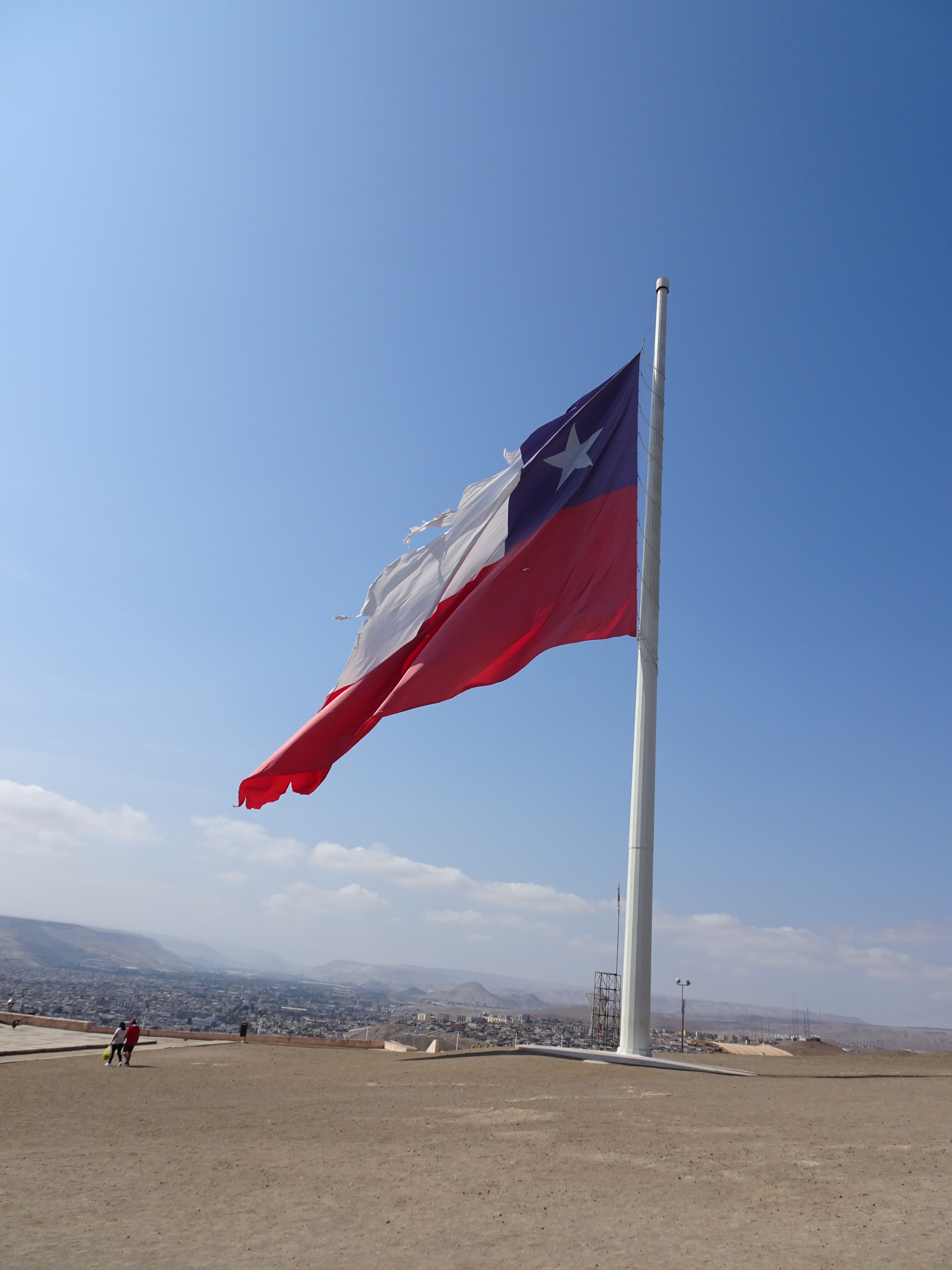
The road from Iquique to Arica is not straight. We go down a road with a sheer drop on one side. It opens out into a valley bordered by steep hills. As they are working on the road, we bump along on a temporary surface. I’m quite happy down here. I’m not happy when we go back up the other side of the valley – this time the road seems to drop away into nothing. It makes me feel a little sick. I’m relieved when the road spreads out across the plains and we arrive in Arica.
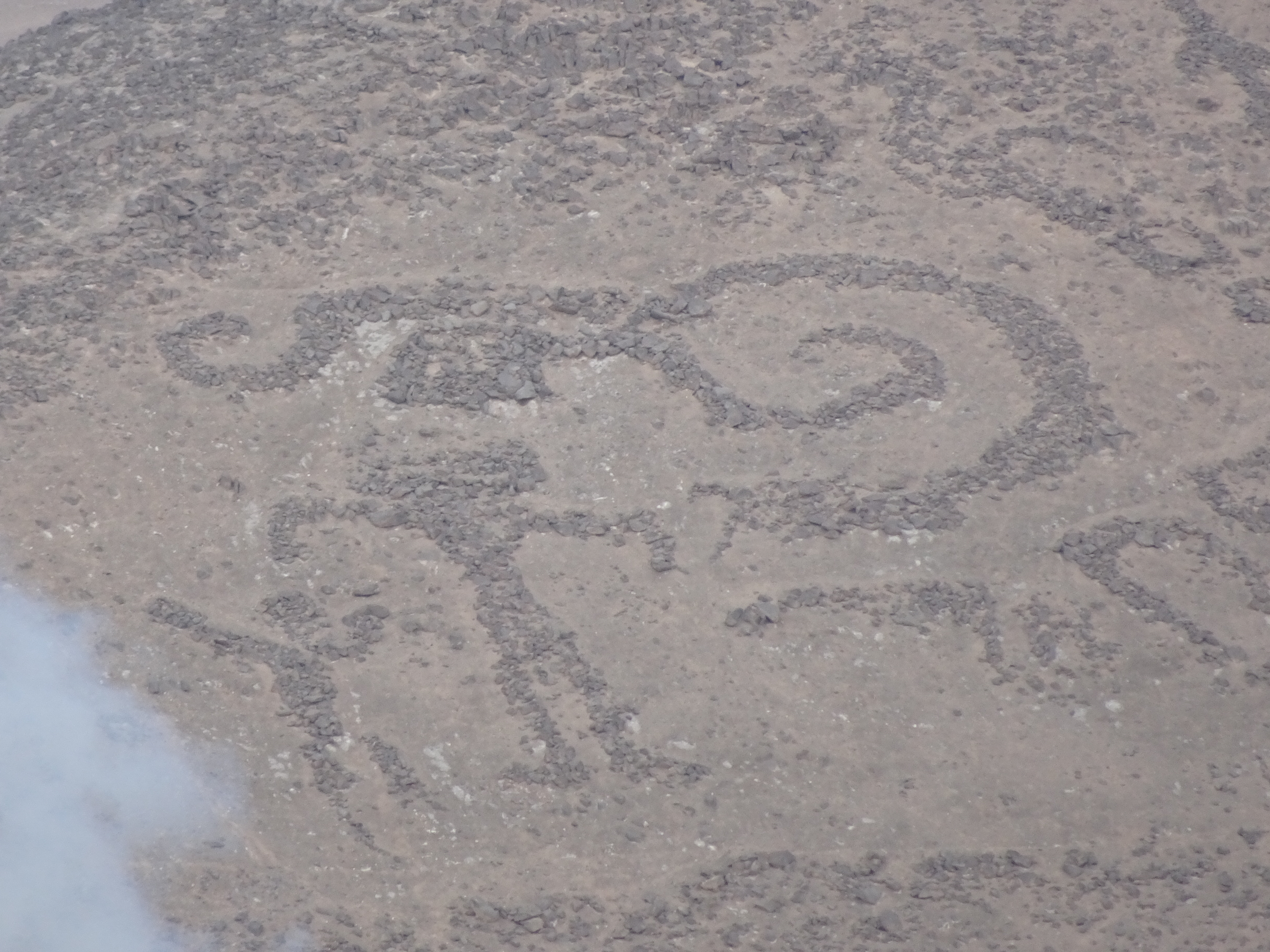
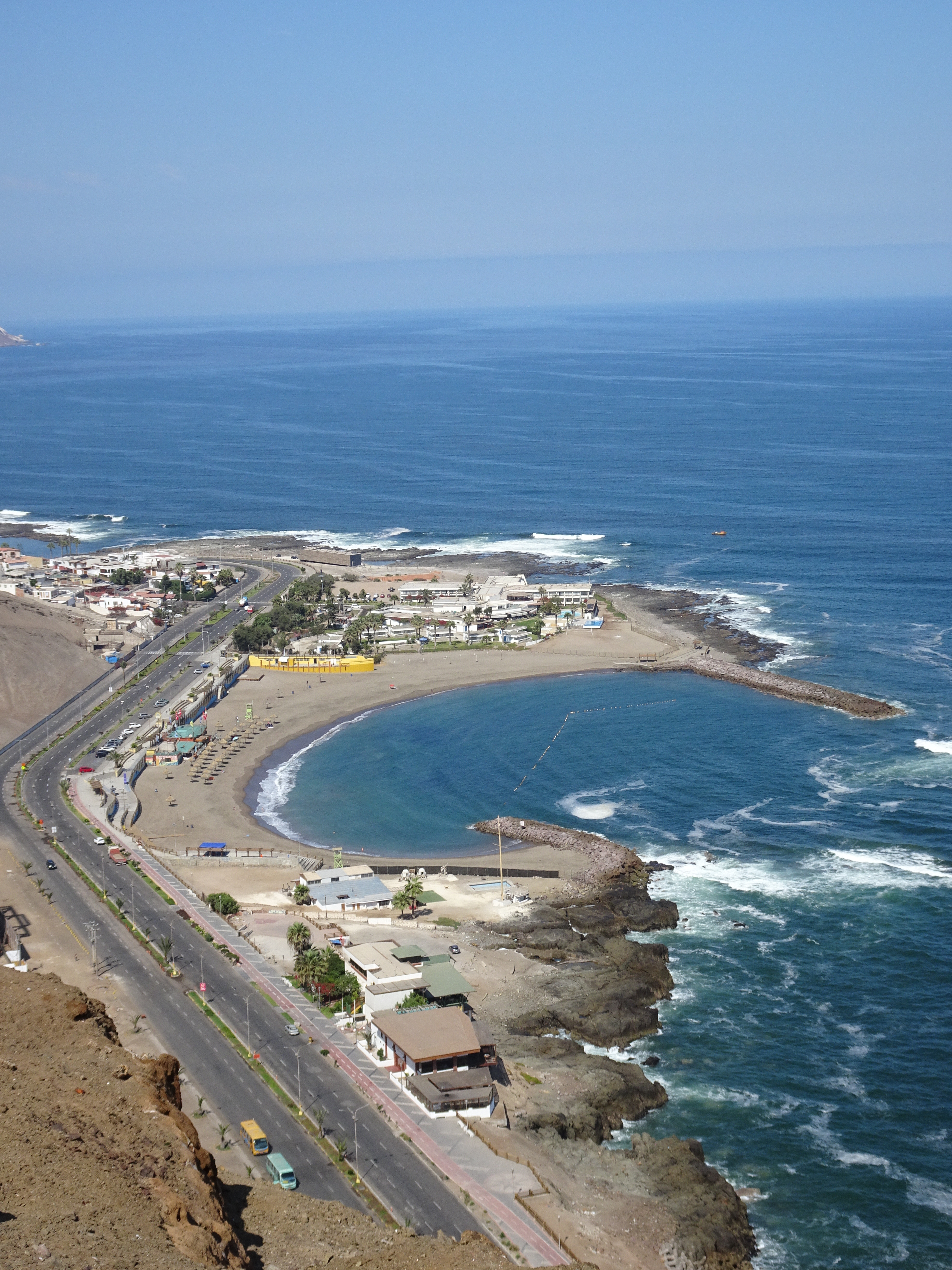
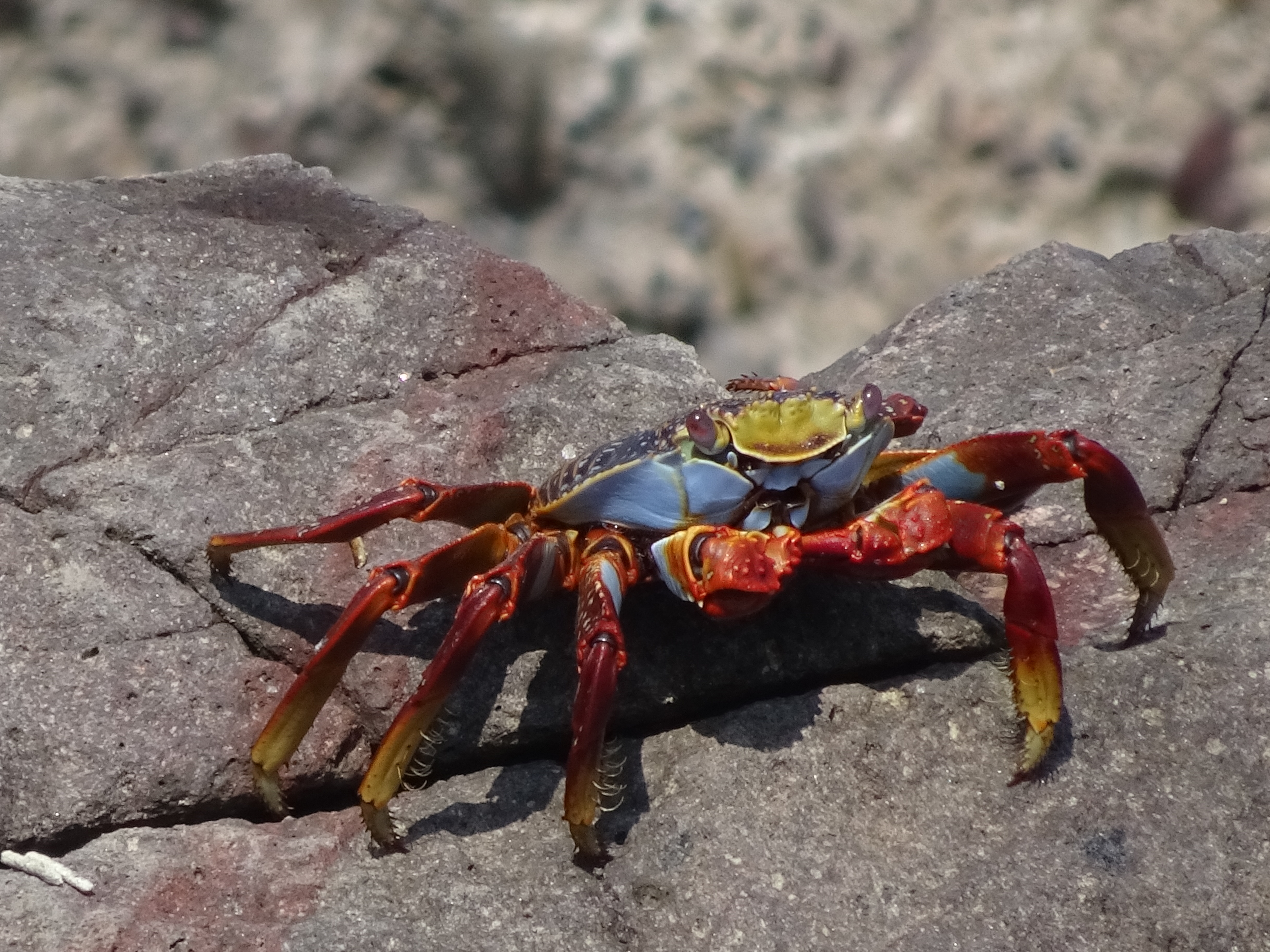
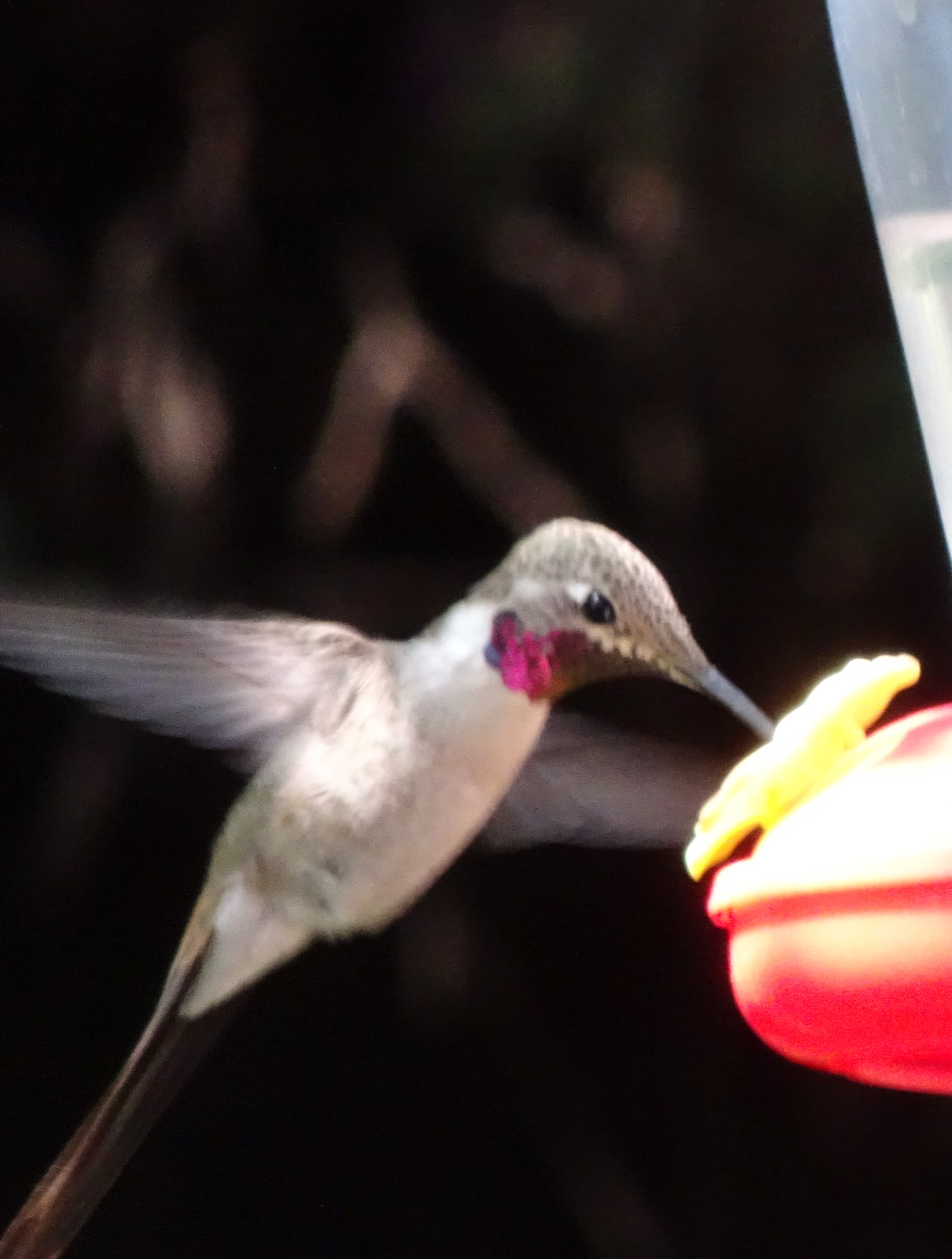
Arica is another place where we have slowed down and enjoyed just mooching. We’ve climbed the hill to see the amazing views over the city, we’ve walked by the sea spotting crabs and even been window shopping in shops selling clothes styles from the 1980s. On our trip to the Azapa valley we admire the geoglyphs, gape at the oldest mummies in the world and see my favourite bird, the hummingbird. Our food consumption has been less beige in colour and we have even found a local cafe with decent coffee and a roof terrace.
Oh and one more thing: we experience two minor earthquakes that make our beds shake and have a panic when our phones vibrate and a high pitched siren blasts out across the town. We are only marginally relieved when a local tells us it is a practise drill in case of a tsunami.
We nod, smile and pretend to understand but don’t actually have a clue what is going on at all! The guide is talking away in Spanish; the 20 or so Chileans on the trip are agreeing to what he is saying and laughing at what must be some very funny jokes. We are on a tour to see the ghost towns of Humberstone and Santa Laura. When we booked it, the man said the tour was in Spanish but with some English. Mmm! We soon find out that that means just enough to tell us the time to be back to the bus and to learn that leaving in ten minutes means at least 30.
Santa Laura was a potasium nitrate industry making gunpowder and fertilizers. The buildings were abandoned in the 1960s when it became possible to manufacture fertilizer by using man made methods.
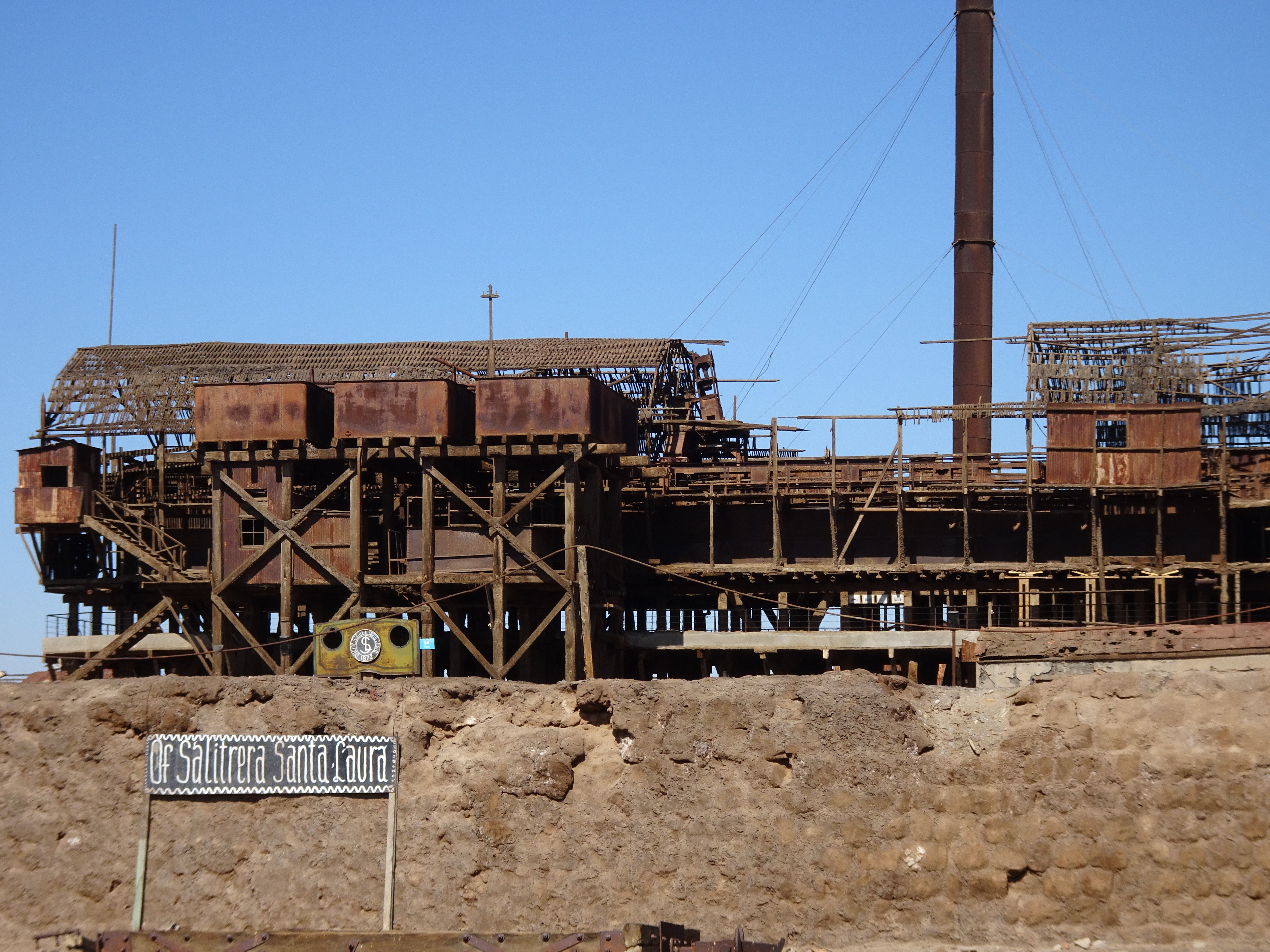
The first sight of the buildings standing alone surrounded by desert, reminds me of the rusty hulks of the boats left by the retreating Aral Sea.
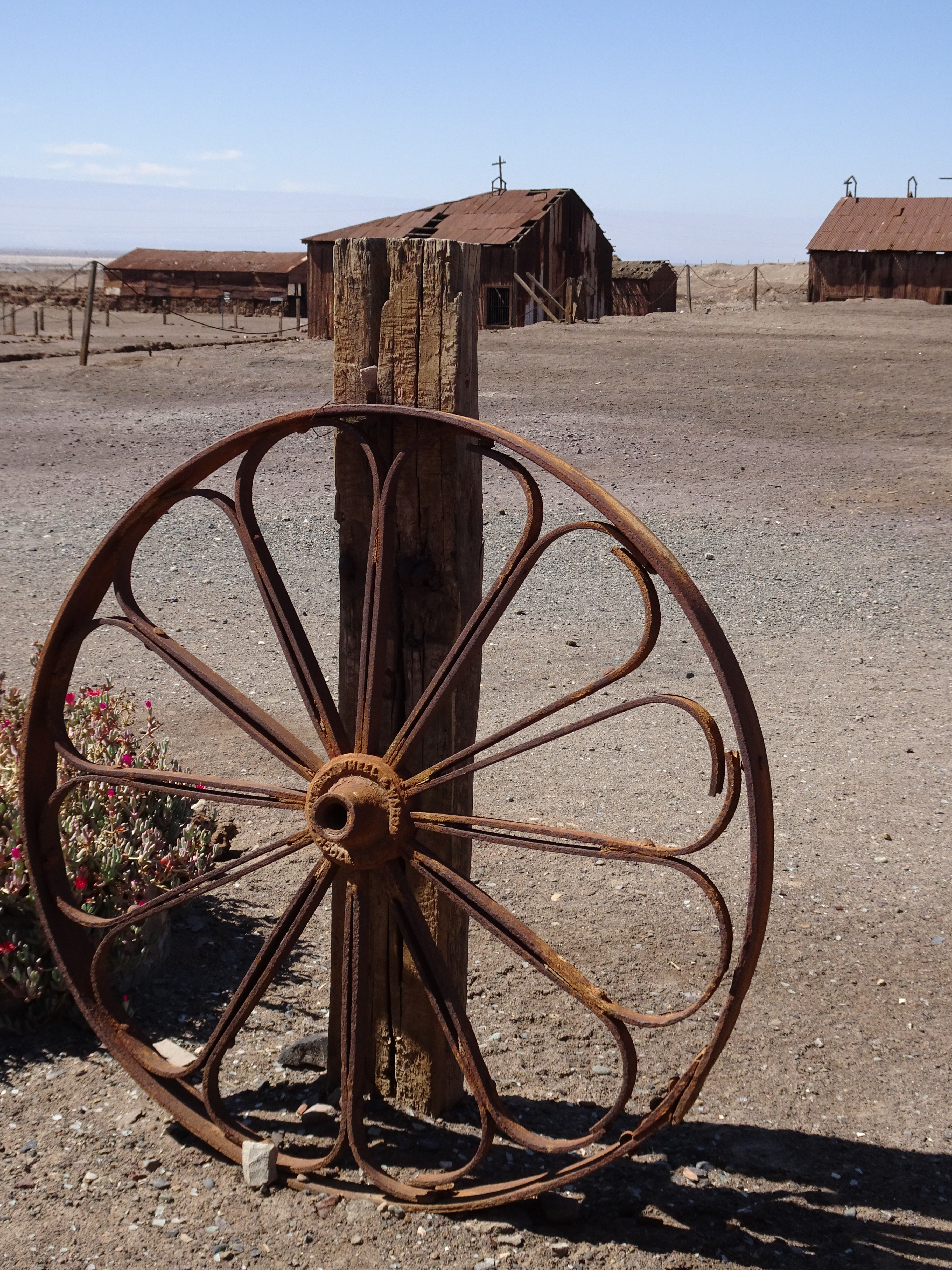
Getting closer, it feels like we are in the American West, tumble weeds included.
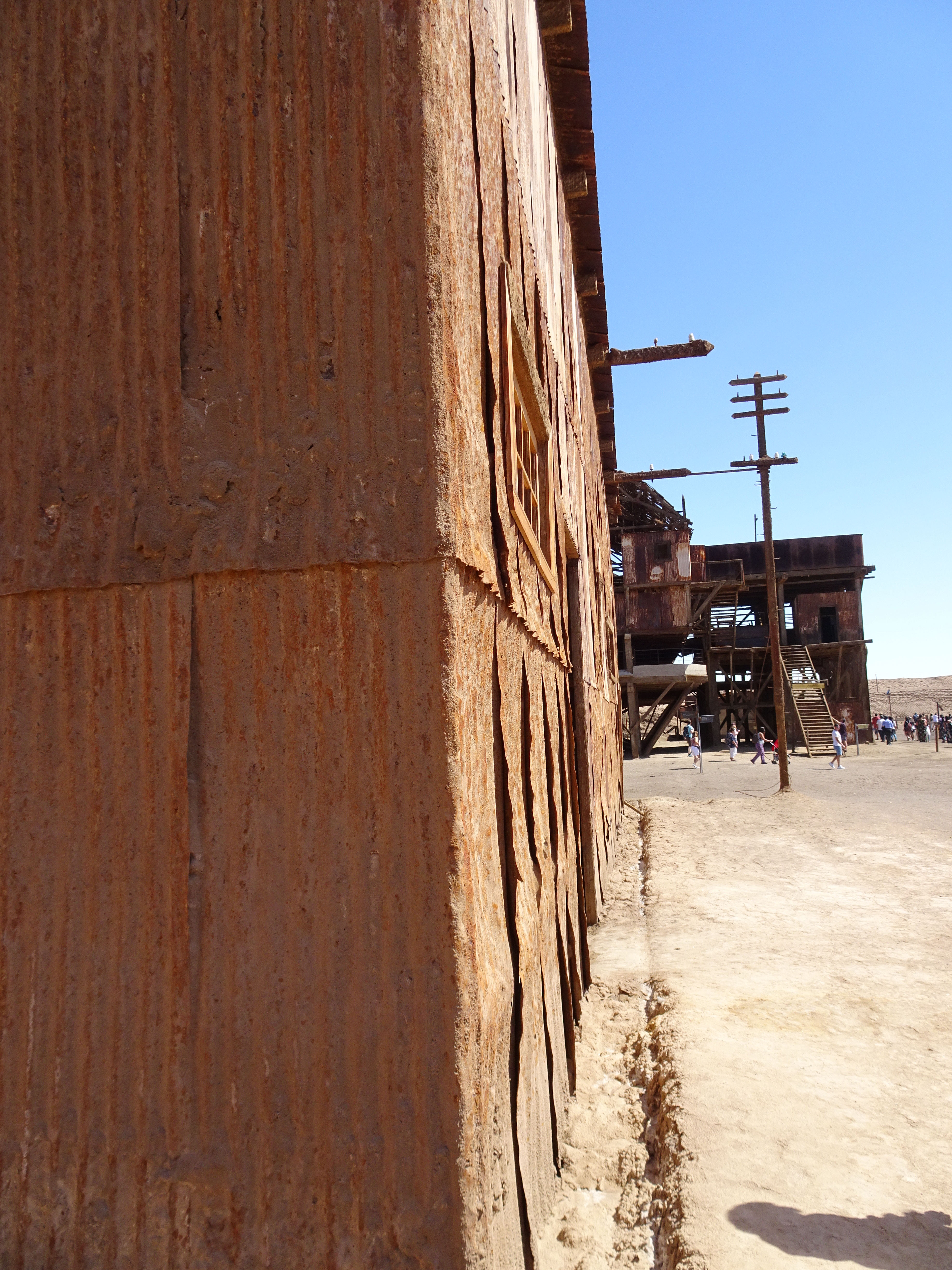
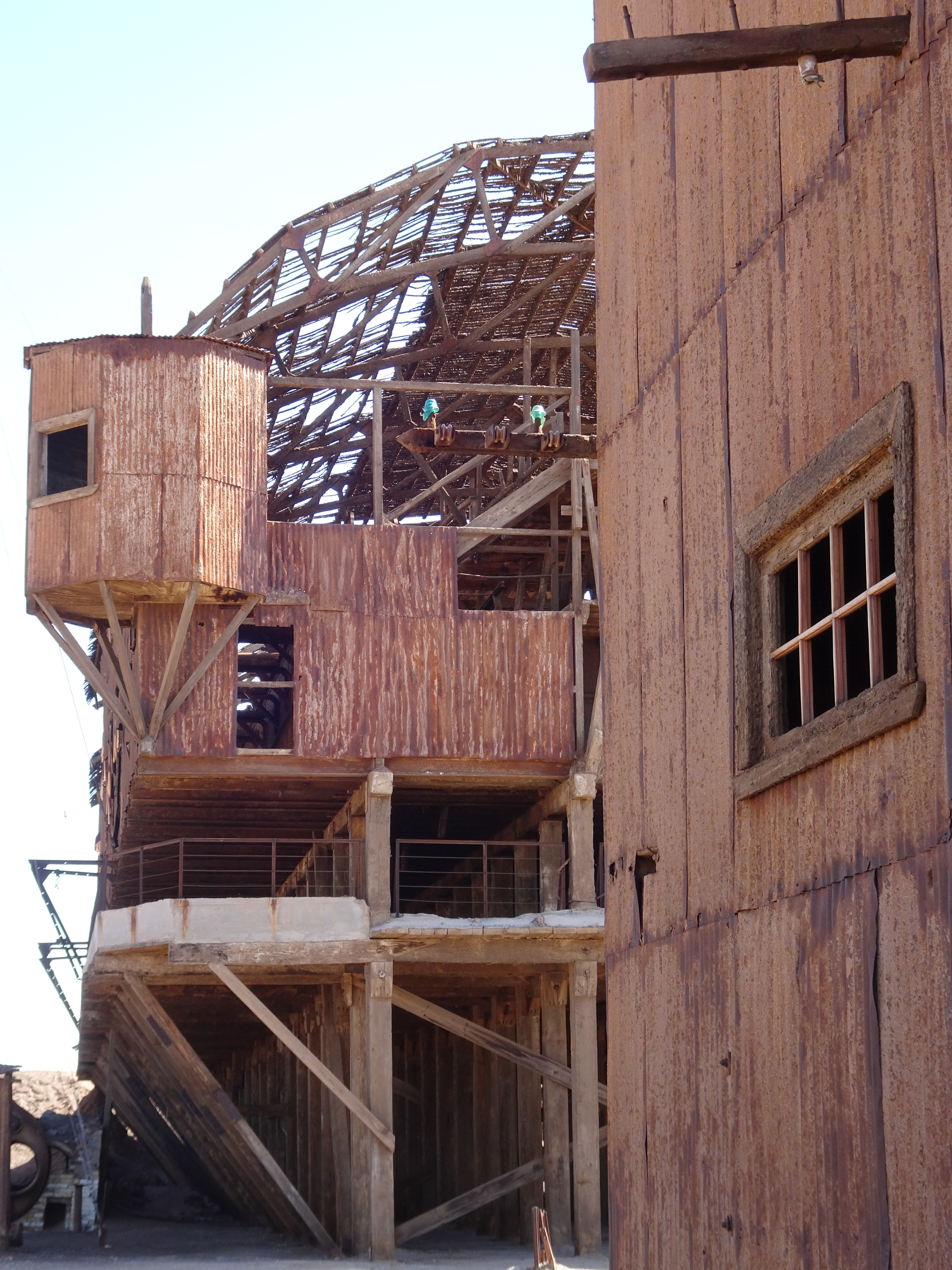
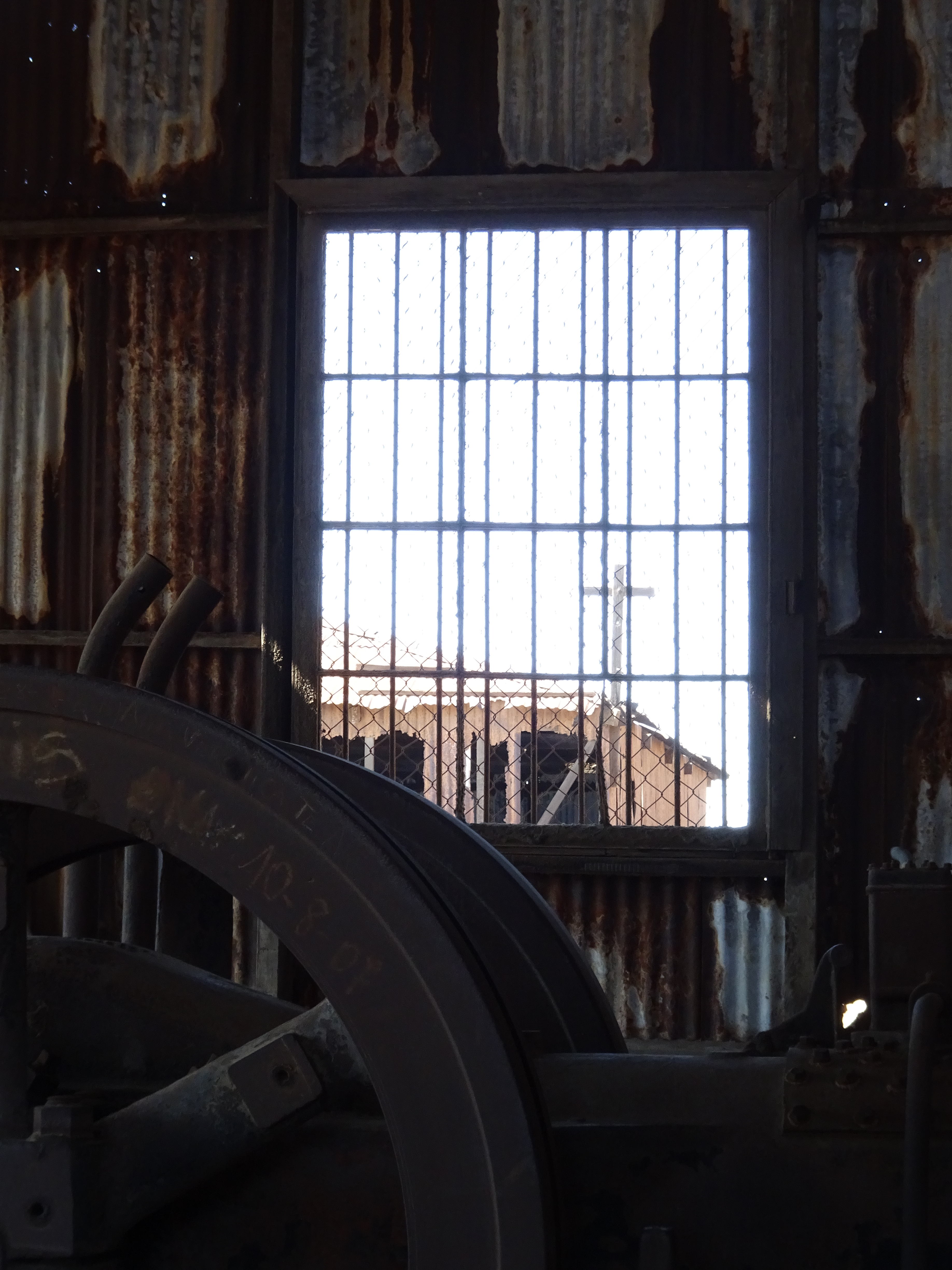
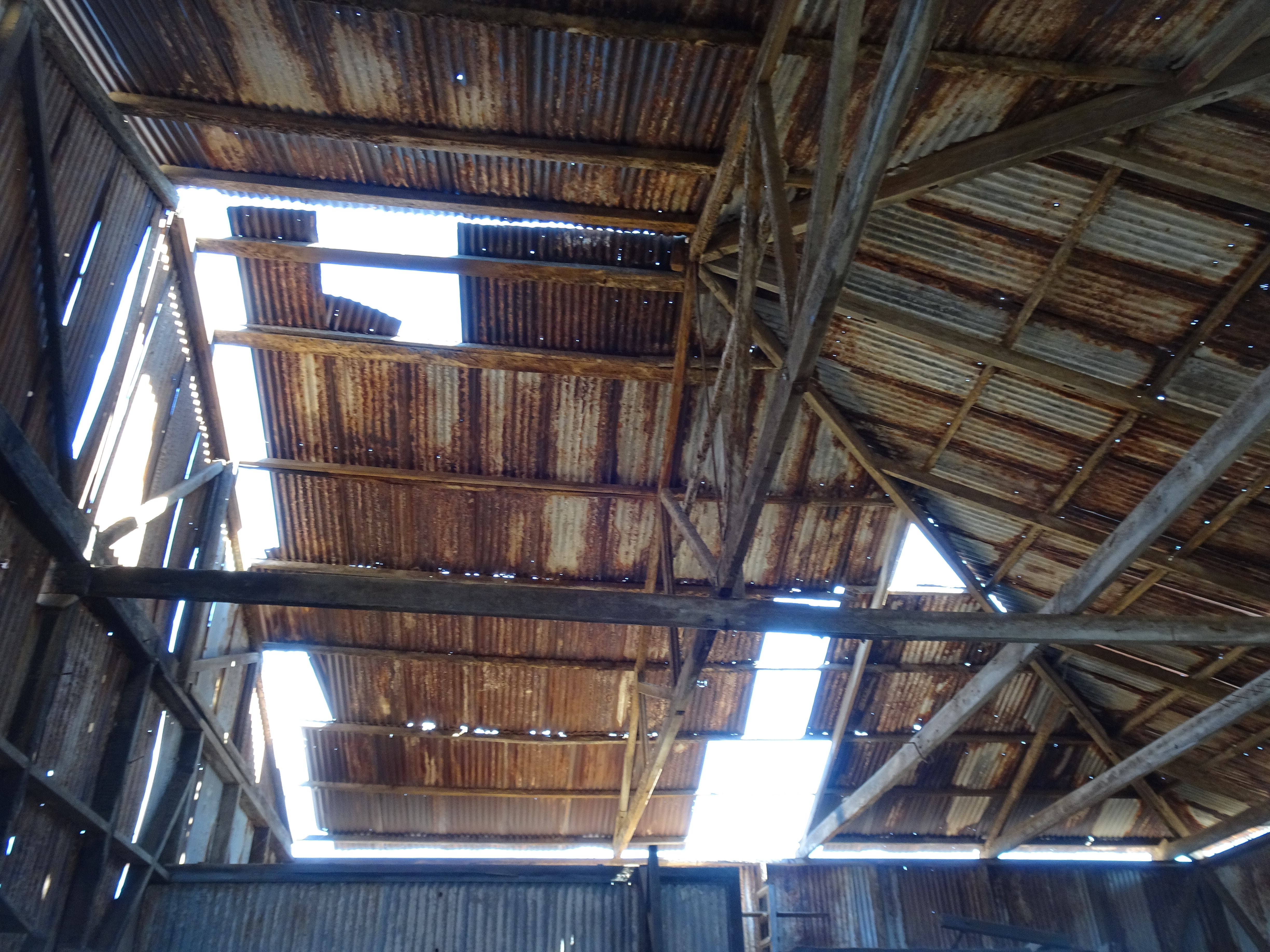
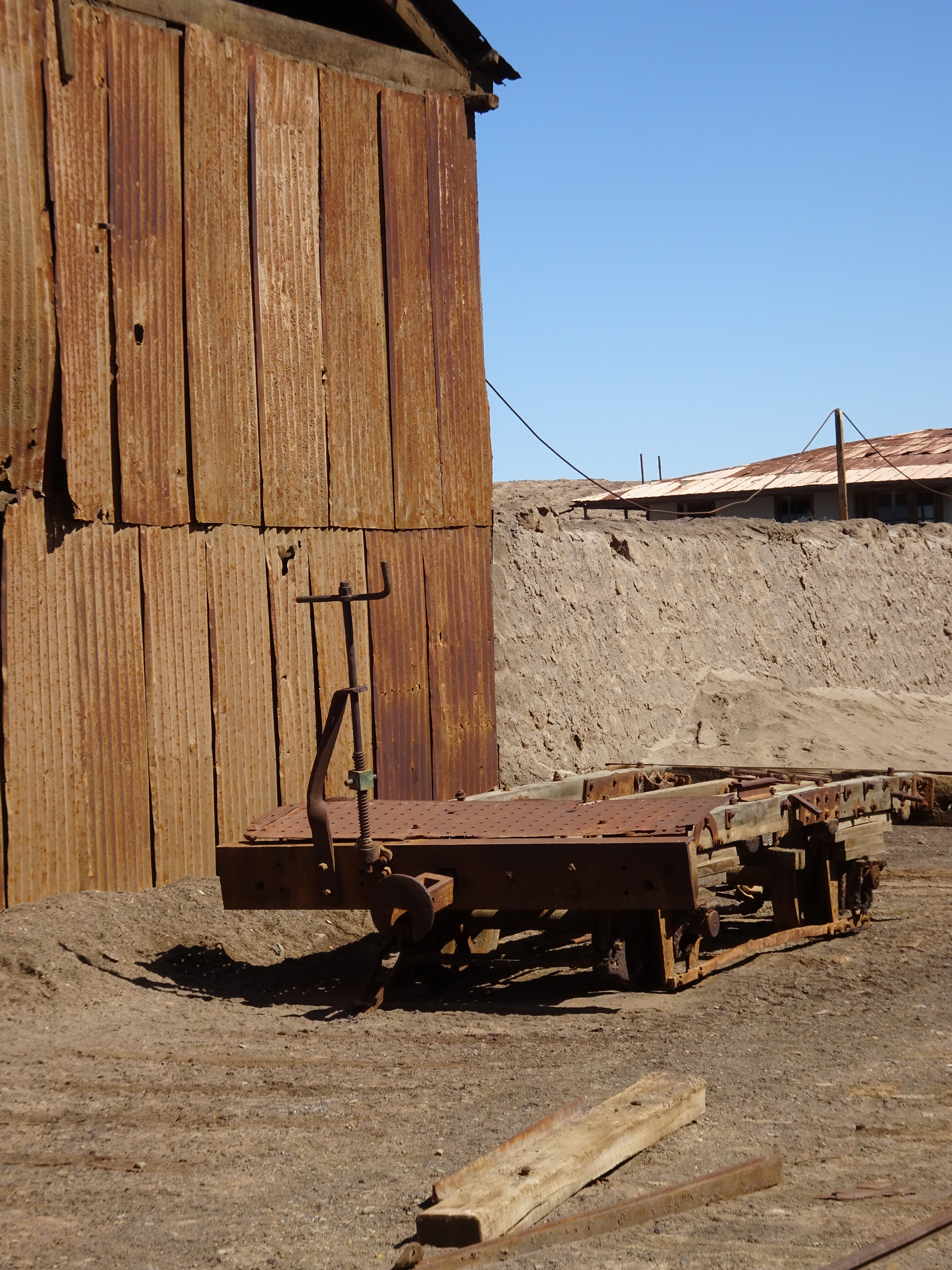
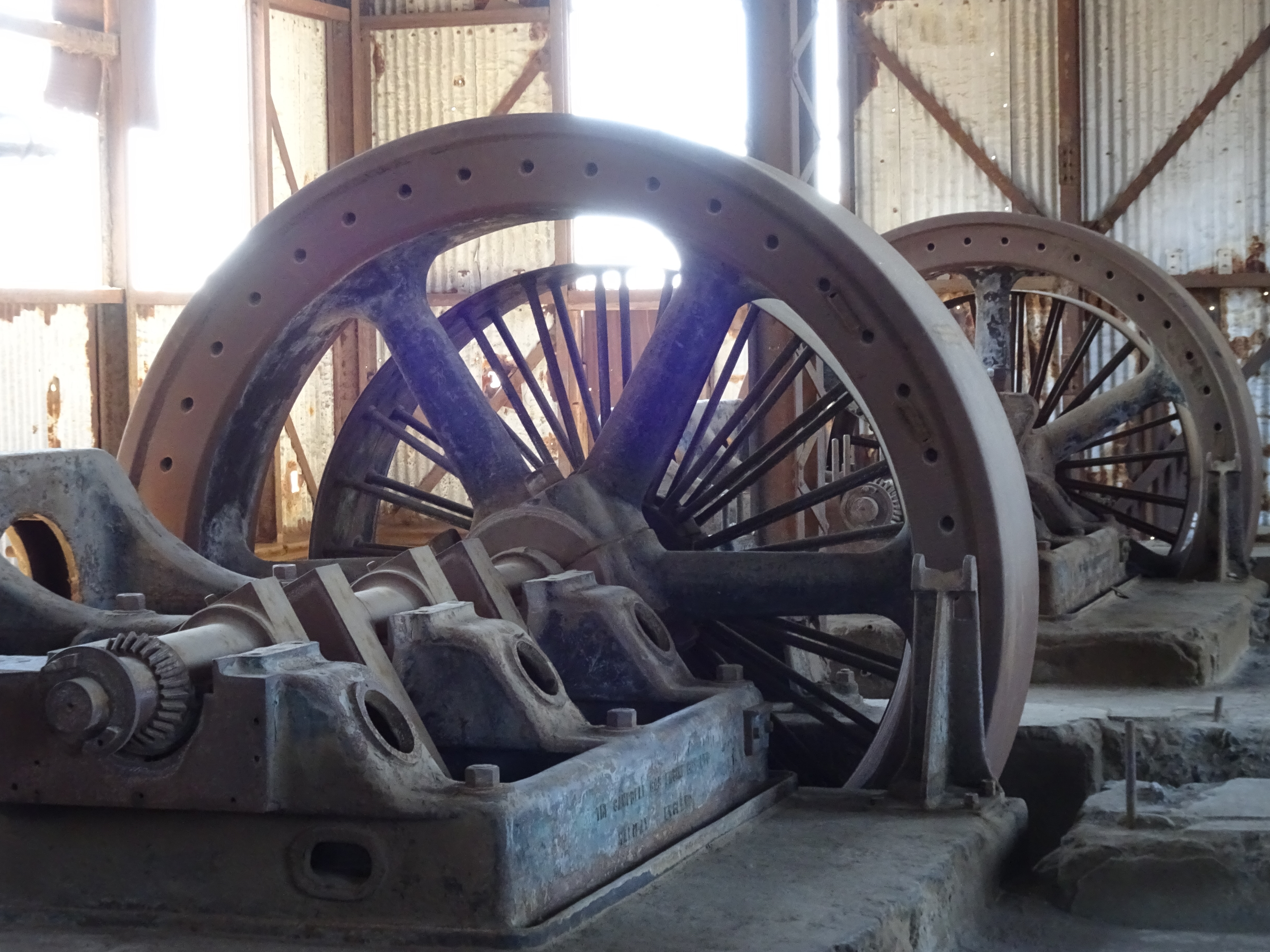
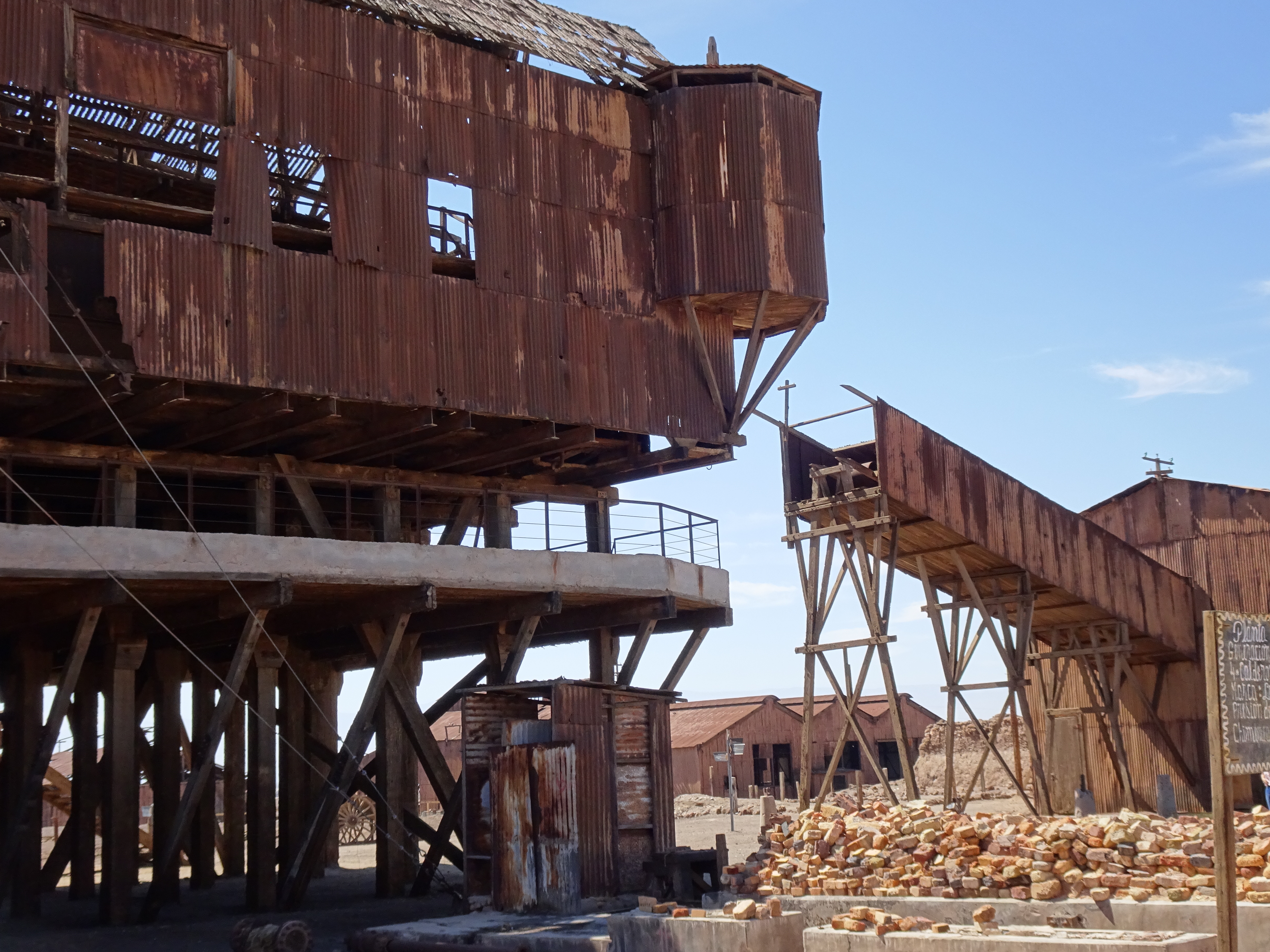
We walk in and out of various workshops and factory buildings, roofs decaying, iron rafters exposed. Minute holes pepper the corrugated iron. Glass hangs shattered in window frames; we try to take arty photos through them. A conveyor belt is left hanging in mid air. Large wheels and machinery are frozen: work suspended.
A quick drive down the road, takes us to Humberstone- the town set up to house the workers from Santa Laura.
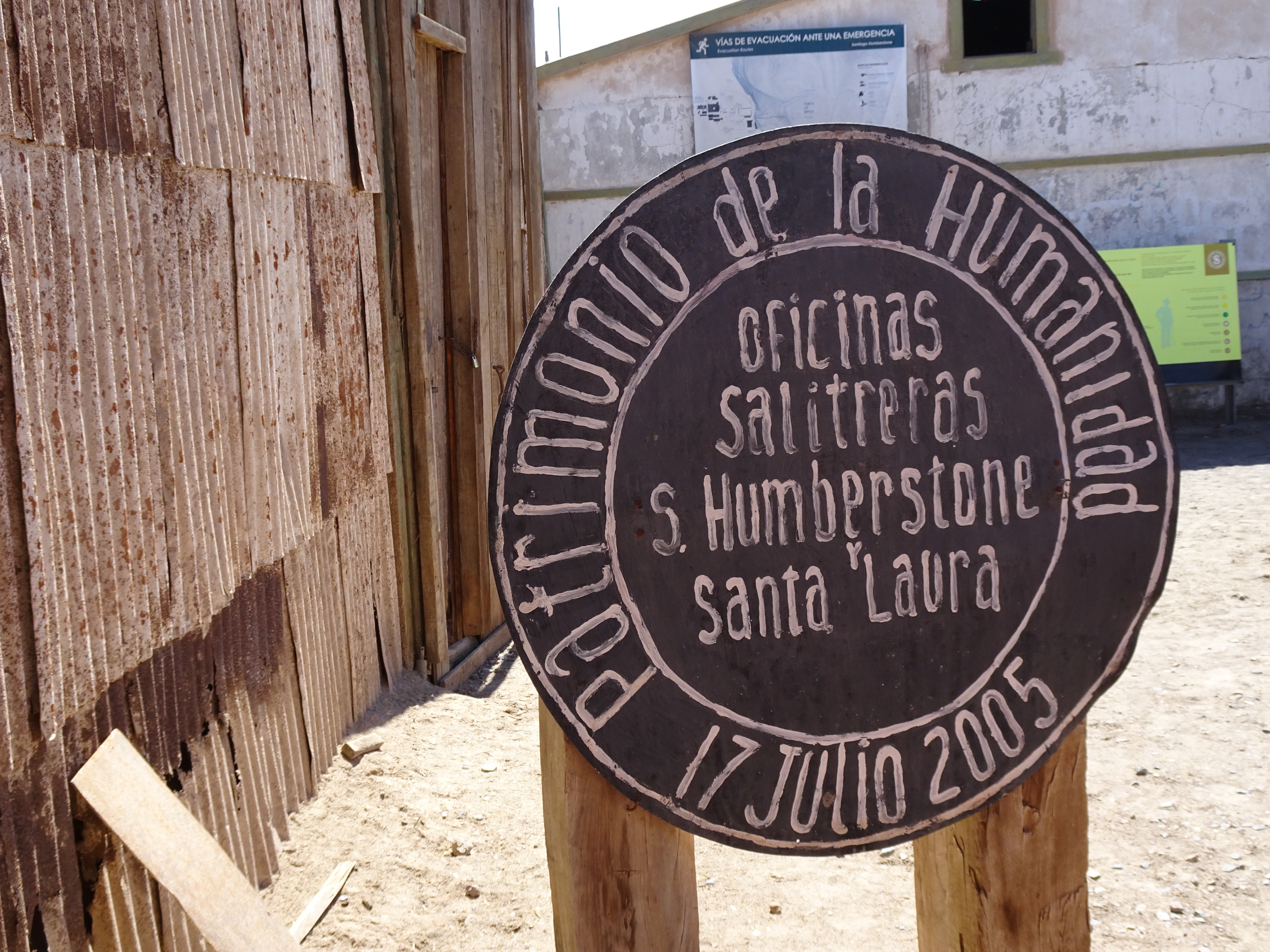
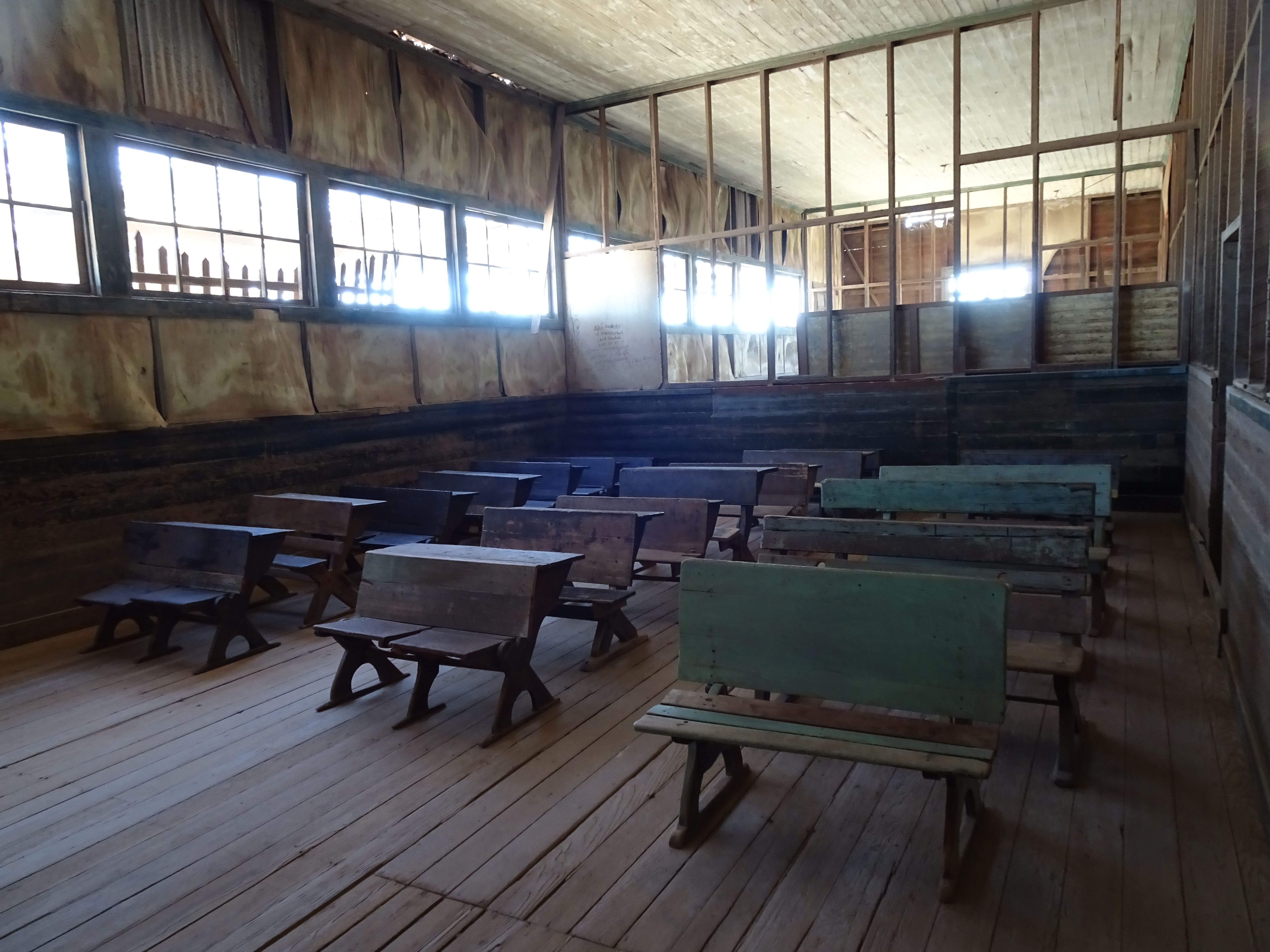
We are walked by the guide to the school, where as we sit at wooden graffitted desks. Appropriately our attention drifts from the classroom as he talks with animation in Spanish about what we presume is the history of the town.
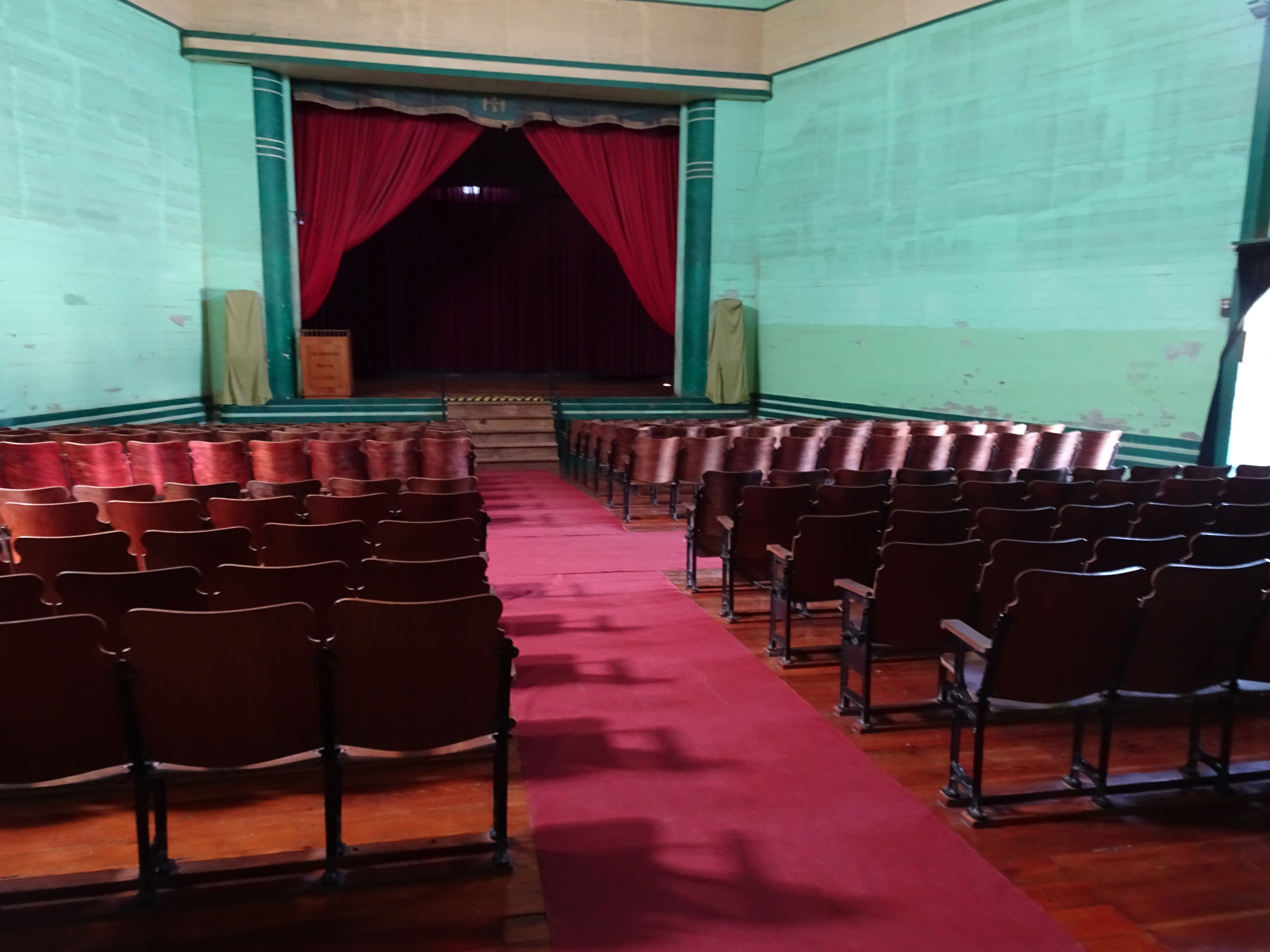
Exploring on our own, we enter the theatre.
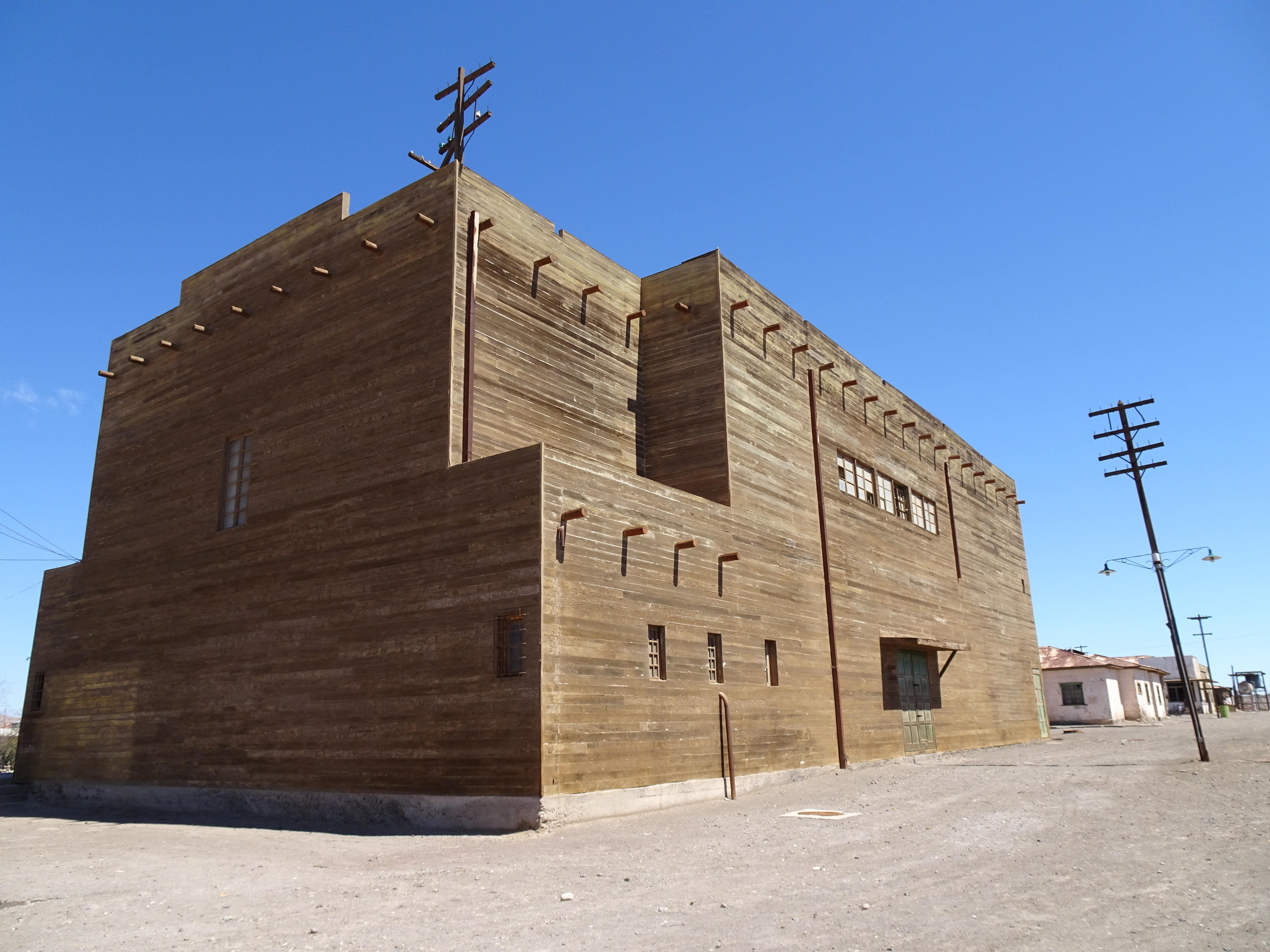
There is a slightly distasteful whiff of decay, that flashes me back to the deserted Russian Mining town on Svalbard. The damp and cold invade everything there, the smell staying in your nostrils for long afterwards. The dry of the desert is doing a better job of preserving the buildings.
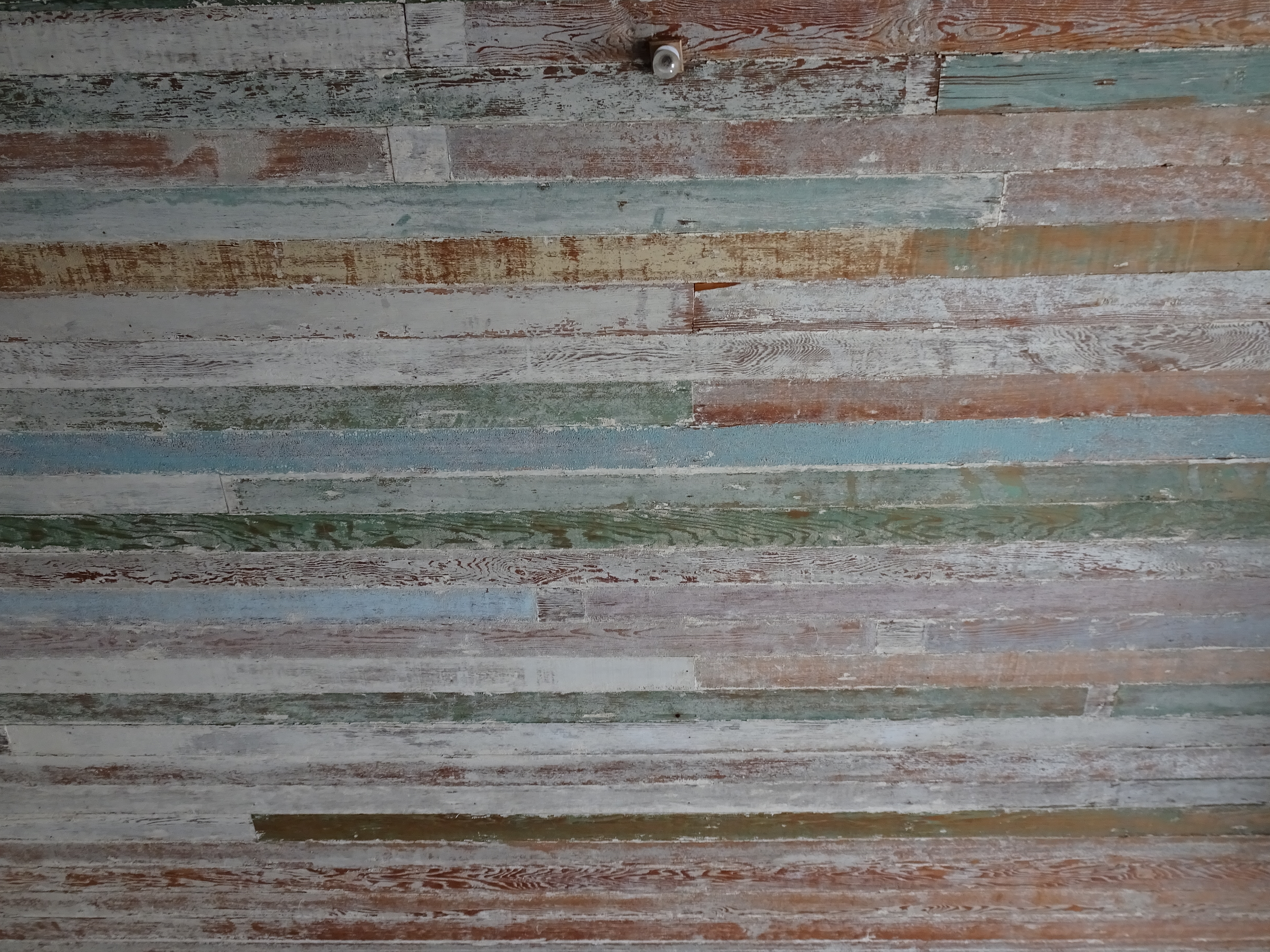
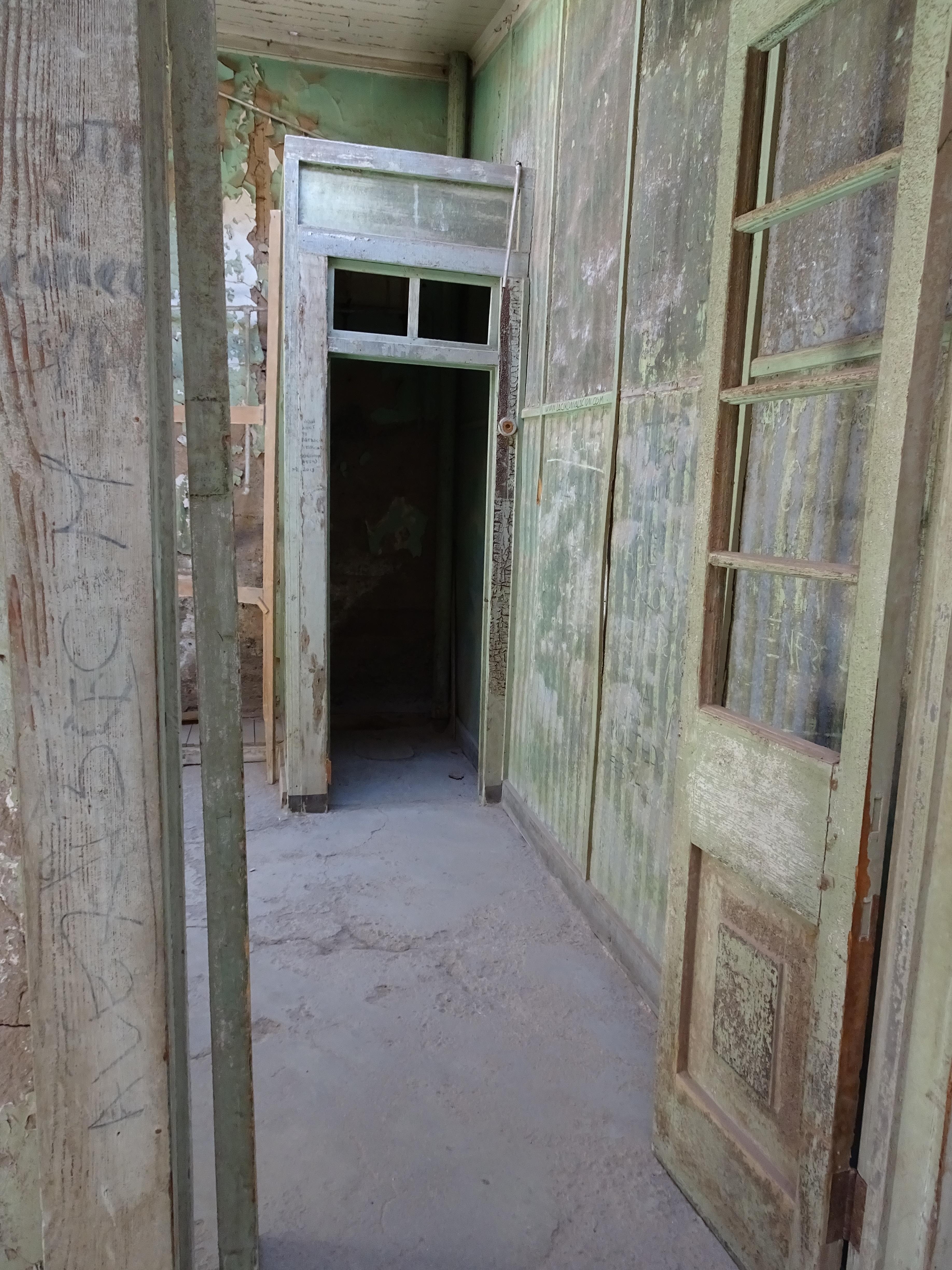
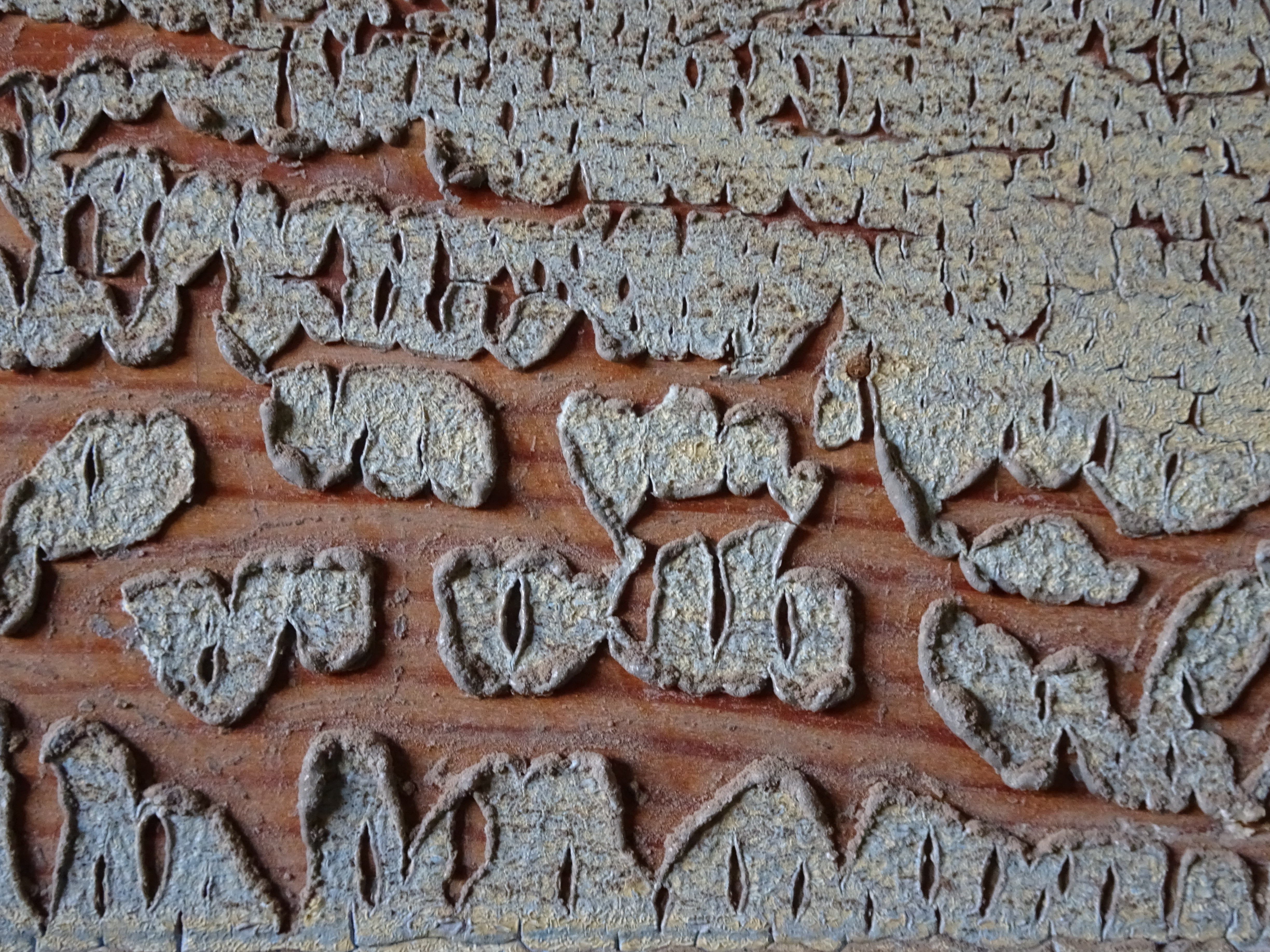
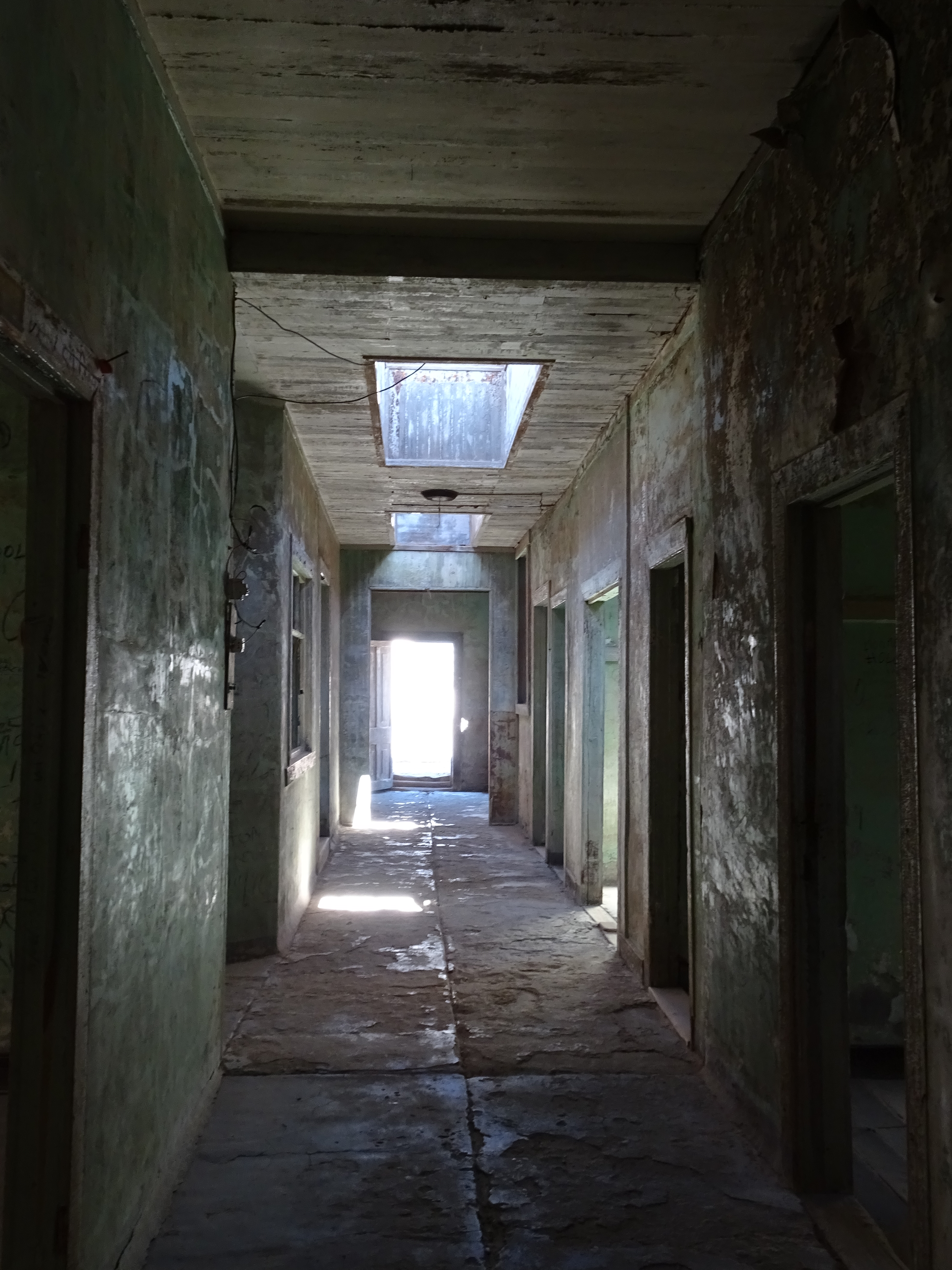
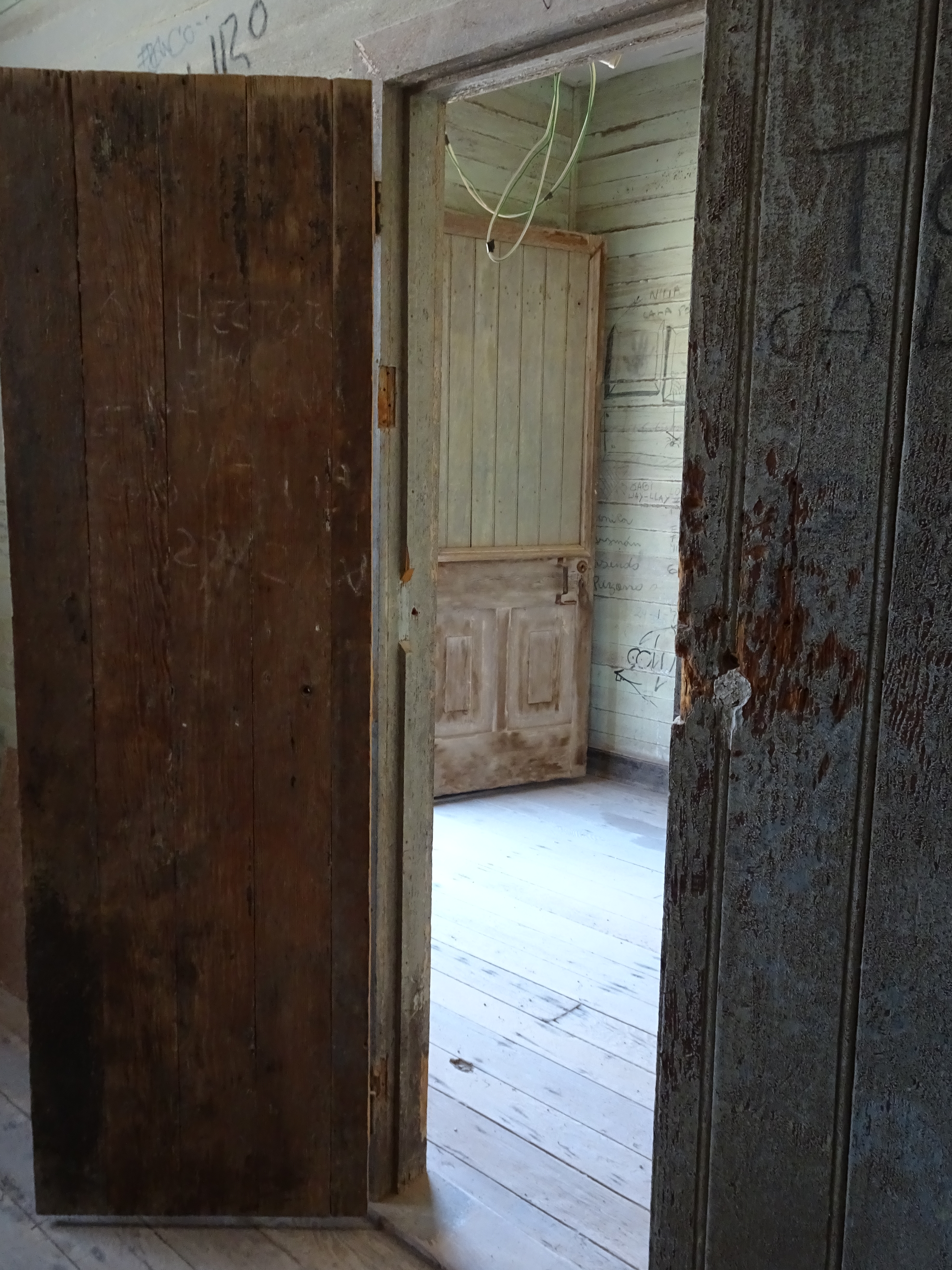
The empty hospital has an eerie feel to it; particularly the one chair left in the middle of a room. Corridors and doorways lead onto others. The paint in some places is peeling off the woodwork, in others the striped planks remain. No equipment is left so it makes it quite hard to imagine what it would have been like.
We explore the rest of the buildings. All are empty. There is the sadness of time passing.
 Journeys with my pencil