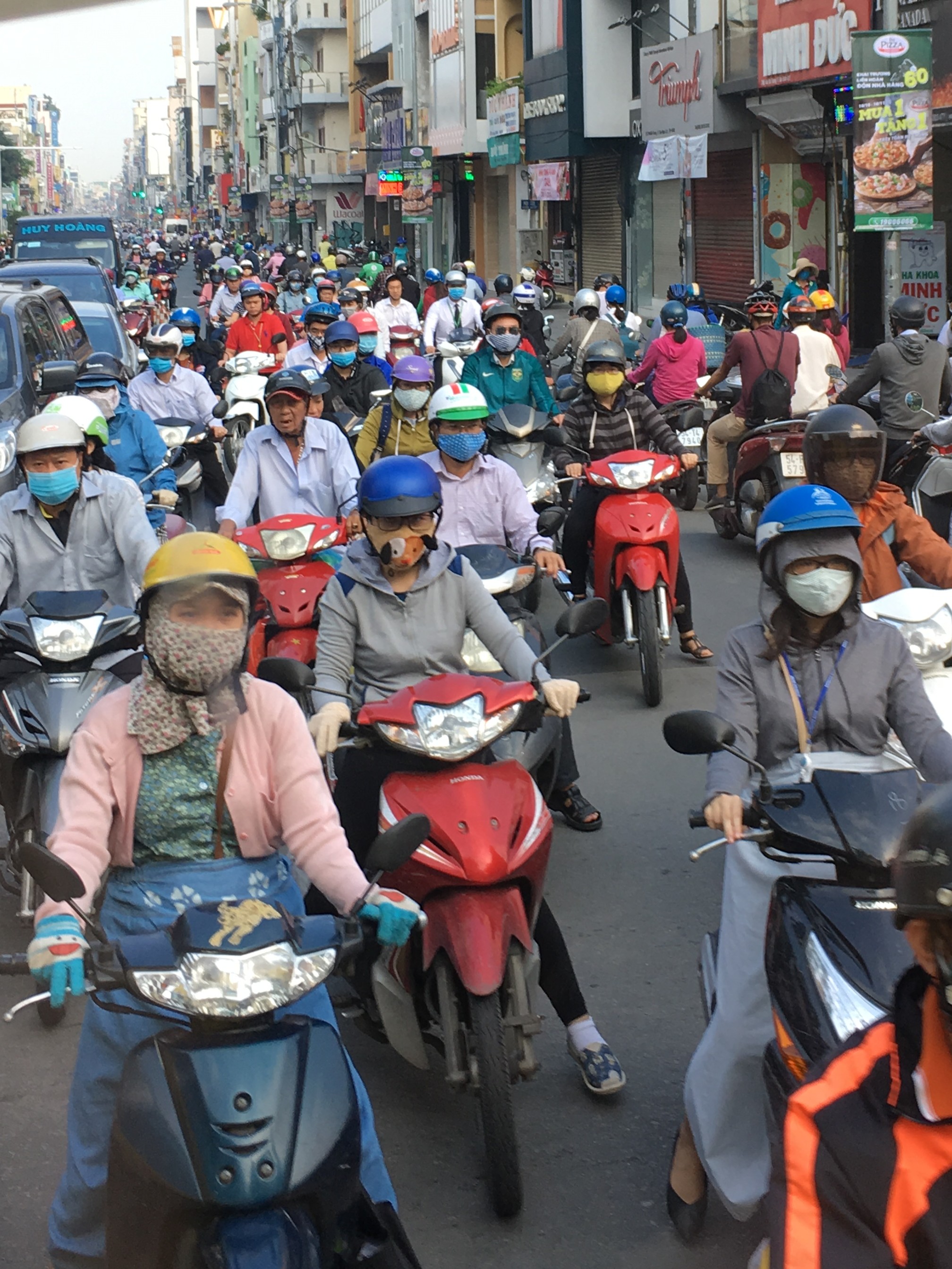
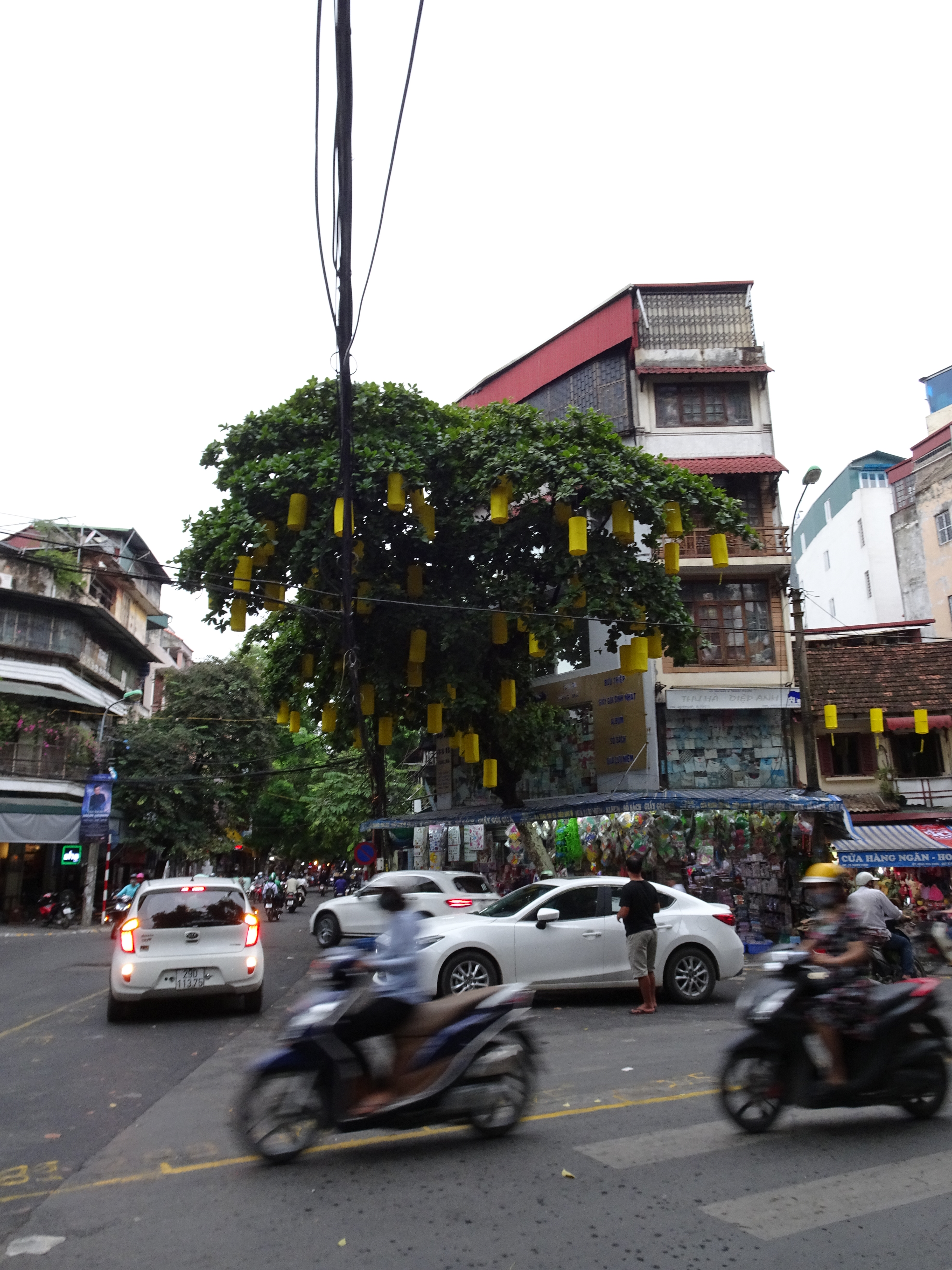
Don’t hesitate. Whatever you do, don’t hesitate. Walk confidently, preferably in a group. Don’t vary your speed. Forget everything you already know. Keep walking with certainty and assurance. Don’t deviate from your course and you’ll make it safely to the other side. These are the rules for crossing the road in Vietnam. I learnt quickly that first afternoon in Hanoi that I would have to show no fear and just go for it, or I would be stuck on the side of the road forever. And don’t think that just because you are on a zebra crossing showing the green man that the traffic will stop. It doesn’t!
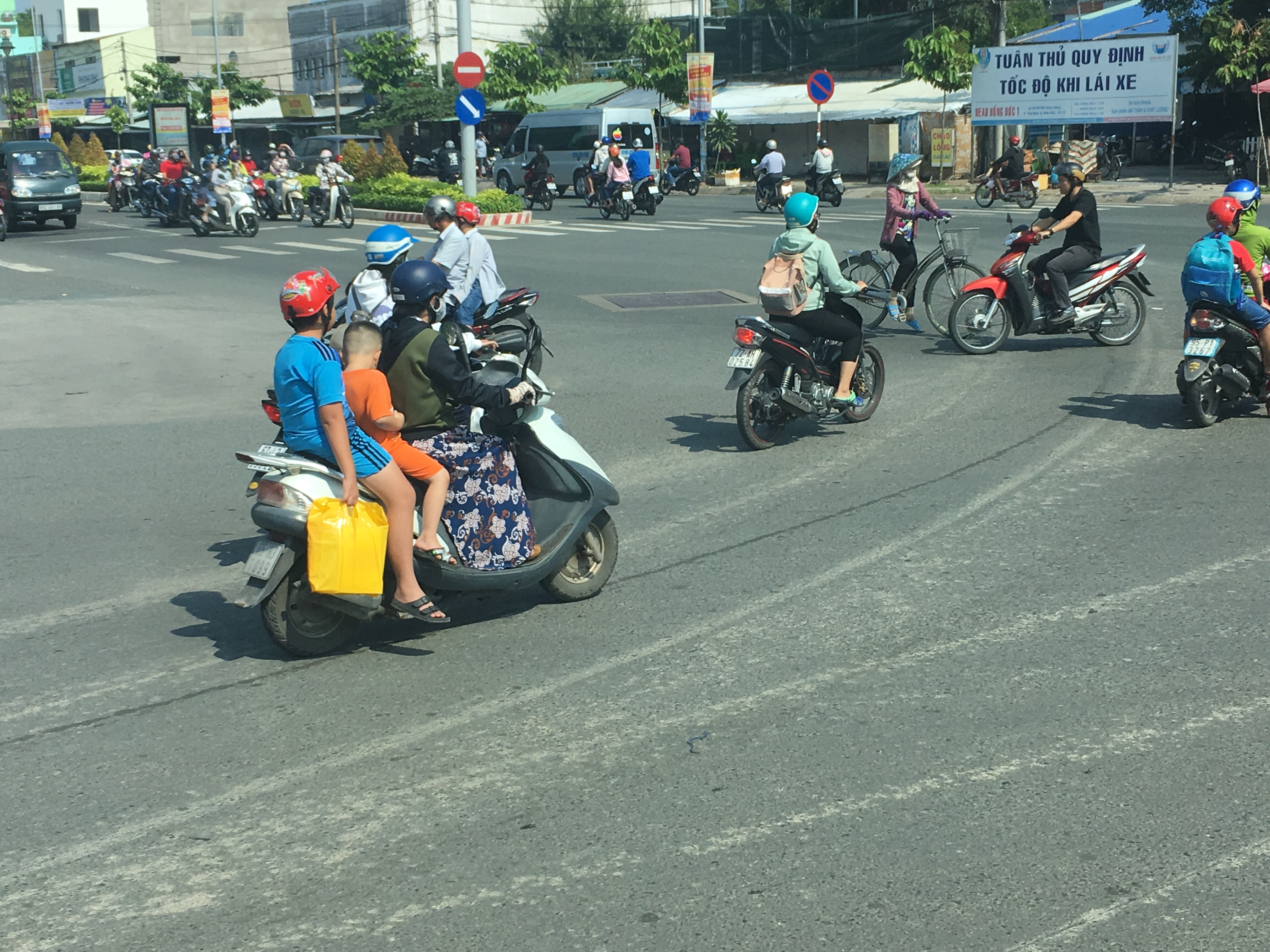
The scooter is the chosen method of transport for thousands of people in Vietnam. Scooters zip in and out of each other, weaving through the narrow streets in an acrobatic and almost invisibly coordinated manner. The number of passengers varies. A woman covered in an all in one suit to protect her from the sun, alternates with a family of four going out on a day trip. People get round the compulsory law for wearing helmets by accessorising with cheap horse riding style headgear which offer no protection to the head at all. Scooters seem to be used to carry a whole variety of things including planks of wood, cages of chickens, boxes of food, baskets of fruit, pieces of furniture including on one occasion, a child’s wardrobe and a large flat screen tv.
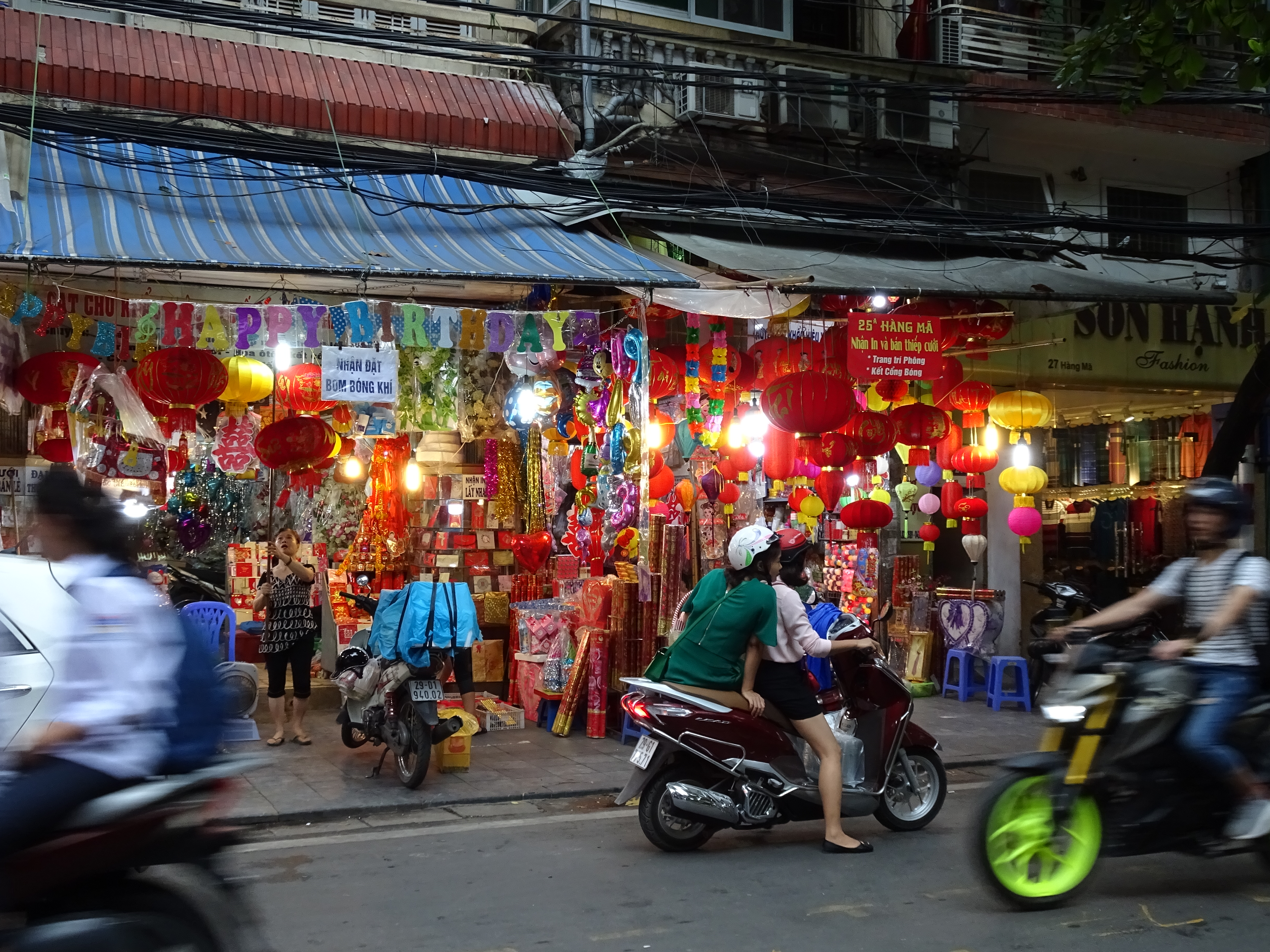
Life is lived on the streets of the Old Quarter, Hanoi.There are streets of stationery, streets of electrical items, streets of Buddha statues, streets of food. People sit on small red plastic chairs and eat food cooked in front of their shop. Rubbish is openly thrown into the road, the gutters are full of filthy water; the drains collapsing in places. Some of the smells are overwhelming.
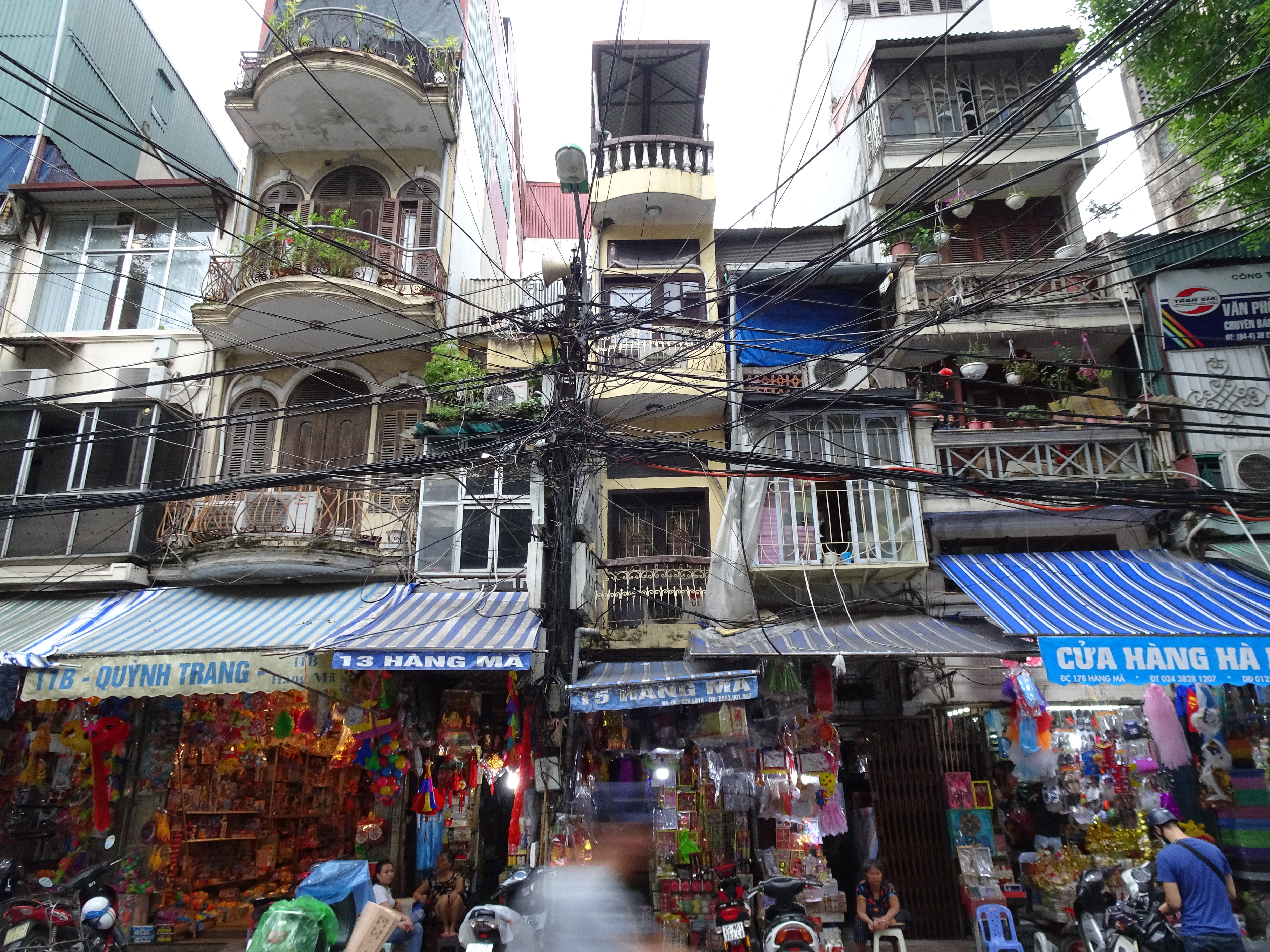
Skinny houses squeezed together are joined by a chaotic mess of electrical wires. Women with a shoulder pole and baskets of fruit hung on each end try to get you to put on the conical straw hat or buy their fruit. I manage to escape but not before I’ve somehow bought some extortionately priced bananas! She does it with such charm and a smile that you can’t help but go with it! For all the disarray and disorder, there is a charismatic appeal to the old town, although the peacefulness of the Buddhist temple in the middle of Hoan Kiem Lake provides a rest from the noise and commotion.

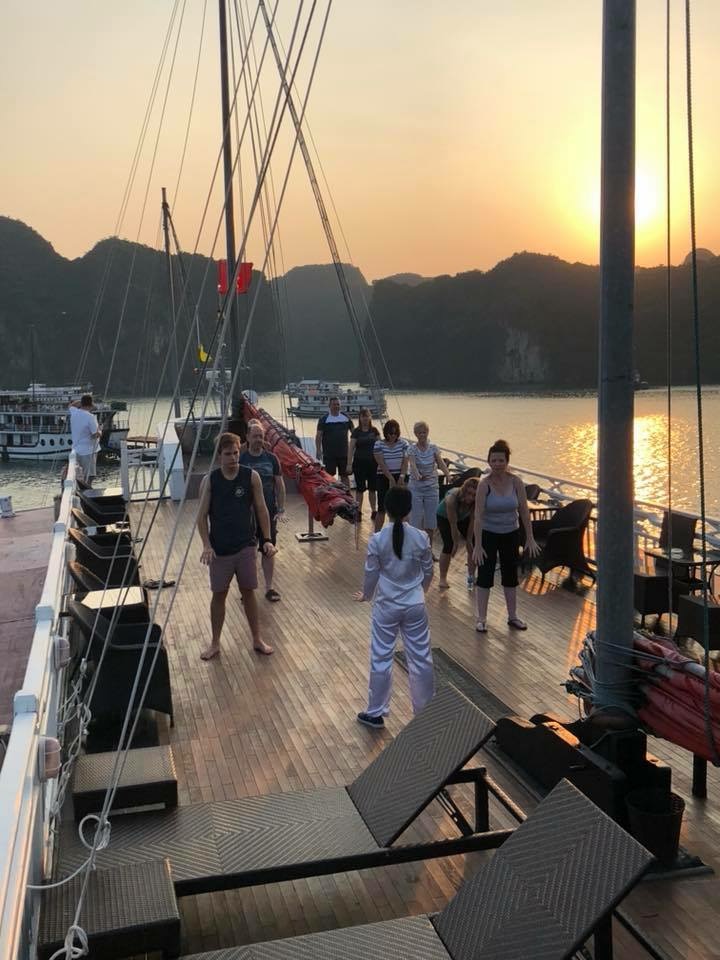
Seeing the limestone karsts of Ha Long Bay set against the blue-green water for the first time is quite something. Our sampan floats through the rock pillars where the vegetation clings precariously by the roots. We are all up on deck taking numerous photos of the scenery or lounging in the cane chairs watching the world go by. Off the boat, panting up the steep steps we enter an enormous cave made up of three joining caverns. Stalactites cling on in the orange light. Another outing off the boat sees us drifting through a cave entrance that opens out into a lagoon. Monkeys scamper down the hanging trees to be fed the bananas brought by the guide. Waking up early to do Tai Chi on the top deck as the sun rises behind us is an unexpectedly magical experience.
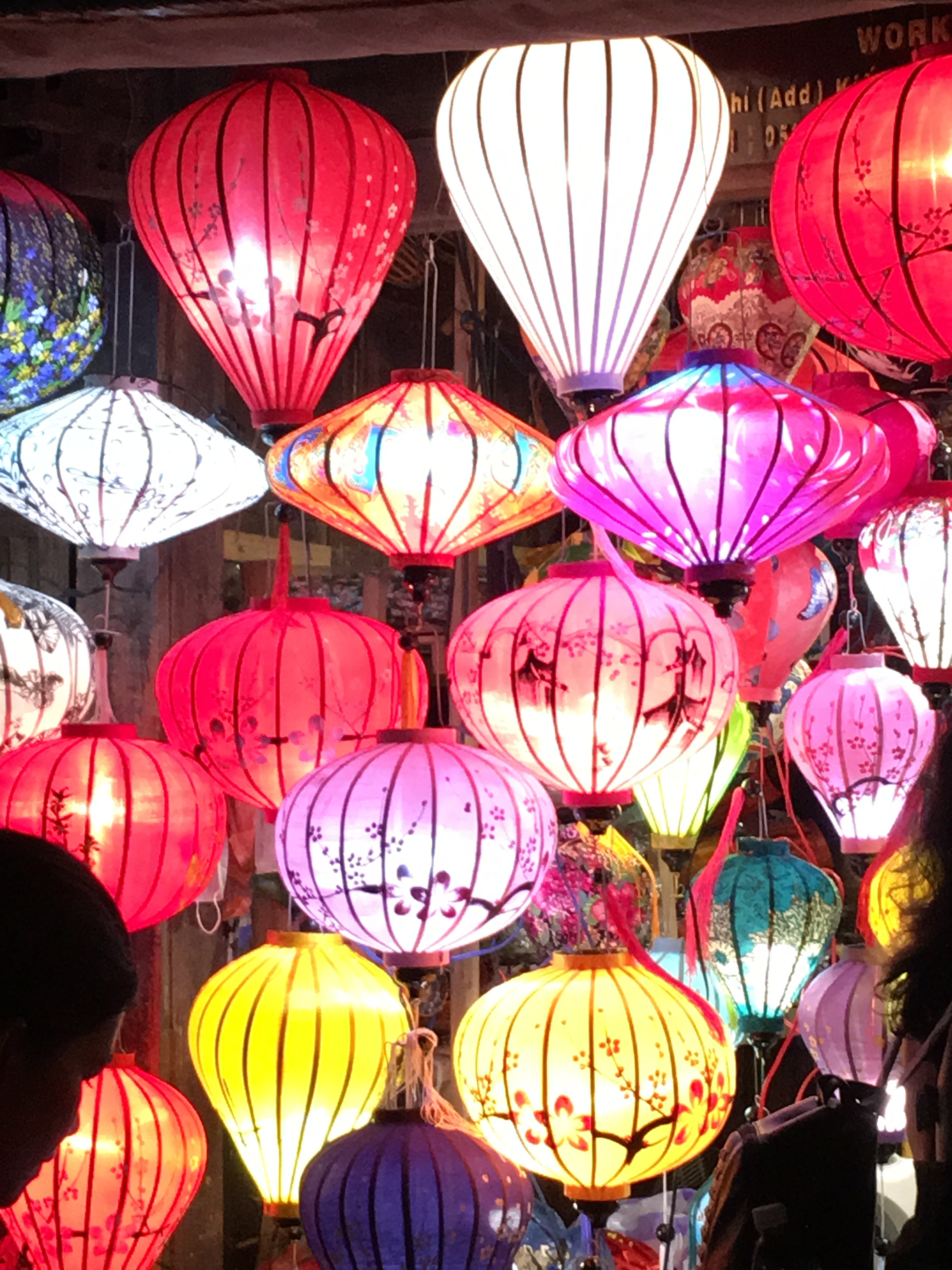
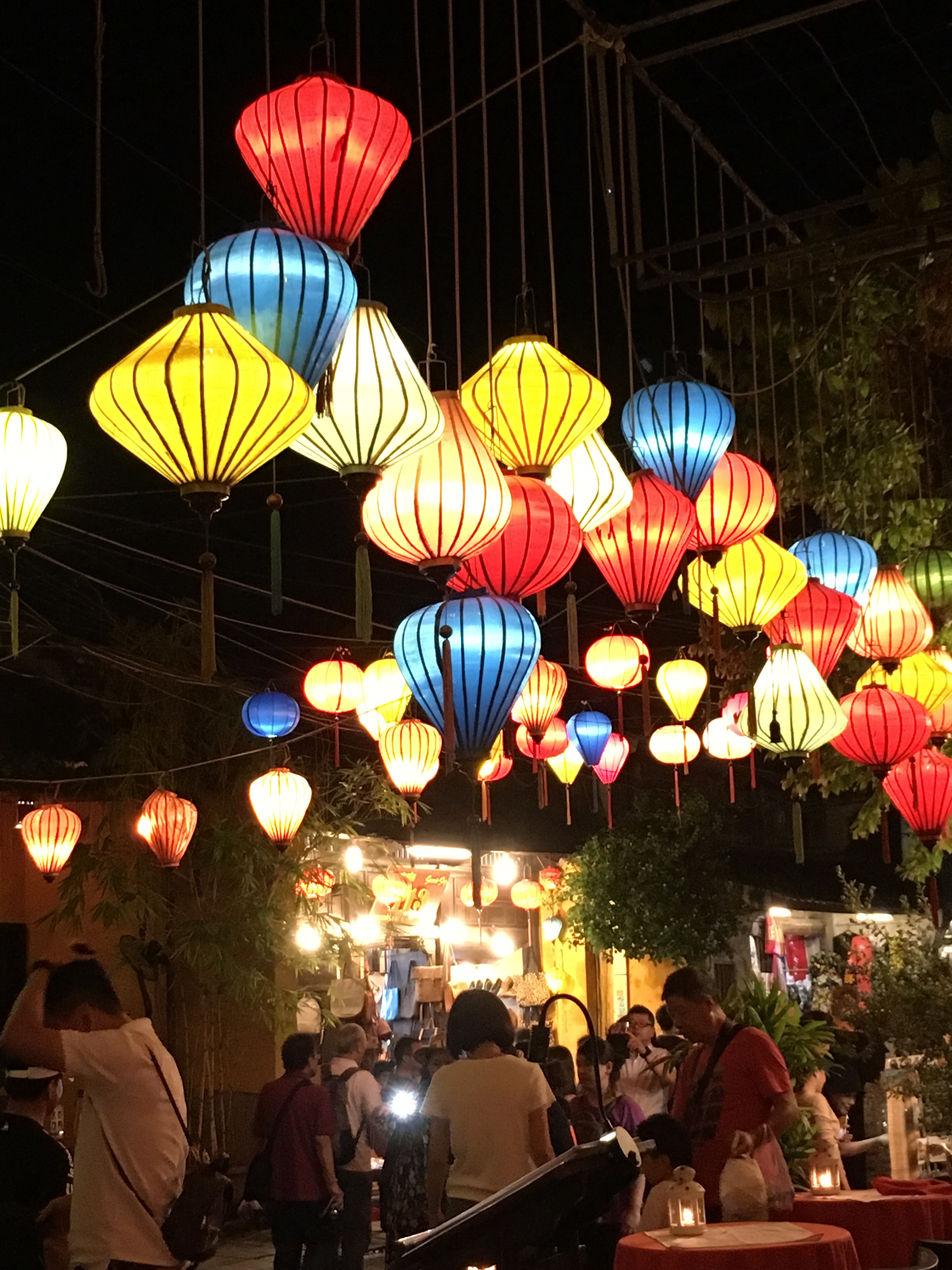
Lanterns are everywhere. Suspended on wires across the street, hung from market stalls, strung out along bridges. Decorated and patterned. Paper and material. At night they are illuminated giving the town of Hoi An an enchanted air. It is a busy place, tourists wandering around enjoying the old buildings, shops and atmosphere. We sit and people watch from a street side bar. From our small rowing boat, we float a lighted lantern and watch it drift away on the darkening river.
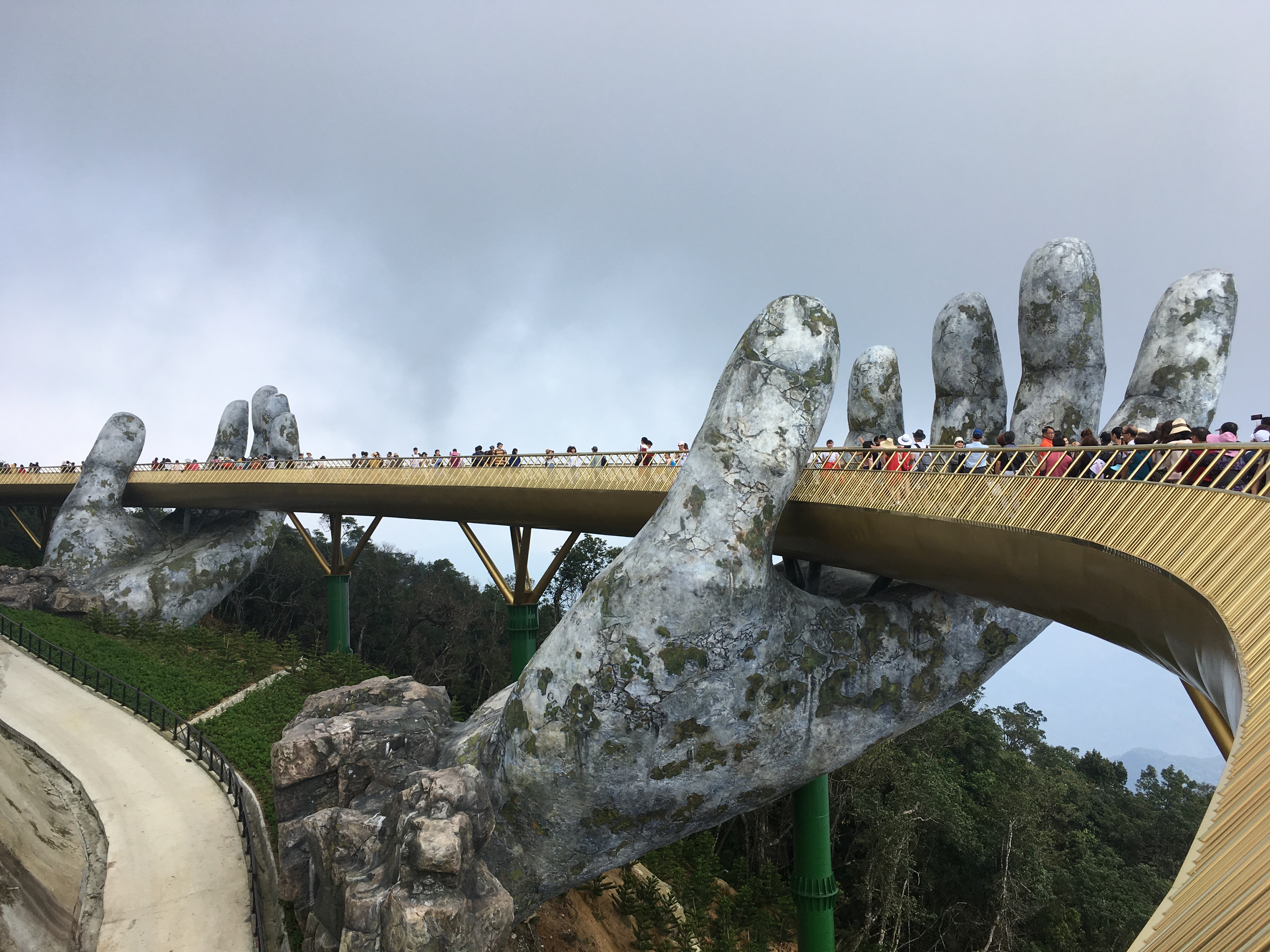
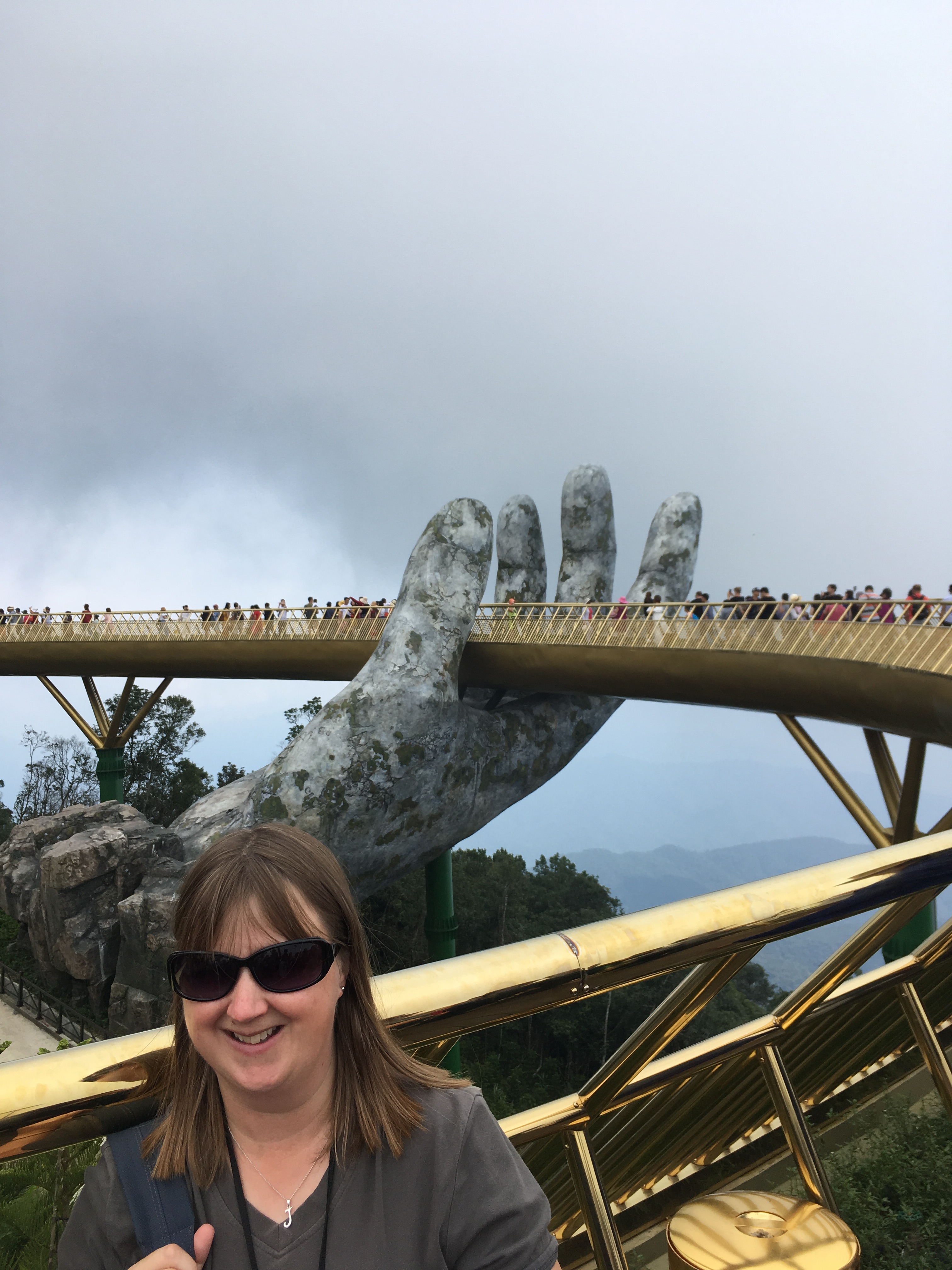
The giant hands reach out from the mountainside and grab hold of the curved bridge. The hands look ancient like they are carved from the rock. The bridge shines gold in the sun. The bridge that I’ve been wanting to see for a while is part of the recently opened theme park of Sun World, Ba Na Hills near Da Nang. You glide up to the top of the mountain on an Austrian designed cable car. The bridge itself is a stunning piece of architecture especially when set against the backdrop of the hills.
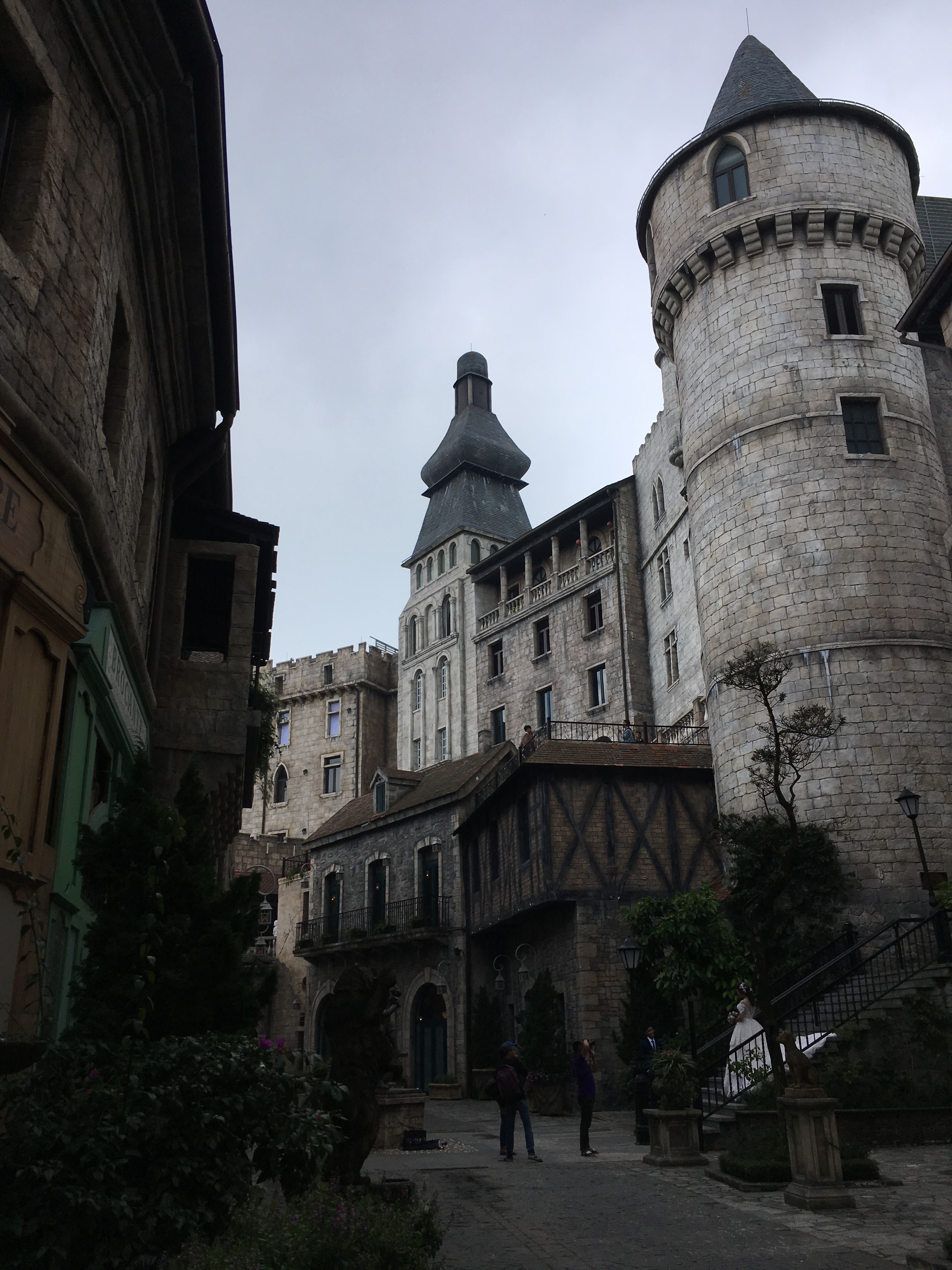
The rest of the park, which is still being added to, is definitely an experience. There is French love garden, Greek statues, a giant Buddha, a temple and wait for it a full size French/German town complete with beer ‘tent’ and terrace. It’s all a bit surreal.
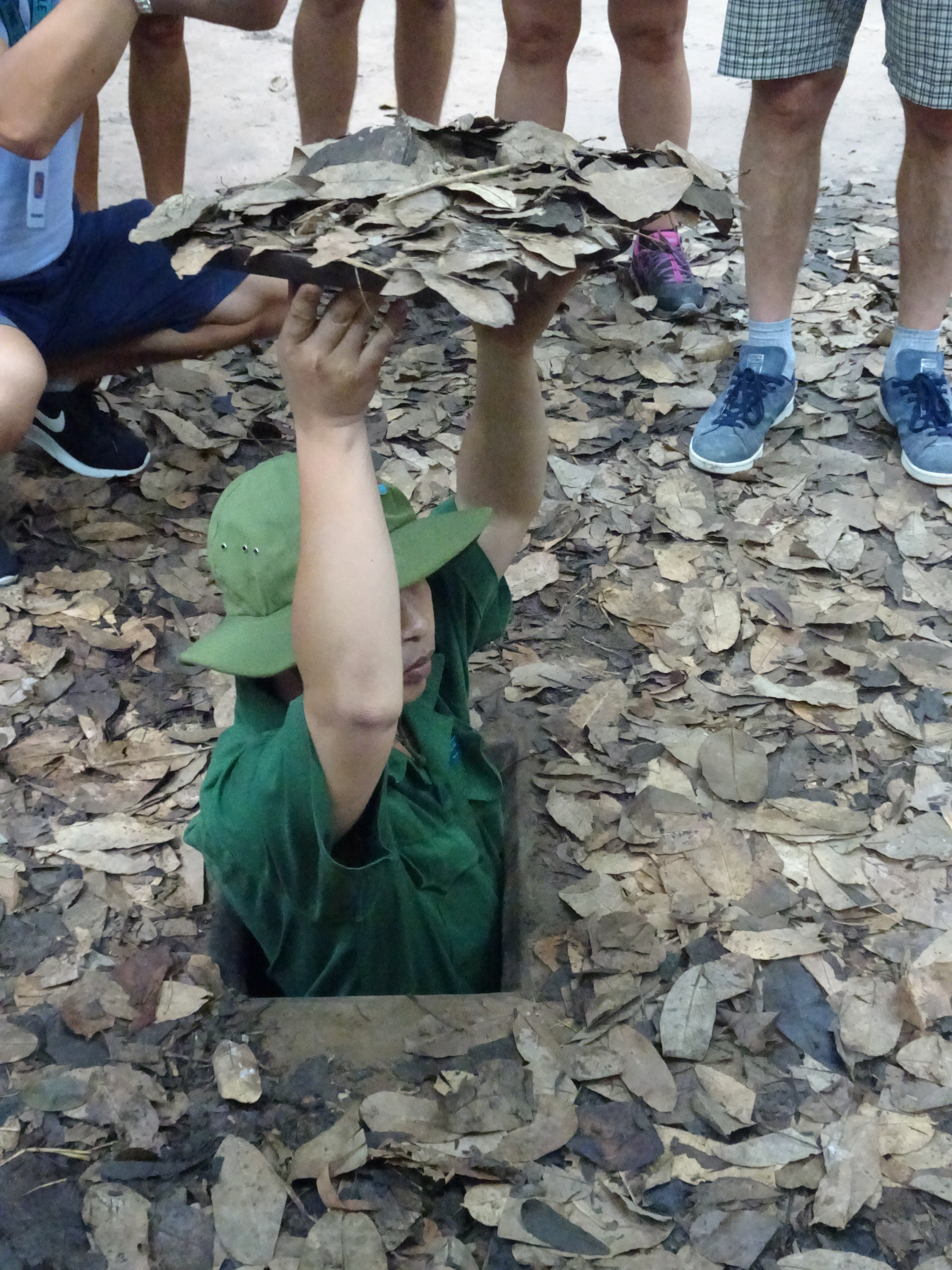
The thought of being a Viet Cong soldier spending days underground in the 75 miles of tunnels at Chu Chi fills me with dread. Spiked traps and rotating devices protect the entrances to each tunnel. Termite mounds hide the places where there are ventilation shafts. Some of our group try crawling through a short length of tunnel. Even the fact that these have been widened to fit tourists does not encourage me to join in.
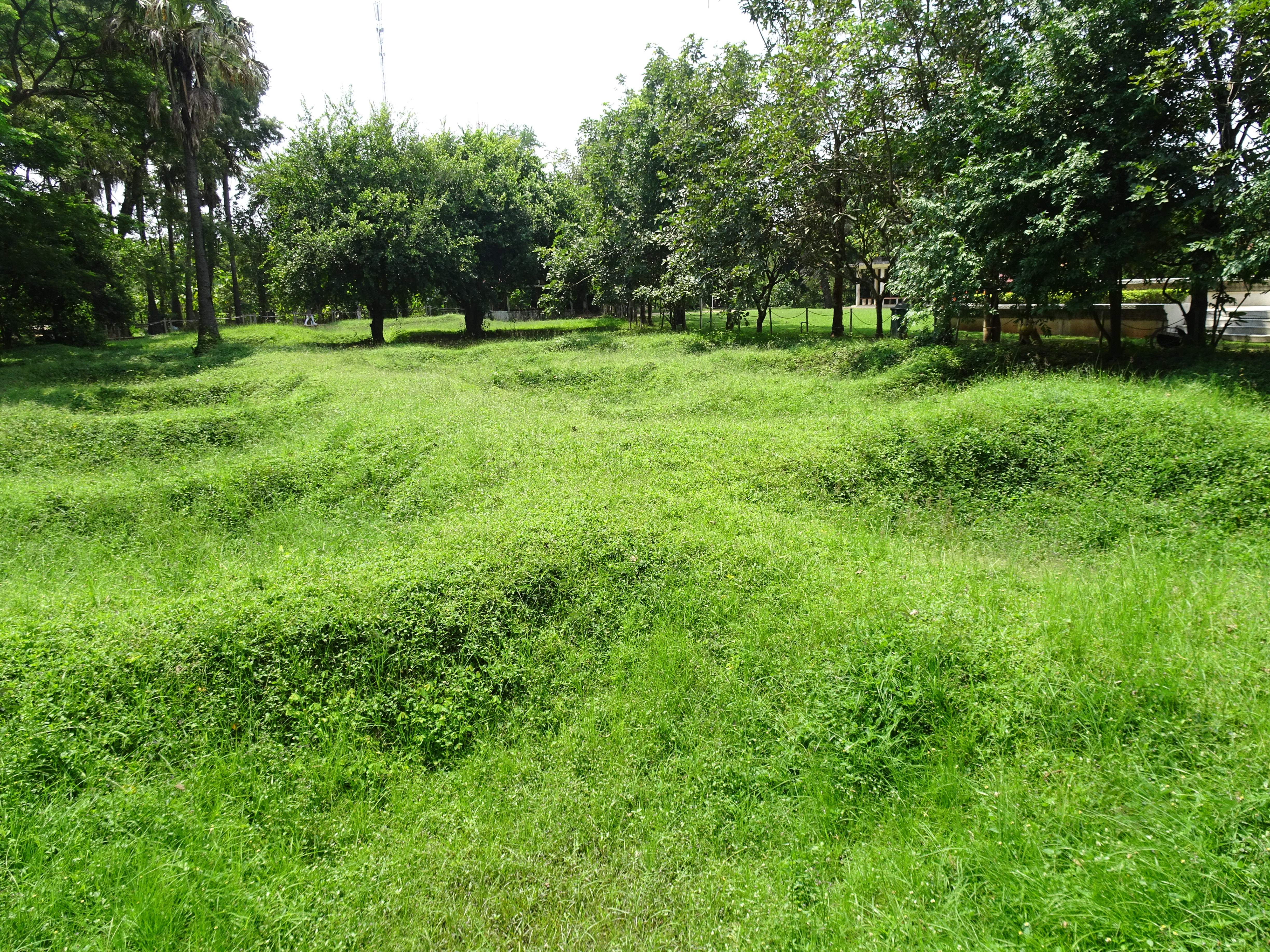
I have to go and sit quietly by myself on a visit to the Killing Fields. Here are the mass graves of the prisoners of the Khmer Rouge. Thousands of bodies have been found including many children.
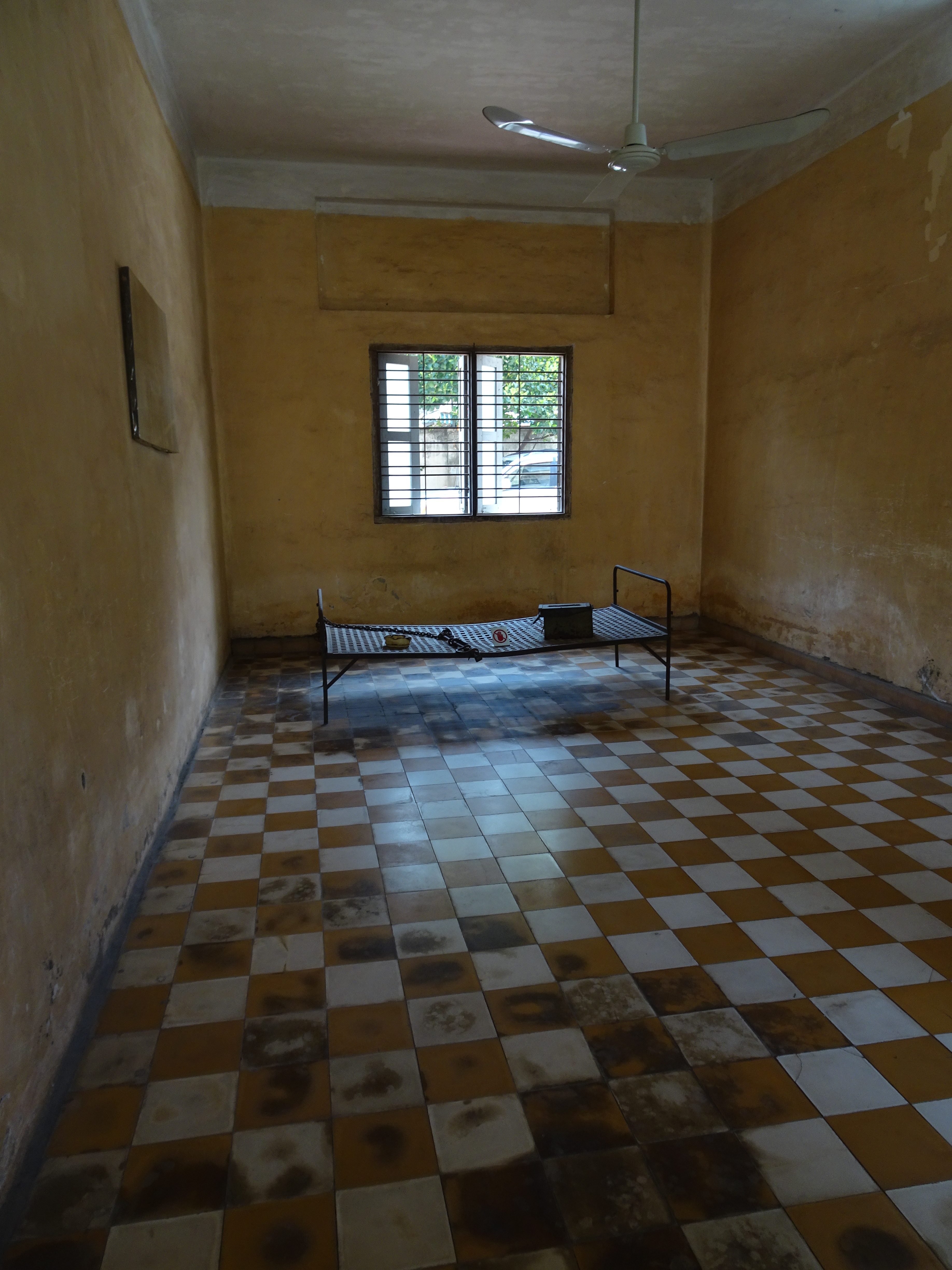
This is followed by a tour of S21, an old school turned into a cruel and sadistic prison. The photos taken of each of the inmates haunt you long after you have left the room. The prison was the place where prisoners were held before being transported to the Killing Fields to die.
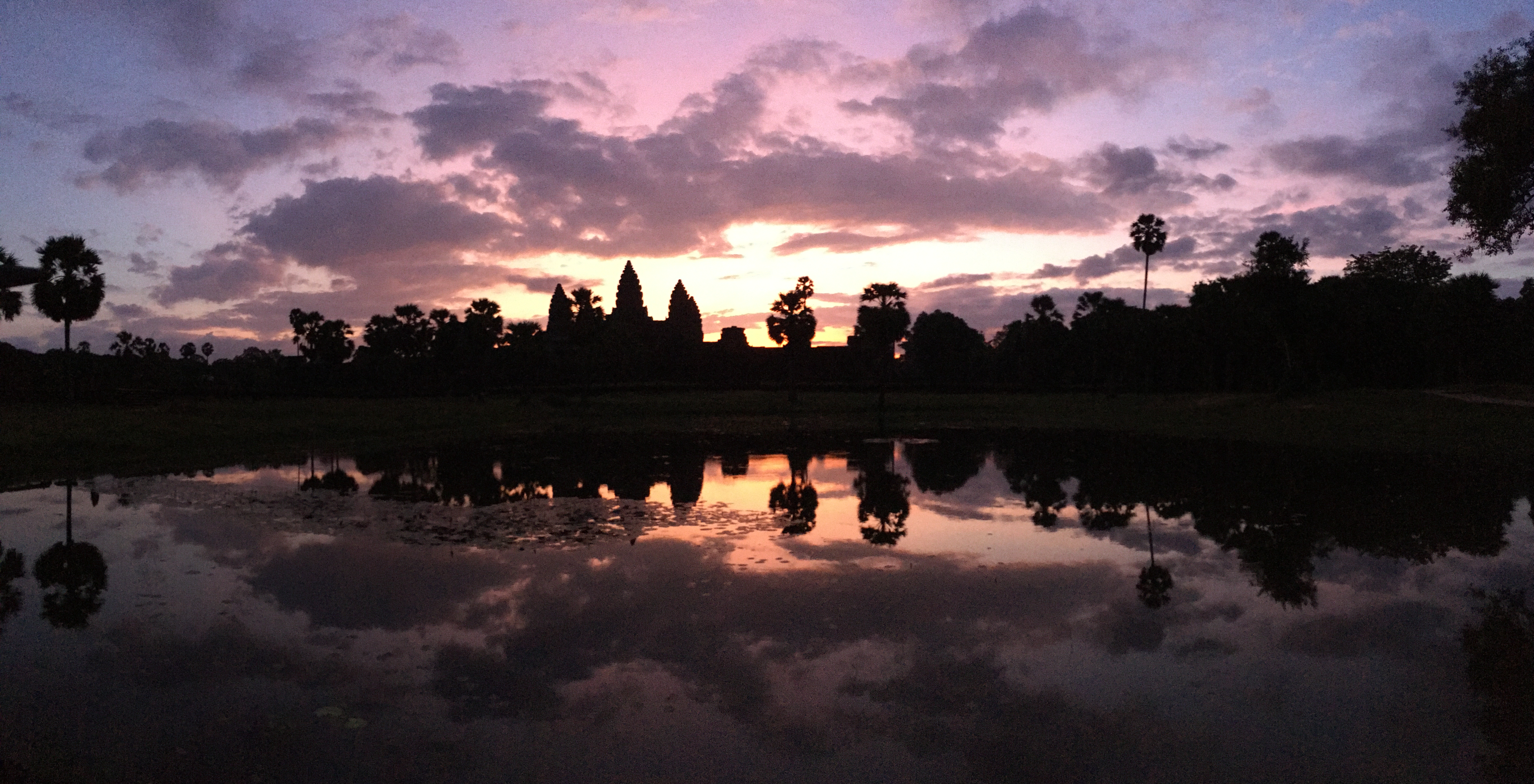
A slight glow outlines the edges of the temple against the black of the early morning sky; our first glimpse of Angkor Wat. As we watch the sky turn pink behind the building, we see its towers reflected in the pool in front. Despite the number of people gathered to watch there is a feeling of peacefulness. Thousands of photos are taken – one for each moment that the sky changes colour. We stay, eyes fixed on the temple, until the sun is nearly up.
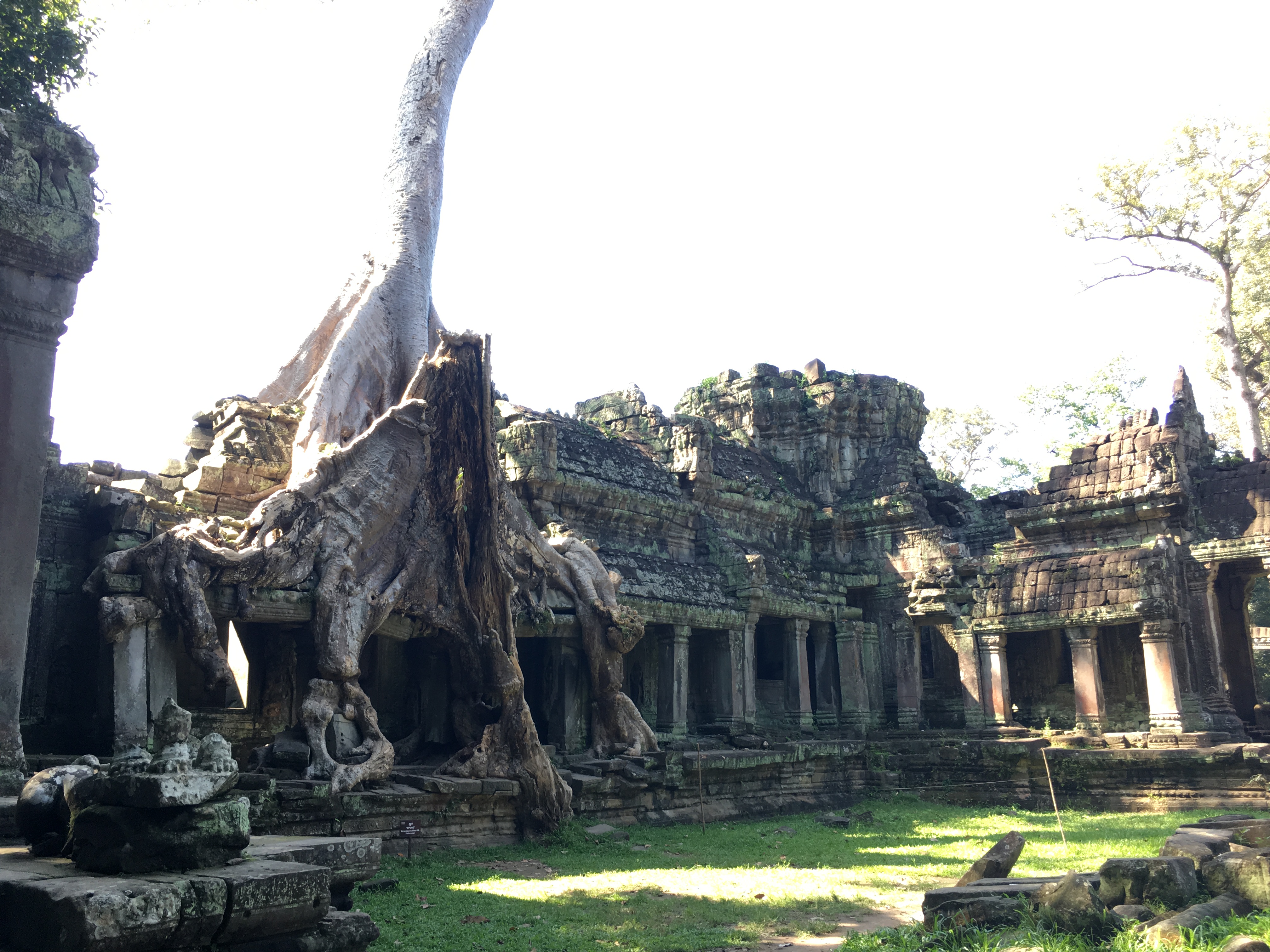
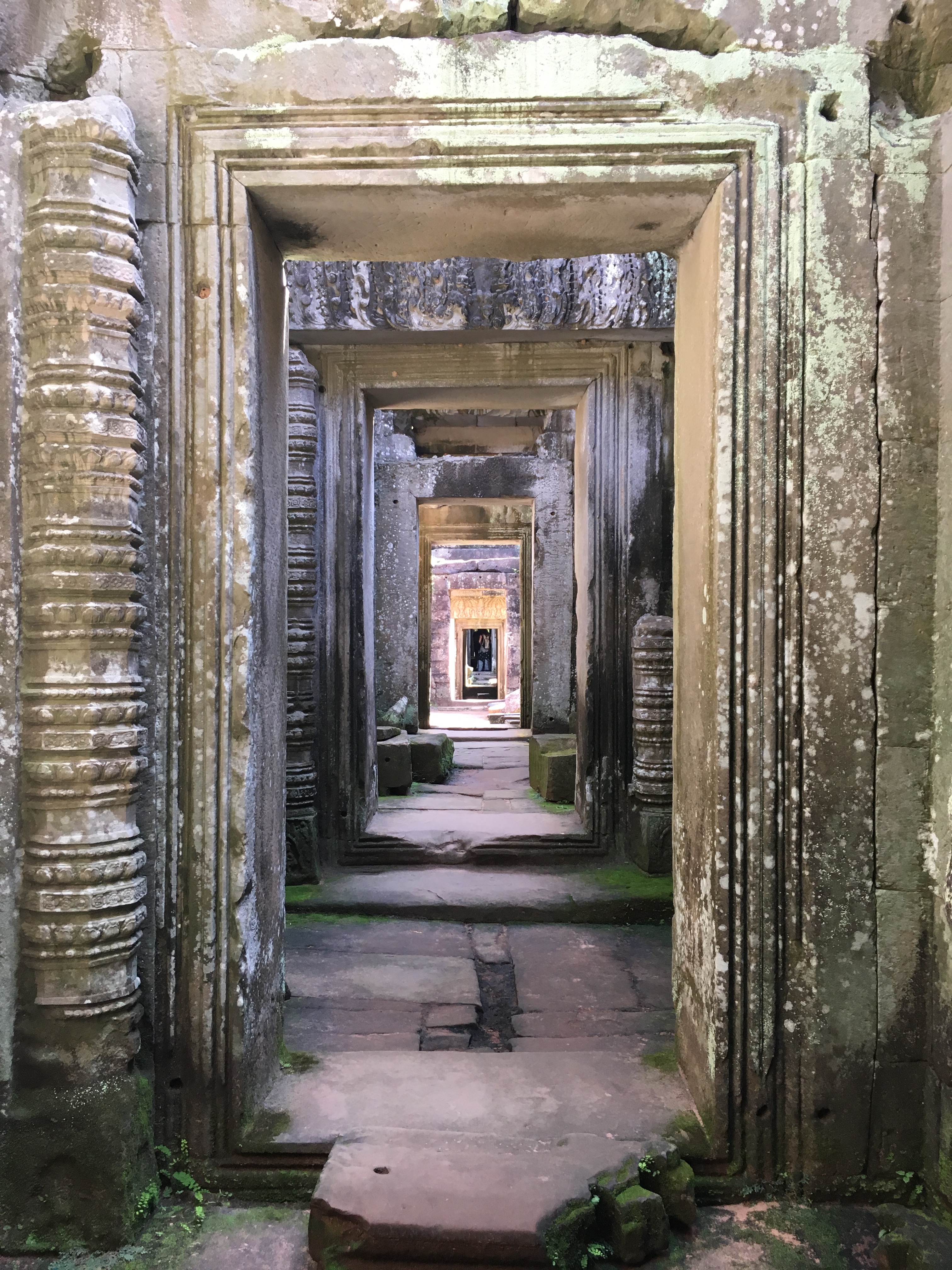
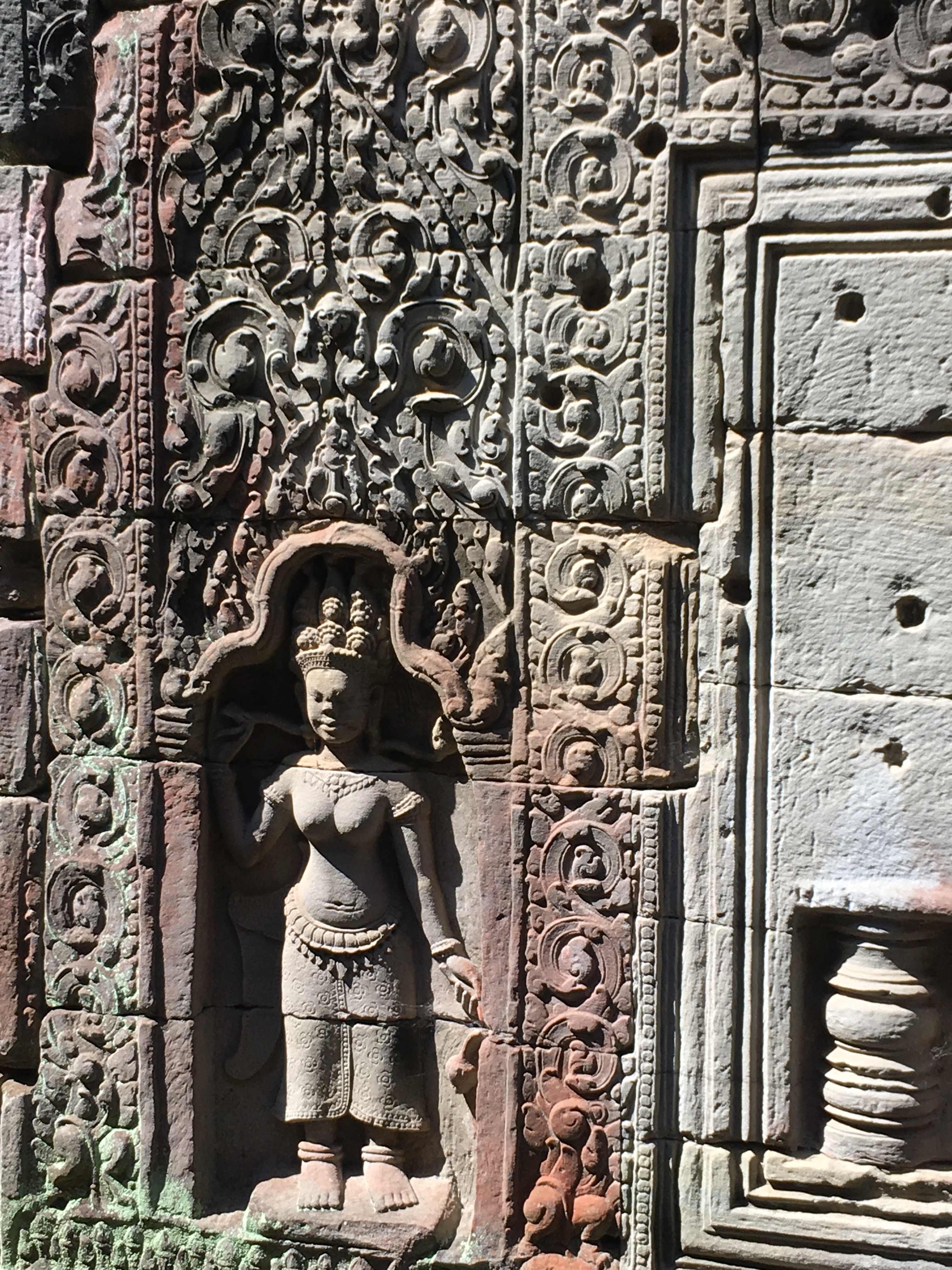
The temples and palaces around Angkor Wat are each different to the one before. Tree root tentacles drape themselves over crumbling walls, tightening against the stone. Exquisitely carved reliefs and panels bring to life stories and beliefs. Never ending corridors stretch out in front of you with each door seeming to get smaller than the one before.
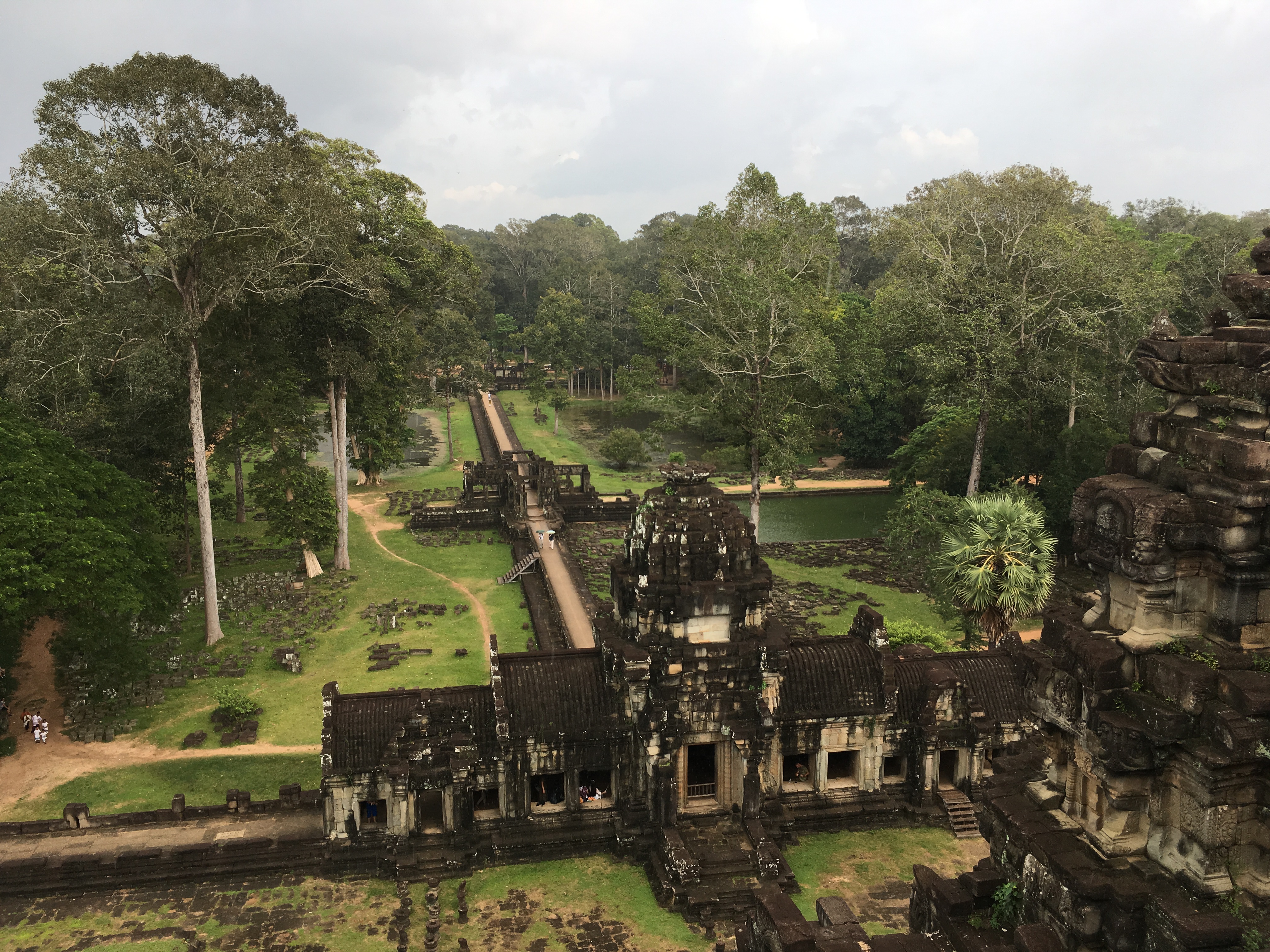
Steep steps lead upwards to the top, opening out to views across the jungle. A panorama across an ancient city where 1 million people went about their daily lives, their wooden homes long gone but the stone temples and palaces remain


 Journeys with my pencil